

German umlauts—the two dots over ä, ö, and ü—can look intimidating, but they are simply letters with their own distinct sounds and spelling rules. Learning them early makes your pronunciation clearer and your writing far more accurate.
This beginner’s guide to German words with Ä, Ö, and Ü explains how each umlaut sounds, when it appears, and which common words you should know first. With clear examples and practical tips, you’ll master these three letters quickly and confidently.
Introduction
The German language is famous for its distinctive sounds, and few features are as immediately recognizable as the letters ä, ö, and ü. These three characters, known as Umlaute in German, are not just decorative additions to the standard alphabet. They change pronunciation, meaning, and even grammar. For an English speaker learning German, encountering words with umlauts for the first time can feel intimidating. Words like schön, Käse, and Tür look unfamiliar and the sounds they represent do not exist in quite the same way in English. Yet mastering these three letters is one of the most rewarding steps you can take, because they appear everywhere in everyday German.
This guide, German Words With Ä, Ö, and Ü: A Beginner’s Guide, is designed to demystify these characters. It explores how they are pronounced, how they function within words, and how they differ from their non-umlauted counterparts. Understanding the fundamentals of German Words With Ä, Ö, and Ü: A Beginner’s Guide helps you make informed decisions about pronunciation, vocabulary building, and study routines. Whether you are preparing for a trip to Berlin, studying for an exam, or simply curious about the language, this article gives you practical, actionable information you can use right away.
What makes umlauts so important is that they are meaning-bearing. In many cases, adding or removing the two dots changes a word entirely. Schwul (gay) and schwül (humid) are different words; Bar (bar) and Bär (bear) are unrelated. Reliable information and consistent habits lead to better long-term outcomes, so the sooner you internalize these sounds, the faster your German will improve. The goal here is not perfection on day one, but steady, informed progress.
Key Concepts
Before diving into pronunciation drills, it helps to understand a few core concepts. These form the foundation for everything that follows.
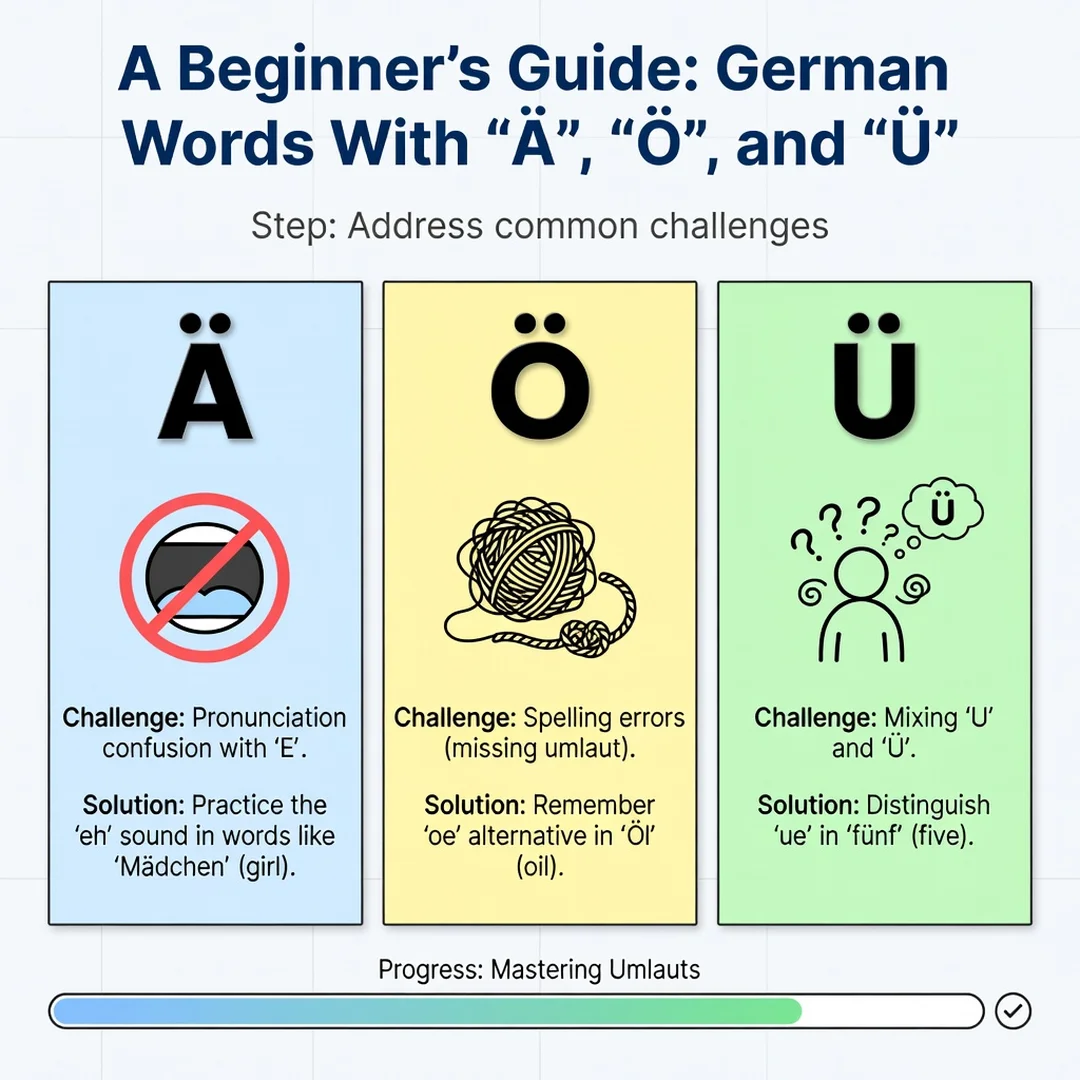
What exactly is an umlaut?
An umlaut is a diacritic, two dots placed above a vowel. In German, it applies to three vowels: a becomes ä, o becomes ö, and u becomes ü. Historically, these dots developed from a small superscript “e” written above the vowel, which explains why the sound shifts in a particular direction—toward a lighter, more frontal sound in the mouth.
The three umlauted vowels at a glance
- Ä (ä): Roughly like the “e” in “bed” or “air.” It is the umlauted form of A.
- Ö (ö): No direct English equivalent. It sits between the “ur” in “fur” and the “e” in “bet,” with rounded lips.
- Ü (ü): Also unique. It resembles the “u” in “cue” or the French “u,” produced with tightly rounded lips and a forward tongue position.
Why they matter for meaning
Umlauts are not optional accents. They distinguish singular from plural (das Haus / die Häuser), comparative from positive adjectives (groß / größer), and verb forms from nouns (ich fahre / die Fähre). Ignoring them can lead to confusion or outright errors in writing and speech.
Short versus long pronunciation
Like all German vowels, ä, ö, and ü can be short or long depending on the word. A double consonant or consonant cluster usually signals a short vowel, while a single consonant or an “h” after the vowel often signals a long one. This distinction matters for sounding natural.
Deep Dive
Now that the basics are clear, let’s examine how these vowels behave inside real German words. This section breaks down pronunciation and common patterns so you can recognize and produce them with confidence.
Words with Ä
The umlauted A is the most familiar to English ears because it closely resembles the “e” in “bed.” Common words include Käse (cheese), Mädchen (girl), Bär (bear), spät (late), and Gäste (guests). Plurals frequently use ä: Stadt becomes Städte, Kraft becomes Kräfte. Once you recognize this plural pattern, you can predict many word forms.
Words with Ö
The umlauted O is trickier. To produce it, round your lips as if saying “oh” but try to say “ay” through that rounded shape. Words to practice include schön (beautiful), König (king), hören (to hear), Löffel (spoon), Öl (oil), and können (to be able to). Many verbs with an O in the stem shift to Ö in the subjunctive or in second/third-person singular forms.
Words with Ü
The umlauted U requires tightly rounded lips and a tongue position that is far forward, almost like saying “ee.” English speakers often find this the hardest, but it is very common. Practice with über (over/about), Tür (door), für (for), grün (green), fünf (five), müde (tired), and Bücher (books). Notice how frequently ü appears in basic vocabulary, so early mastery pays off.
Minimal pairs to train your ear
Minimal pairs are words that differ only by the umlaut. Practicing them sharpens both listening and speaking:
- schon (already) vs. schön (beautiful)
- Bar (bar) vs. Bär (bear)
- für (for) vs. fur (not a standard German word, but the contrast helps)
- müde (tired) vs. Mude (not standard; replace with Mutter comparisons)
Recording yourself and comparing with native audio is one of the fastest ways to improve. Reliable information and consistent habits lead to better long-term outcomes, and short daily practice beats occasional cramming.
Grammar connections
Umlauts are deeply tied to German grammar. They mark the comparative and superlative of many adjectives (alt – älter – am ältesten), the plural of many nouns, and certain verb conjugations. In the subjunctive mood, umlauts appear frequently (ich wäre, ich hätte, ich würde). Recognizing these patterns helps you understand why umlauts appear where they do rather than memorizing each word in isolation.
Step-by-Step Guide
Follow these six steps to build a reliable foundation with ä, ö, and ü. Each step is designed to be practical and manageable, even for complete beginners.
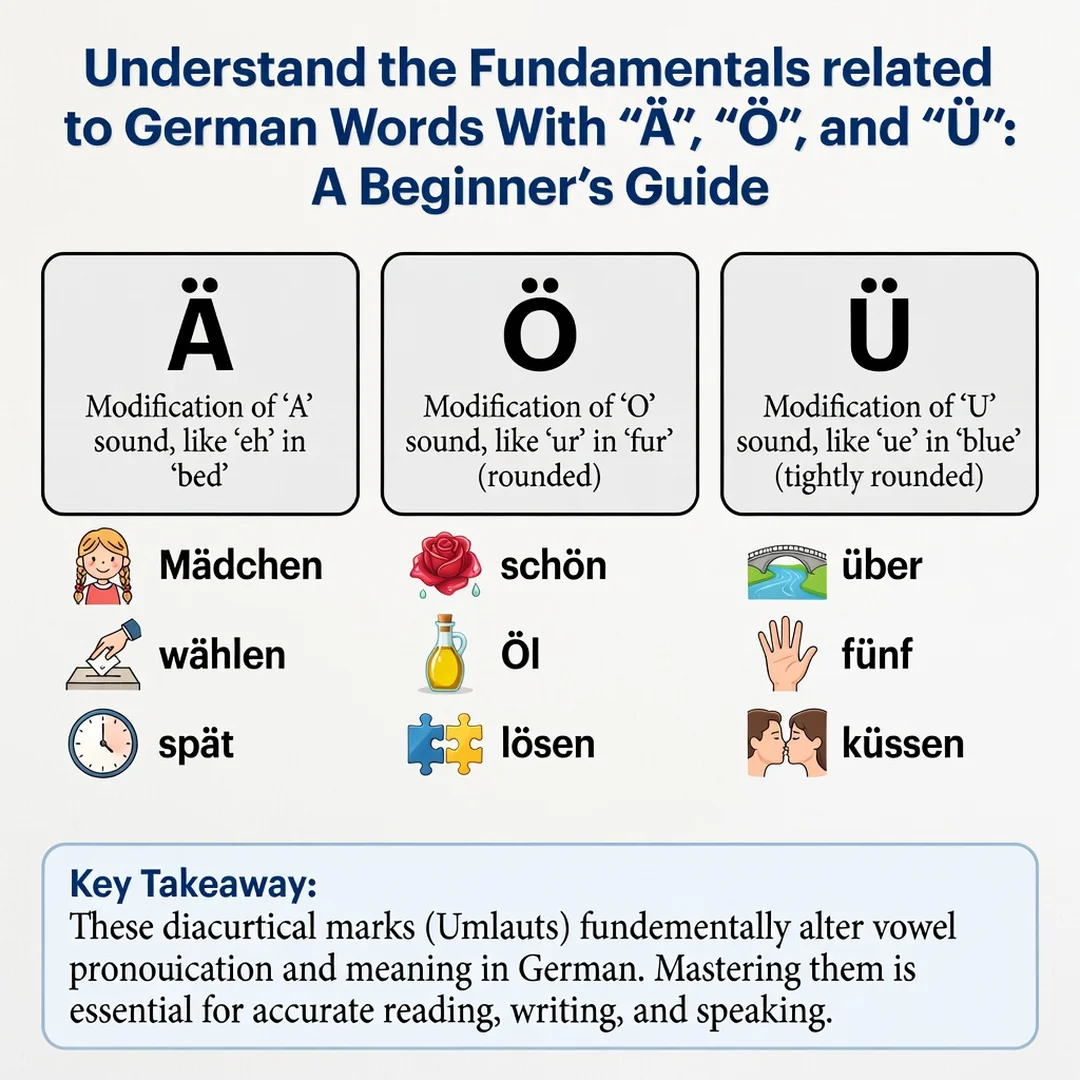
Step 1: Understand the fundamentals
Begin by learning what each umlaut sounds like in isolation. Listen to native recordings of ä, ö, and ü as standalone sounds, then in simple syllables. Do not worry about perfect production yet; the goal is to train your ear to recognize the difference between a and ä, o and ö, and u and ü. Understanding the fundamentals of German Words With Ä, Ö, and Ü: A Beginner’s Guide helps you make informed decisions about which words to practice first.
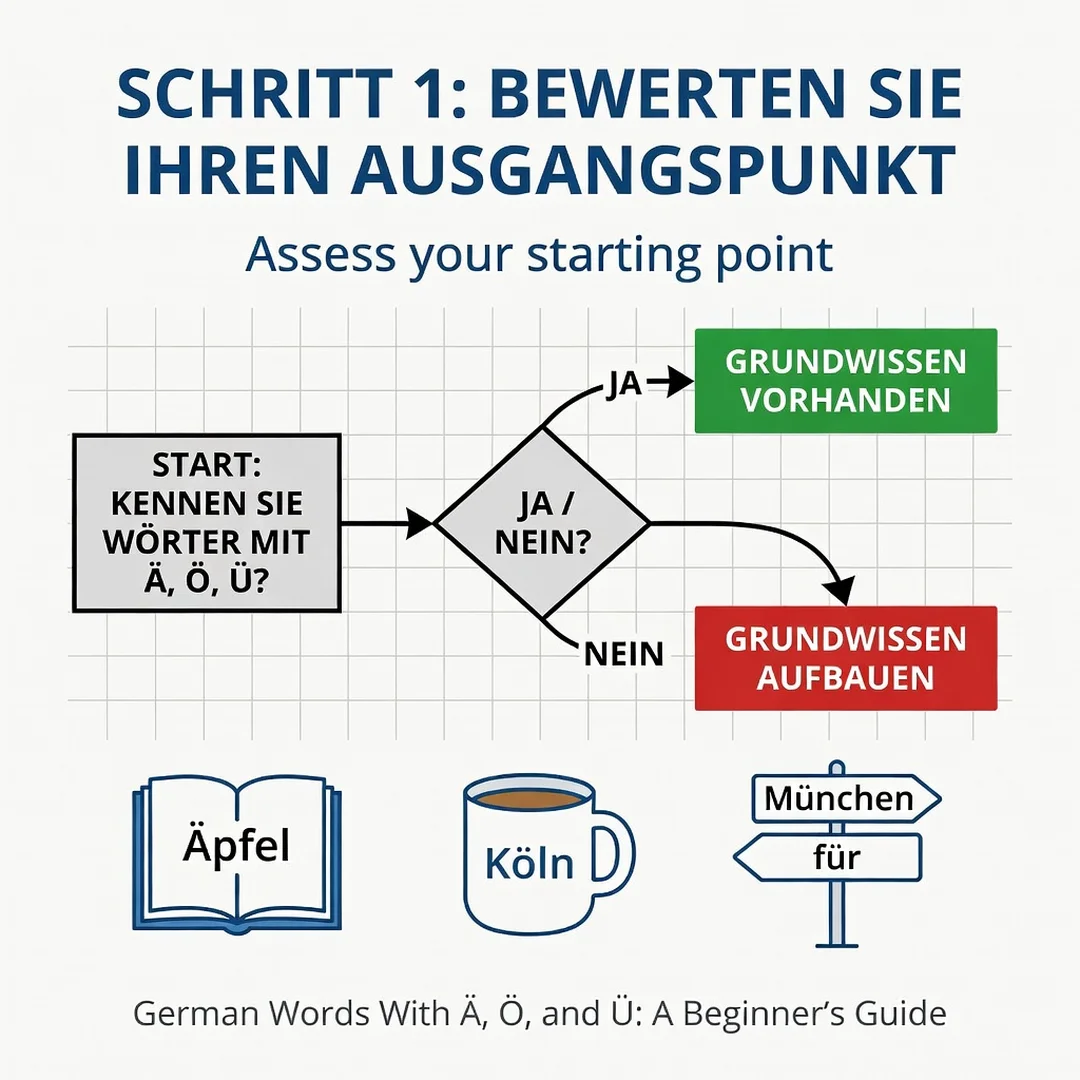
Step 2: Assess your starting point
Take an honest inventory of your current ability. Can you hear the difference between schon and schön? Can you produce ü without it sounding like “oo”? Write down which sounds feel easy and which feel difficult. This self-assessment guides where you should focus your energy.
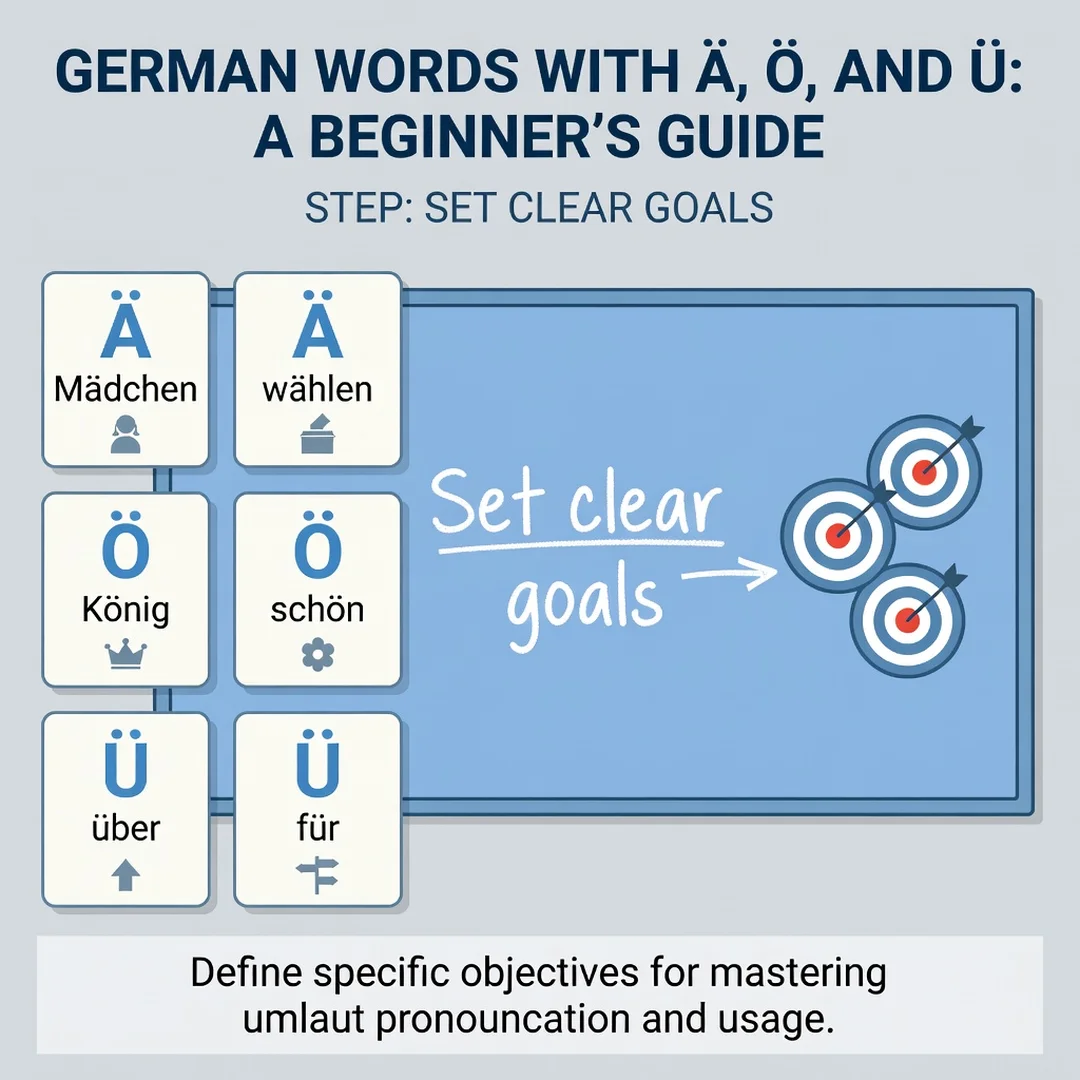
Step 3: Set clear goals
Vague goals like “get better at German” rarely work. Set specific, measurable targets. For example: “Learn twenty common words with ü this week” or “Practice five minimal pairs daily for ten minutes.” Clear goals keep you motivated and make progress visible.
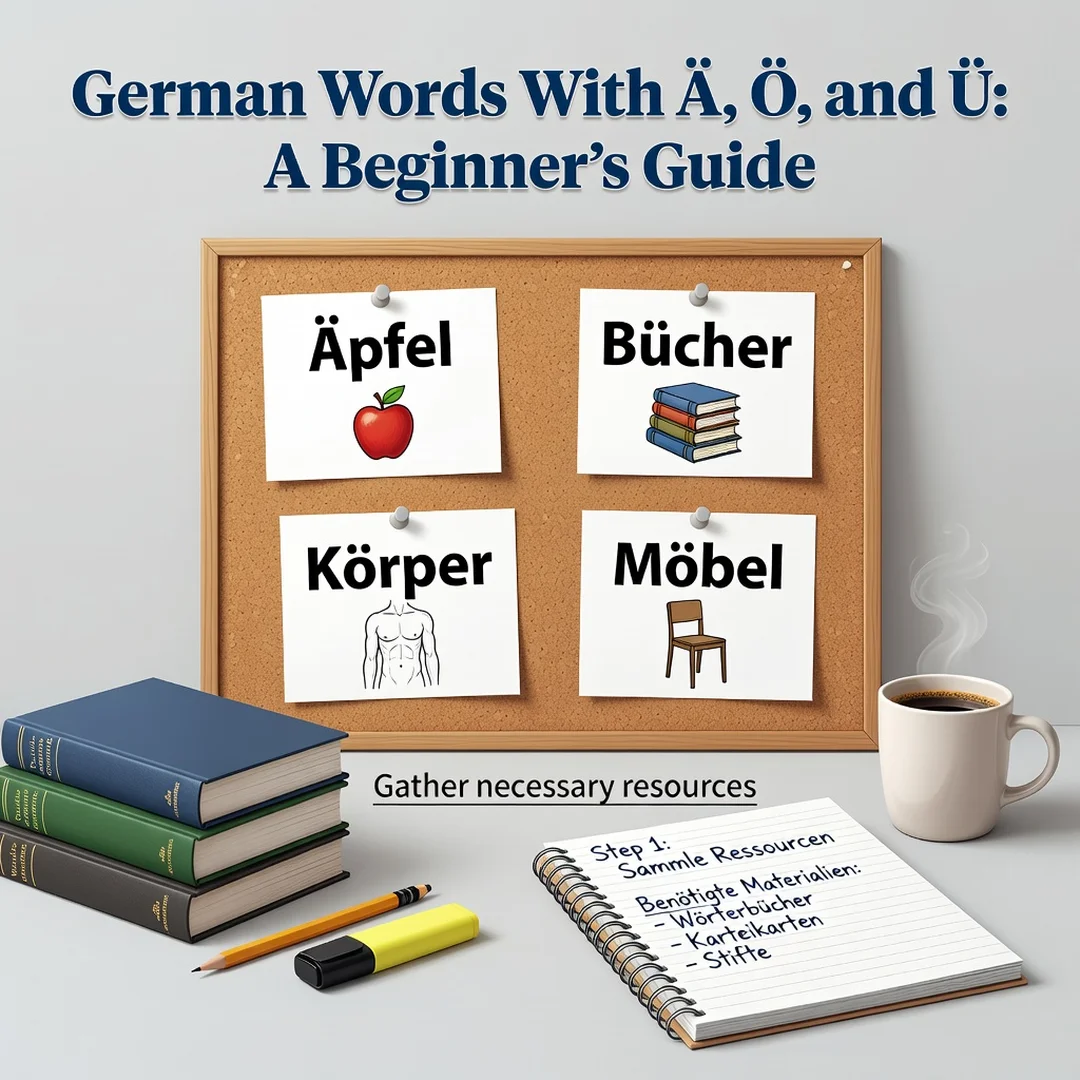
Step 4: Gather necessary resources
You do not need expensive tools. Gather a few reliable resources:
- A dictionary with audio pronunciation, such as dict.cc or Leo.
- A language app that includes umlaut drills.
- Native content such as podcasts, songs, or children’s shows.
- A notebook for tracking words and pronunciation notes.
Consistency matters more than quantity, so choose resources you will actually use.
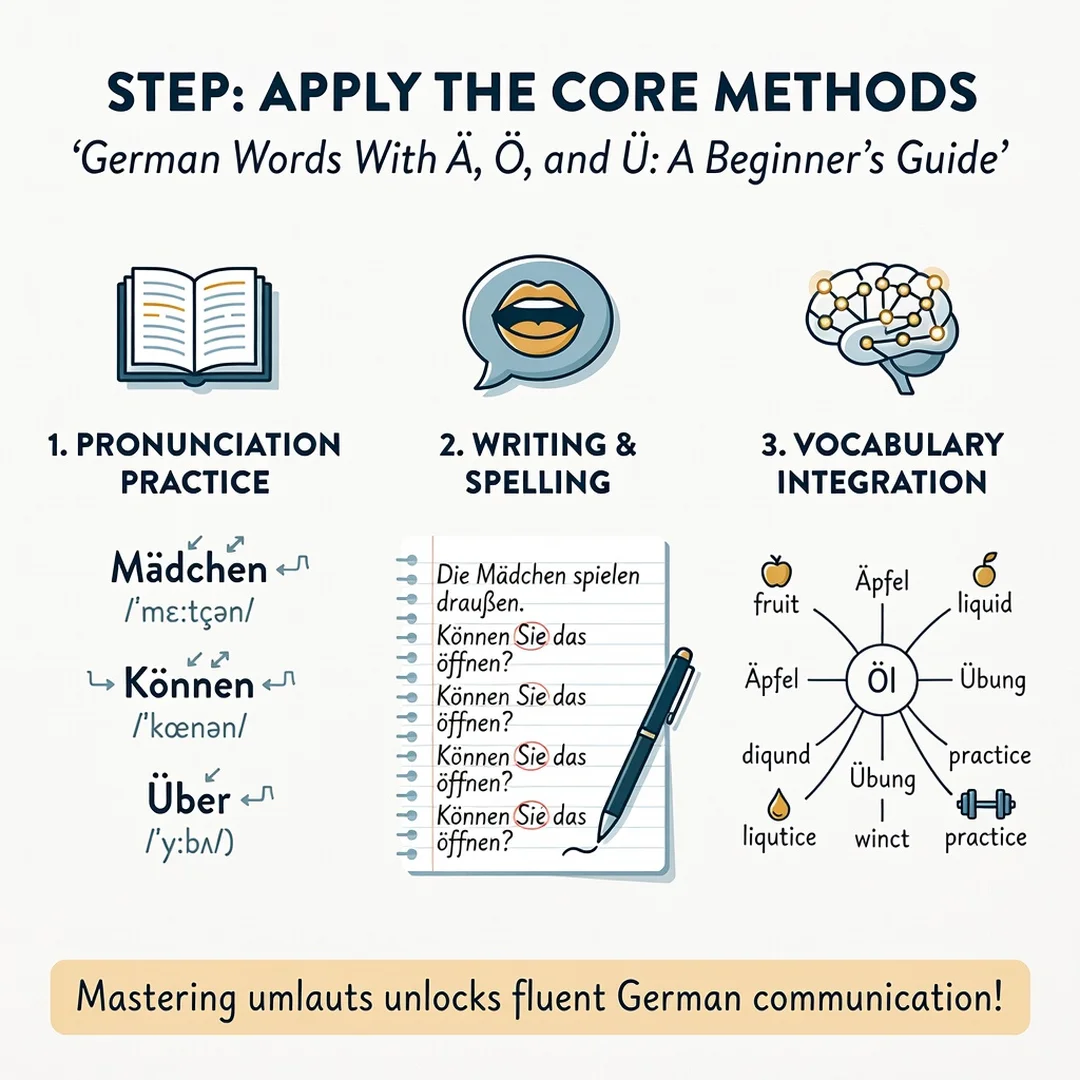
Step 5: Apply the core methods
Put your tools to work with proven methods. Shadow native speakers by repeating audio immediately after hearing it. Use flashcards with images rather than translations to build direct associations. Read aloud daily, even for five minutes, focusing on words containing umlauts. Practice writing by hand, since forming the letters reinforces memory. The key is regular, active engagement rather than passive listening.
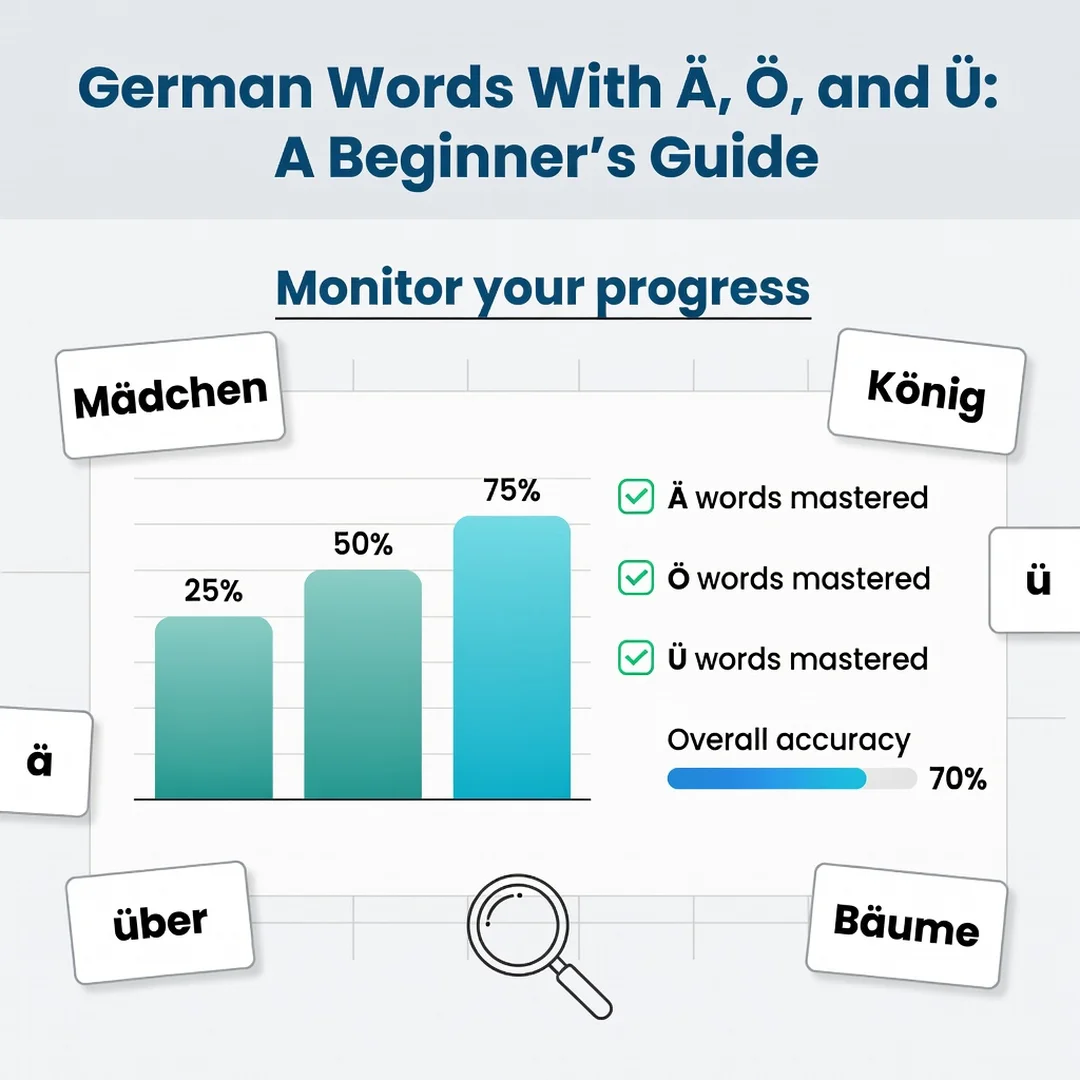
Step 6: Monitor your progress
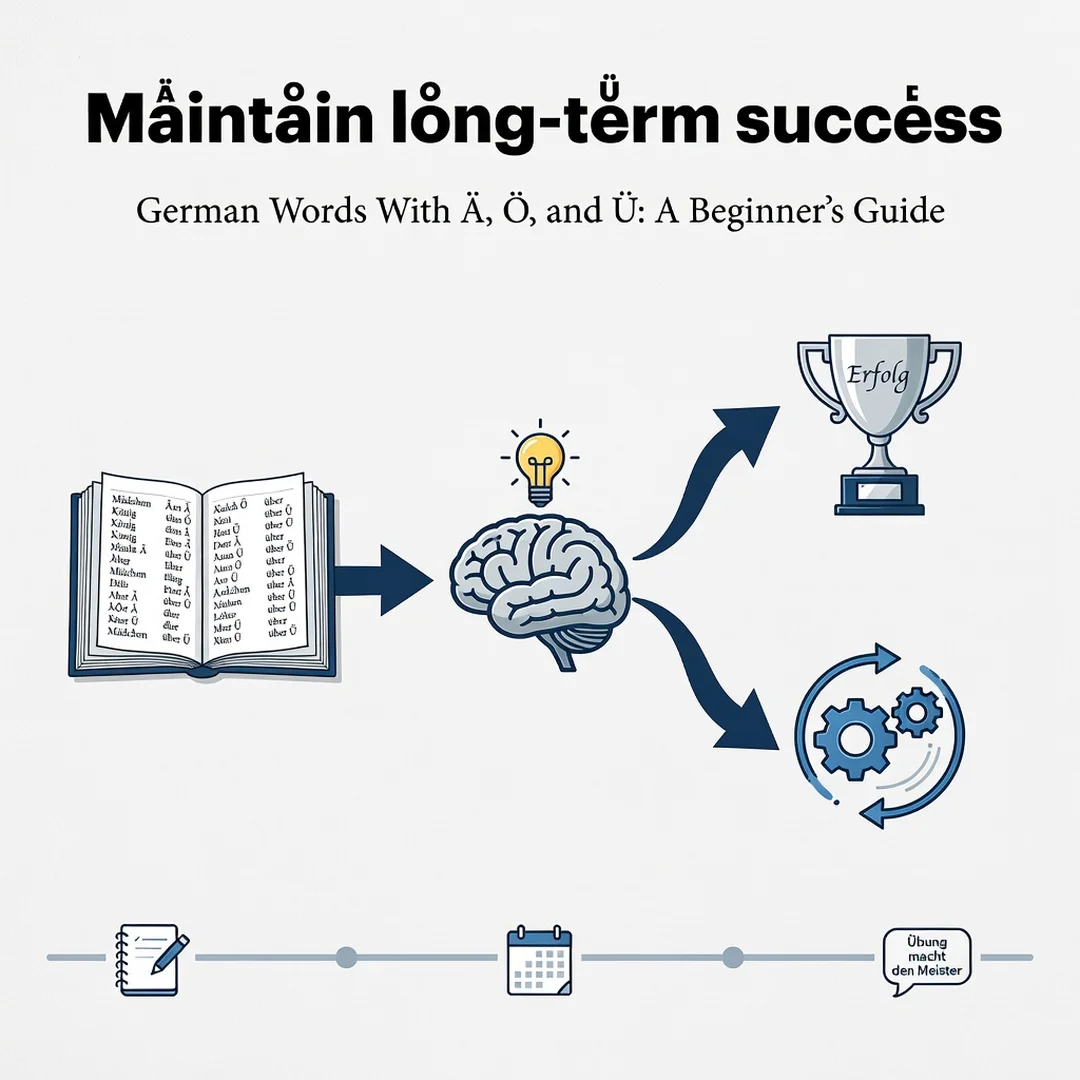
Review your goals weekly. Record yourself speaking and compare older recordings with newer ones. Note which words you now pronounce confidently and which still need work. Adjust your plan accordingly. Reliable information and consistent habits lead to better long-term outcomes, so treat monitoring as an essential part of learning, not an afterthought.
Best Practices
To make steady progress with German umlauts, adopt these habits:
- Practice little and often. Ten minutes daily is more effective than two hours once a week.
- Exaggerate at first. Over-articulating ö and ü helps your mouth learn the new positions; you can relax later.
- Use mirrors. Watching your lip shape helps you produce rounded vowels correctly.
- Learn words in context. Memorize phrases like Ich möchte einen Kaffee rather than isolated words.
- Type umlauts properly. On most devices, use Alt codes or keyboard settings; avoid replacing ä with ae unless absolutely necessary.
- Be patient with yourself. Some sounds take months to feel natural. That is normal.
- Immerse regularly. Music, films, and conversations expose you to authentic pronunciation.
These practices are simple but powerful. Combined with the step-by-step approach above, they create a reliable path forward.
FAQ
What should I know about German Words With Ä, Ö, and Ü: A Beginner’s Guide?
You should know that these three letters are essential, meaning-bearing parts of German, not optional decorations. They change pronunciation and often change meaning, so learning them early prevents bad habits. This guide covers their sounds, common words, grammar connections, and a step-by-step method for mastering them. Remember that reliable information and consistent habits lead to better long-term outcomes.
Who is this guide for?
This guide is for anyone new to German, including self-learners, students, travelers, and heritage speakers who want to improve their pronunciation. It assumes no prior knowledge of umlauts and provides practical steps suitable for beginners. If you can read basic German words and want to sound more natural, this guide is for you.
Do I really need to use umlauts when typing?
Yes, whenever possible. While replacing ä with ae, ö with oe, and ü with ue is acceptable in emergencies, standard German writing uses umlauts. Using them correctly improves clarity and shows attention to detail.
How long does it take to master these sounds?
It varies. Some learners produce acceptable ö and ü within weeks, while others need several months. Daily practice, listening, and feedback accelerate progress. Focus on steady improvement rather than a fixed timeline.
Are umlauts used in Swiss German?
You now have a solid foundation for German Words With Ä, Ö, and Ü: A Beginner’s Guide. Apply the best practices above and revisit this guide as your needs evolve.