

If you enjoy word puzzles and want a fresh challenge, learning how to play German Wordle is a great next step. This popular twist on the daily guessing game uses German words, offering a fun way to test your vocabulary and sharpen your logic skills at the same time.
In this guide, you will learn the exact rules, how the color-coded feedback works, and practical winning tips to help you solve each puzzle faster. Whether you are a beginner or a seasoned player, these strategies will boost your accuracy and confidence.
Introduction
Wordle took the world by storm when it launched in late 2021, offering players a simple daily challenge: guess a five-letter word in six attempts. As the game spread across the globe, language enthusiasts began building localized versions. German Wordle, often found through sites like Wordle.de or German-language clones, adapts the same satisfying loop to the German language—complete with umlauts, a different letter frequency, and a vocabulary that rewards a fresh strategy.
This article explores How to Play German Wordle: Rules and Winning Tips with clear, practical guidance. Whether you’re a native speaker, a German learner, or simply a Wordle addict looking for a new challenge, understanding the fundamentals of How to Play German Wordle: Rules and Winning Tips helps you make informed decisions. Reliable information and consistent habits lead to better long-term outcomes—both in your daily win streak and in your overall grasp of the German language.
Key Concepts
Before you start guessing, it helps to understand what makes German Wordle different from its English counterpart. The core mechanics are identical, but the language changes the game in meaningful ways.
The Basic Rules
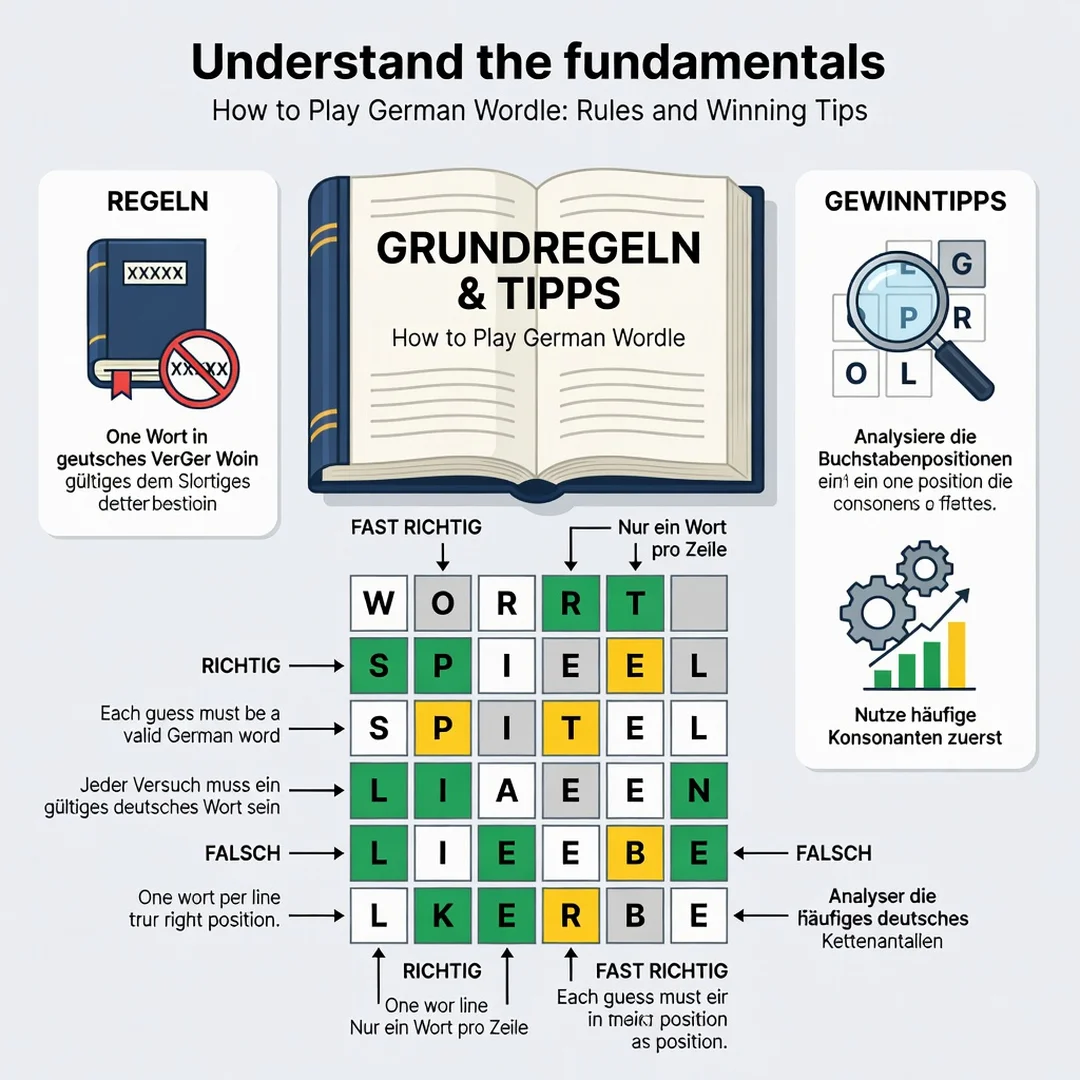
German Wordle follows the same structure as the original. You have six attempts to guess a five-letter German word. After each guess, the tiles change color:
- Green: The letter is correct and in the right position.
- Yellow: The letter exists in the word but is in the wrong position.
- Gray: The letter does not appear in the word at all (or has already been accounted for).
One key difference: German nouns are capitalized, but most German Wordle versions require you to type in all lowercase letters. The game typically accepts any valid German word of the correct length, not just nouns—so adjectives, verbs, and other parts of speech can appear as solutions.

Umlauts and the Special Character Problem
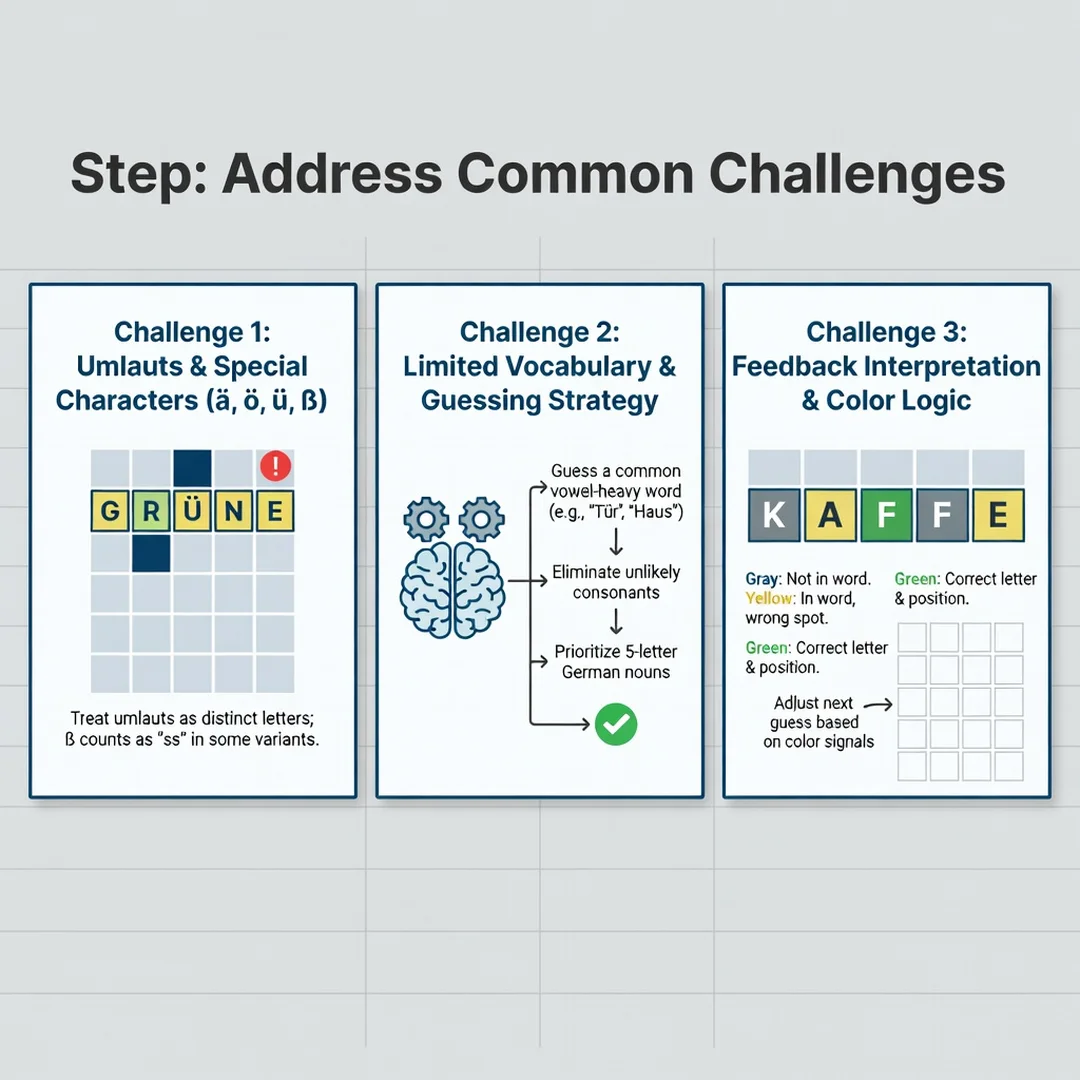
The German alphabet includes umlauts (ä, ö, ü) and the sharp S (ß). Most German Wordle implementations handle these in one of two ways: either they replace umlauts with their base letter (ä becomes a, ö becomes o, ü becomes u, ß becomes ss), or they accept the umlaut as a distinct character. Before you start, check the specific rules of the version you’re playing—this single detail can change your entire strategy.
Letter Frequency in German
German letter distribution differs significantly from English. The most common letters in German are E, N, I, S, R, A, and T. The letter E appears far more frequently than in English, while letters like Y and Q are rare. Vowels are often paired with umlauts, and consonant clusters like “sch,” “ch,” and “pf” are common. Understanding these patterns gives you a statistical edge when choosing your opening words.
Word Length and Vocabulary
Five-letter German words include common nouns like “Haus” (house), “Buch” (book), “Tisch” (table), and “Wasser” (water). Verbs like “gehen” (to go), “sehen” (to see), and “lesen” (to read) are also frequent solutions. The challenge is that German compound words can be long, but the five-letter constraint keeps the puzzle focused on simpler, more common vocabulary—which is good news for learners.
Deep Dive
Winning at German Wordle isn’t about luck—it’s about applying a repeatable system. Let’s break down the elements that separate consistent winners from frustrated guessers.
Choosing the Best Starting Word
Your first guess should maximize information. You want a word that covers the most common German letters without repeating any. Strong openers include “Reise” (journey), “Stern” (star), “Adler” (eagle), and “Toner” (toner). Each of these uses high-frequency letters and avoids rare ones. Avoid starting with words containing Q, X, Y, or J unless you have a specific reason.
Using the Second Guess to Narrow Down
Your second guess depends entirely on the feedback from the first. If you get several gray tiles, your priority shifts to testing new common letters. If you get greens and yellows, you want to rearrange and confirm positions. A common mistake is to tunnel-vision on one possible solution too early. Instead, treat guesses two and three as information-gathering rounds.
The Role of Vowels
German words often contain two or three vowels, and E is nearly universal. If your first guess doesn’t include E, consider making it your second guess. A, I, and O are also extremely common. U appears frequently, especially in words with umlauts. Getting vowel placement right early dramatically reduces the remaining possibilities.
Consonant Clusters and Compounds
German loves consonant clusters. Words containing “sch,” “ch,” “ck,” “pf,” and “tz” are common. If you see a yellow S and a yellow C, for example, there’s a good chance they belong together in “sch.” Recognizing these clusters helps you place letters correctly even when you haven’t confirmed individual positions.
Handling Umlauts Strategically
If the version you play treats umlauts as separate letters, you should include at least one umlaut word in your first few guesses. Words like “Mädchen” (girl) or “König” (king) aren’t five letters, but five-letter umlaut words like “Träne” (tear) or “Hören” (to hear) can reveal whether the solution contains an umlaut. If the game converts umlauts to base letters, you can ignore this step—but you should still be aware that the actual solution might have an umlaut.
The Endgame: Solving in Three or Fewer
Once you have three or four confirmed letters, the puzzle becomes a process of elimination. List the possible words that fit your pattern, then choose the guess that eliminates the most options at once. If you’re stuck between two possibilities and have attempts to spare, guess a word that tests both—even if it means using a word you know isn’t the answer. This “sacrificial guess” strategy is a hallmark of expert play.
Best Practices
Beyond the core mechanics, several habits separate casual players from consistent winners. These practices apply whether you’re playing daily or practicing with unlimited mode.
- Play at the same time each day: Consistency builds routine. A daily habit ensures you don’t miss puzzles and keeps your streak alive.
- Don’t rush your first two guesses: These set the foundation. Take ten seconds to think before typing.
- Track your letter eliminations: Mentally note which letters are grayed out. As the board fills, you have less room for error.
- Use a German dictionary when stuck: There’s no shame in looking up a five-letter German word if you’re learning. Just don’t peek at the answer.
- Review your losses: If you fail a puzzle, look back and identify which guess wasted information. Learn from it.
- Practice with unlimited versions: Many German Wordle clones offer unlimited play. Use these to test new opening words without risking your daily streak.
- Learn the 500 most common German words: This vocabulary base covers the vast majority of Wordle solutions and improves your German at the same time.
Step-by-Step Guide to Playing German Wordle
Step 1: Understand the fundamentals
Before your first guess, confirm the rules of the specific German Wordle you’re playing. Check whether umlauts and ß are treated as distinct characters or converted to base letters. Confirm that the game accepts five-letter words only and that you have six attempts. Understand the color coding: green for correct position, yellow for wrong position, gray for absent. This foundational knowledge prevents early mistakes and ensures your strategy aligns with the game’s actual mechanics.
Step 2: Assess your starting point
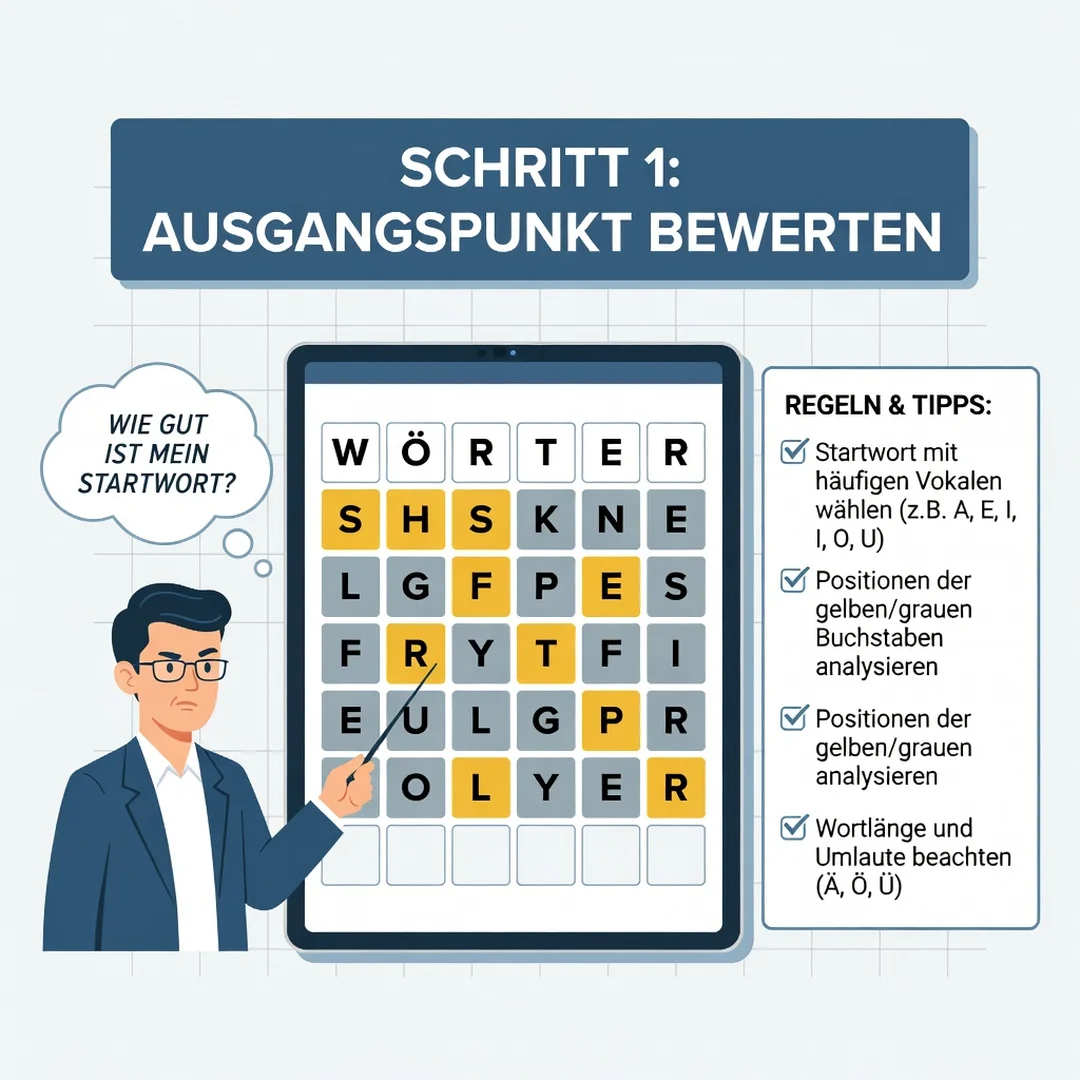
Evaluate your German vocabulary level honestly. If you’re a beginner, you’ll rely more on common words and pattern recognition. If you’re fluent, you can draw on a wider range of solutions. Also consider the version you’re playing—some German Wordle games use a fixed daily word, while others pull from a larger pool. Assess whether you have a streak to protect or if you’re playing casually. Your starting point determines how aggressive or conservative your guessing strategy should be.
Step 3: Set clear goals
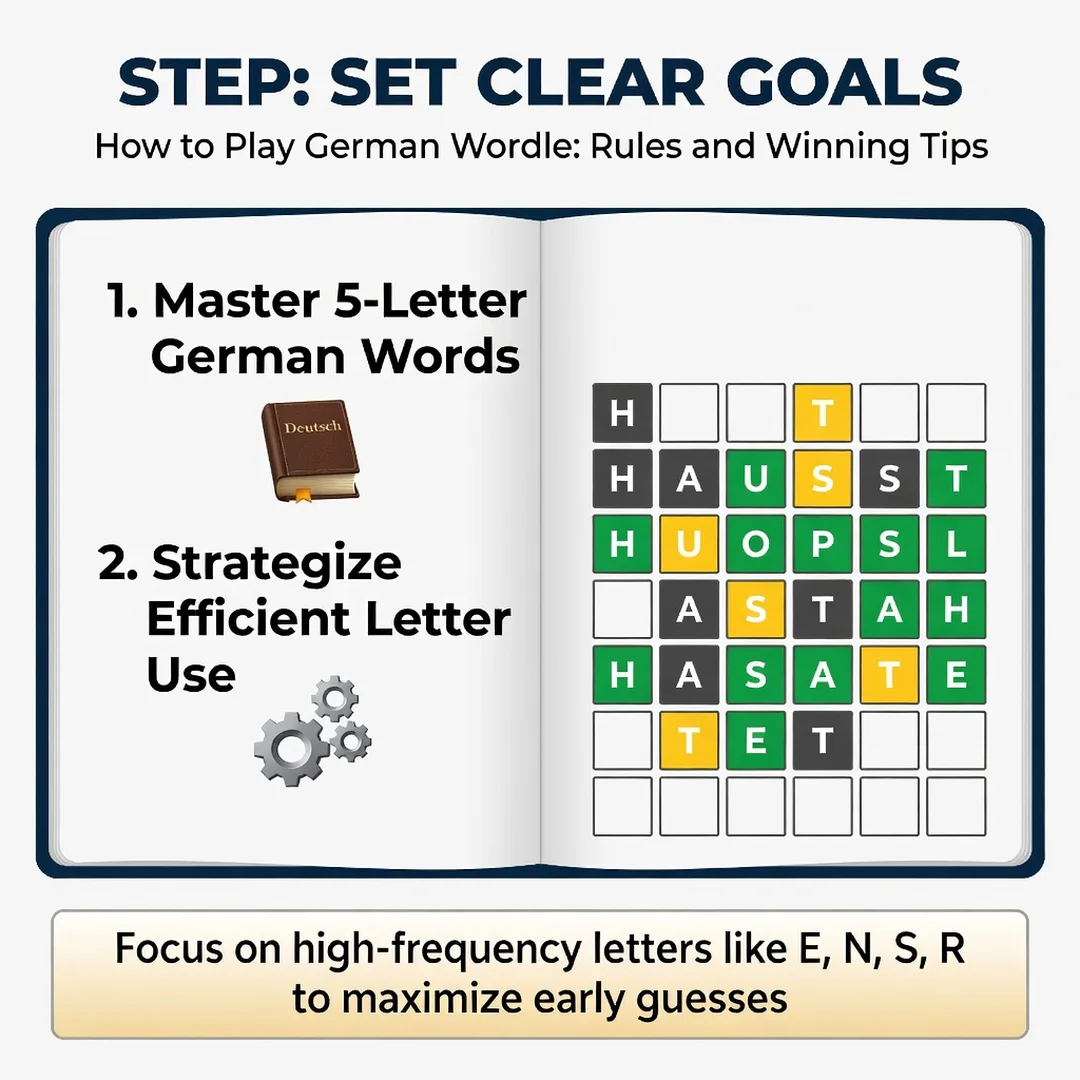
Decide what success looks like for you. Is your goal simply to solve the puzzle each day? To maintain a 30-day streak? To solve in three guesses or fewer? To learn ten new German words per week? Clear goals shape your approach. A player focused on vocabulary growth might allow more experimental guesses, while a streak-focused player will prioritize safe, information-rich words. Write your goal down if it helps you stay committed.
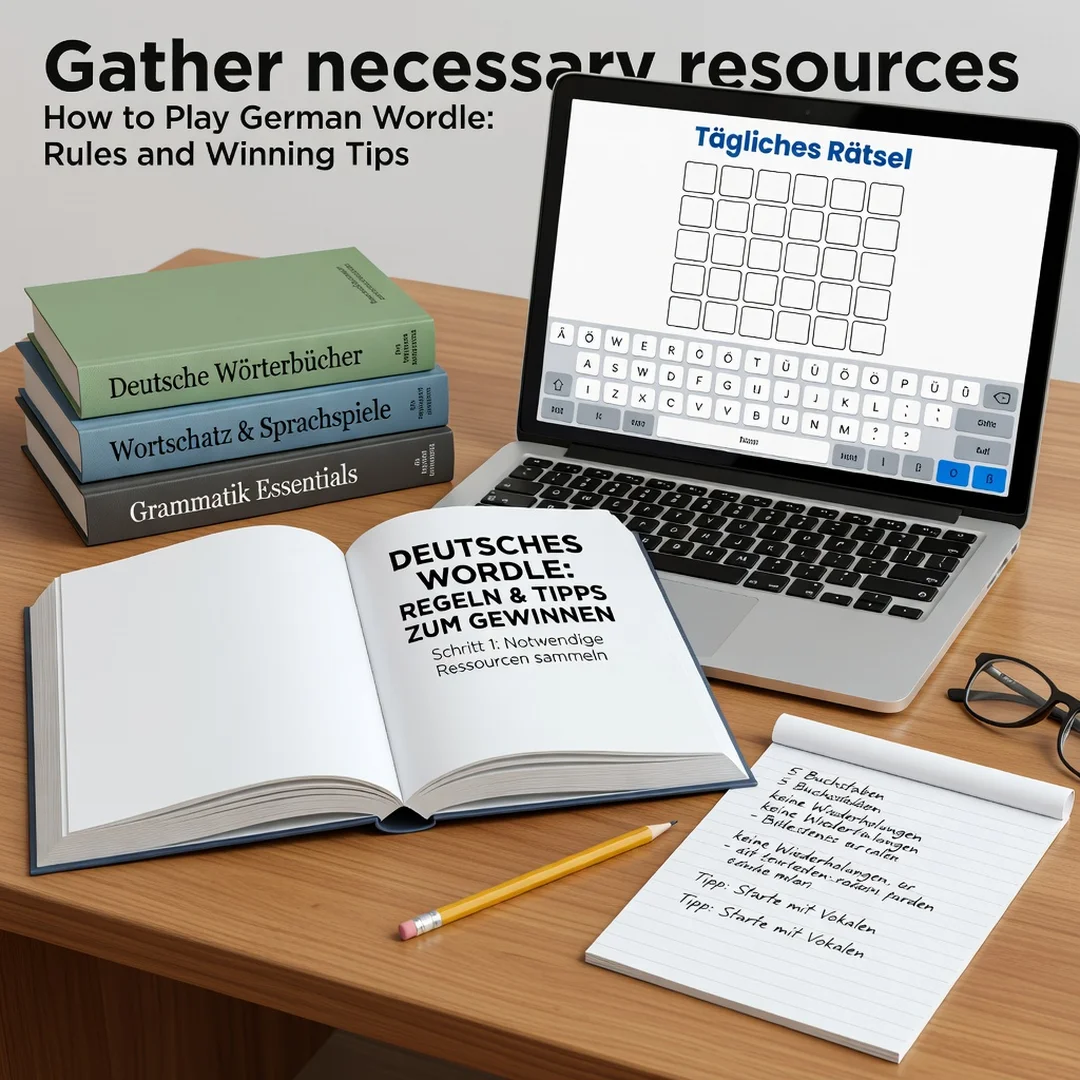
Step 4: Gather necessary resources
Bookmark a reliable German dictionary or word list for five-letter words. Familiarize yourself with a German letter frequency chart. If you’re learning the language, keep a notebook for new words you encounter during play. Some players use a simple spreadsheet to track their opening words and success rates. These resources aren’t cheating—they’re study aids that accelerate improvement and make the game more educational.
Step 5: Apply the core methods
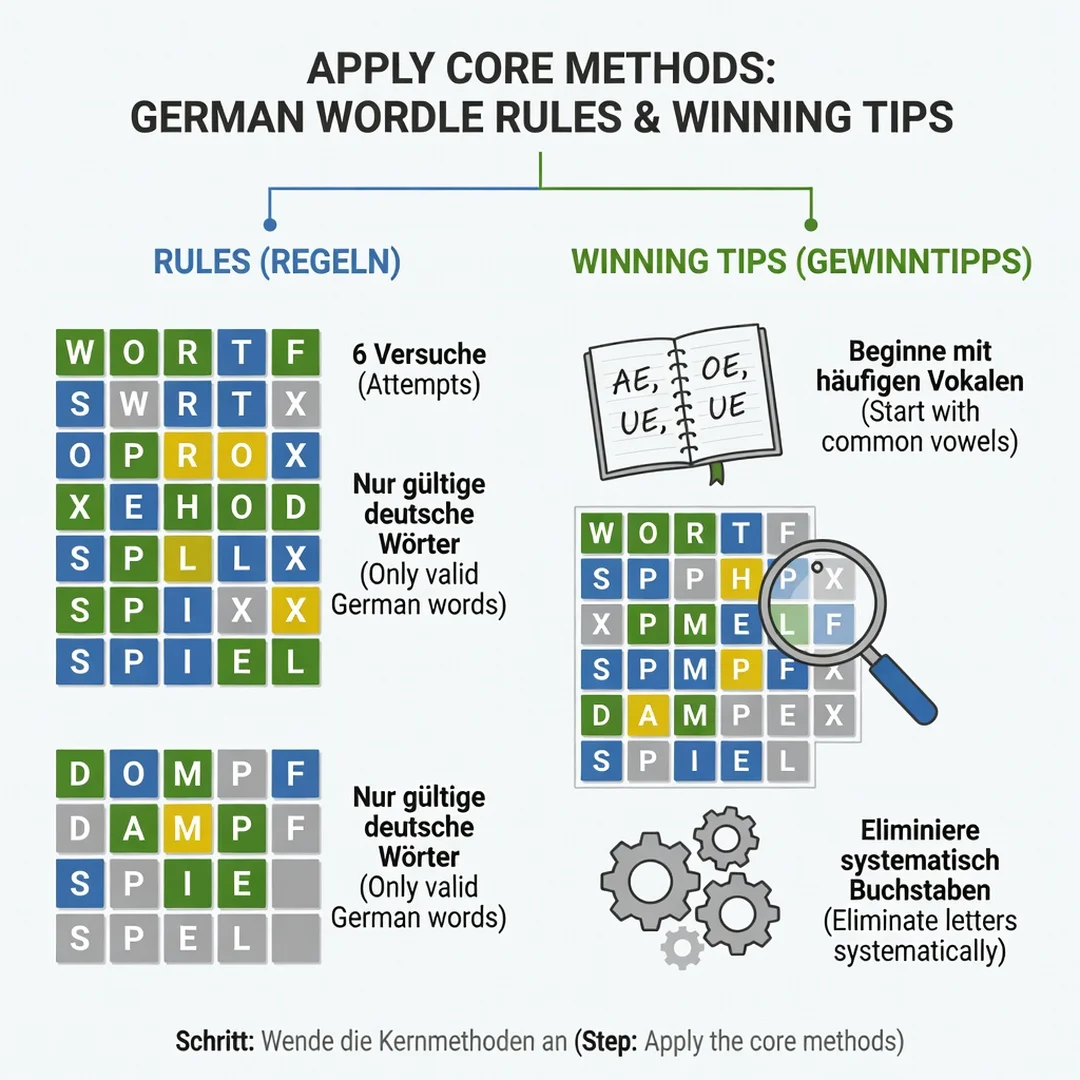
Start each puzzle with a high-frequency opening word like “Reise” or “Stern.” Use your second guess to test new common letters or confirm vowel placement. Pay attention to consonant clusters like “sch” and “ch.” If umlauts are distinct in your version, include an umlaut word in your first three guesses. In the endgame, list possible solutions and make a sacrificial guess if it eliminates multiple options. Stay calm and avoid random guessing—every guess should have a purpose.
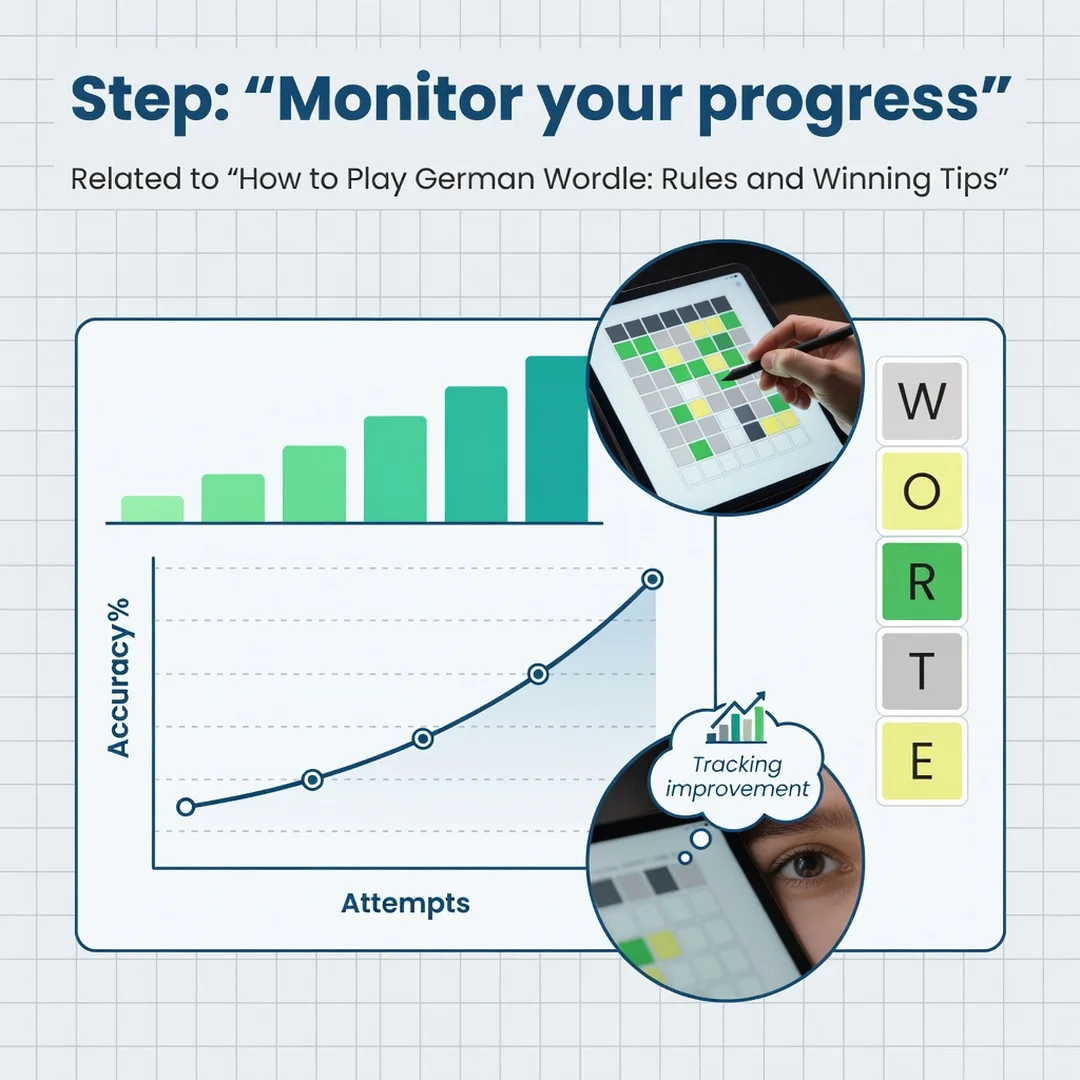
Step 6: Monitor your progress
After each week, review your performance. How many puzzles did you solve? What was your average number of guesses? Which opening words worked best? If you failed a puzzle, identify where your strategy broke down. Adjust your approach based on this data. Over time, you’ll notice patterns in your play and can refine your methods. Consistent monitoring turns a casual game into a measurable skill.
FAQ
What should I know about How to Play German Wordle: Rules and Winning Tips?
The most important thing to know is that German Wordle follows the same color-coded, six-guess structure as the original English game, but the language changes the strategy. German letter frequencies differ, umlauts may or may not be treated as distinct letters, and common consonant clusters like "sch" and "ch" appear frequently. Winning consistently requires choosing high-frequency opening words, using early guesses for information rather than guesses at the solution, and understanding how German vocabulary and capitalization rules affect the puzzle. Reliable information.
You now have a solid foundation for How to Play German Wordle: Rules and Winning Tips. Apply the best practices above and revisit this guide as your needs evolve.