

German food vocabulary is a feast for compound-word lovers. A pancake is a “pan cake” (der Pfannkuchen), scrambled eggs are “stirred eggs” (das Rührei), a cinnamon roll is a “cinnamon snail” (die Zimtschnecke) — the names describe exactly what you see on the plate. These 50 German food compound words cover breads, cakes, sausages, roasts, soups, and salads, each with its correct article, literal breakdown, and English meaning.
As always, read right to left: the last word is the head that sets the gender (our German compound nouns gender and plural guide explains the rule in full), and the parts before it describe the dish. For the general machinery, see how German compound words work.
Breads, Rolls and Dumplings: 12 German Food Compound Words
| German | Breakdown | English |
|---|---|---|
| das Vollkornbrot | voll (whole) + Korn (grain) + Brot (bread) | wholegrain bread |
| das Roggenbrot | Roggen (rye) + Brot | rye bread |
| das Weißbrot | weiß (white) + Brot | white bread |
| das Laugenbrötchen | Lauge (lye) + Brötchen (bread roll) | lye roll |
| der Hefezopf | Hefe (yeast) + Zopf (braid) | yeast braid |
| die Dampfnudel | Dampf (steam) + Nudel (dumpling/noodle) | steamed dumpling |
| der Semmelknödel | Semmel (bread roll) + Knödel (dumpling) | bread dumpling |
| der Kartoffelknödel | Kartoffel (potato) + Knödel | potato dumpling |
| das Marmeladenbrot | Marmelade (jam) + Brot | bread with jam |
| das Butterbrot | Butter + Brot | buttered bread / sandwich |
| das Abendbrot | Abend (evening) + Brot | supper (lit. “evening bread”) |
| der Lebkuchen | Leb (loaf, old word) + Kuchen (cake) | gingerbread |
Das Abendbrot is a cultural window: the traditional German cold evening meal, named for its centerpiece — bread. And der Lebkuchen shows how old compounds fossilize: nobody says “Leb” anymore, but the gingerbread keeps its medieval name.
Cakes, Strudels and Sweets: 9 German Food Compound Words
| German | Breakdown | English |
|---|---|---|
| der Apfelstrudel | Apfel (apple) + Strudel (whirlpool/eddy) | apple strudel |
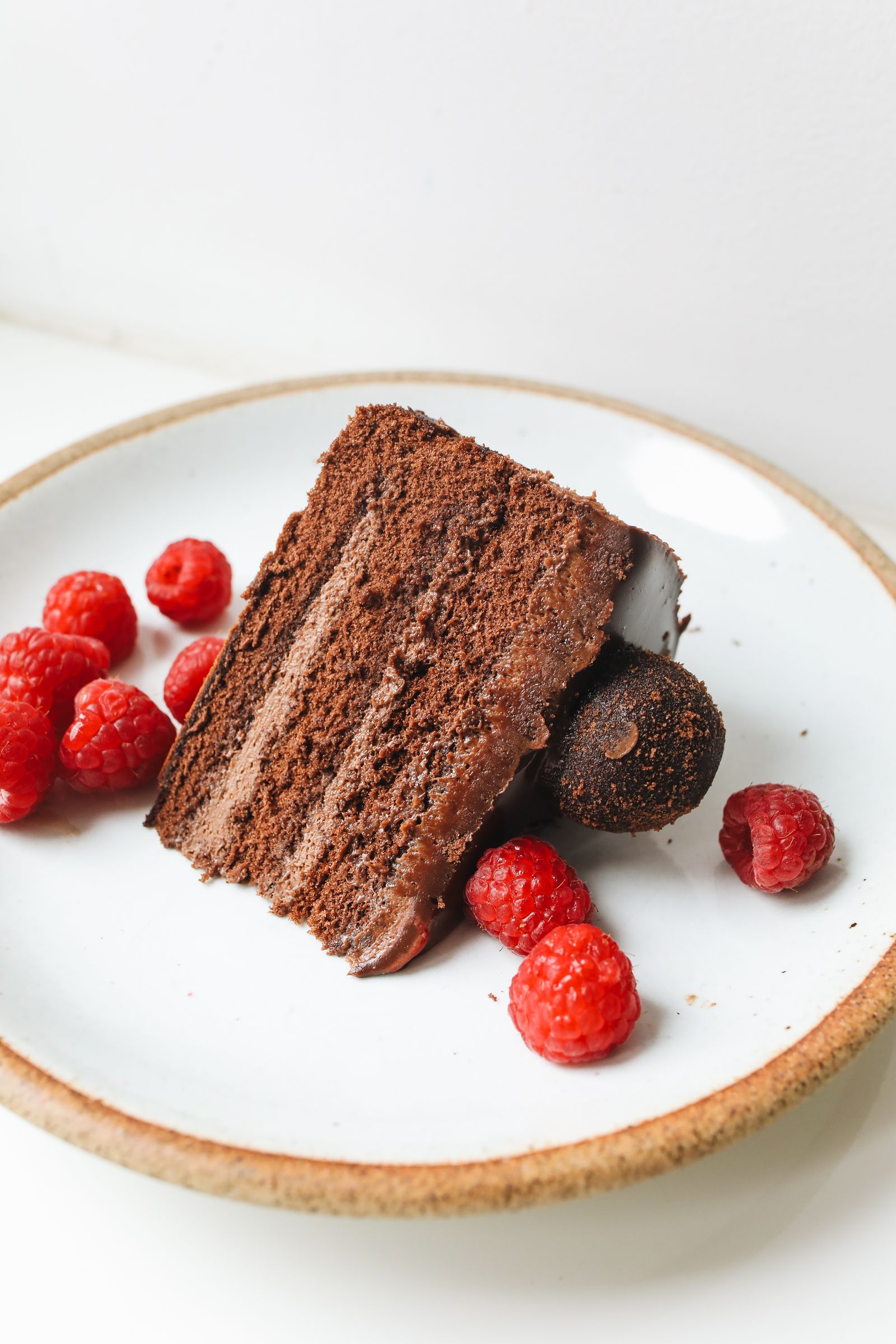
| die Schokoladentorte | Schokolade + Torte (layer cake) | chocolate layer cake |
| der Käsekuchen | Käse (cheese/quark) + Kuchen | cheesecake |
| der Apfelkuchen | Apfel + Kuchen | apple cake |
| der Marmorkuchen | Marmor (marble) + Kuchen | marble cake |
| der Bienenstich | Biene (bee) + Stich (sting) | bee-sting cake |
| die Donauwelle | Donau (Danube) + Welle (wave) | Danube-wave cake |
| die Zimtschnecke | Zimt (cinnamon) + Schnecke (snail) | cinnamon roll |
| der Pfannkuchen | Pfanne (pan) + Kuchen | pancake |
Der Bienenstich (“bee sting”) allegedly earned its name when a baker was stung by bees attracted to his honey-topped cake — legend or not, the name markets itself. Die Zimtschnecke (“cinnamon snail”) names the spiral shape, not the flavor: German compound names describe looks as often as taste.
Sausages and Cold Cuts: 9 German Food Compound Words
| German | Breakdown | English |
|---|---|---|
| die Currywurst | Curry + Wurst (sausage) | currywurst |
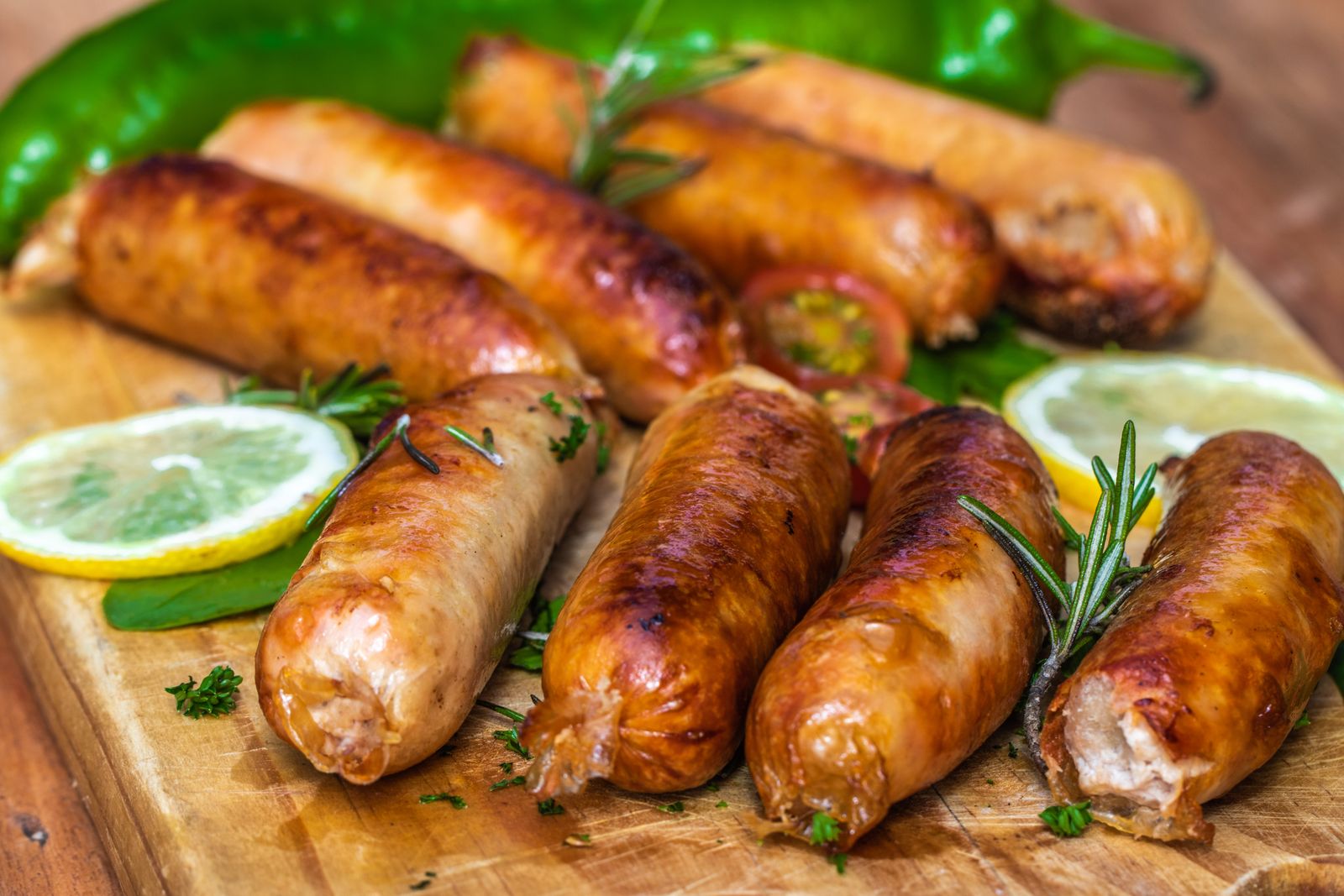
| die Bratwurst | braten (to fry/roast) + Wurst | bratwurst |
| die Weißwurst | weiß + Wurst | white sausage (veal) |
| die Bockwurst | Bock (buck) + Wurst | bockwurst |
| die Leberwurst | Leber (liver) + Wurst | liverwurst |
| die Blutwurst | Blut (blood) + Wurst | blood sausage |
| die Teewurst | Tee (tea) + Wurst | tea sausage (spreadable) |
| die Mettwurst | Mett (minced seasoned pork) + Wurst | mettwurst |
| der Kochschinken | kochen (to cook) + Schinken (ham) | cooked ham |
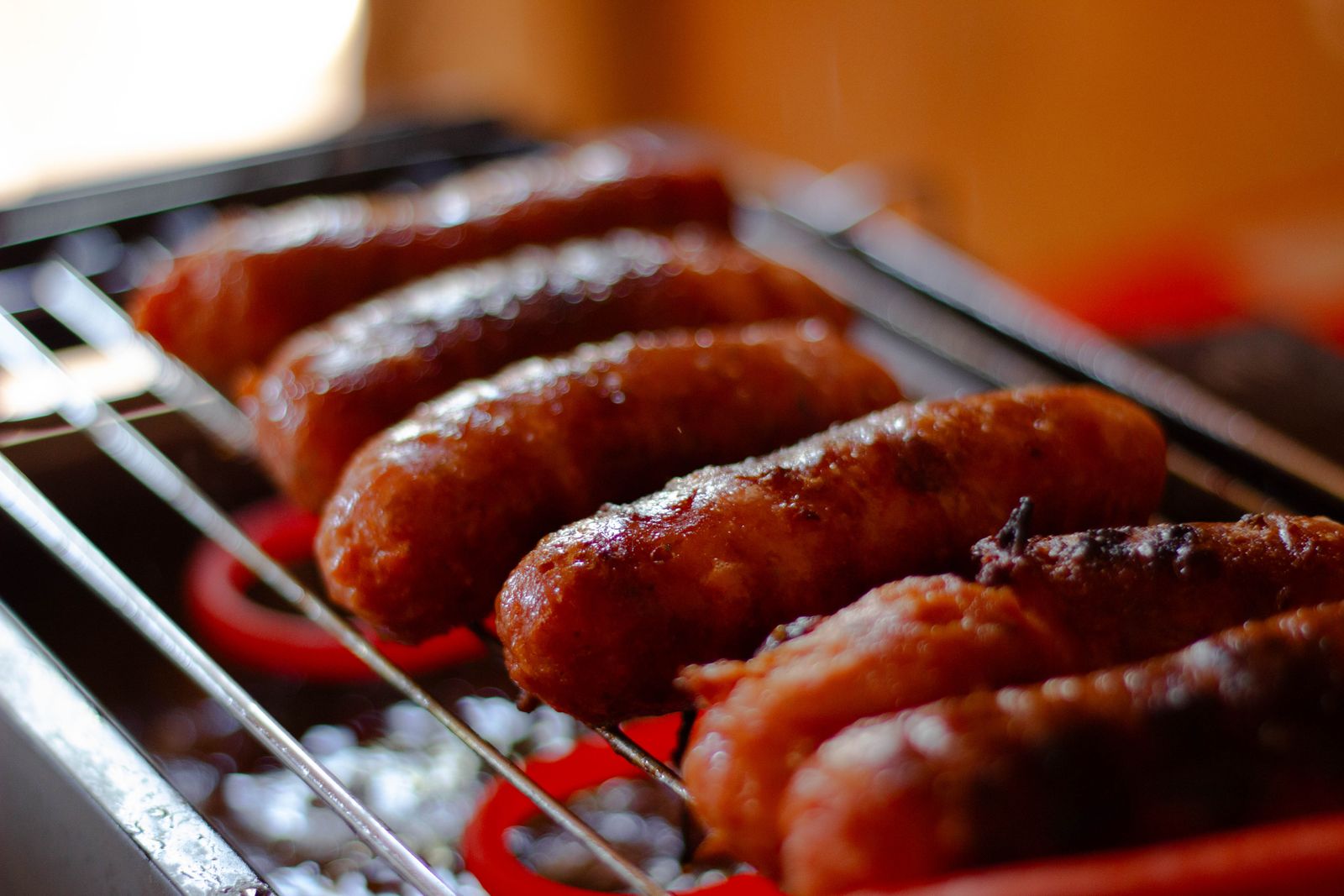
Every sausage here is feminine because die Wurst is feminine — the head rule in its purest form. Die Teewurst (“tea sausage”) is a spreadable raw sausage traditionally eaten at afternoon tea time; the name records a mealtime, not an ingredient.
Roasts and Hearty Dishes: 7 German Food Compound Words
| German | Breakdown | English |
|---|---|---|
| der Schweinebraten | Schwein (pig) + Braten (roast) | roast pork |
| der Rinderbraten | Rind (cattle/beef) + Braten | roast beef |
| die Rinderroulade | Rind + Roulade (roulade) | beef roulade |
| der Hackbraten | hacken (to chop/mince) + Braten | meatloaf |
| das Brathähnchen | braten + Hähnchen (young chicken) | roast chicken |
| das Sauerkraut | sauer (sour) + Kraut (cabbage) | sauerkraut |
| die Fischstäbchen | Fisch + Stäbchen (little sticks) | fish sticks |
Der Schweinebraten vs. der Rinderbraten shows the meat-naming system: the animal (Schwein, Rind) plus the preparation (Braten). Learn Braten once and Schweinebraten, Rinderbraten, Gänsebraten (roast goose), and Entenbraten (roast duck) all unlock — productive compounding doing its daily work.
Soups, Salads, Eggs and Drinks: 13 German Food Compound Words
| German | Breakdown | English |
|---|---|---|
| die Hühnersuppe | Huhn (chicken) + Suppe (soup) | chicken soup |
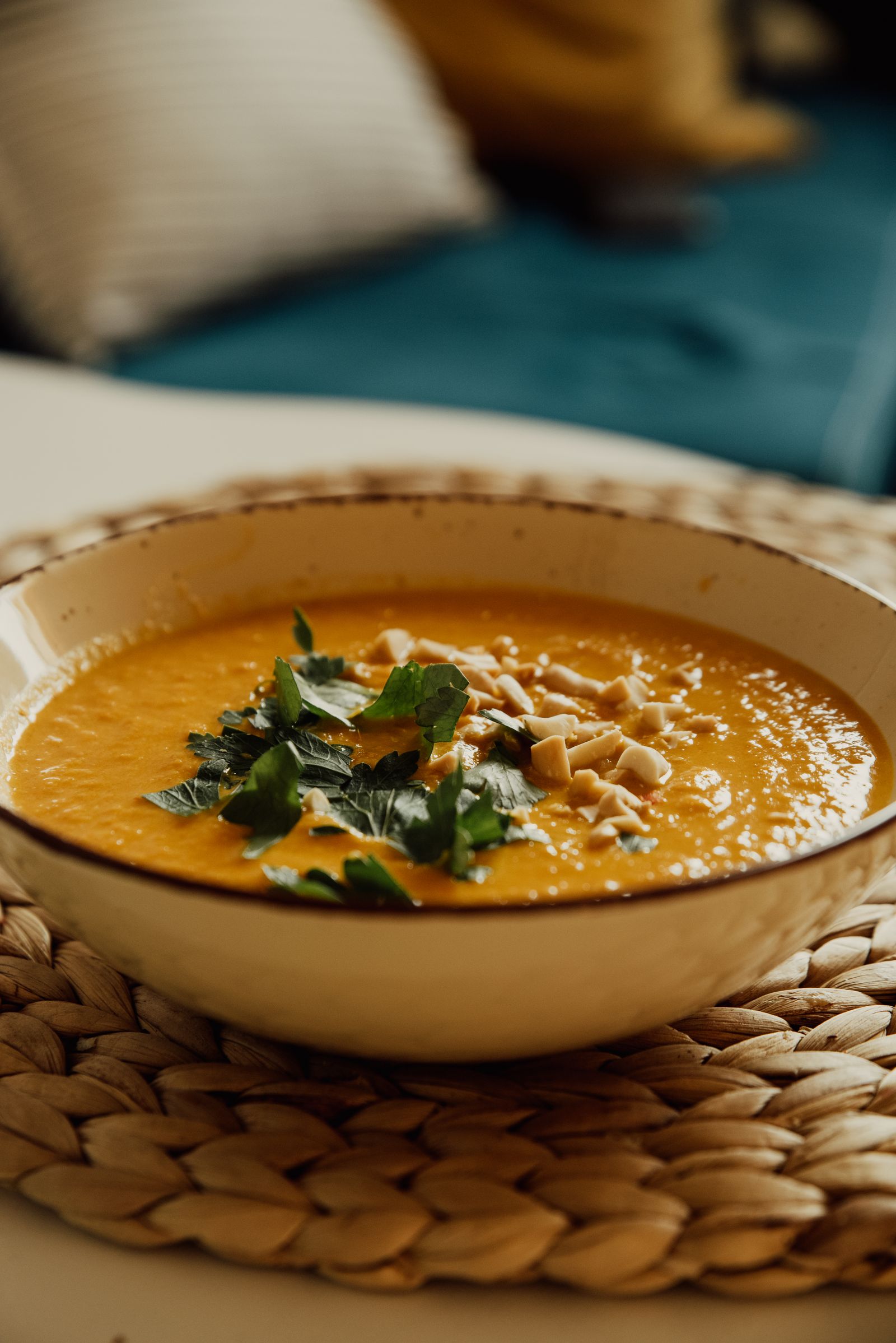
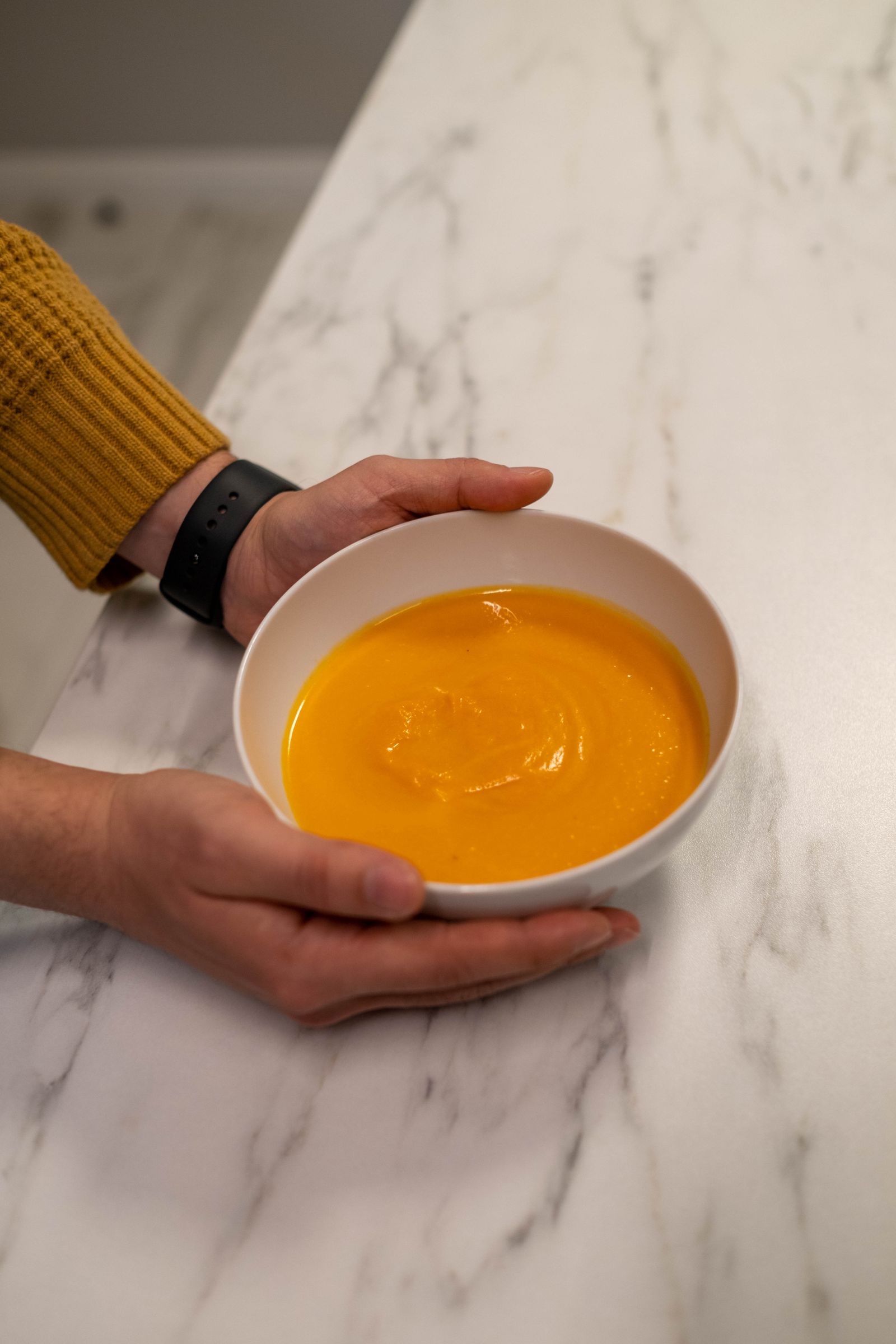
| die Kürbissuppe | Kürbis (pumpkin) + Suppe | pumpkin soup |
| die Erbsensuppe | Erbse (pea) + Suppe | pea soup |
| die Linsensuppe | Linse (lentil) + Suppe | lentil soup |
| der Linseneintopf | Linse + Eintopf (stew, “one-pot”) | lentil stew |
| der Kartoffelsalat | Kartoffel + Salat (salad) | potato salad |
| der Nudelsalat | Nudel (noodle/pasta) + Salat | pasta salad |
| der Obstsalat | Obst (fruit) + Salat | fruit salad |
| der Wurstsalat | Wurst + Salat | sausage salad |
| der Eiersalat | Ei (egg) + Salat | egg salad |
| das Rührei | rühren (to stir) + Ei | scrambled eggs |
| das Spiegelei | Spiegel (mirror) + Ei | fried egg (sunny side up) |
| der Glühwein | glühen (to glow) + Wein (wine) | mulled wine |
Das Spiegelei (“mirror egg”) is named for the glossy yolk staring up like a mirror — one of German’s most poetic food compounds. Der Glühwein (“glow wine”) is named for the glowing coals it was warmed over, and it anchors every German Christmas market.
5 Food Names That Tell a Story
- das Abendbrot (evening bread). The word for supper is just “evening bread” — because for generations, the German evening meal WAS bread: cold cuts, cheese, and Brot. The compound preserves an entire food culture in two syllables.
- die Zimtschnecke (cinnamon snail). Nobody eats snails here — the Schnecke is the spiral shape of the rolled dough. German food compounds name shapes as readily as flavors (compare die Nussschnecke, die Mohnschnecke).
- der Bienenstich (bee sting). A cake named after an insect attack. Whether or not the legend is true, the name follows Rule 2 of our build German compound words guide: the modifier must earn its place, and a bee story earns it.
- das Spiegelei (mirror egg). The fried egg’s yolk shines like a little mirror. English says “sunny side up” (a serving instruction); German names what you see.
- der Linseneintopf (lentil one-pot). Eintopf itself is a compound (ein + Topf, “one pot”) — the dish is defined by its cooking vessel. German meal names routinely encode method: Braten (roasted), gekocht (boiled), gebraten (fried).
Patterns: How German Builds Food Words
- Ingredient + dish: Apfelkuchen, Kürbissuppe, Eiersalat, Leberwurst. The most productive pattern — master it and you can parse any menu.
- Method + dish: Bratwurst, Brathähnchen, Rührei, Dampfnudel. The verb stem (braten, rühren, Dampf) tells you how it was cooked.
- Meal + bread: Abendbrot, Marmeladenbrot, Butterbrot. Brot is the head of Germany’s cold meals; the modifier says what goes on top.
- -suppe, -salat, -kuchen, -wurst as universal heads: Learn these four heads and dozens of dishes decode themselves — every -suppe is feminine (die Suppe), every -kuchen masculine (der Kuchen), every -wurst feminine, every -salat masculine. The head rule turns menu reading into a reflex.
- Regional fossils: Lebkuchen, Dampfnudel, and Mettwurst preserve old words (Leb, Nudel in the dumpling sense, Mett) that survive almost nowhere else. Food vocabulary is a museum of the language.
At the Bakery: Ordering with Compounds
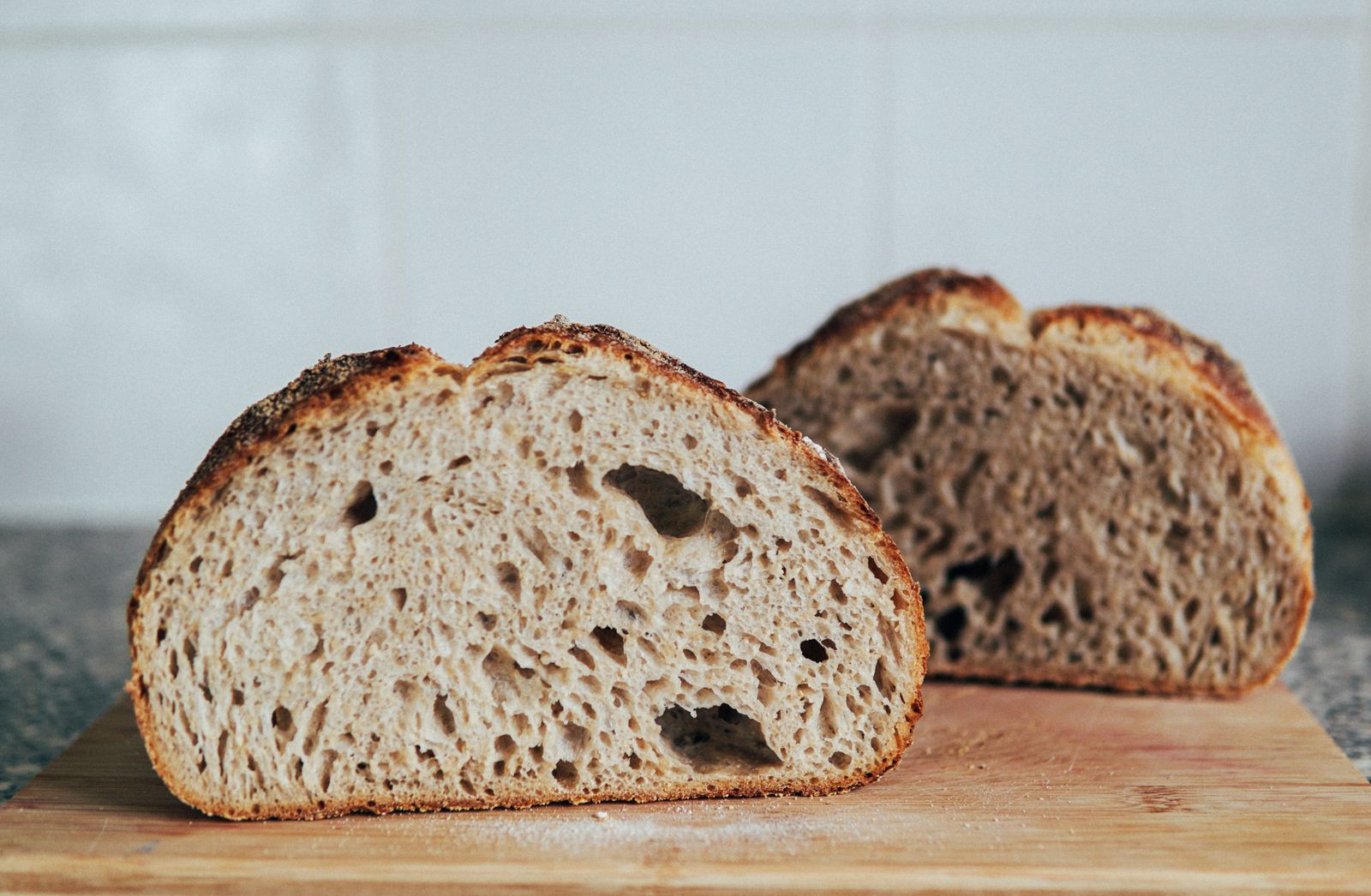
German bakeries (die Bäckerei) are the ultimate compound-word classroom, because everything has a precise compound name and you must say it to get it. Here is your survival kit:
- “Ein Laugenbrötchen, bitte.” One lye roll, please. The -brötchen head (neuter, das Brötchen) takes -chen, so it is always das: das Käsebrötchen, das Mohnbrötchen, das Schokobrötchen.
- “Ein Stück Apfelkuchen / ein Stück Bienenstich.” A slice of apple cake / bee-sting cake. Das Stück (piece) + cake name — the standard café order.
- “Zum Mitnehmen, bitte.” To take away, please. (Zum Mitnehmen = for taking along — a nominalized verb phrase, not a compound, but essential.)
- “Haben Sie auch Vollkornbrot?” Do you also have wholegrain bread? Sie is the polite you — bakeries run on Sie.
Watch the bakery staff compound on the fly: “das Dinkelvollkornbrot” (spelt wholegrain bread), “die Apfel-Zimt-Schnecke” (apple-cinnamon roll, hyphenated because three parts get long). Listen for the heads — -brot, -brötchen, -kuchen, -schnecke — and you will understand orders you have never heard before. This is productive compounding happening live, exactly as our build German compound words guide describes.
Quiz Yourself: 10 Menu Riddles
Translate from the parts. Answers below.
- Pfanne + Kuchen → ? 2. rühren + Ei → ? 3. Zimt + Schnecke → ?
- Abend + Brot → ? 5. Biene + Stich → ? 6. Spiegel + Ei → ?
- voll + Korn + Brot → ? 8. Kürbis + Suppe → ? 9. Blut + Wurst → ?
- glühen + Wein → ?
Answers: 1. pancake (der Pfannkuchen), 2. scrambled eggs (das Rührei), 3. cinnamon roll (die Zimtschnecke), 4. supper (das Abendbrot), 5. bee-sting cake (der Bienenstich), 6. fried egg (das Spiegelei), 7. wholegrain bread (das Vollkornbrot), 8. pumpkin soup (die Kürbissuppe), 9. blood sausage (die Blutwurst), 10. mulled wine (der Glühwein).
Key Takeaways: German Food Compound Words
- These 50 German food compound words prove the system at the dinner table: ingredient + dish (Apfelkuchen), method + dish (Bratwurst), meal + bread (Abendbrot).
- The head rule governs every menu: die Wurst makes all sausages feminine, der Kuchen makes all cakes masculine, die Suppe makes all soups feminine.
- Literal names are memory hooks — cinnamon snail, mirror egg, bee sting, evening bread — and they teach the dish’s story along with its name.
- Productive heads (-suppe, -salat, -kuchen, -wurst, -brot) unlock unfamiliar dishes: decode the head, and the modifier fills in the rest.
- To build your own food compounds (or decode the monsters on packaging), see how to read long German words and why German words are so long.
Frequently Asked Questions
Why do Germans say “Pfannkuchen” instead of just borrowing “pancake”?
German prefers native compounds for everyday concepts — Pfannkuchen (pan-cake) is transparent to every speaker, while “pancake” would be opaque. The compounding habit keeps the core vocabulary Germanic.
Is “Currywurst” one word or two?
One word: die Currywurst. Like all established compounds, it is written solid. The two-word spelling is the most common learner error on German menus.
What is the difference between der Kuchen and die Torte?
Der Kuchen is the everyday cake (often a single layer or sheet cake); die Torte is the fancier layered or filled cake. Hence die Schokoladentorte (a proper layer cake) but der Marmorkuchen (a humble loaf cake).
Which food compounds should a tourist learn first?
Start with the heads: -brot, -wurst, -suppe, -salat, -kuchen, -schnitzel. With those six you can decode most of any menu — the modifiers (Kartoffel, Hühner, Apfel) are usually words you already know.