

German Scrabble Word Checker: How to Verify Legal Words
Every Scrabble game reaches the moment: someone plays a word nobody recognizes, eyebrows rise, and the table goes quiet. Is it real? In that moment you need a German Scrabble word checker — not necessarily an app, but a reliable method for answering the only question that matters: is this word legal?
This guide covers the complete picture: which authority decides (the Duden), how word challenges work at the table, how to verify words with online checkers without falling for bad ones, what to do step by step when a word is disputed mid-game, and how to build the word knowledge that makes disputes rare in the first place.
Why Word Checking Matters More Than You Think
Word disputes are not interruptions to the game — they are part of the game. In German Scrabble, where compounding and inflection generate an effectively infinite supply of candidate words, the boundary between “clever play” and “made-up word” gets tested constantly. A player who understands word checking has two advantages: they challenge bad words confidently, and they play aggressive words without fear, because they know what is defensible.
The stakes are real. A successful challenge removes the opponent’s entire play — tiles back on the rack, zero points, turn wasted. A failed challenge, in most casual rules, costs nothing but a moment. That asymmetry means challenges are common, and being wrong about a word’s legality — in either direction — is expensive. The player who can verify words quickly and correctly wins these exchanges; the player who guesses loses them.
The Authority: The Duden Decides
In German Scrabble, there is exactly one word authority that matters: the Duden. Tournament play, club play, and serious casual play all use it. If a word appears in the Duden — as a headword or as a standard inflected or compounded form according to the game’s conventions — it is legal. If it does not, it is not.
This is simpler than the English situation, where players argue about which dictionary applies. In German, agree on “the Duden” before the first tile is drawn and the argument never happens. A recent edition is best, since German spelling and vocabulary evolve (the 1996 spelling reform, new loanwords, updated compounds), but any complete Duden works for casual play.
What the Duden’s authority means in practice:
- Headwords are legal. If the Duden lists SPIELEN, you can play it.
- Standard inflections are legal. Conjugated verbs (SPIELST, SPIELTE), declined adjectives, plurals (HÄUSER, BÜCHER) — the game’s conventions cover the regular forms of listed headwords.
- Compounds are legal when formed from legal parts according to German compounding rules. This is the big one: German lets you build words like DONAUDAMPFSCHIFFAHRTSGESELLSCHAFT from real parts, and the game honors that — within the board’s physical limits, of course.
- Proper nouns are out. Names of people, places, brands, and trademarks are not playable, even if the Duden mentions them.
- Abbreviations are out. No ABK., no Z.B., no acronyms — unless the Duden lists them as standalone headwords (a short list; check before playing).
When in doubt at the table, the physical or digital Duden is the final court of appeal. Everything else — apps, websites, word lists — is a convenience layer on top of it.
How a German Scrabble Word Checker Works (The Method)
When people say “German Scrabble word checker,” they usually mean one of two things: an online tool where you type a word and get a yes/no answer, or the manual method of looking a word up in the Duden. Both are legitimate; they serve different moments.
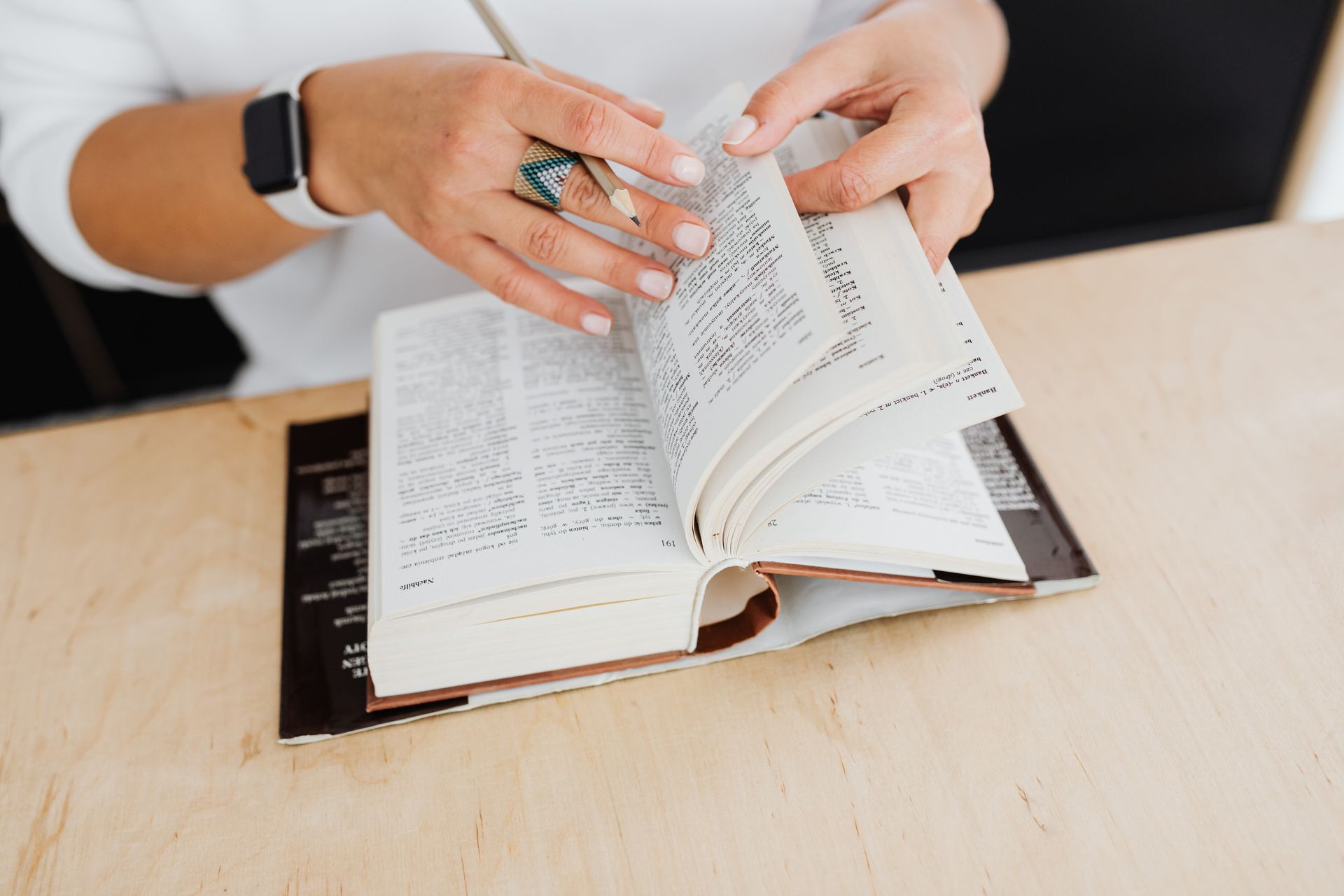
The manual method is the gold standard and the tournament standard: open the Duden (book or official digital edition), find the word, and read the verdict. It is slow — thirty seconds to a minute per lookup — but it is definitive. In a disputed challenge, this is what settles it. No app overrules the Duden.
Online checkers are the fast layer. A typical German Scrabble word checker works like this: you type the candidate word into a search field, and the tool checks it against a word list derived from the Duden (tournament-legal lists are built from Duden data with the game’s conventions applied). You get an answer in seconds: legal or not, sometimes with the word’s definition or inflections.
Here is the honest guidance on using them:
- Use checkers for study, not for mid-game disputes. Looking up a word on your phone mid-game is cheating in most rule sets — it is outside help. The legitimate mid-game procedure is the challenge (below), settled by the agreed Duden. Use online checkers between games to build your word knowledge, test candidate words you are unsure about, and settle bar bets.
- Prefer Duden-based checkers. A checker’s answer is only as good as its word list. Tools that explicitly base their lists on the Duden (rather than, say, a generic German dictionary or — worse — an English Scrabble list with German words bolted on) are the ones to trust. If a checker does not say where its word list comes from, treat its answers as hints, not verdicts.
- Watch out for the ß and umlaut traps. A good checker handles ß→SS correctly (STRASSE for “Straße”) and treats Ä/Ö/Ü as distinct letters. A bad one mangles them. If a checker tells you STRAßE is playable with a ß, it does not understand German Scrabble — find a better one. (The ß rules explain why.)
- Cross-check surprising answers. If a checker says an odd-looking word is legal, verify it in the Duden before you stake a game on it. Checkers occasionally include errors, outdated spellings, or words from the wrong word list. Trust, then verify — especially before a tournament.
We are deliberately not naming specific checker websites here, because the landscape changes: tools appear, go stale, and change their word lists without notice. The method above — Duden-based, used for study, cross-checked when it matters — works regardless of which specific tool you use, today or in two years.
How Word Challenges Work Mid-Game

The challenge is Scrabble’s built-in German Scrabble word checker: a formal procedure for resolving disputes without outside help. Here is how it works in standard casual and tournament-adjacent play:
- A word is played. The player places tiles, announces the word and score.
- Any opponent may challenge by saying so clearly — before the next player draws replacement tiles. Once tiles are drawn, the challenge window closes.
- The word is looked up in the agreed word source (the Duden). In casual play, whoever has the dictionary (or the Duden app, if the group allows it for this purpose) performs the lookup. Everyone accepts the result.
- The verdict is binary. Legal: the word stays, play continues, and the game moves on. Illegal: the word comes off the board, the tiles return to the player’s rack, the turn scores zero, and the next player plays.
A few refinements worth knowing:
- Challenge all words formed, not just the main word. A play often creates several words at once (the main word plus cross-words). The challenge applies to every word the play formed — one illegal cross-word kills the whole play. This is why the two-letter words matter so much: most failed challenges die on a two-letter cross-word.
- The challenger risks little (usually). In standard casual rules, a wrong challenge costs nothing. Some competitive formats penalize failed challenges with a lost turn — know your group’s rule, because it transforms challenge strategy from “challenge everything suspicious” to “challenge only when confident.”
- You cannot challenge after drawing. This is the most commonly misplayed rule. If you suspect a word, speak before the next rack is refilled. Tournament players develop the habit of pausing two seconds after every opponent’s play — a small ritual that saves many arguments.
What to Do When a Word Is Disputed: Step by Step
Disputes get heated when there is no procedure. Here is the procedure — agree on it before the game, and mid-game disputes become boring administrative moments instead of arguments:
Step 1: State the challenge clearly. “I challenge WÖRTER.” Not muttering, not sighing — a clear statement, before tiles are drawn.
Step 2: Identify every word in question. The main word and all cross-words. Write them down if there are several. (“The play formed WÖRTER, plus the cross-words TE and ER.”)
Step 3: Look each word up in the Duden. One at a time, in order. The player who owns the dictionary reads the entry aloud — headword present or not, and whether the form is a standard inflection of a listed headword.
Step 4: Apply the verdict to the whole play. All words legal → the play stands, exactly as scored. Any word illegal → the entire play is removed, tiles returned, zero points. There is no partial credit.
Step 5: Move on. The challenged player draws no tiles (their turn produced no legal play), and the next player takes their turn. No replays, no appeals — the Duden has spoken.
If no Duden is available: pause the game and agree on a resolution method before continuing — look it up in a comprehensive German dictionary app everyone trusts, or agree to treat the word as provisionally legal and verify after the game (adjusting the score then, if your group allows it). Better: never start without a Duden. A dictionary app on someone’s phone, designated only for challenge lookups, works fine and keeps the game moving.
Building Word Knowledge So Disputes Get Rare
The best German Scrabble word checker is the one in your head. Every word you learn is a dispute you will never have and a play your opponent cannot challenge. Here is the efficient curriculum:
- The two-letter words first. They are few, they decide most challenges, and they unlock parallel plays. Start with our complete two-letter list.
- The three-letter words next. Our three-letter collection focuses on the ones that shine in parallel plays — the highest-leverage threes in the game.
- The Q-words and the umlaut words. QU words and umlaut words cover the tiles that cause the most uncertainty.
- The hooks. Knowing which words extend (TAG→TAGE, HAUS→HÄUSER) prevents the most common illegal-extension attempts. The plural hooks guide is the reference.
- The ß conversions. STRASSE, GROSS, FUSS, SPASS — the common ß-words in their SS form. The ß guide lists the ones that come up most.
Study method that works: after each game, write down every word that was challenged or that you were unsure about, and look them all up that evening. Ten minutes per game, and within a month your challenge record will be formidable. Online checkers are perfect for this — fast, Duden-based, and used after the game where they belong.
The Anatomy of a Legal German Scrabble Word
To use any German Scrabble word checker well — human or digital — it helps to understand what “legal” actually means in the German game. The definition has more moving parts than beginners expect.
Ordinary vocabulary is the easy case. If the Duden lists HAUS as a headword, HAUS is playable. So are its regular inflections: HAUSES (genitive), HÄUSER (plural), HÄUSERS (plural genitive). The game’s conventions treat a headword as bringing its standard inflectional family along. You do not need the Duden to list every case form separately.
Compounds are where German Scrabble gets its character — and where most disputes arise. German allows free compounding: HAUS + TÜR = HAUSTÜR, and the game honors compounds built from legal parts. But the parts must genuinely be words, and the compound must follow German compounding rules (including Fugenlaute, the joining elements: HAUS-E-TÜR would be wrong; ARBEIT-S-ZIMMER is right). A checker built on a good word list handles common compounds; exotic ones may need a Duden lookup and a judgment call about whether the compound is “standard” enough. When a compound looks invented purely for the board (three nouns jammed together that no German would ever say), challenge it — the Duden’s compounding conventions are the test.
Loanwords are legal once German has adopted them — and German adopts eagerly. COMPUTER, TEAM, CLUB, JOB, BABY are all Duden headwords and all playable. The test is adoption, not origin: if the Duden lists it, its passport is stamped. Recent anglicisms are the gray zone; a 2020 Duden and a 2026 Duden may disagree about the newest arrivals, which is one more reason to play with a recent edition.
What is never legal, regardless of the Duden: proper nouns (people, places, brands), abbreviations and acronyms (unless listed as independent headwords), words requiring letters you do not have (no AE for Ä, no ß at all — SS instead), and hyphenated constructions played with the hyphen (hyphens are not tiles; E-MAIL must be played as EMAIL if the Duden lists that form, or not at all).
Understanding these categories changes how you challenge. When your opponent plays an unfamiliar compound, the question is not “have I seen this word?” but “are the parts real and is the compounding standard?” That is a much easier question to answer — and a much harder one to bluff through.
Common Illegal Plays and Why They Fail
Patterns repeat. Here are the illegal plays that come up most often in German Scrabble, and the reason each one fails — a rogue’s gallery worth studying, because recognizing these instantly makes you a better challenger:
The AE/OE/UE substitution. A player holds no Ä and plays BAUME for “Bäume.” Illegal — the umlaut tile (or a blank declared as Ä) is required. This is the single most common illegal play in casual German Scrabble, and it fails every time it is challenged. (See the umlaut guide.)
The ß smuggle. STRAßE on the board, played with… what, exactly? There is no ß tile and no way to improvise one. The legal play is STRASSE. Any word containing ß as played is illegal on its face. (See the ß rules.)
The invented compound. Three nouns combined in a way no German speaker would recognize, built purely because the tiles fit. HAUSBAUMTISCH might use seven tiles beautifully, but if the compounding is not standard German, the Duden test fails it. Real compounds only.
The wrong inflection. German inflection is regular enough that players guess forms that do not exist: a guessed plural, a wrong comparative, a verb form from the wrong stem. GEHTEST for “you went”? Not a word. The Duden lists the correct forms; guesses are challengeable.
The proper noun. BERLIN, MERKEL, BMW — all real, all illegal. This one is usually played by beginners who have not learned the rule, and it is the easiest challenge in the game.
The foreign word with no papers. An English or French word the player assumes German has adopted, but the Duden has not. MEETING is in (adopted); some trendier import may not be. When in doubt, check the edition year — adoption is a moving target.
Notice the pattern: every one of these fails for a reason, and the reason is always traceable to the Duden plus the game’s conventions. There are no judgment calls about “feeling” — which is exactly why the challenge procedure works. Learn the reasons and you will challenge with confidence instead of hope.
Key Takeaways: German Scrabble Word Checker
A German Scrabble word checker is a method, not just a tool: the Duden is the authority, the challenge is the procedure, and online checkers are the study aid. Use Duden-based checkers between games to build your word knowledge; resolve mid-game disputes with a clear five-step challenge procedure and the agreed Duden; and invest in the word lists — two-letter words first — that make disputes rare. The player who knows the words does not need to look them up, and that player wins the close games.
For the rules around the words themselves, see the complete rules guide; and for turning word knowledge into wins, the 15 strategies.
Frequently Asked Questions
What is the official dictionary for German Scrabble?
The Duden. Tournament, club, and serious casual play all use it as the word authority.
Can you use a phone to check words during a Scrabble game?
Not to look up your own plays — that is outside help and against the rules in standard play. Phones are acceptable only as the agreed challenge reference (a Duden app), used openly to settle a formal challenge.
What happens if a word is challenged successfully?
The entire play is removed from the board, the tiles return to the player’s rack, and the turn scores zero. One illegal cross-word invalidates the whole play.
Are inflected forms legal in German Scrabble?
Yes — conjugated verbs, declined adjectives, and plurals of Duden headwords are legal under the game’s standard conventions, as are compounds built from legal parts.
Is STRASSE legal in German Scrabble?
Yes. There is no ß tile, so “Straße” is played as STRASSE. This is official tournament practice. See the full ß explanation.
How do online German Scrabble word checkers work?
You type a word and the tool checks it against a Duden-derived word list, returning legal or not. Use Duden-based checkers for study between games, and cross-check surprising answers in the Duden itself before staking a game on them.
Are compound words legal in German Scrabble?
Yes, when built from legal parts following standard German compounding rules. Invented compounds that no German speaker would recognize are challengeable — the parts must be real and the compounding standard.
Can you challenge more than one word from a single play?
The challenge covers every word a play formed — the main word and all cross-words. A single illegal cross-word invalidates the entire play, which is why short cross-words decide most challenges.