Nouns name the world; adjectives make it interesting. The difference between ein Apfel (an apple) and ein kleiner, roter Apfel — ein schöner Apfel (a beautiful apple) shows the point: adjectives turn labeling into describing, and describing into conversing. These 56 5 letter german adjectives are the beginner’s complete describing toolkit, each exactly five letters, each with a real example phrase.
The adjectives are grouped by what they describe: size and shape, appearance, texture and feel, character, and state and intensity. After the list, you will find the essential adjective-ending rules — because in German, adjectives change form based on the noun’s gender, case, and article. Learn the words here and the endings below, and you can describe anything. For the broader method, see our beginner’s guide.
5 Letter German Adjectives for Size & Shape
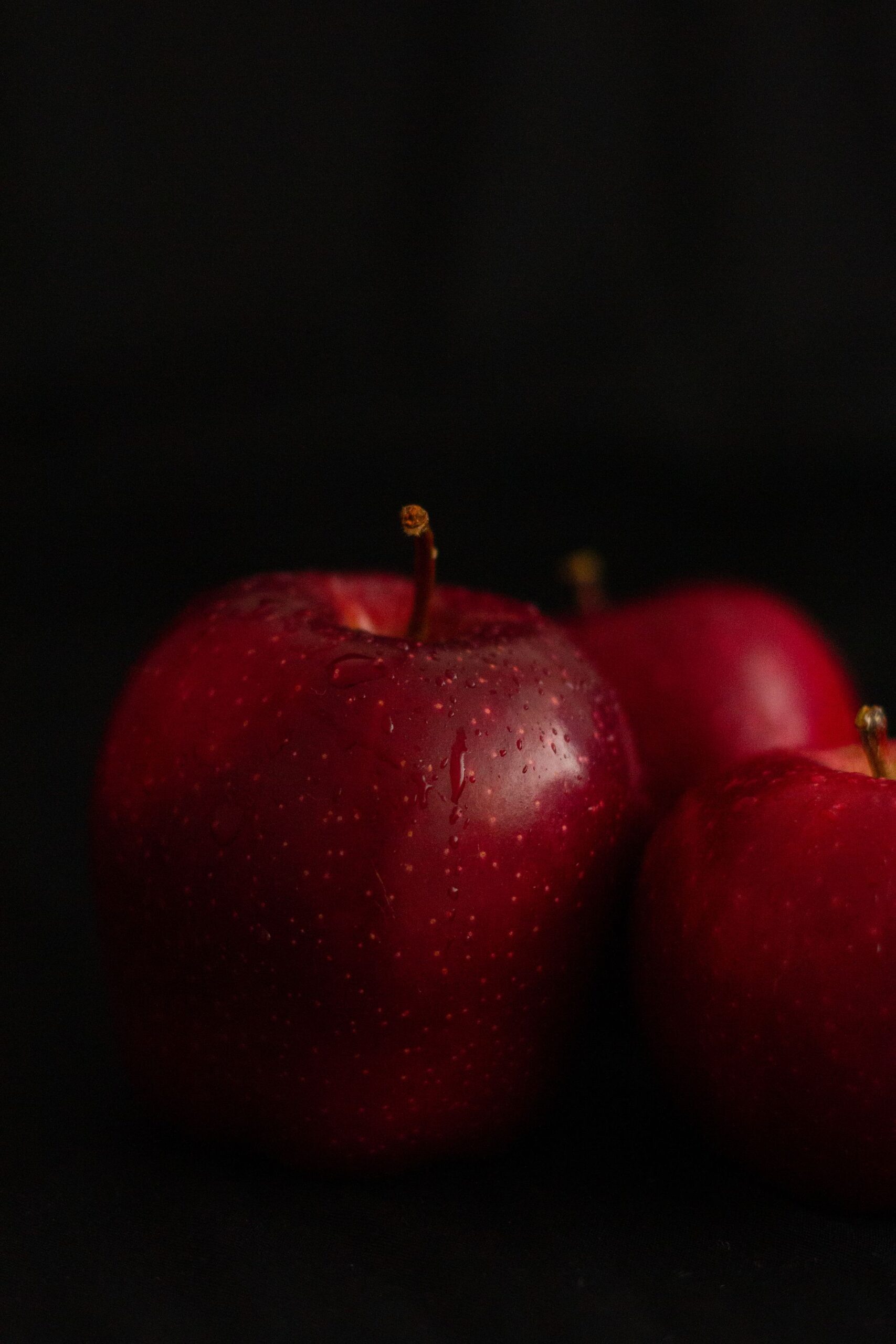
klein (small) — ein kleiner Apfel (a small apple). The gentlest descriptor; klein also softens requests (ein kleines Bier).
breit (wide) — ein breiter Fluss (a wide river). Also “broad-minded” figuratively.
flach (flat) — ein flaches Land (flat countryside). Opposite of steil below.
spitz (pointed) — ein spitzer Bleistift (Bleistift — “a pointed pencil”). Also “sharp” as in witty: eine spitze Bemerkung.
eckig (angular) — ein eckiger Tisch (an angular table). From die Ecke (corner).
krumm (bent, crooked) — ein krummer Weg (Weg — “a winding path”). Also figurative: krumme Geschäfte (crooked deals).
steil (steep) — ein steiler Berg (Berg — “a steep mountain”). Hiking essential.
platt (flat) — ein platter Reifen (Reifen — “a flat tire”). platt is the colloquial flat; flach is the neutral one.
prall (taut, bulging) — pralle Äpfel (taut apples). Describes fullness — fruit, muscles, sails.
5 Letter German Adjectives for Appearance
schön (beautiful, nice) — ein schöner Tag (a beautiful day). The most versatile positive adjective in German — beautiful, nice, lovely, great.
nackt (naked) — nackte Füße (Füße — “bare feet”). Also “plain, unadorned”: die nackte Wahrheit (the naked truth).
blass (pale) — ein blasses Gesicht (Gesicht — “a pale face”). Also “vague”: eine blasse Ahnung (a vague idea).
grell (garish, glaring) — grelles Licht (glaring light). Negative brightness — grell is never a compliment.
rosig (rosy) — rosige Wangen (rosy cheeks). Health and optimism in one word: rosige Zeiten (rosy times).
hager (gaunt) — ein hagerer Mann (Mann — “a gaunt man”). Thin in a weathered, striking way.
üppig (lush) — üppige Blumen (lush flowers). Abundance — vegetation, buffets, imaginations.
5 Letter German Adjectives for Texture & Feel
weich (soft) — ein weiches Bett (Bett — “a soft bed”). Opposite of hart (hard).
glatt (smooth) — glattes Papier (smooth paper). Also “slippery”: glatte Straßen (slippery roads).
sanft (gentle) — eine sanfte Stimme (Stimme — “a gentle voice”). Softness with kindness.
dicht (dense, tight) — dichter Nebel (dense fog). Also “sealed”: dichte Fenster (tight windows).
starr (rigid) — ein starrer Blick (a rigid stare). Inflexibility — bodies, rules, minds.
steif (stiff) — ein steifer Nacken (a stiff neck). Physical stiffness; steif also means “formal, starchy” of people.
mürbe (crumbly, tender) — mürbes Brot (Brot — “crumbly bread”). Also “worn down”: mürbe machen (to wear someone down).
schal (stale) — schales Bier (stale beer). Flat taste, flat jokes: ein schaler Witz.
klamm (clammy, damp) — klamme Hände (clammy hands). Also “broke”: klamm sein (to be short of cash).
5 Letter German Adjectives for Character
stolz (proud) — stolz auf dich (proud of you). Takes auf + accusative.
ernst (serious) — ein ernster Blick (a serious look). Also the male name Ernst.
artig (well-behaved) — ein artiges Kind (Kind — “a well-behaved child”). What parents praise.
fromm (pious) — ein frommer Wunsch (Wunsch — “a pious wish”). Religious devotion; ein frommer Wunsch idiomatically means “wishful thinking”.
feige (cowardly) — eine feige Lüge (a cowardly lie). Strong disapproval.
eitel (vain) — eitler Stolz (vain pride). Also “pure, sheer”: eitel Sonnenschein (pure sunshine) — same word, positive sense.
frech (cheeky) — eine freche Antwort (a cheeky answer). Playful rudeness — affectionate or annoying depending on tone.
prüde (prudish) — prüde Ansichten (prudish views). Moral strictness.
weise (wise) — eine weise Frau (a wise woman). Earned wisdom, not cleverness.
nobel (noble) — ein nobler Zug (Zug — “a noble gesture”). Also “posh”: ein nobles Hotel.
zivil (civil, civilian) — in zivil (in civilian clothes, of police). Also “civil, polite”: ziviler Umgang.
zotig (ribald, crude) — zotige Witze (crude jokes). Coarse humor — know it, use it carefully.
ulkig (droll, funny) — eine ulkige Idee (a funny idea). Quirky funniness.
labil (unstable) — eine labile Lage (an unstable situation). Physical, emotional, or political.
mäßig (moderate) — mäßiger Erfolg (moderate success). The middle path in one word.
5 Letter German Adjectives for State & Intensity
stark (strong) — starker Kaffee (strong coffee). Also slang “great”: Das ist stark!
sauer (sour) — saure Gurken (sour pickles). Also “angry” colloquially: sauer sein.
teuer (expensive) — ein teures Auto (Auto — “an expensive car”). The shopping essential.
krank (sick) — krank sein (to be sick). sich krankmelden (to call in sick).
leise (quiet) — leise Musik (quiet music). A request more than a state: Bitte leise!
still (quiet, still) — stille Nacht (silent night). Deeper quiet than leise — no motion, no sound.
stumm (mute) — stumm bleiben (to remain silent). No sound at all — stronger than still.
super (great) — super Wetter (great weather). The informal intensifier; uninflected in slang use.
flott (brisk, lively) — flotte Musik (lively music). Also “snappy dresser”: flott aussehen.
ideal (ideal) — ideale Bedingungen (ideal conditions). The aspiration word.
total (total) — totale Stille (total silence). Intensifier and descriptor.
träge (sluggish) — ein träger Fluss (a sluggish river). Slow-moving — water, people, mornings.
selig (blissful) — selig lächeln (to smile blissfully). Deep contentment.
vital (vital) — ein vitaler Mann (a vital man). Energy and health.
braun (brown) — braune Augen (brown eyes). The color of earth, wood, and coffee.
uralt (ancient) — ein uralter Baum (Baum — “an ancient tree”). ur- intensifies: old → ancient.
Adjective Endings: The 60-Second Guide
German adjectives change endings based on gender, case, and which article comes before them. You do not need the full table on day one — you need these three patterns:
After der/die/das (weak): the adjective takes -e or -en. der kleine Apfel, die schöne Blume, das kleine Kind. Nominative: -e. All other cases: -en.
After ein/eine (mixed): ein kleiner Apfel, eine schöne Blume, ein kleines Kind. The adjective shows the gender the article hides.
With no article (strong): kleiner Apfel, schöne Blume, kleines Kind. The adjective carries the full gender marking.
The beginner’s shortcut: in the nominative (the subject of the sentence, the most common case), memorize these: der kleine, die kleine, das kleine; ein kleiner, eine kleine, ein kleines. Drill with our adjectives: der starke Mann, die schöne Woche, das leise Kind. Get the nominative automatic first; the other cases follow the same logic with -en.
Predicate adjectives never change: Der Apfel ist klein. Die Blume ist schön. Das Wetter ist super. When the adjective comes after ist, it stays in its base form — no endings at all. This is why beginners should practice ist-sentences first: all description, no endings.
Comparatives & Superlatives with These Adjectives
Comparing is how adjectives earn their keep in conversation — and German makes it mechanical:
Comparative: add -er. klein → kleiner (smaller), stark → stärker (stronger), teuer → teurer (more expensive). One-syllable adjectives with a, o, u usually add an umlaut: stark → stärker, krank → kränker. Use with als (than): Dieser Apfel ist kleiner als jener.
Superlative: add -st with am: klein → am kleinsten (smallest), schön → am schönsten (most beautiful), stark → am stärksten (strongest). Attributive superlative: der kleinste Apfel, die schönste Blume.
Irregulars to memorize: gut → besser → am besten; viel → mehr → am meisten; gern → lieber → am liebsten. None are five letters, but you will meet them constantly.
Practice set with our words: stärker, schöner, teurer, kleiner, leiser, stärker, kränker, weicher, glatter, sanfter. Say each in a sentence: Mein Kaffee ist stärker als deiner. (My coffee is stronger than yours.) Comparison turns 56 adjectives into unlimited expression.
The 10 Adjectives to Learn First
If 56 feels like a lot, start with these ten — they cover 80% of beginner describing needs: klein, schön, stark, teuer, krank, leise, still, super, weich, glatt. Practice them predicate-first (ist klein, ist schön, ist stark), then attributive (ein kleiner Apfel, eine schöne Blume), then comparative (kleiner als, schöner als). Once these ten are automatic, the remaining 46 slot into the same patterns.
Adjectives in German Word Games
Five-letter adjectives are premium word-game material. In German Wordle, adjectives like klein, stark, stolz, sauer, leise are common answers — and their letter patterns (K-L-E-I-N, S-T-A-R-K) make excellent opening guesses because they test high-frequency consonants and vowels. In German Scrabble, qu- and x-free adjectives play easily, while üppig and mürbe score well on umlaut bonuses. Learning adjectives as a set pays off twice: once in conversation, once on the board.
Key Takeaways
- These 56 5 letter german adjectives cover size, appearance, texture, character, and intensity — everything a beginner needs to describe the world.
- Predicate first: Der Apfel ist klein needs no endings — master description before declension.
- Nominative endings: der kleine / die kleine / das kleine; ein kleiner / eine kleine / ein kleines — drill these six until automatic.
- Opposites learned as pairs (weich/hart, stark/schwach, leise/laut) double your vocabulary per minute — this list’s pairs: flach/steil, still/laut.
- Continue with daily conversation words or pronunciation.
Frequently Asked Questions
Do German adjectives go before or after the noun?
Before, like English: ein schöner Tag (a beautiful day). After sein (is), they stay uninflected: Der Tag ist schön. Never put the adjective after the noun attributively — Tag schöner is wrong.
Why do adjective endings change?
They signal gender, case, and number — information English packs into word order. kleiner Apfel (masculine nominative) vs. kleinen Apfel (masculine accusative): the ending tells you the apple’s role in the sentence. It feels heavy at first; it becomes automatic with practice.
Which adjectives should beginners learn first?
klein, groß (four), schön, neu (three), alt (three), gut (three), stark, teuer, leise, krank. This list’s 56 extend that core into every descriptive domain — learn the top ten first, then work through the groups.
What is the difference between leise, still, and stumm?
Intensity scale: leise (quiet — low volume, a request), still (still/silent — no motion or sound, deeper), stumm (mute — incapable of sound or refusing to speak). Bitte leise asks for courtesy; stille Nacht describes peace; stumm bleiben is a decision.
How do I form the comparative of German adjectives?
Add -er: klein → kleiner, stark → stärker (one-syllable a/o/u usually umlaut). Use als for “than”: kleiner als. Superlative: am + -sten: am kleinsten. See the comparison section above for the full practice set.
Can adjectives be used as nouns in German?
Yes — and it is common: der Kranke (the sick person), die Schöne (the beautiful woman), das Beste (the best thing). The adjective takes noun capitalization and strong endings. You will meet these constantly in real German; recognize the pattern and they are free vocabulary.
Conclusion
These 56 5 letter german adjectives turn your German from labeling into describing: sizes, shapes, textures, characters, intensities — everything you need to have opinions in German, which is where conversation actually starts. Learn them predicate-first (ist klein, ist schön), drill the six nominative endings, and pair opposites. Then put them to work in daily conversation, check their pronunciation, and play with them in German Wordle.