S is one of the hardest-working letters in German. It starts more common words than almost any other letter — Stadt, Sonne, Spiel, stark, schön — and it carries the language’s most characteristic sounds: the sht of Stuhl, the shp of Sport, the sh of Schuh. For learners, that makes 5 letter german words starting with s a high-value set: learn these thirty and you have covered an outsized share of everyday vocabulary. For word-game players, S-words are equally strategic — S is the third most common letter in German, so these words anchor Wordle guesses and Scrabble racks alike.
Every word below is verified five letters, every noun carries its correct article, and each entry includes pronunciation guidance plus a real example sentence. Words are grouped by type so you can study nouns, descriptors, and verbs as coherent sets. If S is your Wordle starting letter, pair this list with our German Wordle strategy guide; if you are building vocabulary systematically, continue with the 100 most common 5-letter words.
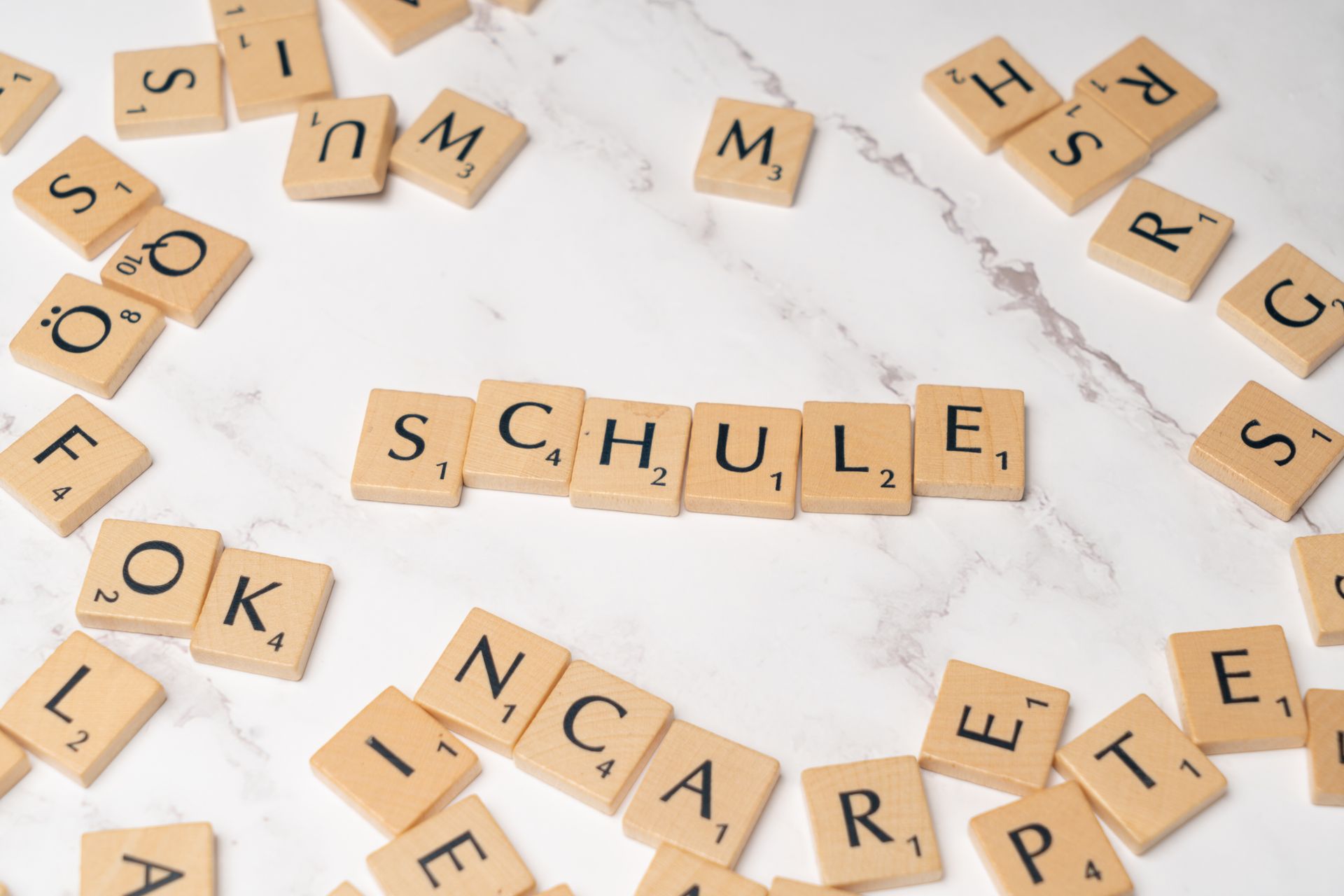
5 Letter German Words Starting with S: Everyday Nouns
der Stern (star, “SHTAIRN”) — The SHT- beginning is the classic German sound. Der Stern ist hell. (The star is bright.) Also used in compounds like der Seestern (starfish).
die Sonne (sun, “ZON-neh”) — Remember: German S before a vowel is a soft English Z sound. Die Sonne scheint. (The sun shines.)
die Seite (page, “ZIGH-teh”) — One of the most useful nouns for students. Die Seite ist leer. (The page is empty.) Also means “side”: die andere Seite (the other side).
die Stadt (city, “SHTAHT”) — Final T is crisp, never softened. Die Stadt ist groß. (The city is big.) Plural: die Städte.
die Sorge (worry, “ZOR-geh”) — Die Sorge vergeht. (The worry passes.) Common in the phrase sich Sorgen machen (to worry, literally “to make worries”).
der Sturm (storm, “SHTOORM”) — Der Sturm war stark. (The storm was strong.) Also used figuratively: ein Sturm der Entrüstung (a storm of outrage).
der Stuhl (chair, “SHTOOL”) — The textbook SHT- word. Der Stuhl ist bequem. (The chair is comfortable.) Do not confuse with der Stiel (handle).
der Stein (stone, “SHTIGHN”) — Der Stein ist schwer. (The stone is heavy.) Appears in der Edelstein (gemstone) and the phrase Stein und Bein (firmly, “stone and bone”).
die Suppe (soup, “ZUP-peh”) — Short U, doubled P. Die Suppe ist heiß. (The soup is hot.) A restaurant essential.
der Salat (salad, “zah-LAHT”) — Stress on the second syllable — a French loanword keeping its original stress. Der Salat ist frisch. (The salad is fresh.)

die Socke (sock, “ZOK-keh”) — Die Socke ist rot. (The sock is red.) Plural die Socken; the phrase sich auf die Socken machen means to get going.
der Schuh (shoe, “shoo”) — SCH is one smooth “sh”. Der Schuh passt. (The shoe fits.) Plural: die Schuhe.
das Spiel (game, “SHPEEL”) — SHP- beginning, another signature German sound. Das Spiel beginnt. (The game begins.) Also “play” (theatre): das Theaterstück is the stage play; Spiel is the game.
der Sport (sport, “SHPORT”) — Der Sport ist gesund. (Sport is healthy.) Used in compounds: die Sportart (type of sport).
der Stier (bull, “SHTEER”) — Der Stier ist stark. (The bull is strong.) Zodiac: der Stier is Taurus.
die Stufe (step, “SHTOO-feh”) — Die Stufe ist hoch. (The step is high.) Also “level, grade”: die Oberstufe (upper level).
die Sitte (custom, “ZIT-teh”) — Die Sitte ist alt. (The custom is old.) Common in die guten Sitten (good manners).
der Sumpf (swamp, “ZOOMPF”) — Final devoicing: the P is crisp. Der Sumpf ist tief. (The swamp is deep.)
der Strom (current, electricity, “SHTROHM”) — Der Strom fließt. (The current flows.) Also means a large river: der Strom for the Danube in poetry.
5 Letter German Words Starting with S: Descriptors & Small Words
schon (already, “shohn”) — The tiny word with huge frequency. Ich bin schon da. (I am already here.) Do not confuse with schön (beautiful) — the umlaut changes everything, as our umlauts guide explains.
stark (strong, “SHTARK”) — Der Kaffee ist stark. (The coffee is strong.) Also “great, cool” in slang: Das ist stark!
stolz (proud, “SHTOLTS”) — Z is “ts”. Sie ist stolz. (She is proud.) Takes auf: stolz auf dich (proud of you).
sauer (sour, “ZOW-er”) — Die Zitrone ist sauer. (The lemon is sour.) Also “angry” in colloquial speech: sauer sein (to be mad).
sonst (otherwise, “zonst”) — Sonst nichts. (Nothing else.) Essential for alternatives: Komm heute, sonst morgen. (Come today, otherwise tomorrow.)
sowie (as well as, “zo-VEE”) — Formal connector. Kaffee sowie Kuchen. (Coffee as well as cake.) You will meet it in official texts.
sechs (six, “zeks”) — CH is the soft hiss here. Sechs Äpfel bitte. (Six apples please.)
sogar (even, “zo-GAR”) — Emphasis word. Sogar er kam. (Even he came.) Adds surprise to any sentence.
stumm (mute, silent, “SHTOOM”) — Er blieb stumm. (He remained silent.) Stronger than leise (quiet) — stumm means no sound at all.

S-Verbs: Two Essentials
sagen (to say, “ZAH-gen”) — One of the most common German verbs. Er sagt die Wahrheit. (He tells the truth.) Conjugation: ich sage, du sagst, er sagt.
sehen (to see, “ZAY-hen”) — Ich sehe den Vogel. (I see the bird.) Irregular in the past (sah, gesehen) but regular in the present: ich sehe, du siehst, er sieht.
The Two S Sounds: Pronunciation Masterclass
Nearly every 5 letter german words starting with s follows one of two pronunciation rules. Master these and the whole list reads itself:
Rule 1 — ST/SP at word start → “sht”/”shp”. When S is followed by T or P at the beginning of a word (or word stem), it becomes “sh”: Stuhl (SHTOOL), Stadt (SHTAHT), Stern (SHTAIRN), Stein (SHTIGHN), Sturm (SHTOORM), Stufe (SHTOO-feh), Strom (SHTROHM), Stier (SHTEER), stark (SHTARK), stolz (SHTOLTS), stumm (SHTOOM), Sport (SHPORT), Spiel (SHPEEL). Thirteen of our thirty words follow this rule — learn it once, apply it thirteen times. Note this only applies at the start of a word or stem; mid-word ST stays “st” (as in beste, “best”).
Rule 2 — S before a vowel → soft “z”. In all other positions, S sounds like the English Z: Sonne (ZON-neh), Seite (ZIGH-teh), Sorge (ZOR-geh), Suppe (ZUP-peh), Salat (zah-LAHT), Socke (ZOK-keh), Sitte (ZIT-teh), Sumpf (ZOOMPF), sagen (ZAH-gen), sehen (ZAY-hen), sechs (zeks), sogar (zo-GAR), sonst (zonst), sowie (zo-VEE), schon (shohn — the SCH is its own “sh” sound), sauer (ZOW-er). Sixteen words, one rule.
Practice drill: read all thirty words aloud in alphabetical order, exaggerating the SHT-/Z- distinction. Then read them again at normal speed. Two minutes, twice a day, for a week — and the German S will feel as natural as the English one.
5 Letter German Words Starting with S: Quick Reference Table
| Word | Article/Type | Meaning |
|---|---|---|
| Stern | der | star |
| Sonne | die | sun |
| Seite | die | page, side |
| Stadt | die | city |
| Sorge | die | worry |
| Sturm | der | storm |
| Stuhl | der | chair |
| Stein | der | stone |
| Suppe | die | soup |
| Salat | der | salad |
| Socke | die | sock |
| Schuh | der | shoe |
| Spiel | das | game |
| Sport | der | sport |
| Stier | der | bull |
| Stufe | die | step, level |
| Sitte | die | custom |
| Sumpf | der | swamp |
| Strom | der | current, electricity |
| schon | adverb | already |
| stark | adjective | strong |
| stolz | adjective | proud |
| sauer | adjective | sour |
| sonst | adverb | otherwise |
| sowie | conjunction | as well as |
| sechs | number | six |
| sogar | adverb | even |
| stumm | adjective | mute, silent |
| sagen | verb | to say |
| sehen | verb | to see |
Print this table or copy it into your flashcard app — it is the complete set in one view.
Common Phrases Built from S-Words
Words stick best in phrases. These common German expressions use only vocabulary from this list plus tiny glue words:
- Die Sonne scheint. (The sun is shining.) — weather small talk
- Schon gut. (Already fine / It’s okay.) — the universal reassurance
- Stark! (Strong! / Great!) — slang approval
- Sonst noch etwas? (Anything else?) — shops and restaurants
- Ich sehe die Stadt. (I see the city.) — travel
- Das Spiel beginnt. (The game begins.) — sports and games
- Sogar am Sonntag. (Even on Sunday.) — emphasis
- Der Sturm war stark. (The storm was strong.) — storytelling
Learn five of these phrases by heart and you will use a dozen S-words without thinking — which is exactly how vocabulary becomes fluency.
Why S-Words Matter for Wordle & Scrabble
S is the third most common letter in German (~7%), and word-initial S is the single most common starting letter for five-letter words. That makes this list a strategic asset:
For Wordle: S belongs in your opening guesses — it appears in ST-, SP-, SCH-, and S+ vowel patterns that dominate the word list. If S goes yellow, try position 1 first (Stuhl, Stadt, Stern all start there). Our best German Wordle starting words builds openers around exactly this logic.
For Scrabble: S tiles are versatile — they pluralize (Apfel → Äpfel needs more than S, but Tisch → Tische is six… in Scrabble, S extends words: Spiel → Spiels). More importantly, S combines into the high-value clusters ST, SP, SCH that let you build parallel plays. The German Scrabble tile values guide covers the full scoring.
Memory trick: learn the SHT- family together (Stuhl, Stadt, Stern, Stein, Sturm, Stufe, Strom, stark, stolz, stumm) — one pronunciation rule, ten words. Then the Z- family (Sonne, Seite, Sorge, Suppe, Salat, Socke, Sitte, Sumpf, sagen, sehen, sechs, sogar, sonst, sowie, schon, sauer) — soft-Z initial, one rule, sixteen words. Two rules, twenty-six words.

Key Takeaways
- These 30 5 letter german words starting with s cover the most productive initial letter in German vocabulary — nouns, descriptors, small words, and two essential verbs.
- Two pronunciation rules unlock almost all of them: SHT-/SHP- at word starts (Stuhl, Spiel) and soft Z before vowels (Sonne, sagen).
- Watch the minimal pairs: schon/schön, and the loanword stress in Salat (zah-LAHT).
- For games: S is your third-most-valuable letter — open Wordle guesses with it and build Scrabble plays around ST/SCH clusters.
- Continue with S-words’ neighbors or the full 100 most common list.
Frequently Asked Questions
How do you pronounce St- at the start of German words?
As “sht”: Stuhl = “SHTOOL”, Stadt = “SHTAHT”, stark = “SHTARK”. This applies to all word-initial ST. Mid-word, ST stays normal. The same rule makes SP into “shp” (Sport = “SHPORT”, Spiel = “SHPEEL”).
What is the difference between schon and schön?
schon (no umlaut) means “already”; schön (with ö) means “beautiful”. They are among the most confused pairs in German — the umlaut changes both sound and meaning completely.
Which S-words are best for German Wordle openers?
SEHEN (S,E,H,E,N) is an excellent opener — four top-ten letters with the doubled E doing real work. STADT and STERN test the SHT- cluster. See our Wordle strategy guide for full opener pairs.
Why is Salat stressed on the second syllable?
It is a French loanword (salade) that kept its original final stress: zah-LAHT. Native German words stress the first syllable (AP-fel); loanwords often do not (ho-TEL, zah-LAHT).

Conclusion
These 30 5 letter german words starting with s are some of the highest-frequency vocabulary you can learn: the SHT- and Z- pronunciation rules, the schon/schön distinction, and two verbs (sagen, sehen) you will use daily. Drill them with our pronunciation guide, deploy them in German Wordle, and keep building with daily conversation words.