

Every German learner collects embarrassment stories the way other travelers collect souvenirs. The raw material is almost always the same: a familiar-looking word, a confident guess, and an audience. These funny german false friends are the 25 most productive misunderstanding-machines in the language — each with its real meaning, the English trap, and the kind of true story that gets retold at every expat dinner.
Laugh, learn, and take comfort: every story below happened to a real person, every one of them survived, and most of them now tell the story better than the German they were trying to speak at the time.
Why These Funny German False Friends Keep Causing Misunderstandings
The stories above are not freak accidents — they are the predictable output of how brains learn languages. Three mechanisms produce nearly every funny false-friend disaster:
Confidence without coverage. By the time you can hold a dinner conversation in German, your brain has learned that guessing from English works 90% of the time (Haus, Milch, Freund). So it guesses — quickly, confidently, and out loud — on the 10% where it fails. The Gift disaster does not happen to day-one beginners (they check everything); it happens to month-six learners (they check nothing).
The audience effect. Misunderstandings need witnesses to become stories. Saying “Ich habe einen Kater” alone in your kitchen teaches you nothing; saying it to colleagues teaches you forever. This is why immersion produces faster learning than apps — it supplies audiences.
Partial truth. The funniest mix-ups are the ones that are almost right. “Du bist ein Huhn” (you’re a chicken) works in both languages — the comedy comes from the learner’s suspicion that it must be wrong. And brav (well-behaved) is adjacent enough to “brave” that the sentence parses — just with the wrong compliment.
Understanding the machinery does not prevent the accidents. But it does let you laugh at them faster, which is the next best thing.
The Classics: Misunderstandings Everyone Has

1. der Mist — manure; “rubbish, darn.” An American farm volunteer in Bavaria nodded enthusiastically when the farmer pointed at the field and said “Mist.” She thought he was admiring the morning fog. He was pointing at the manure pile she was about to spread. “So ein Mist!” remains the most useful mild curse in German — use it freely.
2. das Gift — poison. The exchange student who told her host mother “Ich habe ein Gift für dich” (I have a poison for you) instead of ein Geschenk (a present) is a legend in her program. The host mother laughed for a week. The lesson stuck for a lifetime.
3. die Blamage — embarrassment. An English speaker tried to say “don’t blame me” and produced “blamieren Sie mich nicht” — “don’t embarrass me.” Close enough that everyone understood, wrong enough that everyone laughed. Ironically, Blamage is the perfect word for false-friend moments themselves.
4. der Kater — hangover (or tomcat). A British tourist told his German colleagues “Ich habe einen Kater” after the office party, expecting sympathy for his headache. He got sympathy — and a long discussion about whether his cat was sick. Both meanings are correct; context is everything.
5. die Unterhose — underpants. The language student who announced “Ich habe meine Unterhose verloren” (I lost my underpants) when she meant her Hose (trousers) gave her host family a story they still tell at Christmas. Unter- means “under” — always check the prefix.
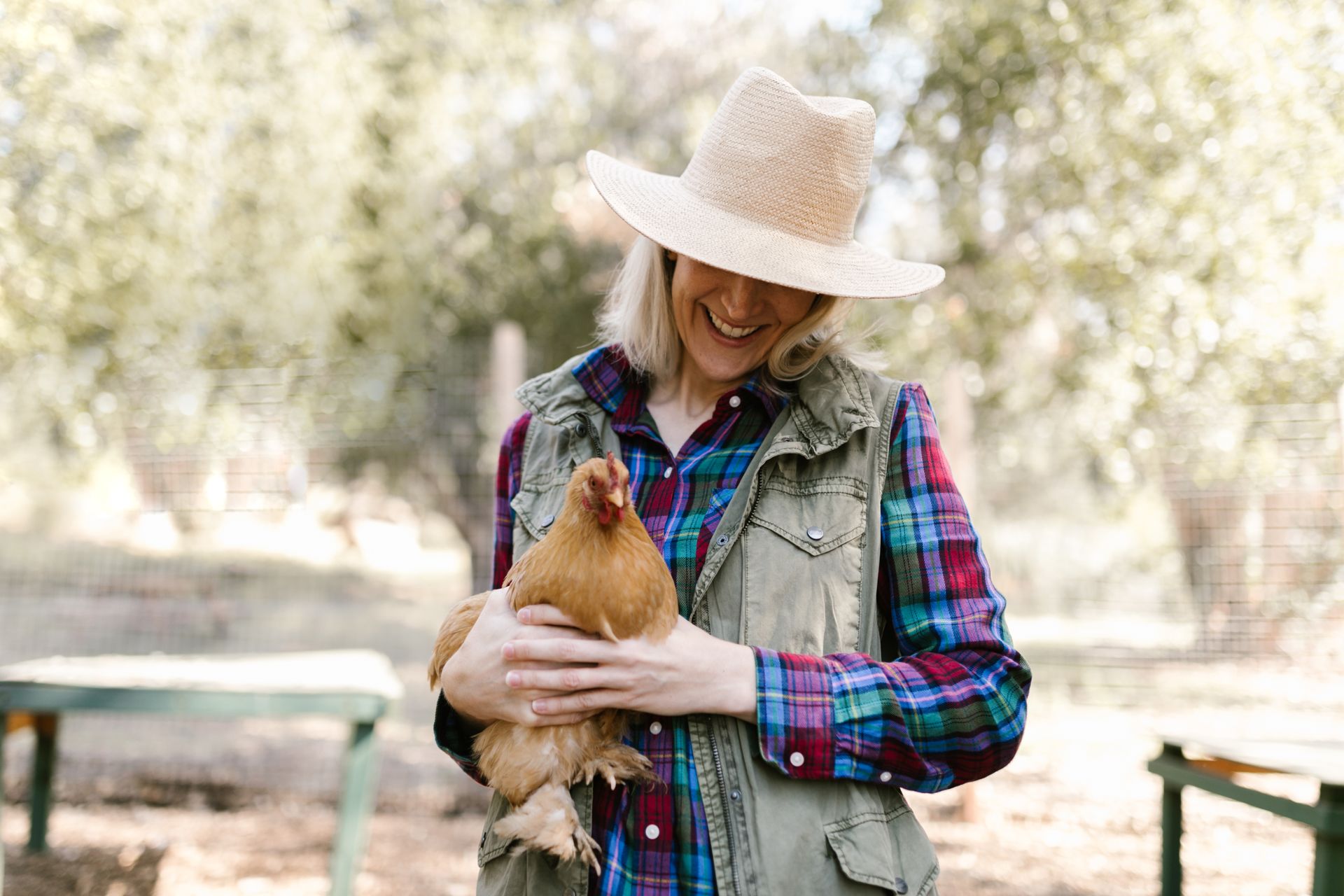
6. brav — well-behaved (not “brave”). Telling a German colleague “Du bist so brav” does not praise his courage — it praises his obedience, like a child or a dog. He will laugh, but he will remember.
7. der Spagat — the splits (gymnastics). An English speaker heard “Sie macht einen Spagat” and spent the rest of dinner waiting for the pasta course. It never came. The splits, however, were impressive.
Bodily Functions and Furniture
8. der Wind — wind; flatulence. “Er hat einen Wind gelassen” can mean “he passed gas” — the polite-ish term is einen Furz lassen, but Wind does the job. An English speaker who announced “Ich liebe den Wind” (I love the wind) on a breezy day was technically correct and socially unfortunate.
9. der Stuhl — chair (medically: stool). “Der Stuhl ist besetzt” means “the chair is taken” — always, in normal life. Only doctors mean the other thing. The English speaker who giggled through a furniture store visit learned this the loud way.
10. die Hose — trousers. “Er hat die Hosen voll” (he’s scared stiff — literally “his trousers are full”) is a standard idiom. The garden hose, meanwhile, is der Schlauch. Plumbing vocabulary has ended more than one confident sentence.
11. der Lappen — rag, cloth. “Nimm den Lappen” (take the cloth) is innocent cleaning vocabulary. But Lappen is also slang for a weakling or a fool — “Du Lappen!” So the word wipes tables and insults people, depending on tone.
12. die Rutsche — slide (playground). “Die Kinder lieben die Rutsche” (the children love the slide). English speakers hear “rutsche” and think of nothing at all — which is the safest kind of false friend until a child drags you toward one.
13. der Knast — prison, jail (slang). “Er sitzt im Knast” (he’s in prison). From Rotwelsch (thieves’ cant). An English speaker who heard it as something like “nest” missed the gravity of the conversation entirely.
The Animal Kingdom of Insults

German is generous with animal-based teasing, and several animal words are false-friend-adjacent traps:
14. der Affe — monkey, ape. “Du Affe!” (you monkey!) is affectionate teasing among friends. But “einen Affen haben” (to have a monkey) means to be drunk — from sich einen Affen kaufen (to buy oneself a monkey). The English speaker who took it literally spent an evening looking for the monkey.
15. das Huhn — chicken; coward. “Du bist ein Huhn” (you’re a chicken) works exactly like English — which is why it is not a false friend but a true friend. Included here because learners assume it must be a trap. Sometimes the familiar word is just familiar.
16. die Schnecke — snail; (slang) girl/chick. “Sie ist eine Schnecke” can be crude slang. The English speaker who called his girlfriend “meine Schnecke” (my snail) intending “my sweetie” learned about connotation the hard way. Stick with Schatz (treasure).
17. der Esel — donkey; fool. “Du Esel!” (you fool!) is the classic German insult — mild, almost affectionate. English speakers hear “Esel” and think of nothing; Germans hear a lifetime of schoolyard memories.
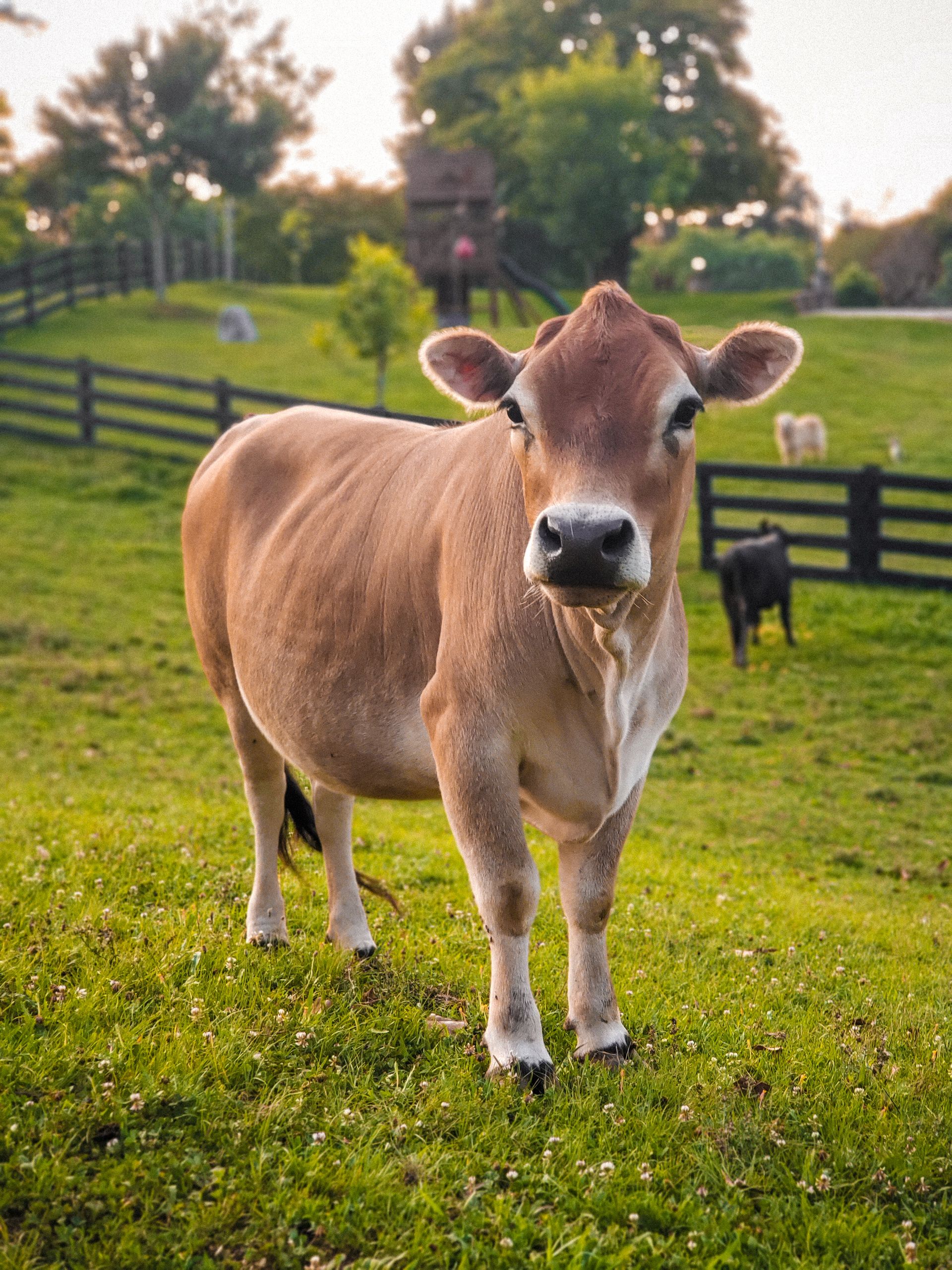
18. die Kuh — cow. “Die Kuh vom Eis kriegen” (to get the cow off the ice) means to resolve a tricky situation. “Heilige Kuh!” (holy cow!) works in both languages — a rare true friend in the barnyard.
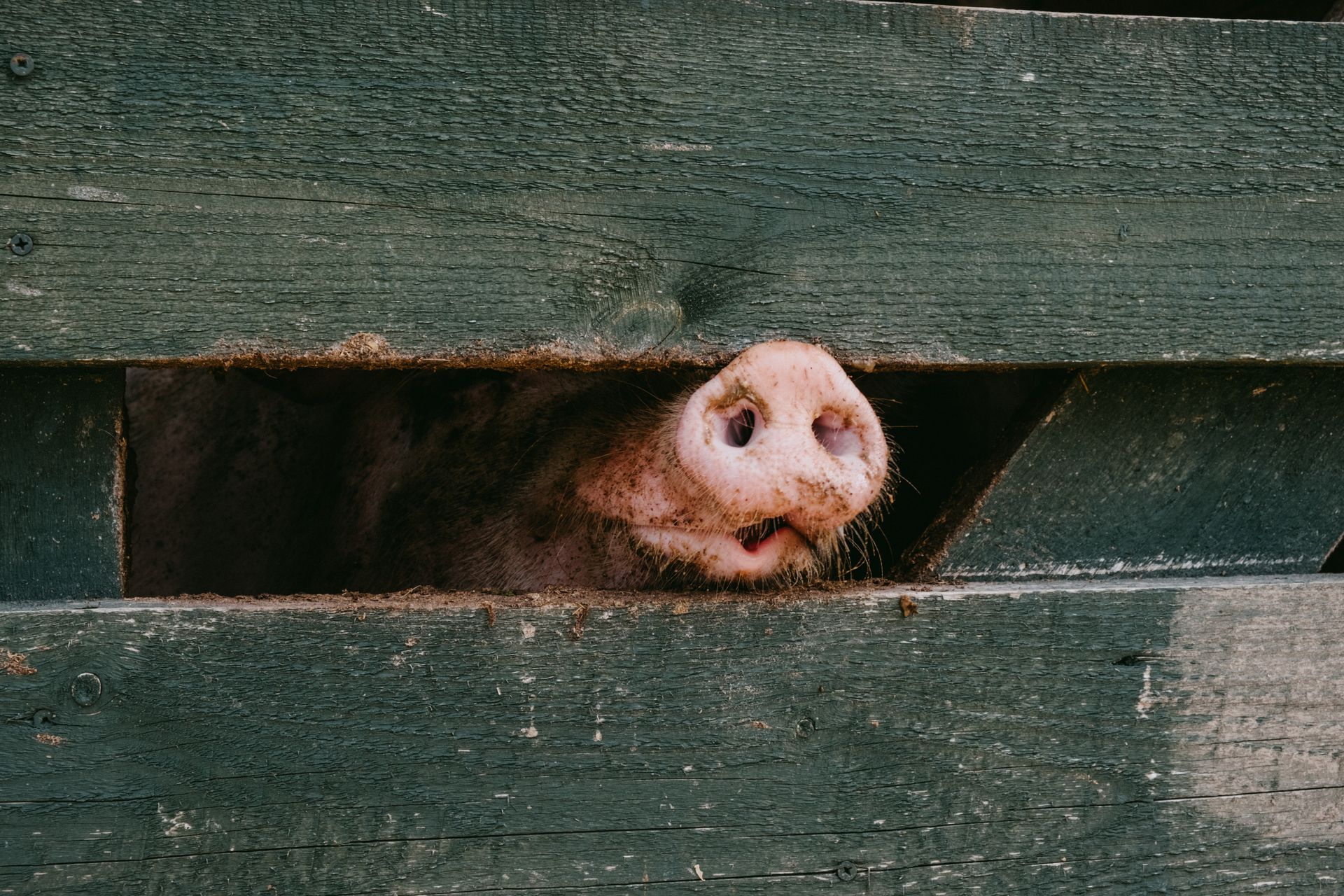
19. das Schwein — pig; lucky person. “Schwein haben” (to have a pig) means to be lucky — the Glücksschwein (lucky pig) is a traditional German good-luck charm. Telling a German “Du hast Schwein” congratulates their luck; in English it would start a fight.
20. die Sau — sow (female pig); (slang) mess, debauchery. “Die Sau rauslassen” (to let the sow out) means to party hard. Stronger than Schwein — Sau is coarse. Learners who confuse the two upgrade their rudeness accidentally.
Food, Drink, and Farmyard Surprises
21. die Gurke — cucumber. “Eine alte Gurke” (an old cucumber) is slang for a decrepit car. The English speaker who heard his beloved vintage VW called eine Gurke thought it was a compliment about freshness. It was not.
22. der Hahn — rooster; faucet/tap. “Den Hahn zudrehen” (turn off the tap). One word for the bird and the bathroom fixture — German compounds (Wasserhahn) make it clear, but the bare word confuses everyone once.

23. die Ente — duck; (newspaper) canard, false report. “Eine Ente” in journalism means a fake story. The English speaker who read “Die Zeitung druckte eine Ente” as “the newspaper printed a duck” was closer to the truth than he knew.
24. der Bock — buck (male goat); desire, inclination. “Ich habe keinen Bock” (I can’t be bothered / I don’t feel like it) is essential youth slang. Literally “I have no buck.” The English speaker who heard it as goat-related missed an entire emotional register.
25. die Fliege — fly (insect); bow tie. “Er trägt eine Fliege” (he’s wearing a bow tie). The insect and the formalwear share a word — supposedly because the bow tie’s shape recalls wings. Black-tie events in Germany are full of Fliegen, none of them buzzing.
How to Recover Gracefully
Every misunderstanding above is survivable — most are endearing. The recovery formula:
- Laugh first. If you laugh, everyone laughs with you. The only unforgivable response is freezing.
- Learn the pair aloud. “Ah — nicht Geschenk, Gift! Gift ist poison!” Saying the correction out loud, in front of witnesses, burns it into memory.
- Write it down that evening. The Unterhose story survives because someone wrote it down. Your error log is your textbook.
- Retell it. Every retelling strengthens the correct meaning. Embarrassment, recycled, becomes fluency.
- Collect them. Keep a running list of your personal bloopers — the Gift incident, the Kater confusion, the Unterhose catastrophe. Revisit it monthly. Nothing motivates review like your own greatest hits of humiliation, and nothing teaches false friends faster than the ones that taught you.
For the full-length versions of the most dangerous traps, see our complete German false friends guide — and for the stories too embarrassing for this list, 50 false friends that will embarrass you. To understand the mechanisms behind the mix-ups, read why German false friends exist.
Key Takeaways
- These 25 funny german false friends work through overconfidence: familiar faces (Gift, Kater, Hose) with unfamiliar jobs, producing stories that get retold for years.
- Animals are a rich misunderstanding zone: Affe, Esel, Schwein, and Sau carry idioms and insults that no dictionary entry fully prepares you for.
- Recovery is a skill: laugh first, say the correction aloud, write it down, retell it. Embarrassment recycled becomes fluency.
- Every story above happened to a real learner — which means every trap above is avoidable for the next one. Read them, remember them, and go make your own original mistakes instead.
- New to false friends? Start with 30 German false friends for beginners — then graduate to tricky intermediate false friends.
Frequently Asked Questions

What is the funniest German false friend?
Das Gift (poison vs. present) wins on pure shock value, but die Unterhose (underpants) and der Kater (hangover/tomcat) generate the best stories. Among slang, “Ich habe keinen Bock” (I can’t be bothered) confuses every newcomer once.
Do Germans find false-friend mistakes funny or rude?
Funny, overwhelmingly — especially the classics. Germans make the mirror-image mistakes in English constantly (“I become a coffee” for bekommen), so there is deep mutual sympathy. Rudeness only enters with words like Sau, used coarsely by accident.
How do I apologize after a false-friend blunder?
“Entschuldigung, falsches Wort!” (Sorry, wrong word!) with a smile fixes almost everything. Germans appreciate the attempt far more than they judge the error — the effort is the compliment.
Are animal insults like “Du Esel!” actually offensive?
Mildly — Esel, Affe, and Kuh as insults are schoolyard-level, often affectionate among friends. Sau is genuinely coarse. When in doubt, do not deploy animal vocabulary on people until you have heard natives do it first.
What should I do if I accidentally insult someone with a false friend?
Apologize once, briefly, with humor — “Entschuldigung, mein Deutsch!” (Sorry, my German!) — and move on. Over-apologizing makes it awkward; Germans have short memories for learner errors and long memories for learners who laughed along.
Can false-friend stories actually help me learn?
Yes — embarrassment is a memory superpower. Psychologists call it the “humiliation effect”: information encoded during embarrassment is recalled far better than information studied calmly. Every cringe on this list is doing pedagogical work.