

Every serious German crossword solver eventually meets the Kreuzworträtsel-Lexikon — the German crossword dictionary. It is not a normal dictionary: you do not look up what a word means, but which words fit a half-known answer. Used well, a German crossword dictionary turns an impossible corner into a satisfying deduction. Used badly, it turns solving into transcription and quietly destroys the skill you are trying to build.
This guide teaches you how to use a German crossword dictionary effectively: the three search methods (by letter pattern, by clue, and by meaning), the techniques that make each one powerful, and — just as important — the honest rules for when to reach for it and when to leave it closed. Think of it as a power tool: in trained hands it builds things faster; in careless hands it just makes noise.
What a German Crossword Dictionary Actually Is
A German crossword dictionary (Kreuzworträtsel-Lexikon, Rätsellexikon, or Kreuzworträtsel-Wörterbuch) is a reference organized for solvers, not readers. Where a normal dictionary is organized alphabetically by headword for meaning lookup, a crossword dictionary is organized for reverse lookup: you know something about the answer — some letters, the clue, the topic — and you need the word.
Print editions are typically hefty paperbacks organized in two main sections: a letter-pattern index (words grouped by length, then by known-letter positions — all five-letter words with E second and N fourth, for example) and a clue index (common clue phrasings mapped to their answers: “Dichterfürst” → GOETHE). Digital versions add full-text search, which effectively gives you all three search methods in one box.
The content reflects the German crossword tradition specifically: the stock of short nouns (AAL, EHE, OHR), the abbreviations (AG, ZB, UNO), river and city names, poetic words (LENZ, ODEM), and the Latin-derived chemical symbols (AU, FE, CU). A good German crossword dictionary contains tens of thousands of entries tuned to what setters actually use — which is why it beats a normal dictionary for this job. Looking up “_ _ E” in a standard Wörterbuch is hopeless; in a crossword dictionary it is the primary use case.
If you are still learning the basics of solving, our beginner’s guide covers when reference help fits into the overall method. This guide assumes you can already work a grid and focuses purely on the tool.
The Three Search Methods
Every lookup in a German crossword dictionary uses one of three approaches. Knowing which to reach for — and in what order — is the core skill.
1. Search by letter pattern. You know some letters and the length: E_B_ (four letters, E first, B third). The dictionary returns candidates: ELBE, ERBE, EBBE… You pick using the clue. This is the most powerful method and the one to learn first, because crossing letters give you patterns constantly.
2. Search by clue. You know the clue phrasing but not the answer: “Dichterfürst,” “chem. Zeichen für Gold,” “Wüstenschiff.” The dictionary’s clue index maps these directly to GOETHE, AU, KAMEL. This is fastest for code words — but it is also the method most prone to abuse (more on that below).
3. Search by meaning or theme. You know the topic but neither letters nor the exact clue: “rivers in Bavaria,” “dog breeds,” “composers.” The dictionary’s thematic lists give you the candidate set, and the grid pattern picks the winner. This method doubles as vocabulary study.
The expert order of operations: pattern first, theme second, clue last. Pattern search preserves the most solving (you still deduce from crossings); clue search preserves the least (you are handed the answer). We will now take each method apart.
Searching by Letter Pattern: The Power Technique
Pattern search is where a German crossword dictionary earns its place. The technique:
Step 1: Write the pattern precisely. Length first, then known positions. For a five-letter answer with S first and E last: S_ _ _E. Be exact about positions — an off-by-one error returns useless candidates. Count the grid squares twice.
Step 2: Apply the umlaut convention. Remember that print puzzles expand umlauts: if the answer might contain Ä, search the AE form too. A pattern like B_ME for “trees” could be BAEUME (six letters, not four) — but _ _ U M E patterns in umlaut-accepting digital puzzles need the Ü form. Know your puzzle’s convention before searching.
Step 3: Filter by the clue’s domain. The dictionary may return a dozen candidates for E_ _E (four letters): EBBE, ELBE, ERBE, ESSE, and more. The clue “Fluss in Deutschland” (river in Germany) selects ELBE instantly — EBBE is the ebb tide, ERBE the heir, ESSE the forge. The dictionary gave you the candidate set; the clue’s domain picked the winner. That division of labor is the whole technique: the tool narrows, you decide.
Step 4: Verify with crossings. Never accept a pattern match on length alone. Check every crossing letter the candidate implies against the crossing clues. A candidate that fits the pattern but contradicts a crossing you are confident about is wrong — recheck the crossing first (beginners’ crossings are wrong more often than dictionaries are).
Digital shortcuts. Online crossword dictionaries accept wildcards: S??E, E?B?, or checkbox letter positions. Learn your tool’s syntax once and lookups take seconds. Some also filter by word type (noun, abbreviation, proper name) — use these filters aggressively to cut candidate lists.
The 80% rule. If pattern search returns more than about twenty candidates, you do not have enough letters — go solve more crossings first. Pattern search is a finisher, not an opener. Two known letters in a seven-letter word is a lookup; four known letters is a solution waiting to happen.
Searching by Clue: Fast but Dangerous

Clue search — typing “Dichterfürst” and being handed GOETHE — is the fastest lookup and the most dangerous habit. It feels productive: the grid fills, the puzzle completes. But it bypasses every cognitive step that makes crosswords valuable. You have not practiced recall, pattern matching, or clue decoding; you have practiced typing.
That said, clue search has legitimate uses:
Learning the code words. When you are new, you do not know that “Dichterfürst” means GOETHE — nobody is born knowing it. Looking it up once and writing it in your notebook converts an unknown convention into permanent knowledge. The lookup is tuition, not cheating, if the knowledge sticks. Our clue abbreviations guide lists the most important ones to pre-learn.
Verifying a guess. You derived GOETHE from crossing letters and the “prince of poets” reading, but you are only 80% sure. A clue search confirms it. This is the dictionary as verifier — the healthiest role it can play.
Breaking a deadlock. One unknown answer is blocking four crossings and you have spent fifteen minutes. A single clue-search lookup unblocks the region and the puzzle flows again. Budget these: one or two per puzzle, spent where they unlock the most.
The rule that keeps clue search honest: every clue-search lookup must produce a notebook entry. If you looked it up and did not write it down, you will look it up again next month — that is not solving, that is outsourcing your memory to the tool. The notebook converts lookups into learning; without it, the dictionary is a crutch.
Searching by Meaning: The Study Method
Theme search — “give me Bavarian rivers,” “give me dog breeds” — is the most underused method and the best for learners. Instead of handing you one answer, it shows you the candidate set, and you still do the work of matching pattern to clue.
How to use it. The clue is “Hunderasse” (dog breed), six letters, pattern U_E. Rather than pattern-searching blind, pull the dictionary’s dog-breed list: DOGGE, PUDEL, DACKEL, BOXER, COLLIE… U_E with six letters: PUDEL fits (P-U-D-E-L). You solved it — the dictionary only narrowed the field. That is the ideal balance: assistance without replacement.
Building topical vocabulary. Work through theme lists as study material: all the river names, all the city abbreviations, the 3-letter and 4-letter stock answers. Reading a theme list twice is worth more than ten isolated lookups, because grouped words reinforce each other.
Reverse study. Pick a theme list and quiz yourself: cover the answers, read the clues, recall. A crossword dictionary’s clue index is a ready-made flashcard deck for the exact vocabulary German puzzles use. Fifteen minutes of this per week compounds remarkably.
When a Dictionary Helps: The Green Lights
Reach for the German crossword dictionary freely in these situations:
Verifying pattern-derived answers. You worked out ELBE from E_B_ plus “Fluss in Sachsen” and want confirmation before inking it. This is the dictionary at its best — a second opinion, not a first resort.
Learning conventions as a beginner. Your first month of solving involves dozens of unknown code words and abbreviations. Looking them up and logging them is legitimate study. The goal is a shrinking lookup count over time — track it.
Unblocking a dead region. One stubborn answer is freezing a whole corner. A single lookup restarts the cascade. This is triage, and it is smart solving, not weak solving.
Checking obscure proper nouns. “Wer schrieb den Steppenwolf?” — if HERMANN HESSE does not surface from memory, verifying the spelling via the dictionary beats guessing. Proper-noun spelling (double letters, ß vs SS) is exactly what references are for.
Post-solve review. After finishing, look up every answer you got wrong or left blank — not to change the result, but to understand it. Was it a convention you should have known, or genuine new vocabulary? The dictionary turns a finished puzzle into a lesson plan.
When It Kills the Fun: The Red Lines
And here is where the tool becomes the problem. Be honest with yourself about these:
Looking up more than a third of the answers. At that point you are not solving the puzzle; the dictionary is, and you are its typist. The puzzle’s difficulty is mismatched to your level — drop down a tier rather than leaning harder on the tool. Struggle is where learning happens; transcription teaches nothing.
Clue-searching everything. If your first move on every unknown clue is typing it into the search box, you are bypassing recall, pattern work, and deduction — the three skills crosswords exist to train. Your grid will fill and your ability will not.
Using it to protect a streak. Digital streaks and timers create pressure to look things up rather than leave blanks. A streak preserved by lookups is fiction. Either solve honestly or let the streak go — the number was never the point.
Never weaning off. The dictionary should be scaffolding, not architecture. If your lookup count is not declining month over month, the tool is not helping you learn — it is helping you avoid learning. Set a monthly lookup budget and shrink it.
The fun test. Ask yourself after a puzzle: did I enjoy that? Puzzles solved mostly by lookup feel hollow — there is no “aha,” no earned answer, just data entry. If the fun is gone, the dictionary is the reason. Put it away for a week and solve easier puzzles unaided; the pleasure returns fast.
Building Your Own Reference System
The endgame of dictionary use is needing it less — and the bridge is a personal reference system tailored to your misses:
The clue-code notebook. As described in our clues guide: every code word, abbreviation, and convention you look up gets one line. Review weekly. This single habit, sustained for three months, eliminates the majority of beginner lookups.
The pattern cheat sheet. Keep a one-page list of your most-used patterns: common 2-letter pairs, the short words (AB, AN, DA, IM, IN, JA, OB, SO, UM, ZU), the river set, the city codes. Glance at it instead of opening the dictionary for routine lookups — faster, and it reinforces memory.
The miss log. After each puzzle, note every answer you missed and why: unknown convention, misread clue, wrong crossing, genuine vocabulary gap. Patterns in your misses reveal exactly what to study — and “unknown convention” misses should trend to zero as the notebook grows.
The graduation plan. Month one: unlimited verification lookups, budgeted clue lookups (five per puzzle). Month two: three per puzzle. Month three: verification only, plus one emergency lookup. By month four, the dictionary is a verifier and study tool, not a solver — which is what it was always meant to be.
Print vs Digital: Choosing Your Dictionary
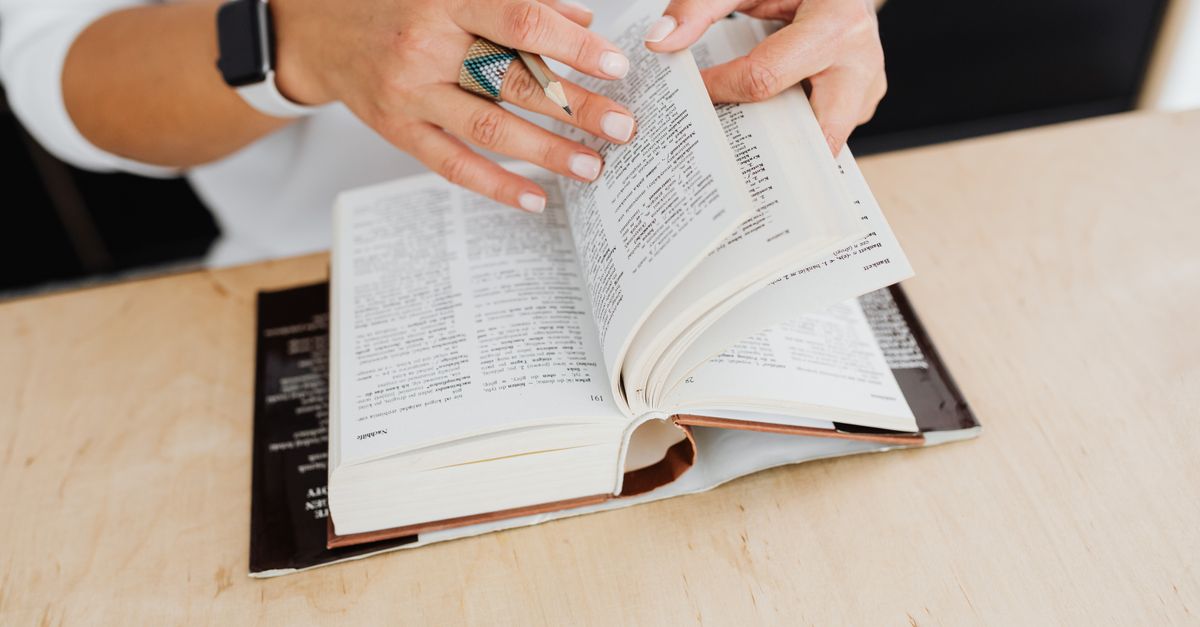
Print dictionaries (the classic Kreuzworträtsel-Lexikon paperback) have one great virtue: they are slow. Flipping to the five-letter section, scanning for E_ E, running your finger down the columns — the friction forces you to think while you search, and thinking is where learning happens. Print also works anywhere, never shows ads, and its curated entry selection reflects decades of editorial judgment about what setters actually use. The downside is speed and the lack of true wildcard search: complex patterns (S _E_AO? no…) take real page-flipping.
Digital dictionaries (websites and apps) offer instant wildcard search, combined filters (length + known letters + theme), and enormous databases. A lookup that takes two minutes in print takes five seconds digitally. The danger is exactly that speed: frictionless lookup bypasses thought, and the red lines from the previous section get crossed before you notice. Digital tools also vary wildly in quality — some are well-curated, others scrape thin databases padded with obscure words no setter would use.
The recommendation: If you are a beginner building the habit, start with print or a deliberately slow digital tool — the friction is a feature. If you are an experienced solver using the dictionary mainly for verification, go digital and enjoy the speed. Either way, the lookup budget and the notebook matter more than the medium. And whichever you choose, make sure it is German-specific: an English crossword dictionary’s word stock (heavy on obscure Scrabble words) does not match German setter conventions at all.
Advanced Pattern Techniques
Once basic pattern search is second nature, these refinements multiply its power:
Work from the rarest letter. In a pattern like _ _ C _ _, start your mental scan at the C, not the blanks. Rare letters (C, Y, X, J) eliminate candidates fastest. German words with Y are a tiny set — if your pattern has a Y, you are usually choosing among fewer than ten candidates.
Use affix knowledge. German morphology is your filter: if the pattern ends in _ _EN and the clue suggests a verb or plural noun, prioritize -EN endings; _ _UNG endings signal feminine nouns (ZEITUNG, WOHNUNG); _ _CHEN signals diminutives (MÄDCHEN, HÄUSCHEN). The dictionary gives candidates; your grammar knowledge ranks them.
Combine two weak patterns. A single crossing letter rarely suffices, but two patterns from perpendicular answers constrain each other. If across gives E_ _E and down gives L _, the shared square must satisfy both — mentally intersect the candidate lists before opening the dictionary. Often only one word survives the intersection, and you never needed the lookup.
Learn the “impossible” patterns. Some letter combinations barely exist in German: words ending in -AA, starting with Y-, containing Q without U. When a pattern forces an impossible combination, your crossing letters are wrong — the dictionary cannot help, but the knowledge saves you from a fruitless search. Recheck the crossings instead.
Keep a personal pattern index. The patterns you search repeatedly (your puzzle’s favorite 3-letter slots, common river patterns) deserve a permanent cheat sheet. Over months, this becomes a personalized mini-dictionary tuned to exactly the puzzles you solve — faster than any published reference for your specific gaps.
Key Takeaways: German Crossword Dictionary
- Three search methods: By letter pattern (most powerful — learn first), by clue (fastest but most dangerous), by meaning/theme (best for study).
- Pattern-search technique: Exact pattern, umlaut convention checked, domain-filtered, always verified against crossings; if 20+ candidates, get more letters first.
- Clue search rule: Every lookup must produce a notebook entry, or you will look it up again next month.
- Green lights: Verifying derived answers, learning conventions as a beginner, unblocking dead regions, checking proper-noun spelling, post-solve review.
- Red lines: Looking up over a third of answers, clue-searching everything, protecting streaks, never reducing usage — and the fun test: hollow solves mean the tool is the problem.
- The goal is graduation: A shrinking monthly lookup count and a growing personal notebook mean the dictionary is working as scaffolding, not a crutch.
FAQ
What is a Kreuzworträtsel-Lexikon?
A Kreuzworträtsel-Lexikon is a German crossword dictionary — a reference organized for solvers, with letter-pattern indexes and clue-to-answer mappings, rather than a normal meaning-based dictionary. It answers “which word fits?” instead of “what does this word mean?”
Is using a crossword dictionary cheating?
Not inherently — it depends on how you use it. Verifying an answer you derived from crossing letters is good practice; looking up every unknown clue bypasses the skills crosswords train. Set a lookup budget and log every lookup in a notebook to keep it honest.
How do I search by letter pattern?
Write the exact pattern (length + known positions, e.g., S_ _ _E), check your puzzle’s umlaut convention (AE vs Ä), and filter candidates by the clue’s domain. If the dictionary returns more than ~20 candidates, solve more crossings first.
What is the best German crossword dictionary?
Look for one with three indexes: letter-pattern, clue-to-answer, and thematic lists — in print or digital form. Digital versions with wildcard search (S??E) are fastest; print editions are fine if you prefer paper. Any established Kreuzworträtsel-Lexikon covers the standard stock.
Should beginners use a crossword dictionary?
Yes, with structure: unlimited verification lookups plus a small budget (about five) of clue lookups per puzzle, every lookup logged in a notebook. The goal is a declining lookup count as conventions become permanent knowledge.
When should I stop using a crossword dictionary?
You never fully stop — even experts verify obscure proper nouns. But the solving lookups should trend toward zero over a few months. When the dictionary is a verifier and study tool rather than an answer source, you have graduated.