

You do not need to speak German to be ambushed by it — you just need to walk around Germany with your eyes open. Train stations, pharmacies, restaurants, and laundromats all display german false friends signs daily life throws at visitors: familiar-looking words on official signs that mean something different from what you assume. Misread them and you walk the wrong way, enter through the exit, ask a pharmacist for shampoo, or stand on the platform watching your connection depart without you.
This is your field guide to the 25 most deceptive words on German signs and in everyday situations — what they really mean, the English trap, and the exact moment each one matters. Whether you are visiting for a week or moving for a year, these are the words that stand between you and confident daily life. Print the list, save it on your phone, or just read it once — recognition, not memorization, is the goal.
Finding Your Way: Direction Signs
1. der Ausgang — exit (not anything like “outgang” in English). “Ausgang” with the arrow — follow it to leave. The great relief: it appears everywhere, consistently, in green-and-white. Learn it on day one and you will never again be trapped inside a German building.
2. der Eingang — entrance (not “in-gang” anything). “Eingang” marks where you go in; Ausgang where you come out. The pair (ein- = in, aus- = out) is the most useful prefix lesson in German signage.
3. der Notausgang — emergency exit (not “note-outgang”). “Notausgang” in red or green — Not means emergency (Notruf = emergency call, Notfall = emergency). You hope never to need it; you must recognize it instantly.
4. die Ausfahrt — exit (from a highway); driveway (not “out-fahrt” — though Fahrt is a drive/journey). On the Autobahn, Ausfahrt signs are your lifeline — miss one and the next may be kilometers away. In parking garages it marks the way out for cars.
5. die Umleitung — detour, diversion (not “umleitung” anything). The orange signs with the U-turn arrows. Um- means “around” — the road goes around. Follow them patiently; German Umleitungen are famously thorough.
6. die Baustelle — construction site (not “bau-stelle” anything). “Baustelle” on barriers and fences — bauen is to build, Stelle is a place. German cities are perpetually eine einzige Baustelle (one big construction site), or so the joke goes.
7. der Zebrastreifen — zebra crossing, crosswalk (not “zebra stripe” as clothing). “Am Zebrastreifen” — the striped pedestrian crossing. Streifen are stripes; the zebra reference is visual. Drivers must stop — this is one sign worth reading correctly.
8. die Einbahnstraße — one-way street (bonus sign, not in the starter set but essential). “Einbahnstraße” — eine Bahn (one direction) + Straße. Driving the wrong way down one is the fastest German vocabulary lesson available.
Health and Personal Care
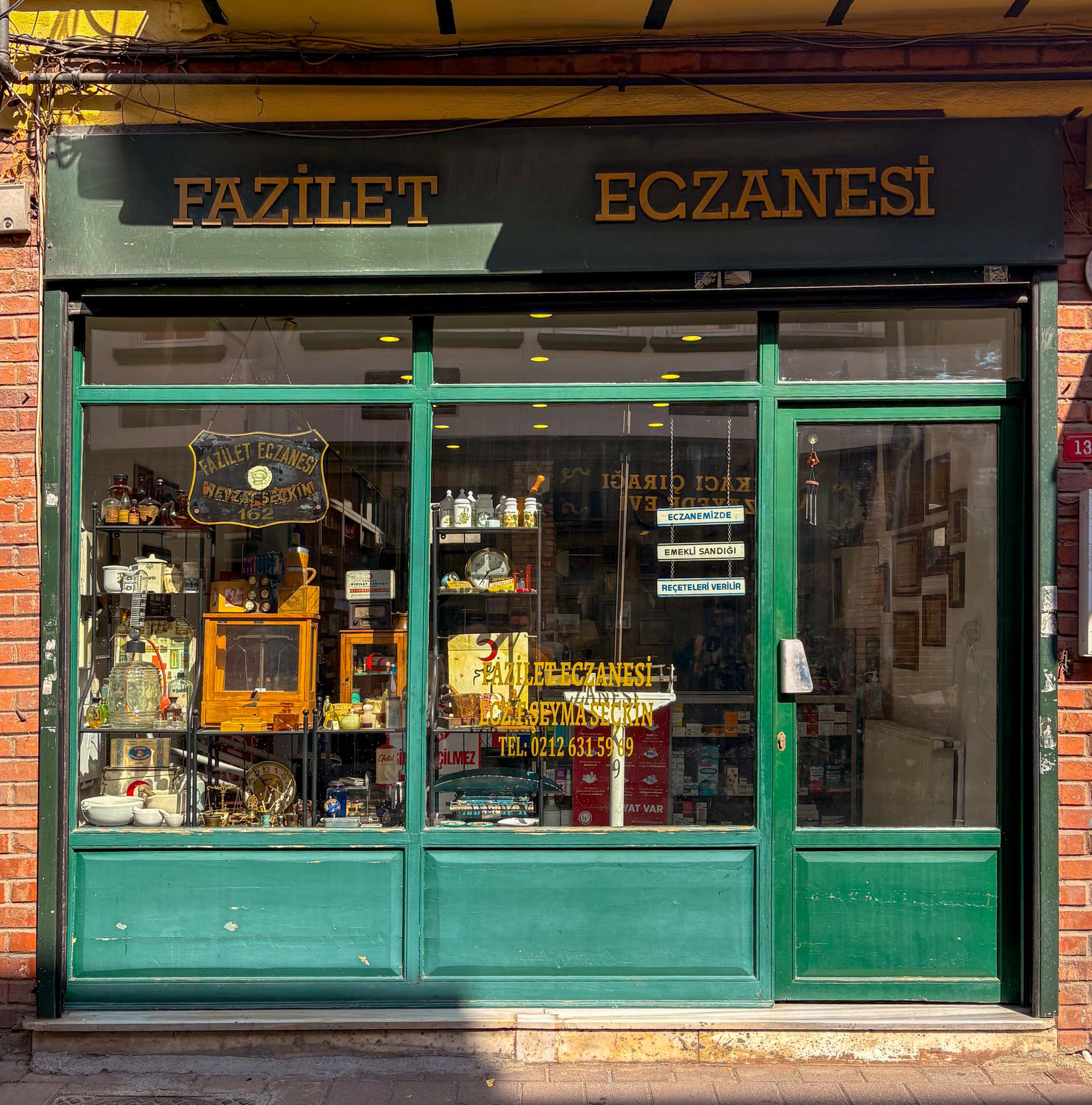
9. die Apotheke — pharmacy (not a drugstore). The green cross with the A. Apotheken dispense prescription medicine and are run by licensed pharmacists — they do not sell shampoo and snacks the way American drugstores do. For that, see Drogerie.
10. die Drogerie — drugstore (cosmetics, toiletries — not a pharmacy). “Drogerie” — think dm or Rossmann. The great German-American confusion: in the US a “drugstore” sells medicine; in Germany the Drogerie sells everything except prescription medicine. Need antibiotics? Apotheke. Need shampoo? Drogerie.
11. der Friseur — hairdresser, barber (not “friseur” anything English). “Friseur” on the shop window — from French friser (to curl). Men’s (Herrenfriseur) and women’s (Damenfriseur) are often separate shops or sections.
12. die Reinigung — dry cleaner (not “cleaning” generally). “Chemische Reinigung” — chemical cleaning, i.e., dry cleaning. Reinigung alone on a sign means the shop that cleans your suits, not a cleaning service for your apartment (that would be Reinigungsfirma).
13. die Wäscherei — laundromat (not “washery”). “Wäscherei” — where you wash clothes yourself or drop them off. Distinct from Reinigung (dry cleaning): Wäscherei = water washing. Long-stay visitors learn this distinction quickly.
14. die Toilette — restroom (not “toilet” the fixture only). “Toiletten” with the WC symbol — asking “Wo ist die Toilette?” is perfectly polite. The fixture itself is also die Toilette; context handles it. (WC is pronounced vay-tsay.)
Getting Around: Stations and Transport
15. der Fahrstuhl — elevator, lift (not “fahr-stuhl” — though fahren is to drive and Stuhl is chair; the “driving chair” etymology delights learners). “Fahrstuhl” in department stores and stations. The synonym Aufzug is equally common — learn both.
16. die Rolltreppe — escalator (not “roll-staircase” weirdness — though that is literally what it is: rollen = to roll, Treppe = stairs). “Rolltreppe” in every mall and major station. Standing on the right, walking on the left is the unwritten law.
17. die Haltestelle — bus/tram stop (not “halt-place” — though halt is stop). “Nächste Haltestelle” (next stop) — announced on every bus and tram. The H sign in green and yellow marks them on the street.
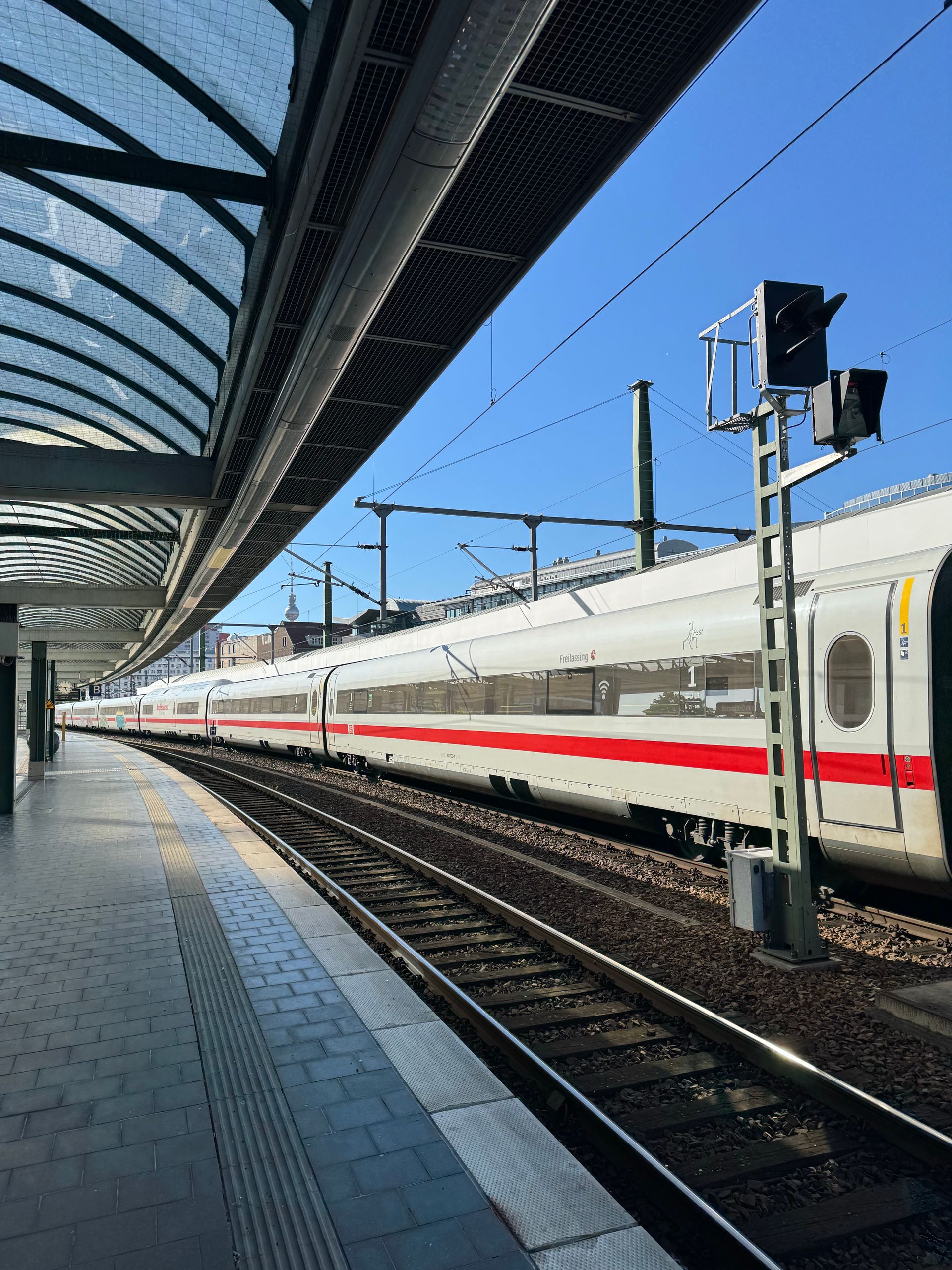
18. der Bahnsteig — platform (train station) — not “bahn-steig” anything. “Bahnsteig 3” — die Bahn (railway) + Steig (path/rise). Platform numbers (Gleis = track) are announced with changes often enough that regulars check the boards twice.
19. der Speisewagen — dining car (not “speise-wagen” — Speise is food/dish, Wagen is car). “Der Speisewagen befindet sich…” Long-distance trains (ICE, IC) have them; the Bordrestaurant is the fancier version. Coffee on a moving train is a German pleasure.
20. die Abfahrt — departure (not “ab-fahrt” anything). “Abfahrt” on station boards — ab- (off) + Fahrt (journey). Paired with Ankunft (arrival) on every departure board in the country.
21. die Ankunft — arrival. “Ankunft” — the counterpart to Abfahrt. Meeting someone? Check the Ankunft board, not Abfahrt. This pair alone navigates every German station.
22. der Fahrplan — timetable, schedule (not “fahr-plan” — though Plan is plan). “Fahrplanwechsel” (timetable change) happens every December and reshuffles the nation’s trains. The Fahrplan is sacred in German transport culture.
23. die Verspätung — delay. “Verspätung” — the word every commuter dreads. “Der Zug hat 10 Minuten Verspätung.” Deutsche Bahn’s relationship with Verspätung is a national comedy genre.
24. der Anschluss — connection, transfer (not “an-schluss” — schließen is to close). “Anschluss verpasst” (missed connection) — the tragedy of tight timetables. Also used for electrical connections and (historically) political annexation — context is everything.
Shops and Opening Hours
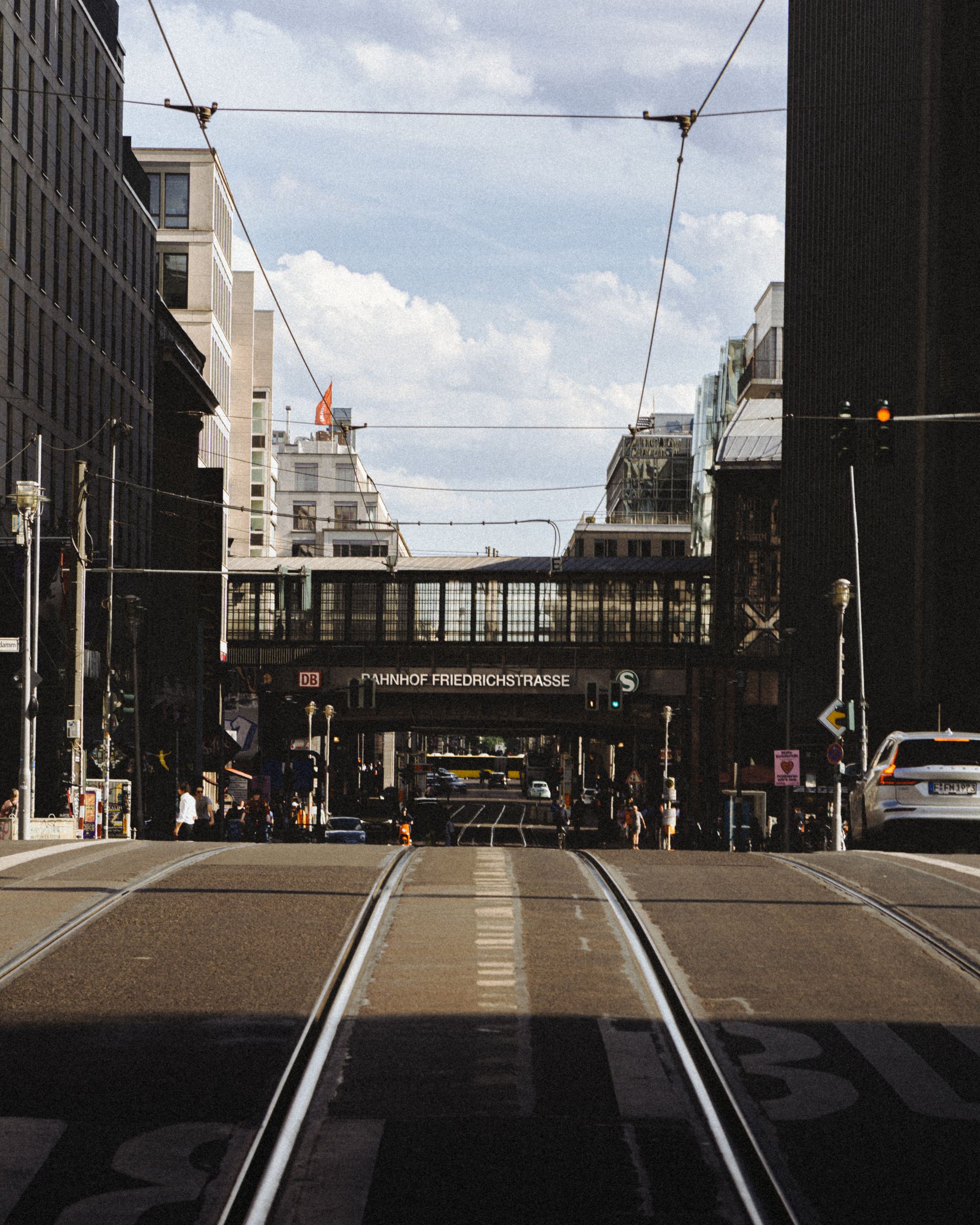
25. der Ruhetag — closing day (not “rest day” as vacation). “Ruhetag: Montag” on restaurant doors — the day the shop rests (is closed). Ruhe is rest/quiet; the Ruhetag is when the kitchen rests and you go hungry. Always check before making plans.
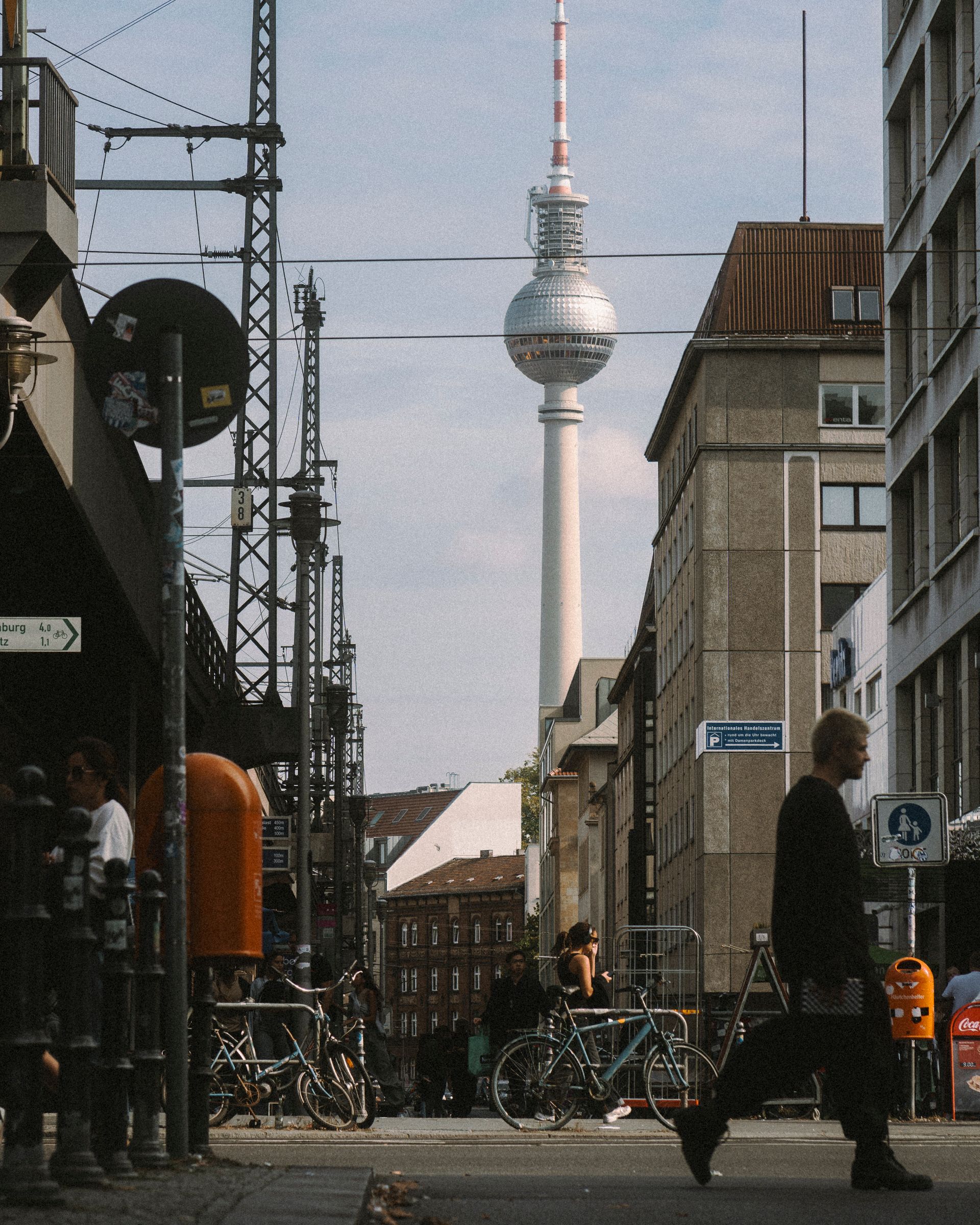
Bonus: die Öffnungszeiten — opening hours (not “opening times” weirdness — Öffnung is opening, Zeiten is times). “Öffnungszeiten: Mo–Fr 9–18 Uhr” — posted on every shop door. Sunday shopping remains largely forbidden (Ladenschlussgesetz), so Saturday Öffnungszeiten matter.
The Compound Code: Reading German Signs Like a Local
Long German sign words look intimidating, but they follow one simple rule: read from right to left. The last element is the core; everything before it modifies.
- Not-aus-gang → Gang (passage) modified by aus (out) modified by Not (emergency) = emergency exit passage.
- Zebra-streifen → Streifen (stripes) modified by Zebra = zebra stripes, i.e., the crosswalk.
- Öffnungs-zeiten → Zeiten (times) modified by Öffnung (opening) = opening times.
- Halte-stelle → Stelle (place) modified by Halt (stop) = stopping place.
- Fahr-stuhl → Stuhl (chair) modified by Fahr (drive) = driving chair = elevator.
- Roll-treppe → Treppe (stairs) modified by Roll (roll) = rolling stairs = escalator.
Once you see the pattern, even unknown signs become decodable: Fahrrad-verleih (bike rental), Gepäck-aufbewahrung (luggage storage), Fund-büro (lost property office). You do not need to memorize every sign in Germany — you need the dozen core elements (Gang, Stelle, Zeiten, Wagen, Stelle, Plan) and the right-to-left habit. This one skill, more than any list, is what separates visitors who navigate confidently from visitors who navigate hopefully.
For the deeper story of how these words evolved — why Ausgang and not something simpler — see why German false friends exist. For the full danger list, see our complete German false friends guide.
German False Friends Signs Daily Life: The Survival Guide
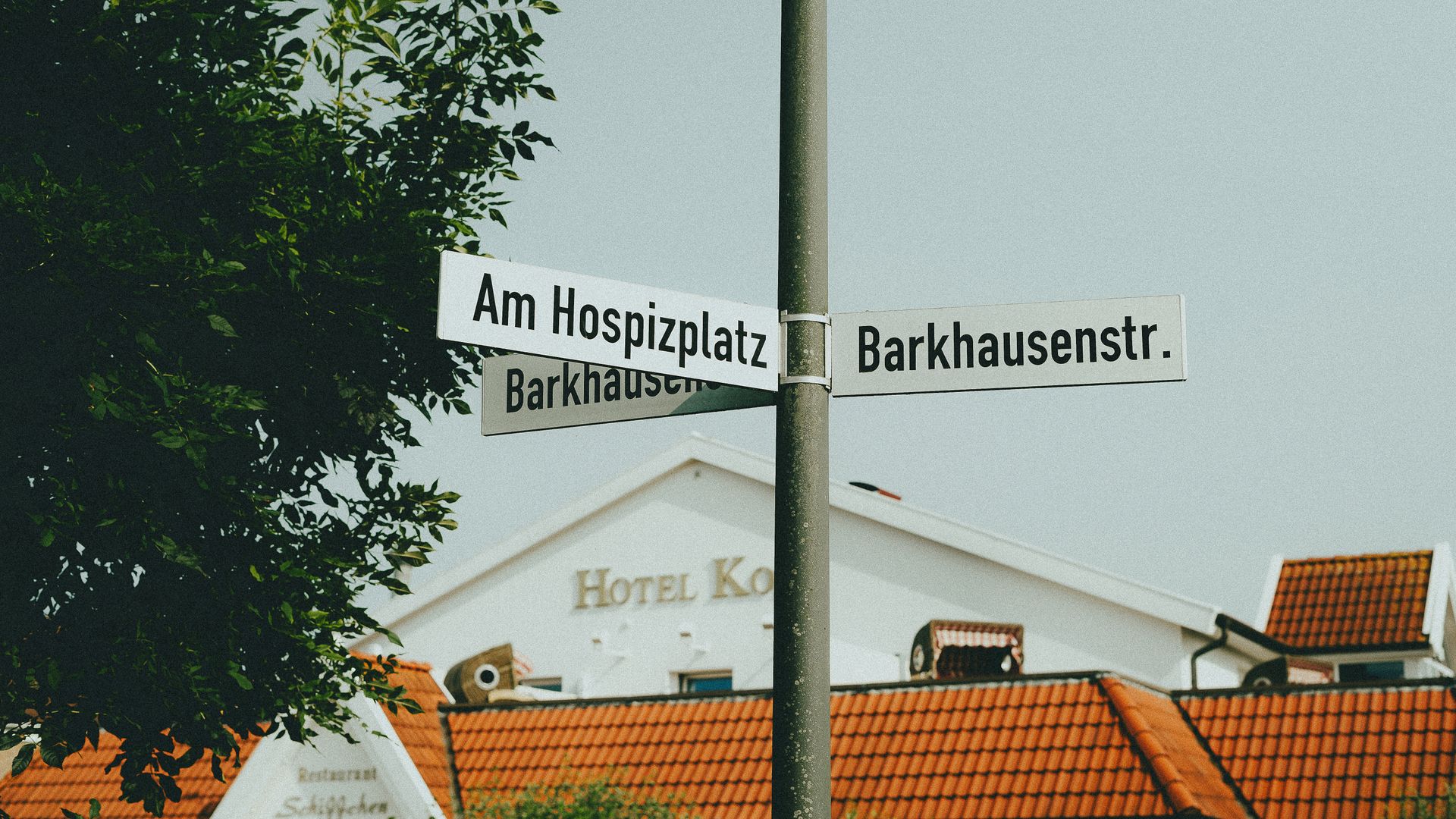
Before the list: three truths about German signs. First, they are consistent — Ausgang looks the same in every city, so each word learned pays off nationwide. Second, they are literal — German sign-makers prefer precise compounds to clever branding, which means the words decode logically once you know the parts. Third, they are everywhere — Germany signs everything, from Hunde verboten (no dogs) to Bitte nicht auf den Rasen (keep off the grass). The country runs on signage, and signage runs on the vocabulary below.
- Learn the exit/entrance pair first. Ausgang/Eingang, Ausfahrt/Einfahrt — these four words alone get you in and out of every building and parking garage in Germany.
- Green cross = pharmacy, not drugstore. Apotheke (medicine) vs. Drogerie (toiletries) — the single most useful retail distinction for visitors.
- Read compounds from right to left. Not-aus-gang = emergency-exit-way; Zebra-streifen = zebra stripes (crossing). The last element is the core meaning; the rest modifies it.
- When lost, follow the i. The lowercase i on a blue sign marks the tourist information office (Touristeninformation) — they answer in English and have maps.
- Photograph confusing signs. Your future self — and your German teacher — will thank you. Sign photos are the best flashcards ever made.
- Learn the courtesy signs. Bitte (please), Danke (thank you), Vorsicht (caution), Achtung (attention/warning) — these four words soften every interaction with German signage and German people alike. Vorsicht, Stufe! (mind the step) is the sign you will see most after Ausgang.
Key Takeaways
- These 25 german false friends signs daily life displays cluster in four zones: directions (Ausgang, Umleitung, Baustelle), health and care (Apotheke vs. Drogerie, Friseur, Reinigung), transport (Fahrstuhl, Bahnsteig, Abfahrt/Ankunft), and shops (Ruhetag, Öffnungszeiten).
- The Apotheke/Drogerie distinction is the highest-value learning on this list — it determines where you go when you are sick versus when you need shampoo.
- German compounds read right-to-left: the last element carries the core meaning (Notausgang = emergency exit) — master this habit and unknown signs become decodable on sight.
- Courtesy words (Bitte, Vorsicht, Achtung) and the tourist i sign complete your field kit: vocabulary plus manners covers nearly every daily situation.
- New to the language? Start with 30 German false friends for beginners — and watch for these traps at work with German false friends in business.
- When in doubt, follow the i (tourist info) — and photograph every confusing sign for your flashcard deck.
Frequently Asked Questions
What does “Ausgang” mean on German signs?
Exit — the way out. It appears on green-and-white signs in essentially every public building. Its counterpart Eingang marks the entrance; Notausgang the emergency exit.
What is the difference between “Apotheke” and “Drogerie”?
Apotheke is a pharmacy (prescription medicine, licensed pharmacist, green cross sign). Drogerie (like dm or Rossmann) sells cosmetics, toiletries, and household goods — but no prescription medicine. Americans must unlearn the “drugstore” equivalence.
Why are German shops closed on Sundays?
The Ladenschlussgesetz (shop closing law) keeps most retail closed Sundays, with exceptions for bakeries (limited hours), gas stations, and shops in train stations and airports. Ruhetag signs mark each shop’s weekly closing day — often Monday for restaurants.
How do I read German train station signs?
Abfahrt (departures) and Ankunft (arrivals) head the big boards; Bahnsteig/Gleis (platform/track) numbers tell you where to stand; Verspätung (delay) tells you how long you will wait. DB Navigator (the app) translates all of it live.
What does “Einfahrt freihalten” mean on German signs?
“Keep the entrance/driveway clear” — Einfahrt (entrance for vehicles) + freihalten (keep clear). Do not park there; Germans take this seriously and tow quickly.
Why do German signs use so few English translations?
Germany assumes German literacy in public signage more than many tourist-heavy countries do. Major stations and airports add English, but small towns often do not. The words on this list are your translation layer — with them, you need far less English signage than you think.