

Rivers are the single most reliable answer category in German crosswords. Short, vowel-rich, unambiguous, and deeply embedded in German cultural geography, river names appear in nearly every puzzle — often several per grid. From the mighty Rhein to the little Enz, this German river names crossword guide covers a closed, learnable set: memorize the rivers with their regions once, and “Fluss in Bayern” will never stump you again.
This guide lists the 30 German river names that appear most often in crosswords, each with its correct article (der/die/das), the region or cities that identify it in clues, and the typical clue phrasing. One geographic note: the Aare flows through Switzerland rather than Germany, but it appears constantly in German-language puzzles, so it earns its place here.
Why Rivers Dominate German Crosswords
Setters love rivers for structural reasons. River names are short (four to seven letters dominate), rich in common vowels and consonants (ELBE, ODER, MAIN are grid-friendly letter sequences), and — crucially — unambiguous: there is exactly one Rhein, one Donau, one Elbe. A setter who clues “Fluss in Sachsen” knows the answer can only be ELBE (or the longer WEISSE ELSTER, which the slot length rules out). That determinism makes rivers ideal fair clues: solvable from knowledge, verifiable from crossings.
For solvers, rivers are equally ideal: they form a closed set. Unlike, say, “authors” (thousands of candidates), the rivers a setter can plausibly clue number in the dozens. Learn the thirty below and you have covered essentially the entire river stock. Few study investments in crosswords pay off this completely.
The standard clue formula is “Fluss in/bei/durch [region]” — river in/near/through a place. The region is the key: memorize each river as a river↔region pair (ISAR↔Bayern, ELBE↔Sachsen, ODER↔Grenze), and the clue hands you the answer directly. Our clue abbreviations guide covers the formula in detail. New to the format? Our beginner’s solving guide shows how river answers seed grids — and many river cities double as Kfz code clues (Köln↔K, Dresden↔DD, Mainz↔MZ).
The Great Rivers: Rhein, Donau, Elbe, Oder, Weser
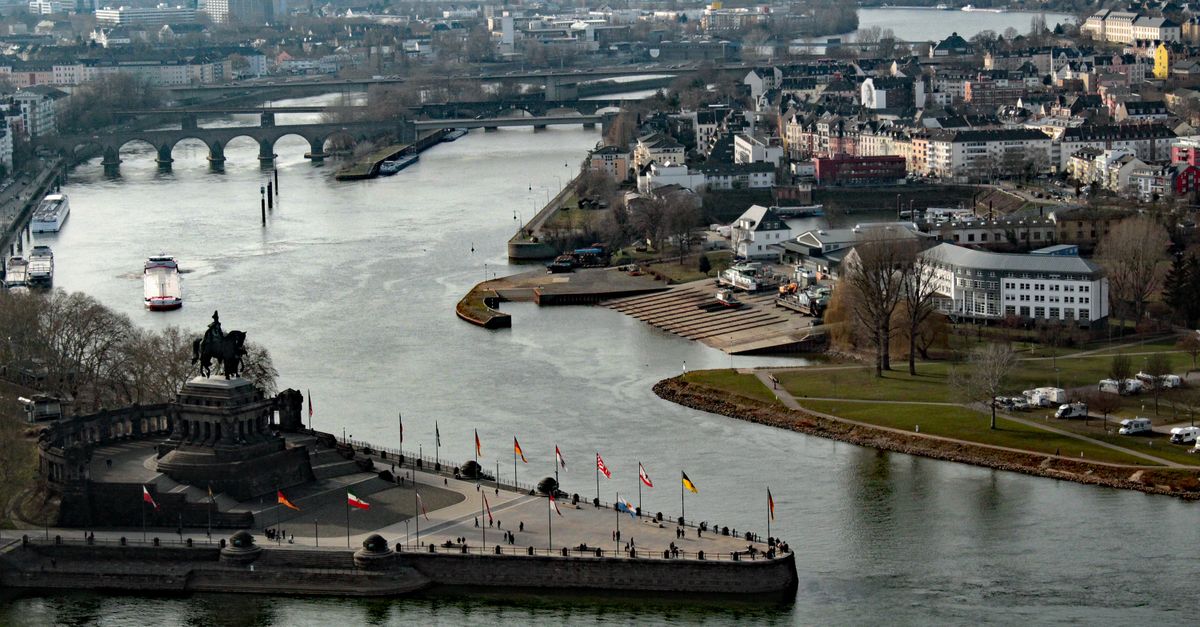
These five are Germany’s major rivers — the ones every schoolchild knows, and the ones setters clue most often.
| River | Article | Key fact for clues | Typical clue |
|---|---|---|---|
| RHEIN | der | Longest river in Germany; flows through Köln, Düsseldorf | “Fluss durch Köln” |
| DONAU | die | Flows through Wien, Budapest; rises in Schwarzwald | “Fluss durch Wien” |
| ELBE | die | Flows through Dresden, Hamburg; Saxony’s river | “Fluss in Sachsen” |
| ODER | die | German-Polish border river | “Grenzfluss” |
| WESER | die | Formed by Werra + Fulda; flows through Bremen | “Fluss durch Bremen” |
RHEIN (der Rhein) is clued by its cities: “Fluss durch Köln,” “Fluss durch Düsseldorf,” “Fluss bei Mainz.” The Lorelei rock and the Rhine castles sometimes feature in longer clues. DONAU (die Donau) is “Fluss durch Wien” par excellence — if the clue mentions Vienna and a river, it is always the Danube. ELBE is Saxony’s river (“Fluss in Sachsen,” “Fluss durch Dresden”). ODER is almost always “Grenzfluss” (border river) or “Fluss an der polnischen Grenze” — the border clue is so standard it is effectively a code word. WESER is “Fluss durch Bremen” or the river formed by Werra and Fulda joining at Hannoversch Münden — a favorite trivia clue.
The Middle Tier: Main, Mosel, Neckar, Spree, Havel
| River | Article | Key fact for clues | Typical clue |
|---|---|---|---|
| MAIN | der | Flows through Frankfurt, Würzburg; Franconia’s river | “Fluss in Franken” |
| MOSEL | die | Wine river; flows through Trier; joins Rhein at Koblenz | “Weinfluss” / “Fluss durch Trier” |
| NECKAR | der | Flows through Heidelberg, Stuttgart | “Fluss durch Heidelberg” |
| SPREE | die | Flows through Berlin | “Fluss durch Berlin” |
| HAVEL | die | Flows through Potsdam, Berlin; lake-rich | “Fluss durch Potsdam” |
MAIN (der Main — masculine, a common article error) is Franconia’s river: “Fluss in Franken,” “Fluss durch Frankfurt,” “Fluss durch Würzburg.” MOSEL (die Mosel) is the wine river — “Weinfluss” is nearly a code word, and Trier is its clue city. NECKAR (der Neckar) belongs to Heidelberg (“Fluss durch Heidelberg”). SPREE (die Spree) is Berlin’s river — and therefore appears in the cluing of Berlin itself. HAVEL (die Havel) is Potsdam’s river, famous for its lake-like widenings.
Note the articles: der Rhein, der Main, der Neckar are masculine; the rest here are feminine. Article errors (writing die Rhein) are the classic learner mistake — the table above is worth a second look for der/die/das alone.
The 4-Letter Core: Isar, Lahn, Lech, Ruhr, Ems, Inn, Aare
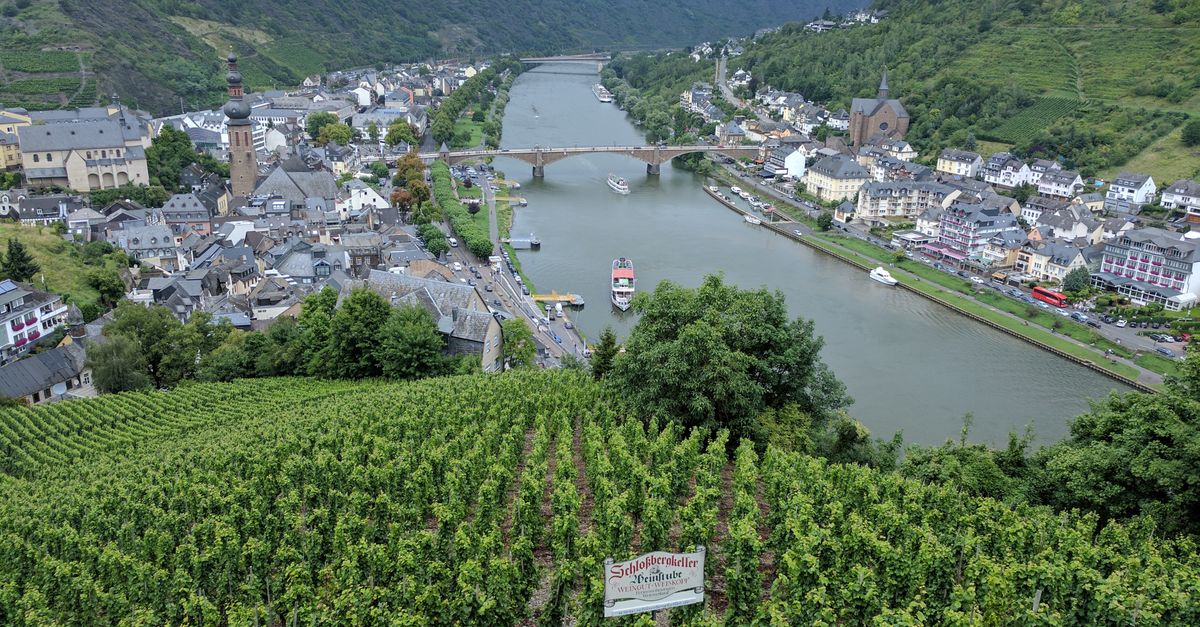
Seven four-letter rivers form the short-answer core — these overlap with our 4-letter answers list because they are the 4-letter river stock.
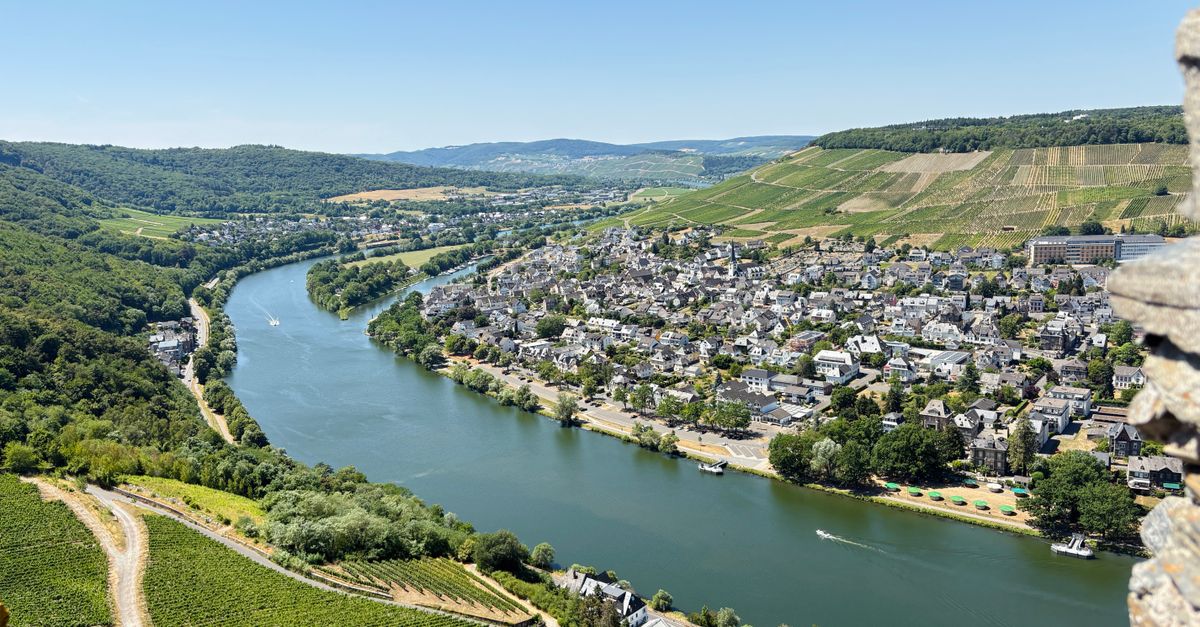
| River | Article | Key fact for clues | Typical clue |
|---|---|---|---|
| ISAR | die | Flows through München | “Fluss durch München” |
| LAHN | die | Hessen’s river; flows through Marburg, Gießen | “Fluss in Hessen” |
| LECH | der | Bavarian river; flows into the Donau | “Fluss in Bayern” |
| RUHR | die | Ruhrgebiet’s river; flows into the Rhein | “Fluss im Ruhrgebiet” |
| EMS | die | Northwest Germany; flows into the Nordsee | “Fluss in Ostfriesland” |
| INN | der | Alpine river; flows through Innsbruck, Passau | “Fluss durch Innsbruck” |
| AARE | die | Swiss river; flows through Bern | “Fluss in der Schweiz” |
ISAR vs LECH is the classic ambiguity: both are Bavarian, both four letters. “Fluss in Bayern” alone cannot distinguish them — the setter knows this, so the clue is telling you the crossings decide. “Fluss durch München,” however, is always ISAR. INN (der Inn — masculine, three letters) is the Alpine river: Innsbruck and Passau are its clue cities. AARE (die Aare) is Swiss — “Fluss durch Bern” — and appears in German puzzles constantly despite (or because of) being foreign: it is the perfect four-letter Swiss river.
Tributaries and Smaller Rivers
The remaining thirteen are tributaries and regional rivers — less famous, but standard crossword stock because their lengths and letter patterns are useful.
| River | Article | Key fact for clues | Typical clue |
|---|---|---|---|
| ALLER | die | Weser tributary; Lower Saxony | “Nebenfluss der Weser” |
| SAALE | die | Elbe tributary; Thuringia/Saxony-Anhalt | “Nebenfluss der Elbe” |
| MULDE | die | Elbe tributary; Saxony | “Nebenfluss der Elbe” |
| WERRA | die | Weser source river; Thuringia | “Quellfluss der Weser” |
| FULDA | die | Weser source river; Hessen | “Quellfluss der Weser” |
| LEINE | die | Aller tributary; flows through Hannover | “Fluss durch Hannover” |
| NAAB | die | Donau tributary; Bavaria | “Nebenfluss der Donau” |
| ALTMÜHL | die | Donau tributary; Bavaria (→ ALT-MUEHL) | “Nebenfluss der Donau” |
| REGNITZ | die | Main tributary; Franconia | “Nebenfluss des Mains” |
| TAUBER | die | Main tributary; Taubertal | “Nebenfluss des Mains” |
| JAGST | die | Neckar tributary; Baden-Württemberg | “Nebenfluss des Neckars” |
| KOCHER | die | Neckar tributary; Baden-Württemberg | “Nebenfluss des Neckars” |
| ENZ | die | Neckar tributary; short and useful | “Nebenfluss des Neckars” |
The Weser system is a setter favorite: WERRA + FULDA = WESER (at Hannoversch Münden), and the ALLER and LEINE feed in downstream. Learn this as a chain — Werra/Fulda → Weser → Aller/Leine — and four rivers come as a package. Similarly, the Neckar’s tributaries (JAGST, KOCHER, ENZ) form a triple: three short, consonant-rich names that constructors love. ENZ (three letters) is particularly valuable — it also appears on 3-letter answer territory.
ALTMÜHL contains Ü → entered as ALTMUEHL (8 letters). It is the longest river on this list and a good test of the umlaut-expansion reflex.
River Clue Patterns
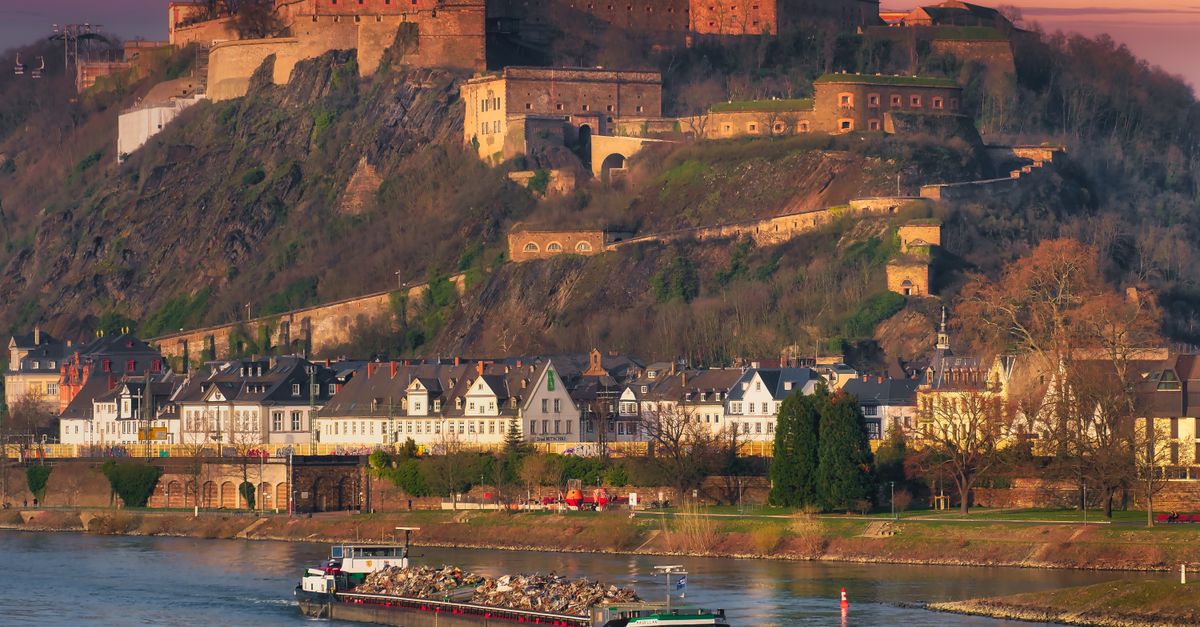
The region formula. “Fluss in [Bundesland]” → the state’s signature river: Bayern → ISAR/LECH/DONAU (check length), Sachsen → ELBE, Hessen → LAHN/FULDA, Franken → MAIN. Memorize state↔river pairs and these clues become instant.
The city formula. “Fluss durch [Stadt]” → Köln → RHEIN, Wien → DONAU, Dresden → ELBE, Berlin → SPREE, München → ISAR, Heidelberg → NECKAR, Bremen → WESER, Trier → MOSEL, Hannover → LEINE, Innsbruck → INN, Bern → AARE, Potsdam → HAVEL. City clues are even more deterministic than region clues — learn them as pairs.
The relationship formula. “Nebenfluss des/der [river]” (tributary of) → SAALE/MULDE → ELBE; NAAB/ALTMÜHL → DONAU; REGNITZ/TAUBER → MAIN; JAGST/KOCHER/ENZ → NECKAR; ALLER → WESER. “Quellfluss” (source river) → WERRA/FULDA → WESER.
The bare “Fluss.” A lone “Fluss” with no region in a short slot means the crossings decide — do not try to solve it from the clue. Fill the surroundings, then pick the river that fits the pattern. This is the setter being honest: the clue is a placeholder.
Border and special clues. “Grenzfluss” → ODER (almost always). “Weinfluss” → MOSEL. “Längster Fluss Deutschlands” → RHEIN. These function as code words — memorize them as units.
River Trivia Setters Love
Beyond the standard formulas, setters occasionally reach for river trivia — and the same facts recur:
Confluences. Deutsches Eck (German Corner) in Koblenz, where the MOSEL joins the RHEIN, is the most-clued confluence in German puzzles. Hannoversch Münden (WERRA + FULDA = WESER) is the second. If a clue mentions two rivers meeting, it is one of these two.
Source trivia. The DONAU rises in the Schwarzwald (Black Forest) — “Fluss aus dem Schwarzwald” is a classic Donau clue. The RHEIN rises in the Swiss Alps. Source-region clues (“Quellgebiet”) point to these.
“Längster Fluss.” The RHEIN is Germany’s longest river (and Europe’s busiest waterway) — “längster Fluss Deutschlands” is a stock clue. The DONAU is Europe’s second-longest overall, but in German puzzles the superlative clue belongs to the Rhein.
City trios. Setters love “flows through X, Y, and Z” clues for the big rivers: Rhein → Köln, Düsseldorf, Mainz; Donau → (Ulm,) Wien, Budapest; Elbe → Dresden, Magdeburg, Hamburg. Any one of these cities in a river clue identifies the river — learn the trios and you will never need the region.
Key Takeaways: German River Names Crossword
- 30 rivers, closed set: From RHEIN to ENZ, this list covers essentially the entire river stock German setters use.
- Learn river↔region pairs: ISAR↔Bayern/München, ELBE↔Sachsen, ODER↔Grenze, MAIN↔Franken, SPREE↔Berlin, DONAU↔Wien — the clue’s place-name hands you the answer.
- Articles matter: der Rhein, der Main, der Neckar, der Lech, der Inn are masculine; most others are feminine — die Rhein is the classic error.
- The 4-letter core: ISAR, LAHN, LECH, RUHR, EMS, INN, AARE — the short-answer rivers; ISAR vs LECH needs crossings or “durch München.”
- River systems come in chains: Werra/Fulda → Weser → Aller/Leine; Neckar ← Jagst/Kocher/Enz — learn tributaries with their main river.
- AARE is Swiss: It flows through Bern, not Germany — but appears constantly in German puzzles anyway.
FAQ
What are the most common river answers in German crosswords?
ELBE, ODER, MAIN, RUHR, ISAR, DONAU, and RHEIN top the frequency list. The four-letter rivers (ISAR, LAHN, LECH, RUHR, EMS, INN, AARE) are especially common because their length fits dense grids.
Is it der, die, or das Rhein?
Der Rhein — masculine. Similarly der Main, der Neckar, der Lech, der Inn. Most other German rivers are feminine (die Donau, die Elbe, die Oder, die Mosel, die Weser).
What is the difference between ISAR and LECH?
Both are four-letter Bavarian rivers. The ISAR flows through München (“Fluss durch München” is always ISAR); the LECH flows through Augsburg into the Donau. A bare “Fluss in Bayern” cannot distinguish them — use crossing letters.
Why is the AARE in a German crossword list?
The Aare flows through Switzerland (through Bern), but German-language crosswords routinely include it — it is the standard four-letter Swiss river and a constructor favorite. Geography in puzzles follows language, not borders.
What does “Grenzfluss” mean in a crossword clue?
“Grenzfluss” (border river) almost always means the ODER, which forms much of the German-Polish border. It functions as a code word — see our clue abbreviations guide.
How do I memorize German rivers for crosswords?
Learn them as pairs: river↔region (ELBE↔Sachsen) and river↔city (SPREE↔Berlin), plus the tributary chains (Werra/Fulda → Weser). Then drill clue → answer and solve puzzles the same week.