

Learning how to solve German crosswords is one of the most enjoyable ways to grow your German vocabulary — and it is far less intimidating than it looks. Most German puzzles use the Schwedenrätsel (Swedish-style) format, where the clues sit right inside the grid instead of in a separate list. Once you understand how that layout works, how German setters phrase their clues, and which short answers repeat endlessly, even a beginner can finish a full puzzle.
This guide walks you through the complete method for how to solve German crosswords, from your first glance at the grid to the habits that make you fast. You do not need to be fluent. You need a system: read the grid correctly, harvest the easy answers first, let crossing letters do the heavy lifting, and learn the small set of tricks that German clue-writers reuse every single day. Follow the steps below in order, and by the end you will have solved your first puzzle — and you will know exactly how to solve the next one faster.
What Makes German Crosswords Different
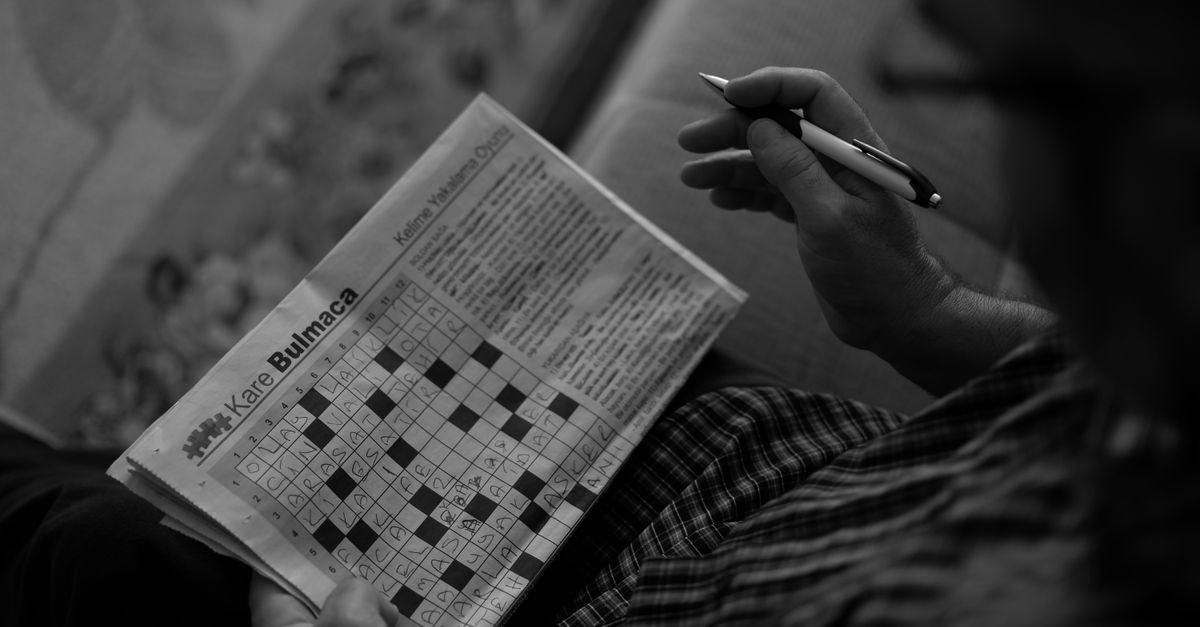
Before learning how to solve German crosswords, it helps to know what you are looking at. The standard German puzzle is the Schwedenrätsel — literally “Swedish puzzle.” Instead of numbered clues listed beside the grid (the American style), the clue for each entry is printed inside one of the grid’s own squares, usually in tiny type, with an arrow pointing in the direction the answer runs. A typical German newspaper puzzle is a dense block of white and black squares with clues embedded throughout, and there is no separate clue list at all.
This design changes the solving experience. You cannot scan a numbered list for the clues you like; you must read the grid itself, moving your eyes across rows and columns to find entries you can answer. The advantage is that every answer is visible in context — you always see exactly how long the answer is and which crossing letters already constrain it.
A few more German-specific features matter. German crosswords traditionally write everything in capital letters without umlauts or ß: Ä becomes AE, Ö becomes OE, Ü becomes UE, and ß becomes SS. So the answer to “schön” would be entered as SCHOEN. (Some modern online puzzles now accept umlauts, but print puzzles overwhelmingly use the AE/OE/UE/SS convention.) Answers are also overwhelmingly nouns in their base form — singular nominative, no articles — plus a stock of short function words, abbreviations, and river and city names that appear again and again. Understanding this inventory is half the battle, and it is why experienced solvers seem to “just know” answers: they have seen the same three-letter answers hundreds of times.
Step 1: Read the Whole Grid Before Writing Anything
The biggest beginner mistake is filling in the first answer you know and working outward from there. Resist it. Your first pass should be a pure reading pass — no pen, no typing — lasting two to three minutes.
Start in the top-left corner and scan every clue embedded in the grid, row by row. As you read each clue, ask one question: do I know this immediately? If yes, make a tiny mental note (or a light pencil dot) but do not write the answer yet. You are building a map of the puzzle: which corners are friendly, where the long answers sit, and which areas look difficult.
This reading pass does three things. First, it prevents tunnel vision — the trap of spending ten minutes on one stubborn corner while easy answers sit untouched elsewhere. Second, it lets your subconscious work on the medium clues while you solve the easy ones. Third, it gives you a realistic sense of the puzzle’s difficulty, so you can decide whether to solve it in one sitting or in stages.
Pay special attention during this pass to clue length indicators. In a Schwedenrätsel, the clue square shows the clue text and the answer runs from the next square in the arrow’s direction until it hits a black square or the grid edge. Count the available squares for any answer you think you know — a wrong-length guess is the most common source of cascading errors later.
Step 2: Fill In the Answers You Know Cold
Now pick up the pen. Your second pass targets only the gimmes — clues you can answer with complete confidence. Typical beginner gimmes in German puzzles include:
- Obvious abbreviations: “Hauptstadt von Frankreich” → PARIS is easy, but even easier are things like “z. B.” style definitional clues.
- Numbers and weekdays: “dritter Wochentag” → DIENSTAG (if it fits), “zwölf Monate” → JAHR.
- Your own strong areas: If you know geography, grab every river and city clue. If you cook, grab every food clue.
Write these in lightly (pencil, or erasable pen). The goal of this pass is not completeness — it is to seed the grid with anchor letters. Every correct letter you place is information that constrains the crossing answers. A puzzle with twenty scattered correct letters is dramatically easier than an empty one, because most remaining clues can now be solved by pattern matching rather than recall.
A practical rule: if you can fill at least a quarter of the grid’s letters from pure knowledge, the puzzle is well within your reach. If you are below that, do not despair — the next steps are designed exactly for that situation. This is also the moment to open our German crossword dictionary guide in another tab if you plan to use reference help; knowing when to look things up is a skill, and looking up your gimmes is not it.
Step 3: Let Crossing Letters Solve Clues for You
This is the core technique of how to solve German crosswords, and it is where beginners become solvers. A crossing letter is a letter shared between an across and a down answer. Once you have seed letters in the grid, most remaining clues stop being vocabulary questions and become pattern questions.
Work systematically: find an unsolved clue where you already have two or more letters placed, ideally at the start or end of the answer. Say the pattern is _ _ A _ and the clue is “Fluss in Bayern” (river in Bavaria). Your mental word list of Bavarian rivers — Isar, Lech, Inn, Donau — collapses instantly: only ISAR fits a four-letter pattern with A third. You did not need to “know” the answer from the clue alone; the crossing letters told you.
Three habits make this technique powerful:
- Always re-scan after filling an answer. Each new answer adds crossing letters to its neighbors. Get in the rhythm: fill one, glance at all four crossing clues, fill whatever those letters reveal, repeat.
- Trust the pattern over your first instinct. If your instinct says DONAU but the pattern is _ S _ R, your instinct is wrong for this slot — move on and let the letters guide you. (DONAU is five letters anyway; length discipline from Step 1 pays off here.)
- Use the distinctive letters. German has wonderful pattern-breakers: Y appears in very few words, X almost always signals a Greek loan or abbreviation, and CK, SCH, and CH clusters narrow possibilities fast. A pattern like _ Y _ _ with a nature clue is almost certainly a plant or animal name.
When you are truly stuck on a clue with good crossing letters, say the pattern aloud as sounds rather than letters — “uh-ah” for _ A, for instance. Your brain’s phonological memory often retrieves words that your visual memory cannot.
Step 4: Decode the Clue Tricks Setters Love
German crossword setters are not trying to trick you unfairly — but they do reuse a small set of conventions, and learning to read them is essential for how to solve German crosswords efficiently.
Abbreviation clues. A huge share of German clues ask for abbreviations, and the clue always signals this. “Abk.: …” or “Abkürzung für …” means the answer is shortened. “Fluss in … (Abk.)” wants the short river form. Common ones: “Abk. für Aktiengesellschaft” → AG, “Abkürzung: beispielsweise” → Z B (entered as ZB). When you see “Abk.”, think short — two to four letters.
The “Dichterfürst” phenomenon. German puzzles love periphrastic clue codes — fixed poetic descriptions that always mean the same answer. “Dichterfürst” (prince of poets) is always GOETHE. “Schweizer Nationalheld” is always TELL. “Vater der Psychoanalyse” is always FREUD. These are not riddles; they are vocabulary items. After solving a dozen puzzles you will know twenty of them by heart, and they become free letters.
Question-form clues. Many clues are phrased as questions — “Wer schrieb Faust?” — and the answer is the name. Others give the definition with “ist ein/eine”: “… ist eine Hunderasse” (is a dog breed). Read the grammar: “eine” tells you the answer is feminine, which eliminates half the candidate words instantly.
Plural and case traps. A clue in the plural wants a plural answer: “Bäume” as a clue might want BAEUME, but as often the clue gives singular and wants singular. Watch for genitive constructions too — “des …” signals the answer may be in a declined form, though most puzzles stick to nominative.
Wordplay markers. Occasionally you will see clues with “umgangssprachlich” (colloquial — expect slang like AMI for American), “veraltet” (archaic — expect poetic words like ODEM), or “Mz.” (Mehrzahl — plural). These markers are gifts: they tell you exactly which register the answer lives in.
Keep a running list of clue codes you encounter. Within a month of regular solving, your personal list will cover 80% of what any German puzzle throws at you.
Step 5: Memorize the Repeat Offenders
Every crossword tradition has its workhorse answers — short words that constructors love because they make grids possible. German puzzles are no exception, and this is the highest-leverage studying you can do. A modest investment here pays off in every puzzle you ever solve.
The most important group is the three-letter nouns: AAL (eel), AAR (poetic eagle), EHE (marriage), OHR (ear), ORT (place), UHU (eagle owl), ERZ (ore), and a dozen more. Then the four-letter set: EIBE (yew), EULE (owl), IGEL (hedgehog), ODER, ELBE, MAIN, RUHR (rivers), and so on. We maintain full study lists of common 3-letter German crossword answers and common 4-letter German crossword answers — work through them once with flashcards and you will recognize them forever.
Beyond those, memorize these ultra-frequent categories:
- Rivers: RHEIN, DONAU, ELBE, ODER, MAIN, MOSEL, WESER, SPREE, ISAR, LAHN, LECH, RUHR. Our German river names guide covers the full set with articles.
- Cities and their license-plate codes: B (Berlin), M (München), K (Köln), HH (Hamburg), F (Frankfurt), S (Stuttgart). See our city abbreviations list.
- Two-letter glue: AB, AN, DA, IM, IN, JA, OB, SO, UM, ZU, AM, ER, ES. Our short German words guide collects them.
- Poetic/archaic words: ODEM (breath), LENZ (spring), AAR (eagle) — setters adore these because of their convenient letters.
You do not need to learn these as a chore. Solve three puzzles a week, keep the lists open beside you, and the repetition will do the teaching.
Step 6: Build Speed With Deliberate Practice
Solving your first puzzle is the milestone; solving one in twenty minutes is the skill. Speed comes from pattern recognition, and pattern recognition comes from volume — but deliberate volume.
Solve at the right difficulty. If you finish fewer than half the clues unaided, the puzzle is too hard and you are practicing frustration. Drop down to easier puzzles (children’s Rätselhefte or “leicht” online puzzles) until you consistently clear 70% unaided, then step up. Our roundup of free German crossword puzzles online is organized by difficulty for exactly this reason.
Time your easy puzzles. Once a week, solve a puzzle you find comfortable with a timer running — not to rush, but to notice where your minutes go. Most solvers discover that 80% of their time goes to 20% of the clues. Those are your study targets.
Review your misses. After finishing, look at every answer you did not know and ask: was it a repeat offender I should have memorized, a clue code I misread, or genuine new vocabulary? The first two categories are fixable this week; the third is just learning.
Vary the format. If you always solve Schwedenrätsel, try an American-style German puzzle occasionally. The numbered-clue format trains a different skill — holding multiple unsolved clues in working memory — and it transfers back. Our Swedish-style vs American-style comparison explains both formats.
Common Beginner Mistakes (and How to Avoid Them)
Writing in ink immediately. Use pencil or an erasable pen, or solve digitally where corrections are free. A wrong answer cemented in ink poisons every crossing clue, and beginners who cannot erase cleanly end up abandoning solvable puzzles.
Ignoring answer length. Every wrong-length entry is a guaranteed error. Count the squares before you write, every single time, until it becomes reflex.
Solving in isolation. Beginners treat each clue as independent. Experts treat the grid as one connected system — every letter belongs to two answers, and information flows both ways. When stuck, stop pushing on the hard clue and harvest its crossings instead.
Looking everything up. A dictionary is a tool, not a strategy. If you look up more than a third of the answers, you are not practicing solving — you are practicing copying. Set a lookup budget (say, five per puzzle) and spend it on the answers that unlock the most crossings.
Quitting at the first wall. Nearly every puzzle has a hard patch. Put it down for an hour — or overnight — and return with fresh eyes. Incubation is real: your brain keeps working on patterns in the background. Some of your best solves will happen in the first two minutes after a break.
A Worked Example: Solving a Corner Step by Step
Theory is useful, but watching the method run on a real corner of a grid makes it concrete. Imagine the top-left corner of a Schwedenrätsel. You have done your reading pass and filled your gimmes. Now you focus on one unsolved across clue: the embedded clue reads “Fluss in Sachsen” (river in Saxony), and the answer slot is four squares long. Crossing it, you already have two letters from solved answers: the first letter is E and the third is B.
Step one: interpret the clue. “Fluss in Sachsen” asks for a river in the German state of Saxony. Your candidate set: ELBE, ODER (forms part of the eastern border), SPREE (rises in Saxony), NEISSE, MULDE, WEISSE ELSTER. Step two: apply the length — four letters. That eliminates WEISSE ELSTER immediately and leaves ELBE, ODER, SPREE (five — out), NEISSE (six — out), MULDE (five — out). Remaining: ELBE, ODER.
Step three: apply the crossing pattern E_B_. ELBE fits perfectly: E-L-B-E. ODER does not. Answer: ELBE. Notice what happened: you never needed to be certain from the clue alone. The clue narrowed the field to a handful of rivers, the length cut it to two, and the crossing letters picked the winner. That three-filter sequence — meaning, length, pattern — is the entire game, repeated dozens of times per puzzle.
Now the reverse direction. Suppose a down clue reads “Abk.: beispielsweise” (abbreviation for “for example”), three squares, with the pattern B. The abbreviation for “beispielsweise” is “z. B.” — entered as ZB. Pattern B… Z-B is only two letters, so something is off. Recheck the length: is the slot really three squares? You count again and find it is two — you miscounted the first time. ZB fits. This is why Step 1’s length discipline matters: a single miscounted square can burn ten minutes. Count twice, write once.
Key Takeaways: How to Solve German Crosswords
- Know the format: German puzzles are usually Schwedenrätsel — clues embedded in the grid, answers in capitals, umlauts written as AE/OE/UE and ß as SS.
- Read first, write second: Scan the whole grid before filling anything in, and always count the available squares for length.
- Seed the grid with gimmes: Fill every answer you know cold to create crossing letters, then let those letters solve the harder clues by pattern.
- Learn the clue codes: Abbreviation markers, periphrastic descriptions like “Dichterfürst” = GOETHE, and register hints (colloquial, archaic, plural) repeat constantly.
- Memorize the repeat offenders: The 3- and 4-letter nouns, river names, city codes, and two-letter glue words appear in nearly every puzzle.
- Practice deliberately: Solve at the right difficulty, time your easy puzzles, review your misses, and take breaks instead of quitting.
FAQ
Are German crosswords harder than English ones?
Not inherently — they are just different. German’s compound words create wonderful long answers, and the Schwedenrätsel format means you never juggle a separate clue list. The main adjustment for English speakers is the AE/OE/UE/SS convention and the stock of short German answers, both of which become second nature within a few weeks.
Do I need to be fluent in German to start?
No. A basic vocabulary (A2 level) plus the repeat-offender lists is enough for easy puzzles. Crosswords are actually an excellent study method: they teach you words in memorable, clued contexts, and every puzzle reviews the highest-frequency vocabulary automatically.
Should I use a dictionary or app while solving?
Sparingly. A crossword dictionary is best used as a verifier (checking a pattern you derived from crossing letters) rather than a first resort. Set a small lookup budget per puzzle so you keep practicing recall.
How long should my first puzzle take?
Anywhere from 30 minutes to two hours is completely normal. Speed is the last thing to develop. Focus on finishing accurately.
What is the best German crossword for absolute beginners?
Look for puzzles labeled “leicht” or “für Einsteiger,” or children’s puzzle magazines (Rätselhefte), which use simpler vocabulary and more forgiving grids. Our guide to free German crosswords online lists beginner-friendly options.
Why do answers never contain umlauts?
Print tradition: to keep grids simple, Ä/Ö/Ü are written as AE/OE/UE and ß as SS. Some digital puzzles now accept real umlauts, so check the puzzle’s instructions — but default to the expanded forms in print.