

Every country has unwritten rules at work, but Germany’s are written in unusually bold ink. The german business etiquette rules below are not about stuffy formality — most German offices are relaxed, friendly places. They are about the expectations that Germans themselves rarely explain because they seem too obvious to mention: how you greet people, when you arrive, how direct you can be, and what happens after 6 p.m. Get these right and you will be treated as an insider far sooner than your vocabulary would suggest. Get them wrong and nobody will correct you — which is worse, because you will never know why something felt off.
This guide covers the do’s and don’ts that actually matter: greetings, the Sie/du divide, punctuality, meeting behavior, email tone, after-work norms, and the classic mistakes foreigners make. Pair it with our practical overview of German business culture explained for the deeper “why” behind each rule.
German Business Etiquette Rules for Greetings and Introductions
First impressions in Germany are structured, and the structure is comforting once you learn it. The default greeting between colleagues is a firm, brief handshake with direct eye contact and your name stated clearly: “Guten Tag, mein Name ist Weber.” In southern Germany and Austria you will also hear “Grüß Gott” (literally “greet God”) as the standard daytime greeting — respond in kind; it carries no religious weight in this context.
Do: Use titles and surnames in formal settings until invited otherwise. “Herr Doktor Schmidt” and “Frau Professor Weber” are not jokes — academic titles are used in professional address, and dropping a Doktor title can genuinely offend. On business cards and email signatures, note how people sign themselves and mirror it.
Do: Stand up when someone enters for a first introduction, and when a senior person joins your table. It is a small gesture that older colleagues especially notice.
Don’t: Go for cheek kisses or hugs at work. Germany is a handshake culture in professional settings; even colleagues who are friendly outside work usually shake hands or nod in the office. Hugs are for actual friends, not work friends.
Don’t: Mumble your name. Saying your surname clearly is part of the ritual — Germans listen for it because they will use it. “Freut mich, Sie kennenzulernen” (pleased to meet you) is the standard reply.
One more greeting that surprises newcomers: in many offices, people say “Mahlzeit!” around lunchtime as a general hello — in the hallway, the elevator, the canteen. It simply acknowledges the midday meal hour. Say it back with a nod and keep walking; no deeper meaning is intended.
Sie vs Du: The Heart of German Business Etiquette Rules
No topic confuses newcomers more than the two words for “you.” Sie is formal, du is informal, and choosing wrong in either direction sends a signal. The good news: the rules are clearer than they feel.
The default is Sie. Use Sie with: anyone senior to you, clients, anyone over roughly 40 you don’t know well, and in all written communication until the relationship is established. Sie takes the third-person plural verb form and is always capitalized: “Können Sie mir helfen?” (Can you help me?), “Wie geht es Ihnen?” (How are you?).
Du is offered, not taken. The switch happens when someone says “Wollen wir uns duzen?” (Shall we use du?), “Sagen wir du?”, or simply starts using du with you and uses your first name. In startups, agencies, and tech companies, du is often the company-wide default from day one — if everyone’s email signature says “Max” and the CEO says du to interns, follow suit. In traditional industries — banking, law, manufacturing, public sector — Sie can persist for years between colleagues who like each other perfectly well.
The danger zone is asymmetry. The worst outcome is not using Sie too long (merely formal) but mixing: calling your boss du while they call you Sie, or flip-flopping with the same person. Once du is agreed, use it consistently and immediately — hesitating reads as rejection.
Practical phrases for navigating it:
- “Sollen wir beim Sie bleiben oder sagen wir du?” — Shall we stay with Sie or switch to du? (Polite, puts the choice to the other person.)
- “Darf ich du sagen?” — May I use du? (Slightly bold; better to wait for the offer with seniors.)
- “Entschuldigung, ich bin mir nicht sicher — du oder Sie?” — Sorry, I’m not sure — du or Sie? (Honest and charming; Germans appreciate the question.)
Email mirrors speech. If you use Sie in person, use Sie in email (“Sehr geehrter Herr Schmidt”). If you’ve switched to du, write “Hallo Max,” with “Viele Grüße.” Mismatching — du in person, Sie in email — looks like you forgot, which is worse than either choice.
Punctuality: Why “On Time” Means Early
If there is one stereotype about Germany that holds up at work, it is punctuality — Pünktlichkeit. But the real rule is subtler than “don’t be late.” In German business life, the meeting starts at the stated time, which means everyone is seated and ready at the stated time. Arriving at 9:00 for a 9:00 meeting means you are late; arriving at 8:55 means you are on time.
Do: Arrive 5 minutes early to meetings, and dial into video calls 2–3 minutes before the start. For job interviews and client meetings, 10 minutes early is the standard — it signals respect and gives you time to settle.
Do: Treat deadlines as promises, not aspirations. “Bis Freitag” (by Friday) means Friday, ideally Friday morning. If you cannot make a deadline, communicate early: “Ich schaffe es leider nicht bis Freitag — wäre Montag auch in Ordnung?” (I unfortunately won’t make Friday — would Monday work too?) Germans respect early honesty about delays far more than optimistic silence followed by a missed deadline.
Don’t: Keep people waiting without a message. If you’re running even 5 minutes late, send a quick note: “Bin in 5 Minuten da, sorry!” (Be there in 5, sorry!) The message matters more than the delay.
Don’t: Confuse social and business punctuality. Private dinner invitations often tolerate 10–15 minutes of lateness; business ones do not. When a colleague says “Komm doch mal vorbei” (drop by sometime), that’s flexible. When the calendar says 14:00, that’s exact.

Trains deserve a mention because they shape the culture: Germany’s railway reputation for punctuality has slipped in recent years, and everyone knows it — “Die Bahn hat wieder Verspätung” (the train is delayed again) is a national small-talk topic. But nobody extends the same tolerance to people. Plan around the trains; don’t use them as an excuse.
German Business Etiquette Rules for Meetings
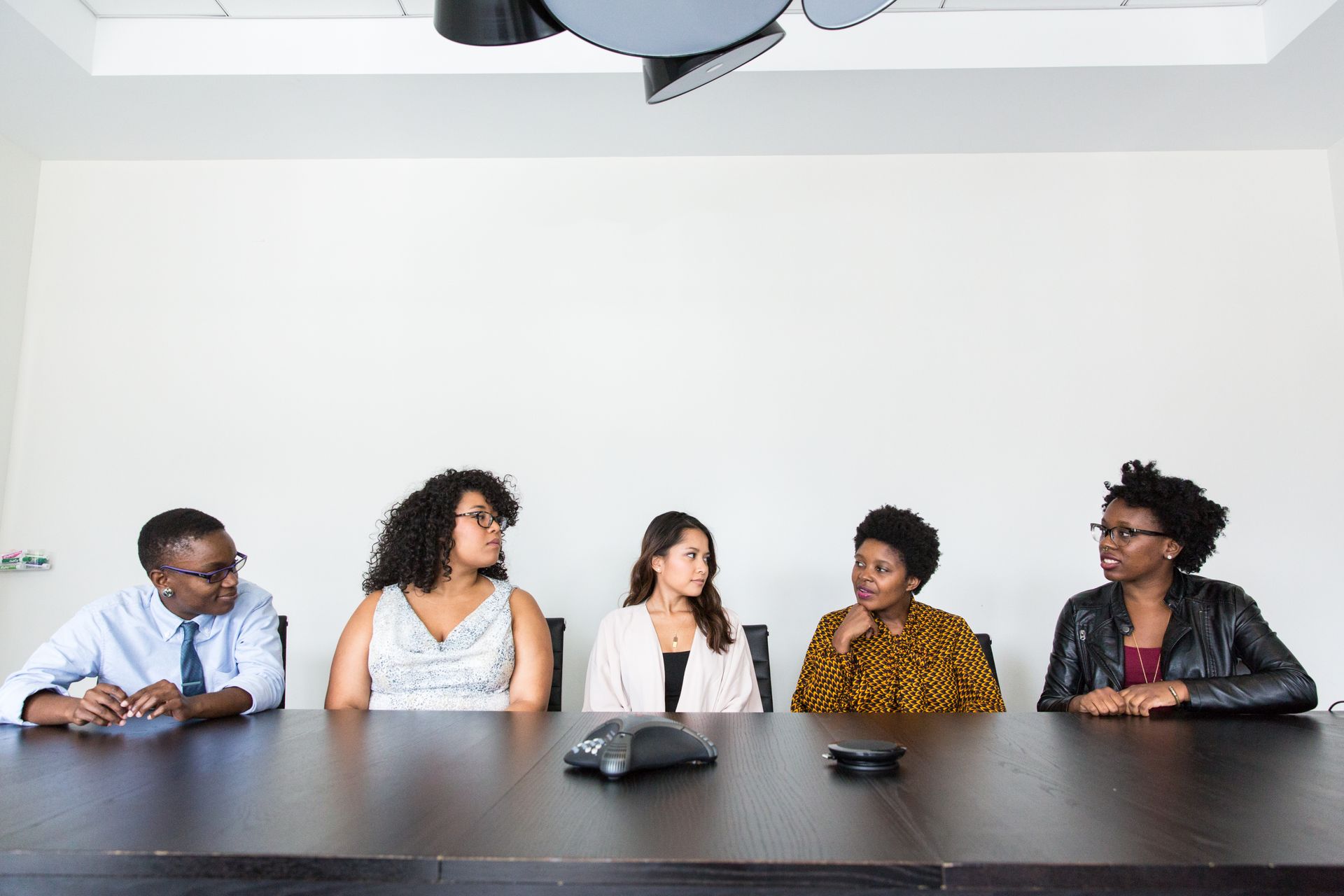
German meetings have a reputation for efficiency, and mostly they earn it. The etiquette that produces that efficiency is worth learning deliberately.
Preparation is respect. Read the agenda (die Tagesordnung) beforehand and bring what you need. Showing up to discuss a document you haven’t read is noticed and remembered. If there are slides or pre-reads, the expectation is genuinely that you’ve read them — “Ich habe die Unterlagen gelesen” (I’ve read the materials) is a sentence that buys credibility.
Do: Get to the point. German meeting culture values Sachlichkeit — matter-of-factness. State your position clearly, support it with reasons, and stop. Long preambles, throat-clearing, and “I just wanted to say that…” weaken your message. Directness is not rudeness here; it is the expected register. “Ich bin anderer Meinung, weil …” (I disagree, because …) is perfectly polite.
Do: Take the minutes seriously. The Protokoll (minutes) is often the actual decision record, and “Wer macht was bis wann?” (who does what by when?) is the question every good meeting ends with. If action items concern you, confirm them out loud: “Also ich übernehme X bis Freitag, richtig?” (So I’ll take care of X by Friday, correct?)
Don’t: Use your phone visibly. Glancing at your phone during a meeting reads as disrespectful in a way that surprises people from more phone-tolerant cultures. If you must, excuse yourself: “Entschuldigung, ich muss kurz raus.” Laptops are fine when they’re clearly being used for the meeting.
Don’t: Interrupt — but do speak up. Germans generally let each person finish, which means you need to claim your turn explicitly: “Dazu möchte ich etwas sagen” (I’d like to say something about that) or simply raising a hand slightly. Silence is often read as agreement, so if you disagree, say so; nobody will ask twice.
Video calls follow the same rules with two additions: camera on is the default expectation in most companies (camera off for a full meeting reads as disengaged), and “Können Sie mich hören?” / “Ich höre Sie nicht” (Can you hear me? / I can’t hear you) are the eternal opening lines. Test your setup before the call, not during it.
For the actual phrases you’ll need in the room, our German meeting phrases guide is the companion piece to this one.
Dress Code: Neat, Understated, Context-Aware
German business dress is best described as neat rather than flashy. The old rule of “suit and tie everywhere” has relaxed considerably, but the replacement is not casual chaos — it is a calibrated scale, and reading it correctly is part of the etiquette.
Do: Observe your first week and match the median. In banking, law, and consulting, the suit (or equivalent formal attire) is still standard for client-facing roles. In tech, startups, and creative industries, smart casual — clean jeans or chinos, decent shoes, a collared shirt or neat top — is completely normal. When in doubt, overdress slightly for the first week; being the best-dressed person on day one is a compliment, and you can calibrate down.
Don’t: Treat “casual Friday” as beach day. Even relaxed offices expect clean, intact, intentional clothing. Sports jerseys, flip-flops, and gym wear read as not taking the workplace seriously.
Client meetings and interviews always merit a step up from your daily norm, whatever that norm is. The German logic is that dressing up for the client shows respect for them, not vanity about yourself. If you’re unsure what a client expects, ask your manager: “Wie ist der Dresscode beim Kunden?” — a completely normal question.
One specifically German note: quality over labels. Germans tend to notice good shoes, a decent watch, and well-kept clothes more than brand logos. Understated quality beats visible branding in most traditional business settings.
Email and Phone Tone: Formal Without Being Stiff

German business writing has a formal register that feels elaborate to newcomers but is mostly a set of fixed formulas. Once you learn the formulas, emails become easy — you are assembling blocks, not composing literature.
Openings. The standard formal opening is “Sehr geehrte Frau Weber,” / “Sehr geehrter Herr Schmidt,” (note the comma, and the next line starts lowercase). For colleagues you address with du: “Hallo Lisa,” or “Liebe Lisa,”. “Guten Tag Herr Schmidt,” sits between the two — polite but slightly less stiff. Never open a first business email with “Hi” — it reads as careless, not friendly.
Closings. “Mit freundlichen Grüßen” is the universal formal sign-off (the abbreviation “MfG” is common internally but too curt for external mail). With du-colleagues, “Viele Grüße” or “Liebe Grüße” is standard. Match the register of the person you’re writing to.
Tone. Be direct and structured: state the reason for writing in the first two sentences (“Ich schreibe Ihnen bezüglich …”), use short paragraphs, and end with a clear next step or question. German business emails are shorter than many foreigners expect — warmth comes from clarity, not from elaborate politeness. Avoid exclamation marks in formal mail (one is the absolute maximum), avoid emojis entirely in external communication, and never use “!!!” unless you want to be remembered for the wrong reasons.
Response times. Same-day or next-day replies are the norm for internal mail; 48 hours is the outer limit before a follow-up becomes appropriate. If you need longer, send a holding reply: “Danke für Ihre Nachricht — ich melde mich bis Ende der Woche.” (Thanks for your message — I’ll get back to you by end of week.) Silence is read as disorganization, not busyness.
Phone calls follow similar formality. Answer with your surname and company: “Weber, Firma Müller, guten Tag.” State your reason quickly, and end calls crisply — long, trailing goodbyes feel awkward. If you reach voicemail, leave your name, number (slowly, twice), and reason. Our business email templates give you ten ready-to-use examples, and the business email phrases guide covers the building blocks.
After-Work Norms: Feierabend, Lunch, and Company Events
Feierabend — literally “celebration evening,” meaning quitting time — is sacred in a way that surprises workaholic cultures. When Germans leave at 17:00 or 18:00, they are not slacking; they are exercising a cultural norm that work ends and private life begins. Do not schedule meetings after 17:00 unless genuinely urgent, do not expect replies in the evening, and take “Schönen Feierabend!” as the warm wish it is.
Do: Leave on time yourself, especially as a newcomer. Consistently staying late signals poor time management more than dedication. The exception is genuine crunch periods, which everyone recognizes — but they should be exceptions.
Lunch is social infrastructure. Colleagues eat together, usually between 12:00 and 13:30, and the invitation “Kommst du mit zum Mittagessen?” is the main daily bonding ritual. Go, especially in your first months. The canteen (Kantine) or nearby restaurants are standard; desk lunches alone are fine occasionally but mark you as unavailable. “Mahlzeit!” does the greeting work.
After-work drinks (Feierabendbier — the after-work beer) happen but are genuinely optional. A team going for one drink on a Thursday is normal; nobody tracks attendance. If you go, one or two drinks is the norm — this is social, not a party. Company parties (Weihnachtsfeier — Christmas party, Sommerfest — summer party) are more significant: attendance is strongly expected, partners are often invited, and behavior should stay professional even as the evening loosens. The classic foreigner mistake is treating the Weihnachtsfeier like a night out; treat it like a friendly extension of work.
Gifts and invitations. Small courtesies matter: bringing cake (Kuchen) on your birthday for the team is a beloved German office tradition — you provide for others on your birthday, not the reverse. If you’re invited to a colleague’s home, bring flowers or wine, and remove your shoes if you see a shoe rack by the door. These are private-life norms, but work friendships cross that boundary quickly in Germany.
Business meals with clients follow their own choreography. The person who issued the invitation pays — don’t reach for the bill if you were invited, and don’t split hairs over it. A simple “Vielen Dank für die Einladung” (thank you for the invitation) covers it. At the table, wait until everyone is served before starting (“Guten Appetit” is said once food arrives), keep your hands visible on the table (wrists, not elbows), and pace yourself with the host on alcohol. Business is often discussed, but let the host raise it first — the first course is usually still social. Tipping around 5–10% by rounding up is standard; the server is typically paid a living wage, so tips are appreciation, not subsidy.
Vacation (Urlaub) is taken seriously and completely. Germans take their full vacation entitlement (typically 25–30 days), plan it months ahead, and genuinely disconnect — out-of-office replies mean out of office. Do not contact colleagues on vacation except for true emergencies, and plan your own vacations early: “Ich würde gern im August zwei Wochen Urlaub nehmen” (I’d like to take two weeks in August) said in spring is normal; said in July, it’s a problem.
Mistakes Foreigners Make: The Classic List

Being vague to be polite. In many cultures, softening disagreement is polite. In Germany, “Maybe we could perhaps consider…” reads as not having a position. Say what you mean: “Ich halte das für keine gute Idee, weil …” (I don’t think that’s a good idea, because …). Directness is respect here.
Skipping the written confirmation. Verbal agreements evaporate; emails persist. After important conversations, send the summary: “Zur Bestätigung: Wir haben vereinbart, dass …” Germans do this with each other constantly — it’s diligence, not distrust.
Treating rules as suggestions. Recycling rules, quiet hours (Ruhezeit), parking assignments, the correct bin for the coffee cups — German workplaces run on small rules, and newcomers who treat them casually stand out immediately. When in doubt, ask: “Wie wird das hier gehandhabt?” (How is this handled here?)
Over-familiarity too fast. First names, hugs, personal questions about salary or religion in week one — all too fast. German friendliness warms up slowly and then lasts. Let colleagues set the pace of personal disclosure.
Complaining about Germany. Every expat does it — the bureaucracy, the cash preference, the Sunday quiet laws. Colleagues will smile, but privately it wears thin, especially from someone who chose to come. Criticize processes at work (that’s welcome and expected); don’t criticize the country at lunch.
Not learning any German. In English-speaking teams it’s possible to survive without German, and some people do for years. But it caps your social integration and, eventually, your career. Even visibly trying — the focus of our business German for beginners guide — changes how colleagues relate to you.
Key Takeaways
- The german business etiquette rules that matter most: firm handshake with eye contact, Sie by default until du is offered, and five minutes early meaning on time.
- In meetings, be prepared, be direct (Sachlichkeit), claim your turn explicitly, and confirm action items out loud.
- German business emails run on fixed formulas — “Sehr geehrte/r …”, “Mit freundlichen Grüßen” — with clarity valued over elaborate politeness; reply within 24–48 hours.
- Feierabend is sacred: leave on time, don’t schedule late meetings, and let colleagues’ vacations stay vacations.
- Go to lunch, bring cake on your birthday, attend the Weihnachtsfeier — and treat after-work drinks as optional social time, not obligation.
- Avoid the classic foreigner mistakes: vague politeness instead of directness, skipping written confirmations, over-familiarity too fast, and complaining about Germany at lunch.
- For the phrases behind the etiquette, see our German meeting phrases, business email templates, and negotiation phrases guides.