

30 German Emergency Phrases Travelers Must Know
Nobody plans for emergencies on vacation — which is exactly why you should learn these phrases before you need them. Stress destroys recall, so the 30 German emergency phrases travelers must know are designed to be short, drilled in advance, and automatic under pressure. Each includes pronunciation and meaning, plus the key numbers and procedures that turn panic into action.
Save these numbers in your phone right now: 112 — the EU-wide emergency number (works in Germany, Austria, and Switzerland; operators speak English). 110 — the direct German police line. Both are free from any phone, even without a SIM card.
Calling for Help: The First Five
If you learn nothing else, learn these five. They are the entire difference between helpless and handled.
- Hilfe! (HIL-feh) — Help!
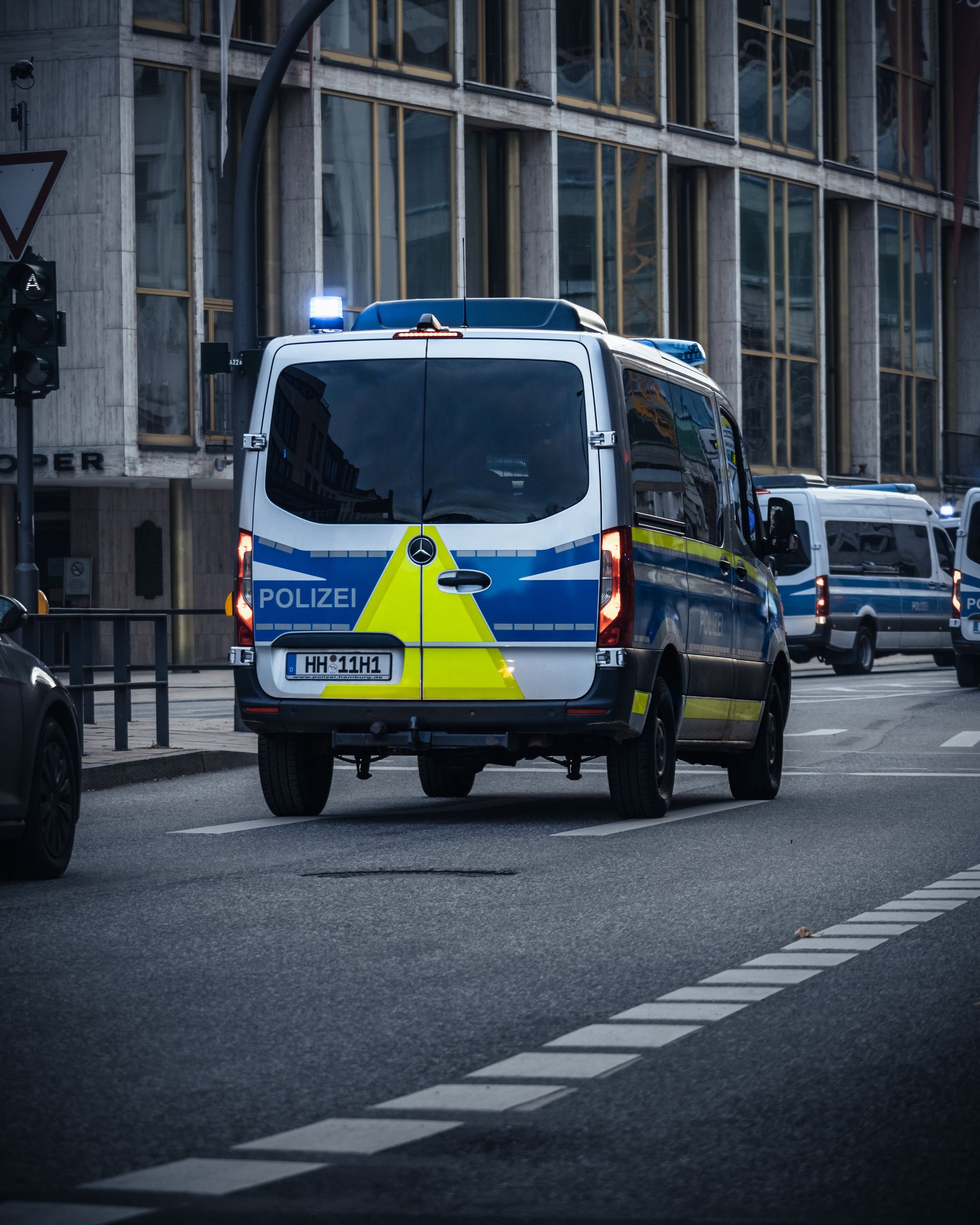
- Rufen Sie die Polizei! (ROO-fen zee dee poh-lee-TSY) — Call the police!
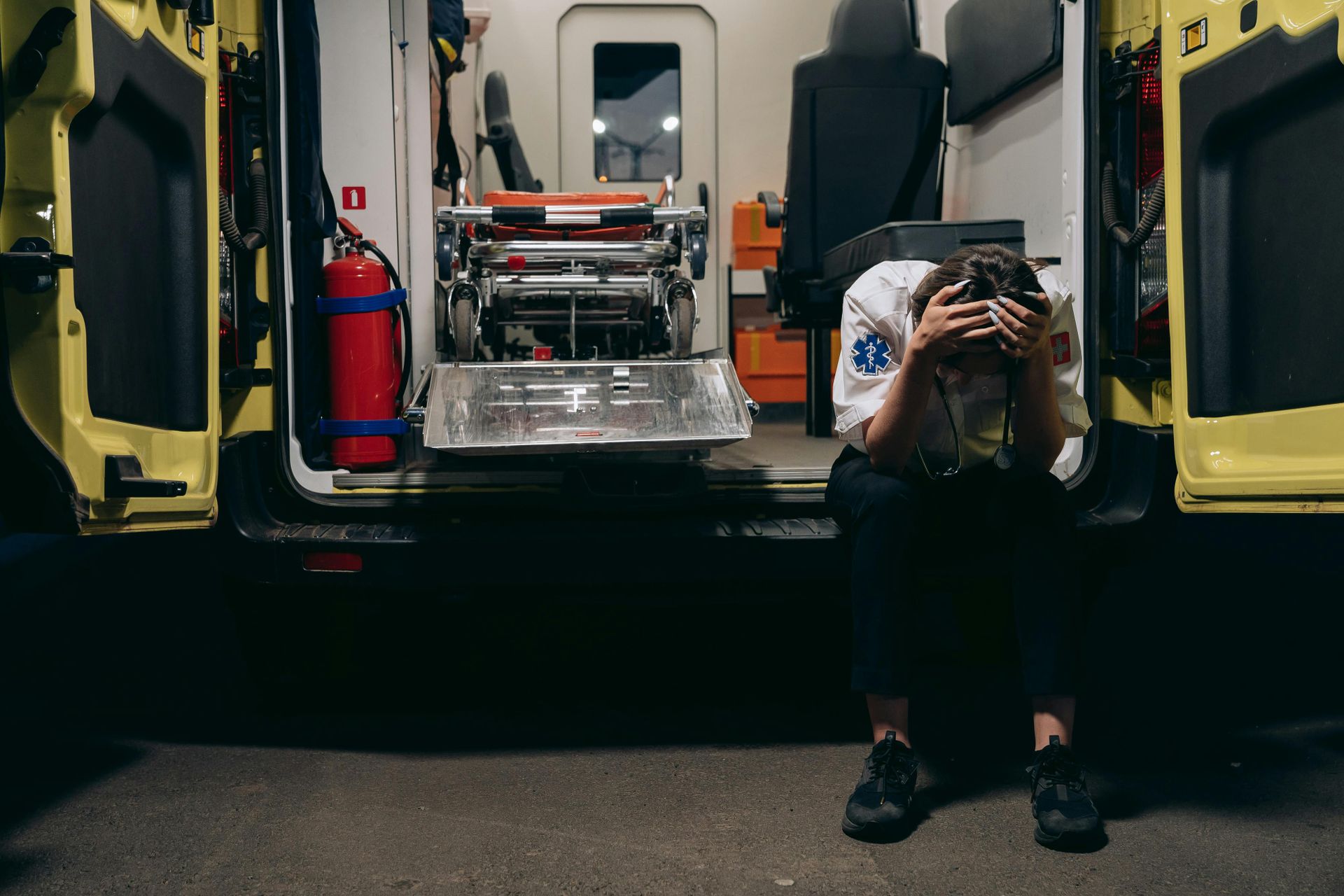
- Rufen Sie einen Krankenwagen! (ROO-fen zee INE-en KRAHN-ken-vah-gen) — Call an ambulance!
- Es ist ein Notfall! (es ist ine NOHT-fahl) — It’s an emergency!
- Feuer! (FOY-er) — Fire!
Why “Rufen Sie…” works: It is the formal imperative — direct, unmistakable, and what Germans expect in a crisis. Point at a specific person when you say it; a crowd where everyone thinks someone else will call is the classic bystander trap.
Medical Emergencies
- Ich brauche einen Arzt. (ikh BROW-kheh INE-en ahrtst) — I need a doctor.
- Wo ist das nächste Krankenhaus? (voh ist dahs NAYKH-steh KRAHN-ken-hows) — Where is the nearest hospital?
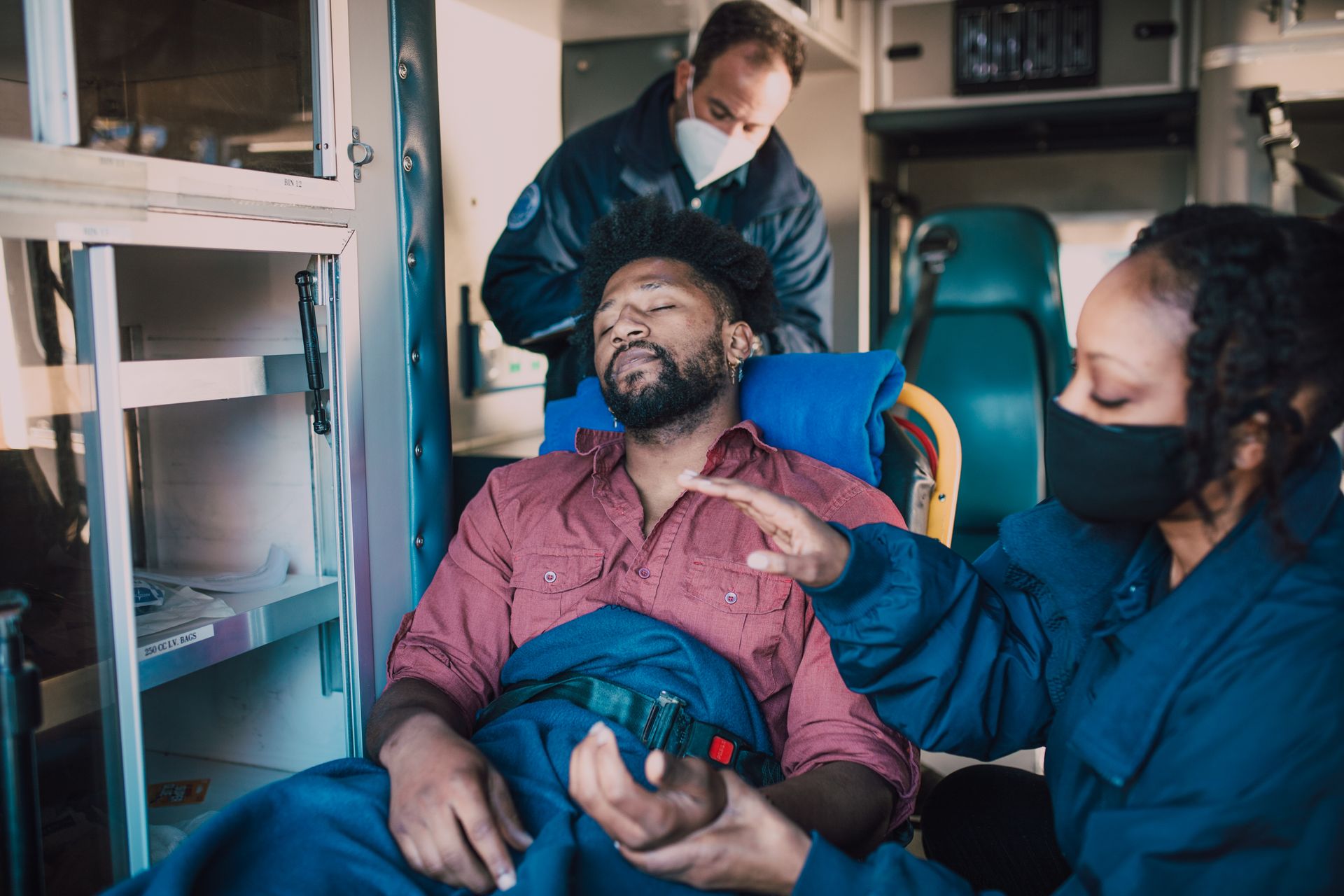
- Ich habe mich verletzt. (ikh HAH-beh mikh fair-LETST) — I’m injured.
- Mir ist schlecht. (meer ist shlekht) — I feel sick / nauseous.
- Mir ist schwindelig. (meer ist SHVIN-deh-likh) — I’m dizzy.
- Ich habe Schmerzen hier. (ikh HAH-beh SHMAIR-tsen heer) — I have pain here. (Point to the spot.)
- Ich bin allergisch gegen… (ikh bin ah-LAIR-gish GAY-gen) — I’m allergic to… Add Nüsse (nuts), Penicillin, Bienenstiche (bee stings).
- Ich nehme diese Medikamente. (ikh NAY-meh DEE-zeh meh-dee-kah-MEN-teh) — I take these medications. (Show the packets — names are usually international.)
- Ich bin Diabetiker / Diabetikerin. (ikh bin dee-ah-BEH-tee-ker / dee-ah-beh-TEE-keh-rin) — I’m diabetic (male/female form).
- Wo ist die nächste Apotheke? (voh ist dee NAYKH-steh ah-poh-TAY-keh) — Where is the nearest pharmacy? (Look for the big red “A” — Apotheken handle many minor medical issues, and staff are highly trained.)
At the hospital or doctor’s office:
- Ich habe eine Reiseversicherung. (ikh HAH-beh INE-eh RY-zeh-fair-zikh-eh-rung) — I have travel insurance. (Have the policy number on your phone.)
- Können Sie bitte langsamer sprechen? (KURN-en zee BIT-teh LAHNG-zah-mer shprekh-en) — Can you please speak more slowly?
- Verstehen Sie Englisch? (fair-SHTAY-en zee ENG-lish) — Do you understand English? (Doctors in cities usually do; say it in German first.)
Theft, Loss, and Documents
- Ich habe mein Portemonnaie verloren. (ikh HAH-beh mine port-moh-NAY fair-LOH-ren) — I’ve lost my wallet. (Also: die Geldbörse.)
- Ich habe meinen Pass verloren. (ikh HAH-beh MINE-en pahs fair-LOH-ren) — I’ve lost my passport.
- Mein Handy wurde gestohlen. (mine HEN-dee VOOR-deh geh-SHTOH-len) — My phone was stolen.
- Meine Tasche wurde gestohlen. (MINE-eh TAH-sheh VOOR-deh geh-SHTOH-len) — My bag was stolen.
- Ich möchte einen Diebstahl melden. (ikh MOOKH-teh INE-en DEEB-shtahl MEL-den) — I’d like to report a theft. (At a police station — you need the report number, the Anzeigennummer, for insurance.)
- Wo ist die nächste Polizeistation? (voh ist dee NAYKH-steh poh-lee-TSY-shtah-TSYOHN) — Where is the nearest police station?
- Wo ist die deutsche Botschaft? (voh ist dee DOYT-sheh BOT-shahft) — Where is the German embassy? (For a lost passport: the embassy issues emergency travel documents. Keep a photo of your passport in your email.)
Practical prep that beats any phrase: photograph your passport, insurance card, and credit cards (front and back) and email them to yourself. If everything is stolen, those photos plus phrase 25 get you home.
Staying Safe: Warnings and Calm
- Vorsicht! (FOR-zikht) — Careful! / Watch out!
- Achtung! (AHKH-tung) — Attention! / Watch out! (Slightly stronger — used for real danger.)
- Bleiben Sie ruhig. (BLY-ben zee ROO-ikh) — Stay calm. (For calming others — or being told it.)
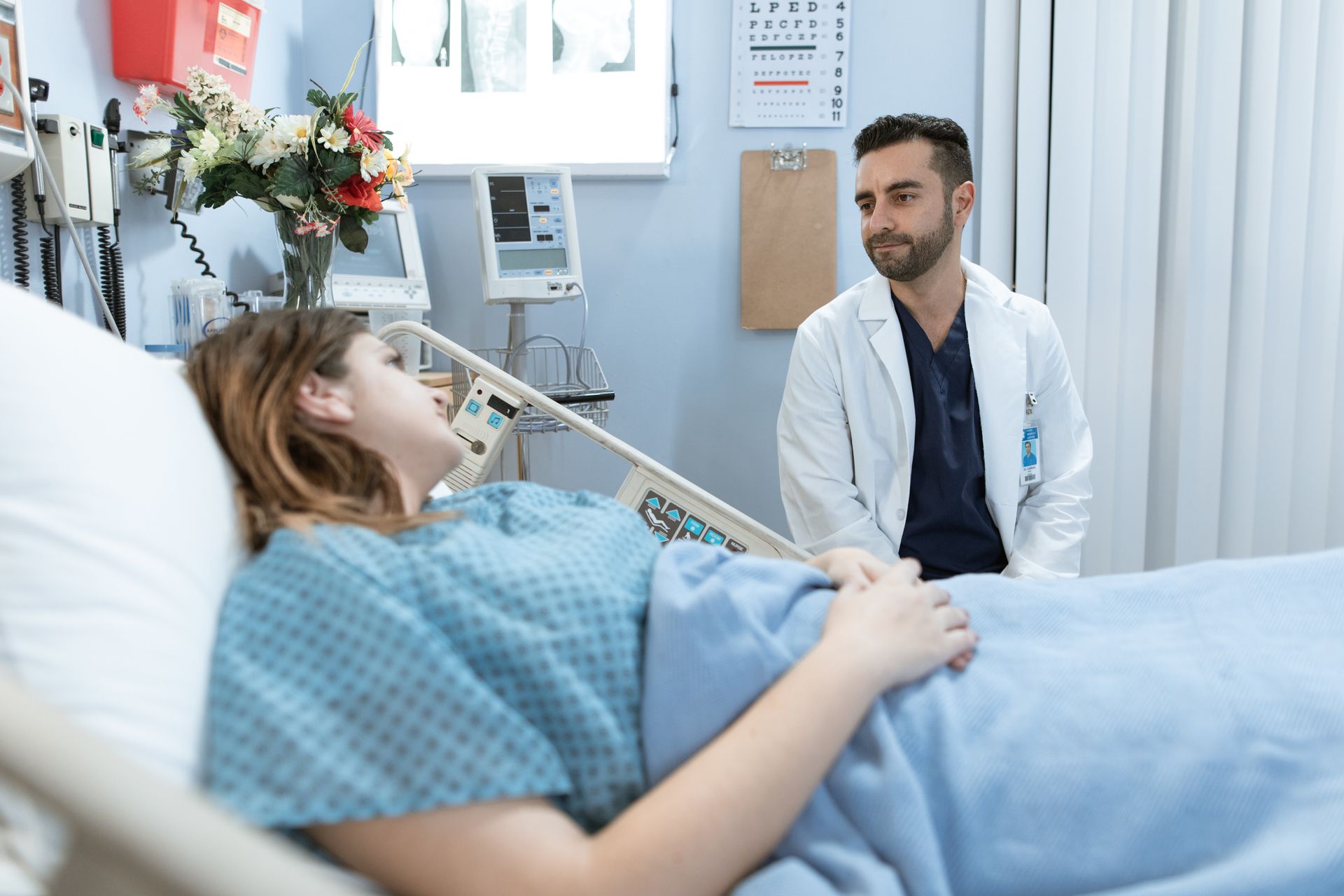
- Gehen Sie weg! (GAY-en zee vek) — Go away! (Firm, unmistakable.)
- Lassen Sie mich in Ruhe! (LAH-sen zee mikh in ROO-eh) — Leave me alone!
Bonus situational vocabulary: der Unfall (accident), der Dieb (thief), der Zeuge (witness), die Versicherung (insurance), der Notausgang (emergency exit — note the green signs), der Erste-Hilfe-Kasten (first-aid kit).
What to Do When It Actually Happens
Phrases are half the battle; procedure is the other half. The sequence that works in Germany:
- Call 112 first for anything medical or dangerous. Say your location, what happened, and how many people are affected. The operator will switch to English if you ask: Sprechen Sie Englisch?
- For theft without danger, go to the police station (Polizeistation) rather than calling 110 — 110 is for crimes in progress.
- For medical issues that are not emergencies, pharmacies (Apotheke) and the medical on-call service (ärztlicher Bereitschaftsdienst, 116 117) handle evenings and weekends.
- For a lost passport, file the police report first, then visit your embassy with the report number and your passport photos.
German Emergency Phrases Travelers Need at the Pharmacy
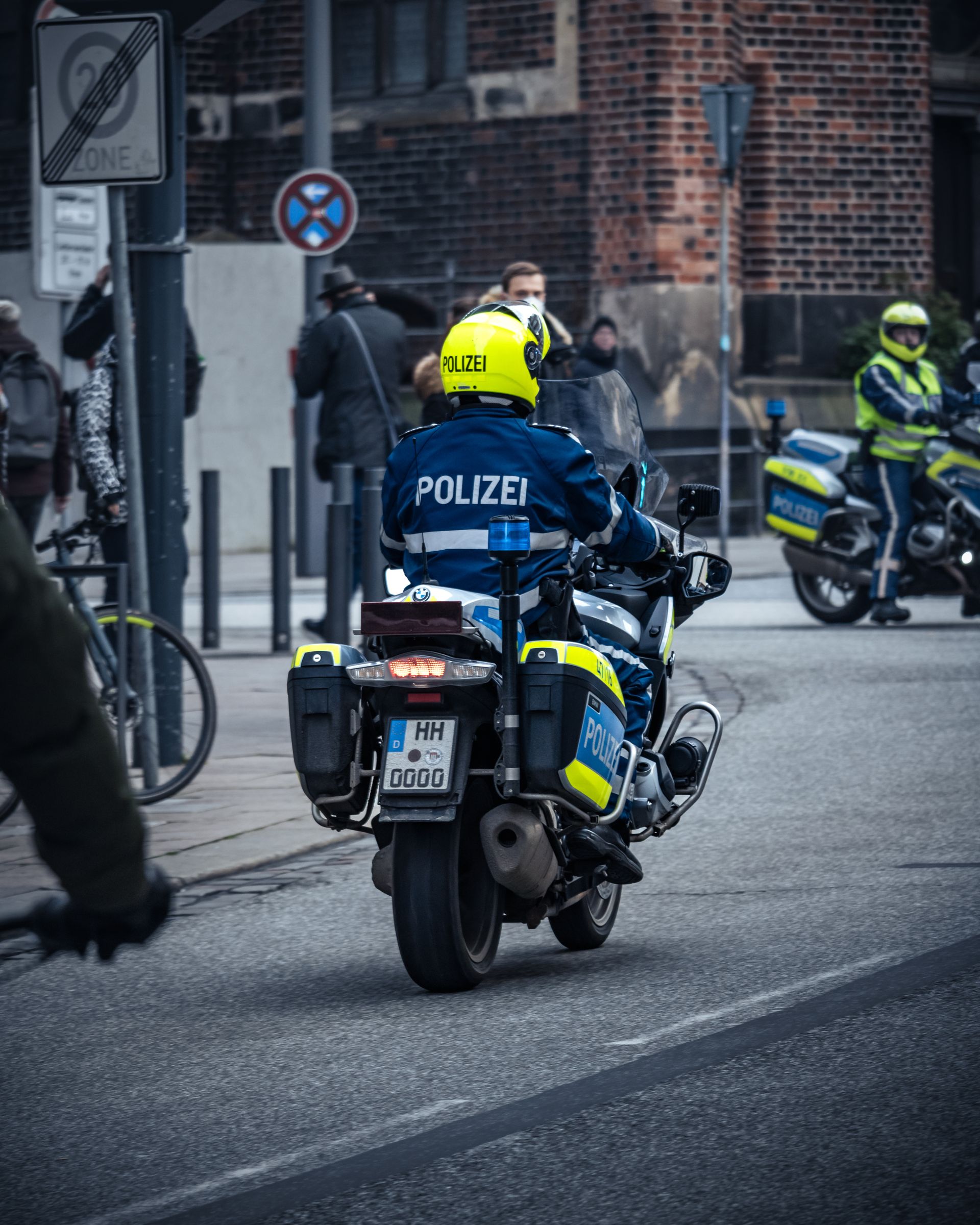
The Apotheke (pharmacy, red “A” sign) is your first stop for non-critical medical issues — pharmacists are highly trained and many speak English:
- Ich brauche etwas gegen Kopfschmerzen. (ikh BROW-kheh ET-vahs GAY-gen KOPF-shmair-tsen) — I need something for headaches.
- Haben Sie etwas gegen Fieber? (HAH-ben zee ET-vahs GAY-gen FEE-ber) — Do you have something for fever?
- Ich habe mich geschnitten. (ikh HAH-beh mikh geh-SHNIT-en) — I’ve cut myself.
- Ich habe einen Sonnenbrand. (ikh HAH-beh INE-en ZON-en-brahnt) — I have sunburn.
- Ich habe Durchfall. (ikh HAH-beh DOORKH-fahl) — I have diarrhea. (Embarrassing to say, important to treat — dehydration ruins trips.)
- Mir ist übel. (meer ist OO-bel) — I feel nauseous.
- Ist das rezeptfrei? (ist dahs reh-TSEPT-fry) — Is that available without a prescription?
- Wie oft muss ich das nehmen? (vee oft moos ikh dahs NAY-men) — How often do I take that?
- Gibt es Nebenwirkungen? (gipt es NAY-ben-veer-kung-en) — Are there side effects?
Night and weekend emergencies: Look for the Notdienst sign — pharmacies rotate 24-hour duty, and the on-duty pharmacy’s address is posted on every pharmacy door and at www.apotheken.de. The medical on-call service is 116 117 (ärztlicher Bereitschaftsdienst).
Describing Symptoms in Detail
Es tut weh (es toot vay) = it hurts. Point and name the body part:
- der Kopf (dair kopf) — head; Kopfschmerzen — headache
- der Hals (dair hahls) — throat/neck; Halsschmerzen — sore throat
- der Bauch (dair bowkh) — stomach; Bauchschmerzen — stomachache
- der Rücken (dair ROO-ken) — back; Rückenschmerzen — back pain
- der Zahn (dair tsahn) — tooth; Zahnschmerzen — toothache (der Zahnarzt = dentist)
- das Auge (dahs OW-geh) — eye; das Ohr (dahs ohr) — ear
- der Arm (dair ahrm) — arm; das Bein (dahs bine) — leg; der Fuß (dair fooss) — foot
- der Finger (dair FING-er) — finger; die Hand (dee hahnt) — hand
- die Nase (dee NAH-zeh) — nose (Nasenbluten = nosebleed)
- die Haut (dee howt) — skin (der Ausschlag = rash)
Useful symptom phrases: Es tut hier weh. (It hurts here.) — Der Schmerz ist stark. (The pain is strong.) — Seit gestern. (Since yesterday.) — Es wird schlimmer. (It’s getting worse.) — Mir ist schwindelig. (I’m dizzy.) — Ich kann nicht schlafen. (I can’t sleep.)
Important Nouns for Emergencies
- der Unfall (dair OON-fahl) — the accident
- der Notfall (dair NOHT-fahl) — the emergency
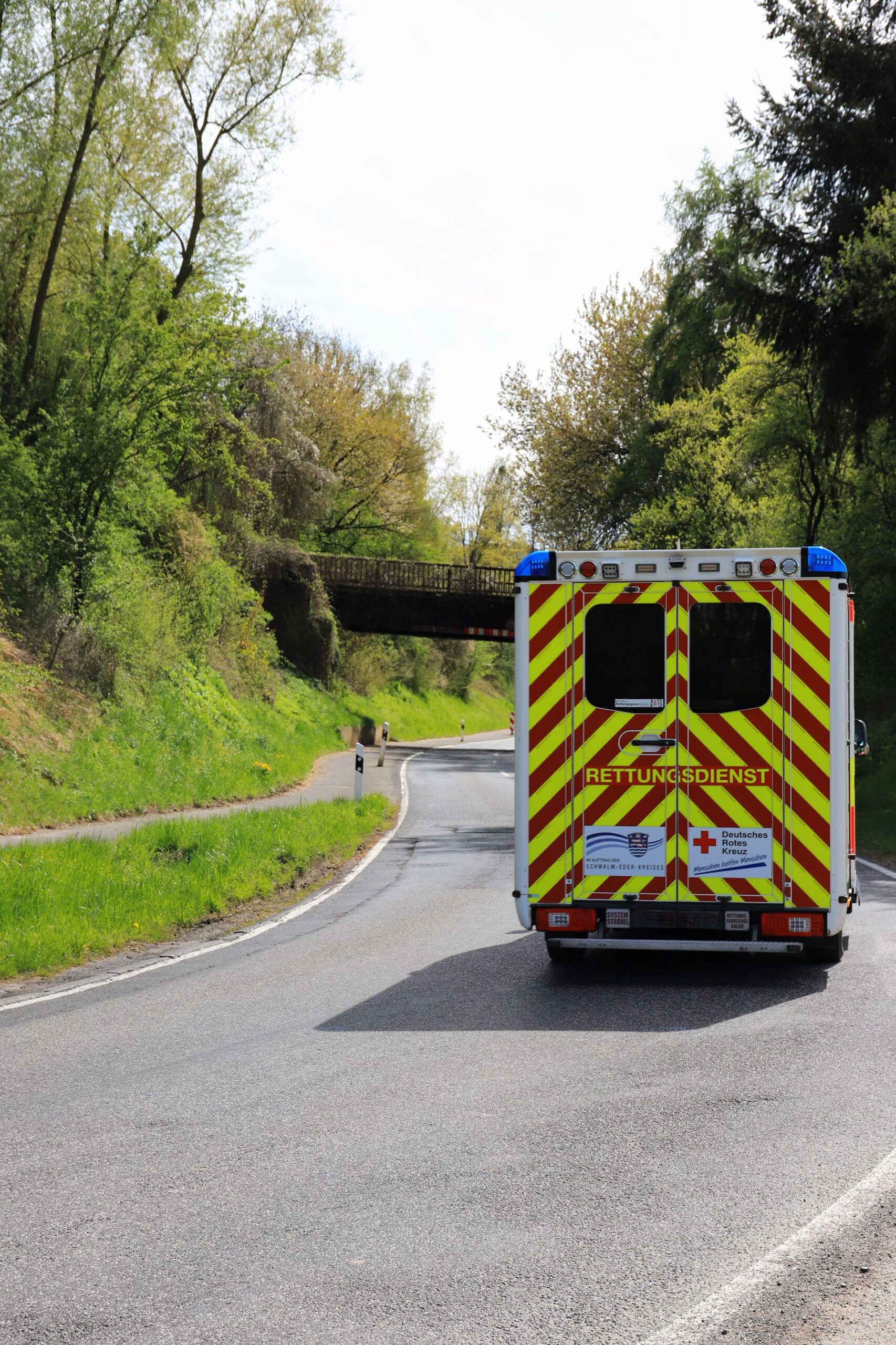
- der Krankenwagen (dair KRAHN-ken-vah-gen) — the ambulance
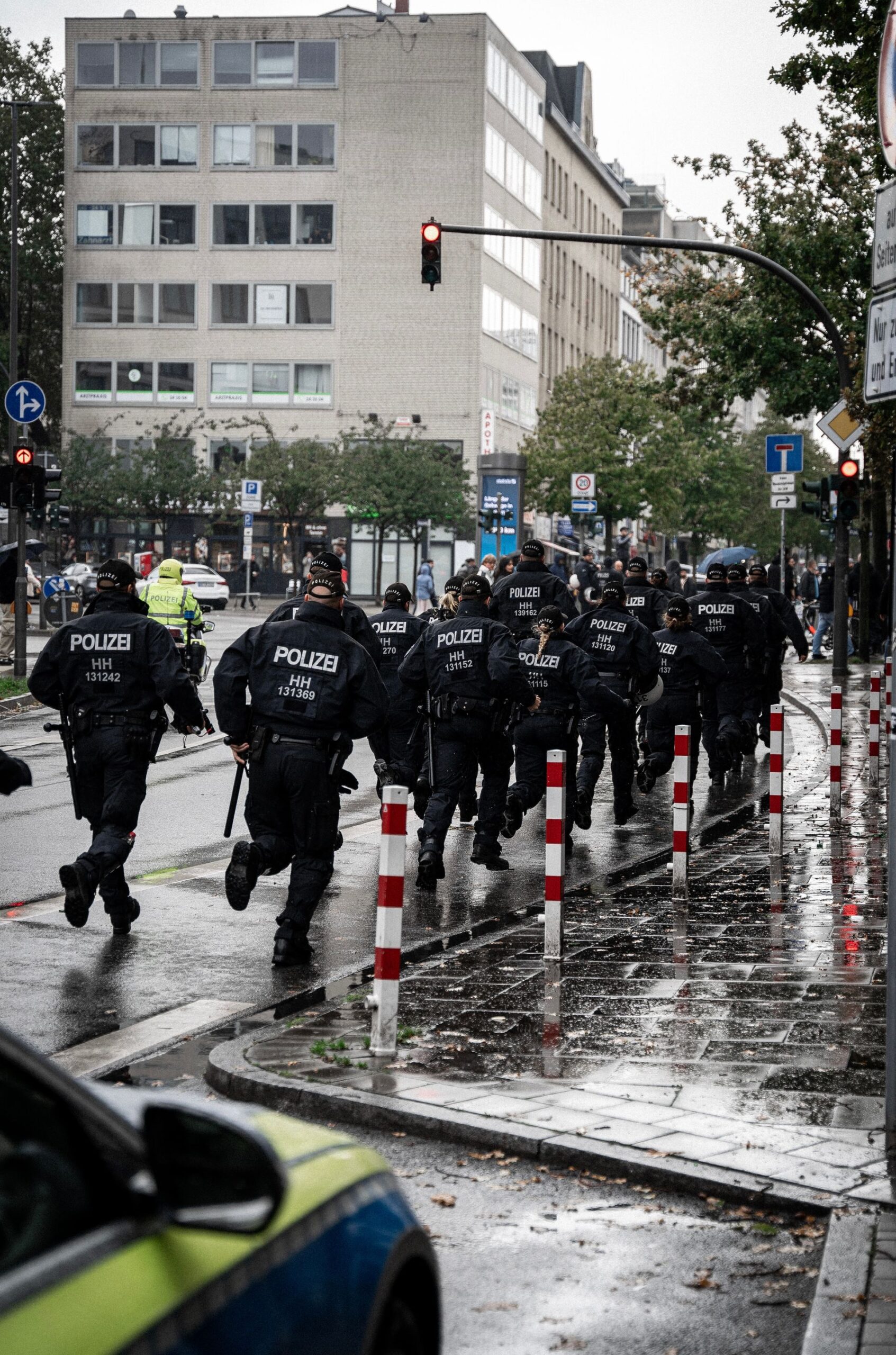
- die Polizei (dee poh-lee-TSY) — the police
- die Feuerwehr (dee FOY-er-vair) — the fire department
- der Diebstahl (dair DEEB-shtahl) — the theft
- der Dieb (dair deeb) — the thief
- der Zeuge (dair TSOY-geh) — the witness
- die Versicherung (dee fair-ZIKH-eh-rung) — the insurance
- die Anzeige (dee AHN-tsy-geh) — the police report (eine Anzeige erstatten = to file a report)
- der Notausgang (dair NOHT-ows-gahng) — the emergency exit
- der Erste-Hilfe-Kasten (dair AIR-steh-HIL-feh-kahs-ten) — the first-aid kit
- die Botschaft (dee BOT-shahft) — the embassy; das Konsulat — the consulate
Consulate and Embassy Procedures
If your passport is lost or stolen, the sequence is: police report first, embassy second.
- Ich habe meinen Reisepass verloren. (ikh HAH-beh MINE-en RY-zeh-pahs fair-LOH-ren) — I’ve lost my passport.
- Ich brauche einen vorläufigen Reisepass. (ikh BROW-kheh INE-en for-LOY-fi-gen RY-zeh-pahs) — I need a temporary passport.
- Hier ist die Anzeige von der Polizei. (heer ist dee AHN-tsy-geh fon dair poh-lee-TSY) — Here is the police report.
- Wann kann ich den neuen Pass abholen? (vahn kahn ikh dayn NOY-en pahs AHP-hoh-len) — When can I pick up the new passport?
- Ich habe ein Foto von meinem Pass. (ikh HAH-beh ine FOH-toh fon MINE-em pahs) — I have a photo of my passport. (This is why you email yourself those photos before the trip.)
Embassies also help in medical emergencies, arrests, and destitution — that is literally their job. Save your embassy’s address and emergency line alongside 112.
After the Emergency: Follow-Up Phrases
Emergencies have paperwork. These phrases handle the aftermath:
- Wo bekomme ich den Polizeibericht? (voh beh-KOM-eh ikh dayn poh-lee-TSY-beh-rikht) — Where do I get the police report?
- Ich brauche eine Kopie für die Versicherung. (ikh BROW-kheh INE-eh koh-PEE foor dee fair-ZIKH-eh-rung) — I need a copy for the insurance.
- Wie ist die Anzeigennummer? (vee ist dee AHN-tsy-gen-num-er) — What is the report number?
- Wann kann ich mein Eigentum abholen? (vahn kahn ikh mine EYE-gen-toom AHP-hoh-len) — When can I collect my property?
- Ich muss meine Versicherung anrufen. (ikh moos MINE-eh fair-ZIKH-eh-rung AHN-roo-fen) — I have to call my insurance.
- Können Sie das bitte aufschreiben? (KURN-en zee dahs BIT-teh OWF-shry-ben) — Can you please write that down? (Names, numbers, addresses — get them in writing.)
- Verstehen Sie, was passiert ist? (fair-SHTAY-en zee vahs pah-SEERT ist) — Do you understand what happened?
- Ich brauche einen Dolmetscher. (ikh BROW-kheh INE-en dohl-MET-sher) — I need an interpreter. (Hospitals and police can arrange one — ask.)
Insurance vocabulary: der Schaden (damage), der Schadensersatz (compensation), die Selbstbeteiligung (deductible), der Versicherungsnehmer (policyholder), die Police (the policy document).
Fire Safety Phrases
- Es brennt! (es brent) — It’s burning! / There’s a fire!
- Wo ist der Feuerlöscher? (voh ist dair FOY-er-lur-sher) — Where is the fire extinguisher?
- Wo ist der Notausgang? (voh ist dair NOHT-ows-gahng) — Where is the emergency exit?
- Wo ist der Sammelplatz? (voh ist dair ZAH-mel-plahts) — Where is the assembly point?
- Benutzen Sie nicht den Aufzug! (beh-NUT-sen zee nikht dayn OWF-tsook) — Do not use the elevator!
- Bleiben Sie unten, es gibt Rauch. (BLY-ben zee OON-ten es gipt rowkh) — Stay low, there’s smoke.
- Rufen Sie die Feuerwehr! (ROO-fen zee dee FOY-er-vair) — Call the fire department! (Or simply dial 112.)
Hotel fire vocabulary: der Rauchmelder (smoke detector), der Feueralarm (fire alarm), die Brandschutztür (fire door), der Fluchtweg (escape route — check the diagram on your hotel room door when you arrive).
For the everyday phrases around these emergencies, see our 100 essential German travel phrases and the German for travelers survival guide.
Key Takeaways
These 30 German emergency phrases travelers must know compress crisis German to its essentials: five calls for help, medical phrases from injury to allergies to insurance, theft and document-loss language including the police report you will need, and the firm warnings that keep you safe. Drill the first five until they are reflex, save 112 and 110 in your phone, and email yourself those document photos. Then get back to enjoying the trip — preparation is what lets you stop worrying. For the everyday phrases around these emergencies, see our 100 essential German travel phrases and the German for travelers survival guide.