

Walk into a German bakery and the display case reads like a familiar menu: Brot, Butter, Käse, Apfel, Honig. You have never studied German, yet you are already reading it. That is the magic of german food cognates — the two languages share a pantry as well as a family tree, and this list of 50 food words proves it.
Every item comes with its correct article (der, die, das) and an honest note about the connection. Most are true cognates; a few are marked clearly where the story is more complicated (borrowings, near-misses). No false friends are hiding here — just delicious, learnable vocabulary. For the method behind the magic, see our complete German-English cognates guide.
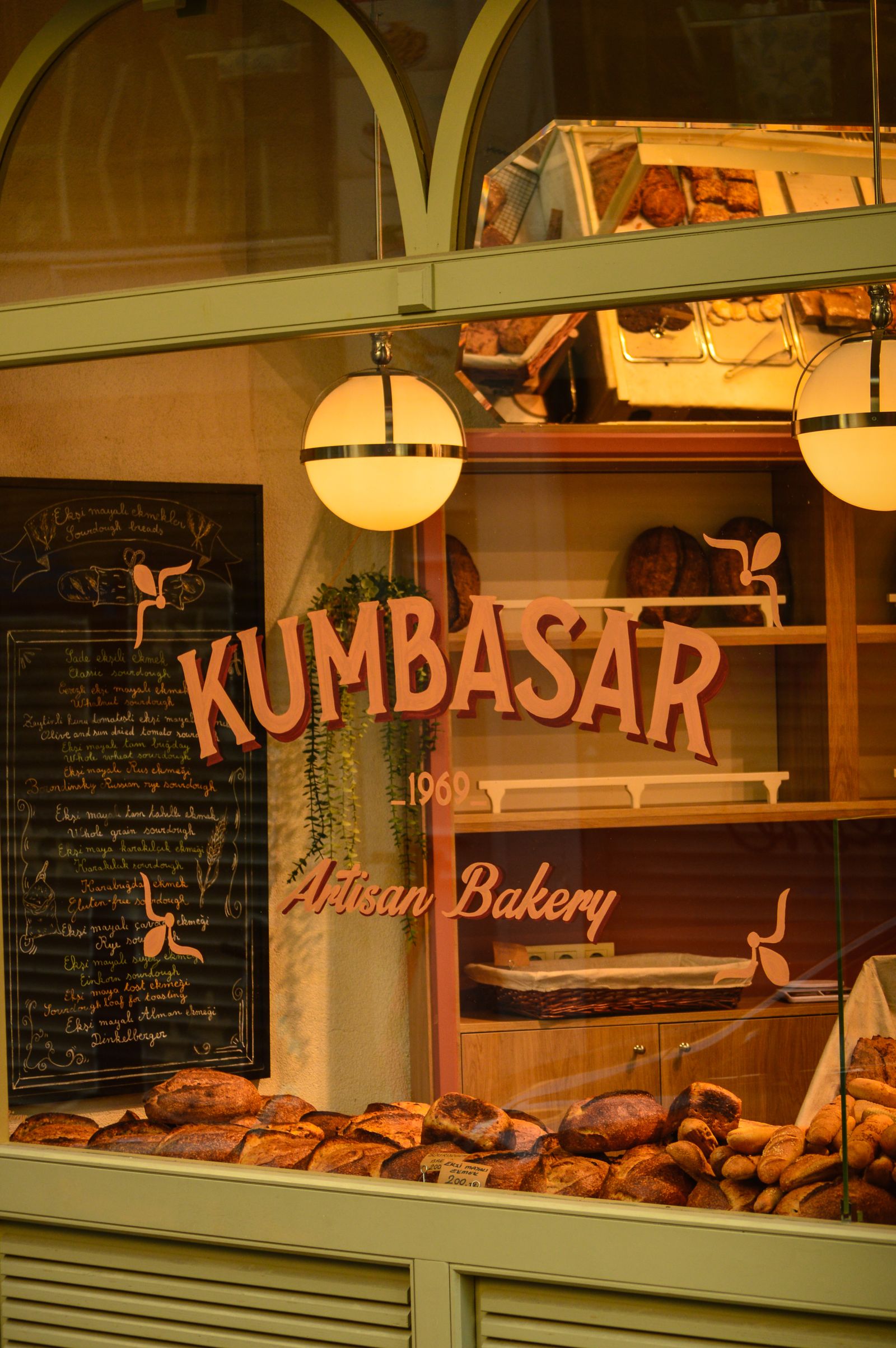
Bread, Dairy, and Breakfast Basics (1–10)
| # | German | English | Note |
|---|---|---|---|
| 1 | das Brot | the bread | The staff of German life — and the language |
| 2 | die Butter | the butter | Identical spelling |
| 3 | der Käse | the cheese | Both from Latin caseus |
| 4 | die Milch | the milk | k→ch shift |
| 5 | das Wasser | the water | t→ss shift — Leitungswasser is tap water |
| 6 | das Ei | the egg | das Frühstücksei — the breakfast egg |
| 7 | das Fleisch | the meat | Cognate with “flesh” |
| 8 | der Fisch | the fish | Identical spelling |
| 9 | die Wurst | the sausage | ⚠ Loanword: English borrowed wurst (bratwurst) — not a true cognate |
| 10 | der Honig | the honey | Drizzle it on Brot like a local |
Fruit / Obst (11–22)
| # | German | English | Note |
|---|---|---|---|
| 11 | der Apfel | the apple | p→pf shift — Apfelsaft is apple juice |
| 12 | die Birne | the pear | Both from Latin pirum |
| 13 | die Kirsche | the cherry | Both from Latin cerasum |
| 14 | die Pflaume | the plum | Both from Latin prunum |
| 15 | die Erdbeere | the strawberry | “Earth-berry” — Beere = berry |
| 16 | die Himbeere | the raspberry | “Hind-berry” — same Beere |
| 17 | die Blaubeere | the blueberry | “Blue-berry” — spot the pattern |
| 18 | die Orange | the orange | |
| 19 | die Zitrone | the lemon | Cognate with “citron” |
| 20 | die Banane | the banana | |
| 21 | die Feige | the fig | Both from Latin fica |
| 22 | die Dattel | the date (fruit) | Both from Greek daktylos (“finger”) |
Obst is the German word for fruit as a category — useful at every market stall.
Vegetables and Savory Staples / Gemüse (23–30)
| # | German | English | Note |
|---|---|---|---|
| 23 | der Salat | the salad | Also the word for “lettuce” |
| 24 | die Suppe | the soup | |
| 25 | die Kartoffel | the potato | ⚠ Near-miss: different roots (Kartoffel ← Italian tartufolo; potato ← Taíno) — memorize, don’t decode |
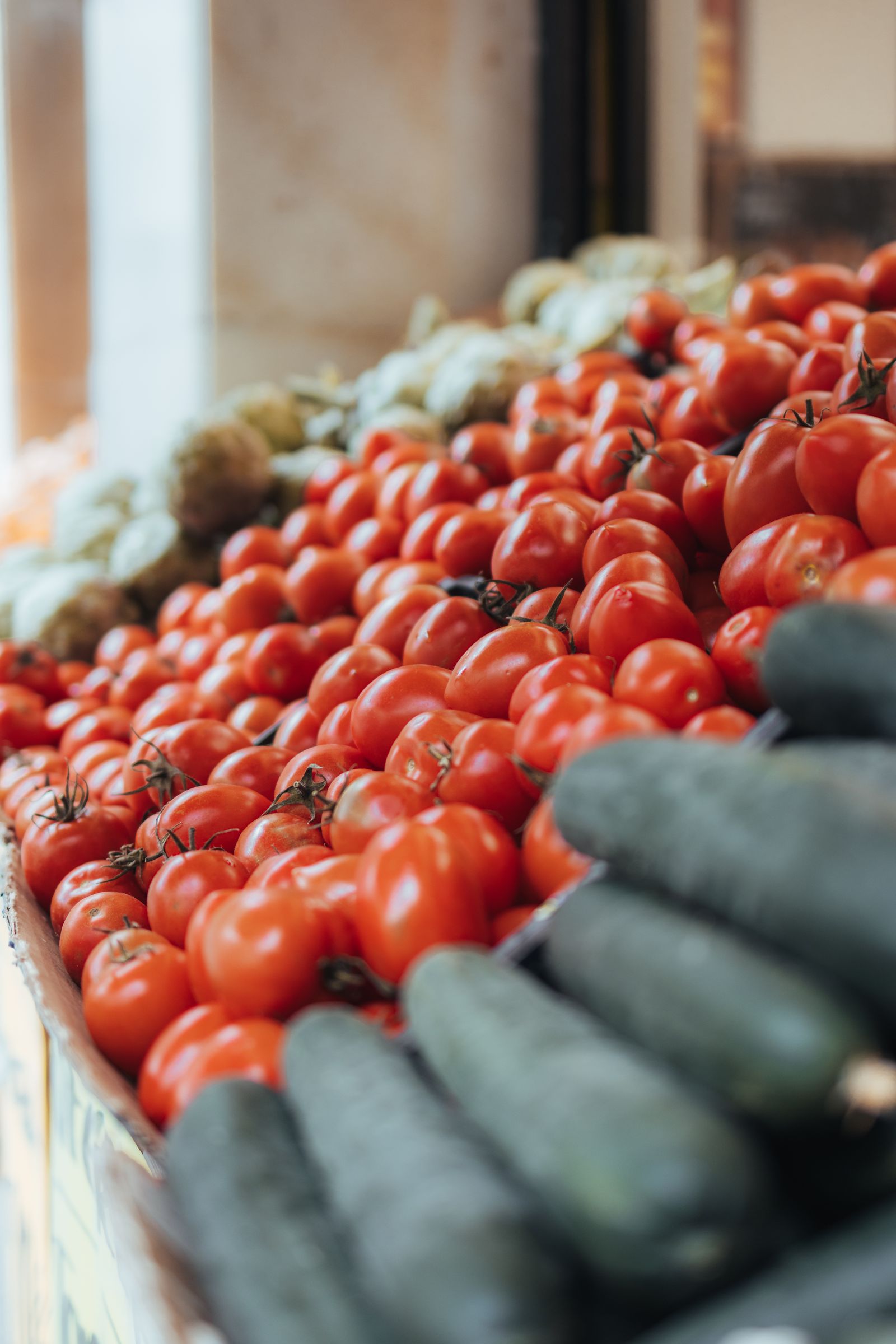
| 26 | die Tomate | the tomato | Shared Nahuatl root — true cognates |
| 27 | die Zwiebel | the onion | ⚠ Borderline: Zwiebel ← Latin cepulla, onion ← Latin unio — same Latin family, different paths |
| 28 | die Gurke | the cucumber | ⚠ Not a true cognate (Gurke ← Polish ogórek; cucumber ← Latin cucumis) — learn it fresh |
| 29 | die Bohne | the bean | grüne Bohnen — green beans |
| 30 | die Erbse | the pea | Both from Latin pisum |
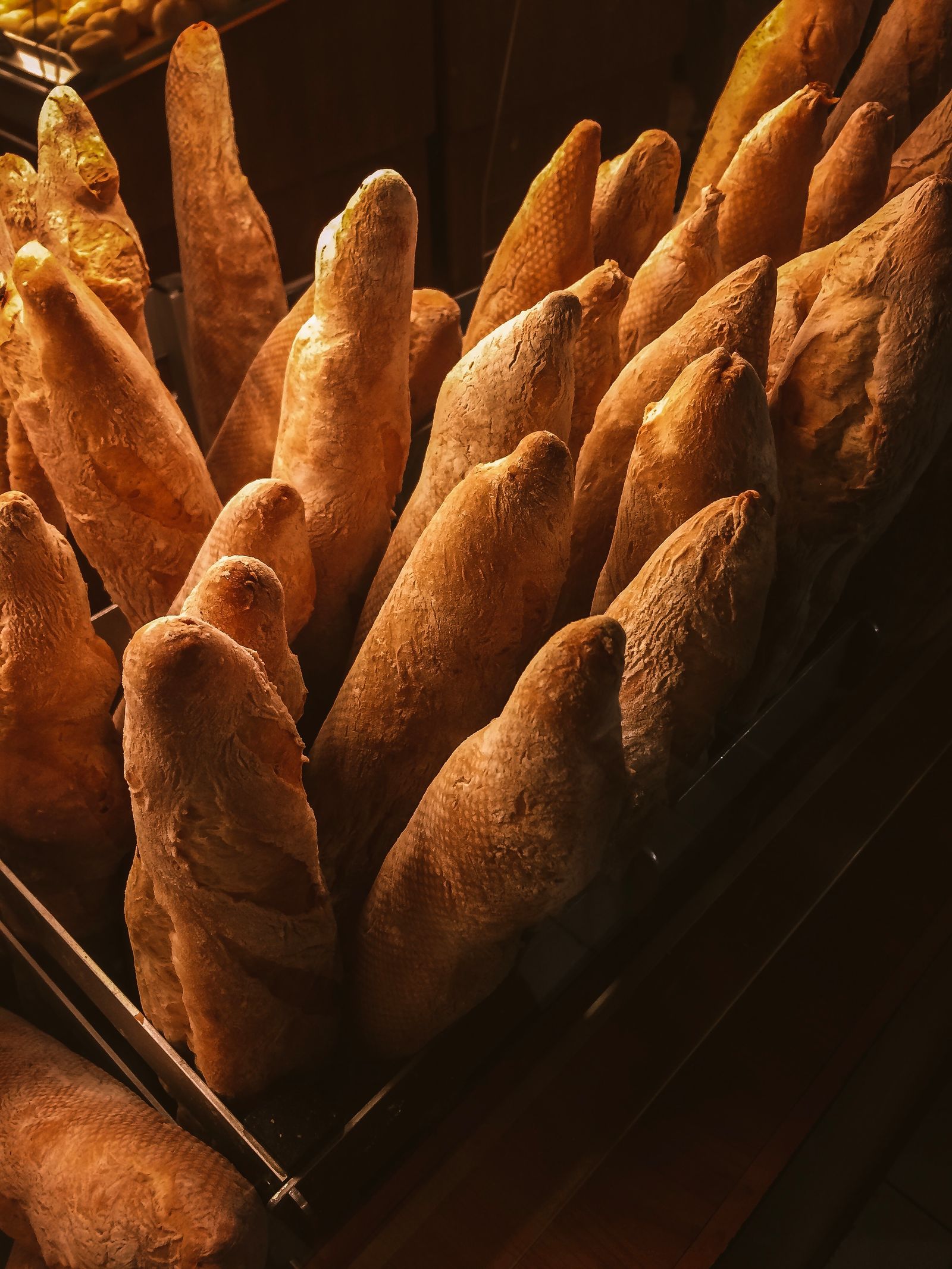
The Pantry: Spices, Nuts, and Baking (31–42)
| # | German | English | Note |
|---|---|---|---|
| 31 | das Salz | the salt | t→z shift |
| 32 | der Pfeffer | the pepper | p→pf shift — say it twice, it is fun |
| 33 | der Zucker | the sugar | |
| 34 | das Mehl | the flour | Cognate with “meal” (as in oatmeal) |
| 35 | das Öl | the oil | Olivenöl — olive oil |
| 36 | der Reis | the rice | Shared Greek root (oryza) |
| 37 | die Nuss | the nut | |
| 38 | die Walnuss | the walnut | “Foreign nut” — wal- meant “non-Germanic” |
| 39 | die Haselnuss | the hazelnut | |
| 40 | die Erdnuss | the peanut | “Earth-nut” — decode it yourself |
| 41 | die Mandel | the almond | Both from Latin amandula |
| 42 | die Olive | the olive |
Grains (43–45)
| # | German | English | Note |
|---|---|---|---|
| 43 | der Weizen | the wheat | Weizenbrot — wheat bread |
| 44 | der Roggen | the rye | Roggenbrot — the dark German classic |
| 45 | das Korn | the grain | Cognate with “corn” (in the old “grain” sense) |
Drinks / Getränke (46–50)
| # | German | English | Note |
|---|---|---|---|
| 46 | der Wein | the wine | German w = English v sound |
| 47 | das Bier | the beer | Ein Bier, bitte — your most useful phrase |
| 48 | der Kaffee | the coffee | Kaffee und Kuchen — the sacred afternoon ritual |
| 49 | der Tee | the tea | |
| 50 | die Limonade | the lemonade |
Thirsty for more? der Saft (juice — cognate with “sap”) is the natural 51st word.
German Food Cognates: Patterns Hiding in Your Kitchen
Food vocabulary is a perfect showcase for the German sound shifts, because so many items are ancient everyday words:
- p → pf: Apfel/apple, Pfeffer/pepper — the pf sound is a dinner bell for cognates.
- t → z/ss: Salz/salt, Wasser/water — seasoning and sustenance in one shift.
- k → ch: Milch/milk — one of the first k→ch words children learn.
- Compounds: Erdbeere (earth-berry), Blaubeere (blue-berry), Walnuss (foreign-nut), Erdnuss (earth-nut) — German builds food words like Lego bricks from parts you already know.
Learn these four moves and the grocery store becomes a classroom where every label teaches. Our 10 cognate rules drill each shift with ten example pairs.

The Honest Corner: 4 Words That Are Not Quite Cognates
Four items above carry a ⚠ mark. Here is the full story, because honest etymology makes you a smarter learner:
- die Wurst — English borrowed wurst from German (think bratwurst, liverwurst). So English speakers “know” it, but it is a loanword, not a shared-root cognate. Delicious either way.
- die Kartoffel — a genuine near-miss. German Kartoffel comes from Italian tartufolo (truffle, via the lumpy resemblance); English “potato” comes from Taíno batata via Spanish. Similar food, completely different family trees.
- die Zwiebel — the borderline case. Both words grew from Latin onion-words (cepulla → Zwiebel; unio → onion), so they are cousins, not twins. Close enough to help memory, distinct enough to note.
- die Gurke — the imposter. German took it from Polish ogórek (from Greek); English took “cucumber” from Latin cucumis. No shared root at all — this one you simply memorize.
Why include them? Because real German texts include them, and a learner who expects every food word to be a clean cognate will be confused at the market. Knowing which words to simply memorize is as valuable as knowing the patterns — our true cognates vs false friends guide teaches this judgment systematically.
Bonus Round: 10 More Delicious Words
Beyond the 50, these are worth meeting — each with a story:
- der Saft (juice) — cognate with “sap.” Apfelsaft is the national drink of German childhood.
- der Kuchen (cake) — shared Germanic root with “cake.” Kaffee und Kuchen is a cultural institution.
- die Torte (layer cake/torte) — English borrowed torte straight from German.
- der Keks (cookie/biscuit) — a reverse loanword: German borrowed it from English “cakes.”
- die Brezel (pretzel) — English borrowed pretzel from German Brezel.
- die Nudel (noodle) — English borrowed “noodle” from German Nudel.
- das Müsli (muesli) — English borrowed it whole, umlaut and all.
- der Schinken (ham) — cognate with “shank.”
- das Lamm (lamb) — identical root.
- das Kalb (calf) — identical root.
Notice the pattern: German gave English an entire bakery shelf (pretzel, torte, noodle, muesli). The borrowing goes both ways.
At the German Market: Phrases That Use This List
- Ich hätte gern ein Brot und etwas Käse. — I would like a bread and some cheese.
- Was kostet das Kilo Äpfel? — How much is a kilo of apples?
- Ein Bier, bitte. — A beer, please.
- Die Suppe schmeckt sehr gut. — The soup tastes very good.
- Haben Sie frischen Fisch? — Do you have fresh fish?
- Noch einen Kaffee, bitte. — Another coffee, please.
Learn the 50 words, practice these six sentences, and you can survive — even thrive — in any German bakery, market, or Biergarten.
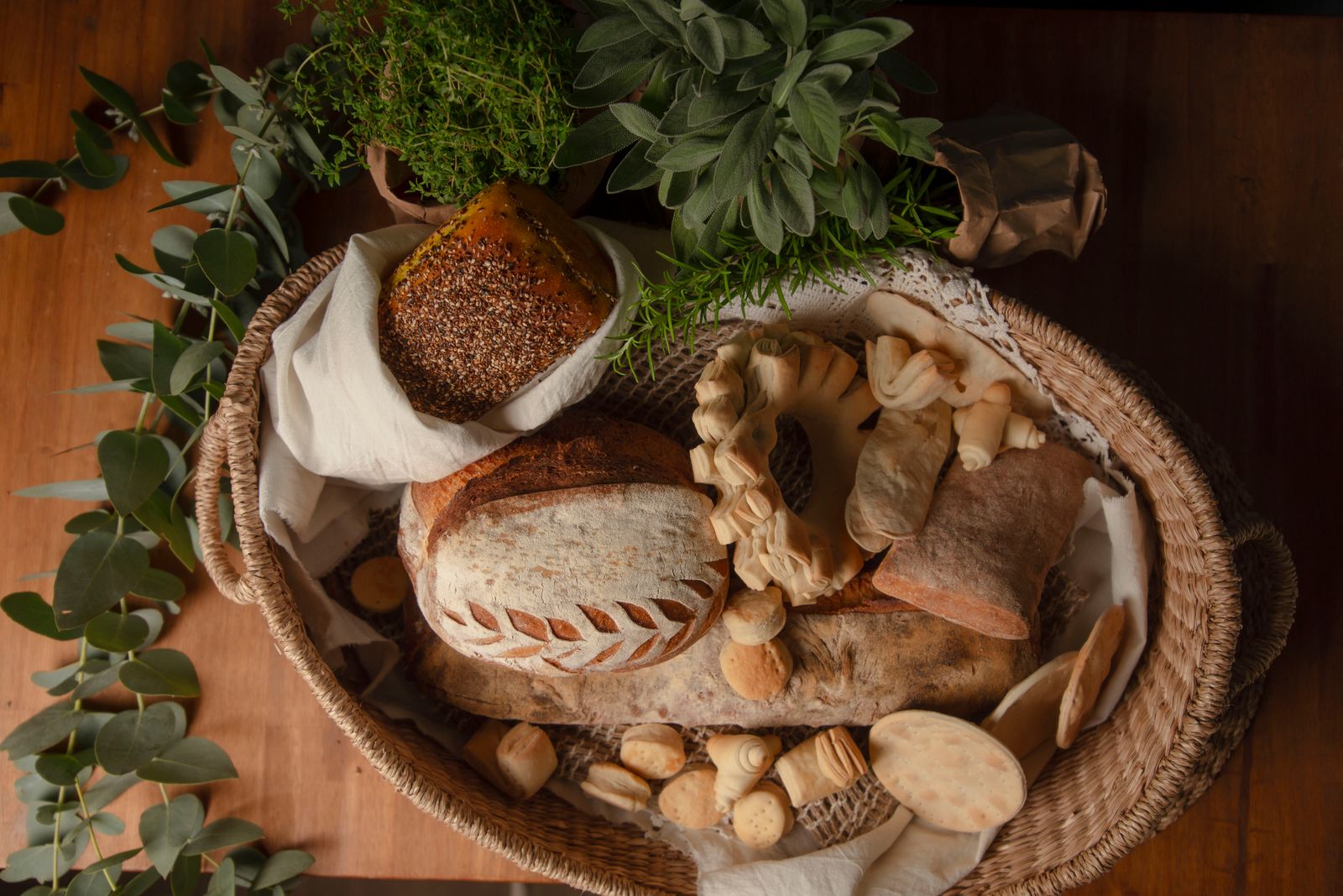
Key Takeaways
- These 50 german food cognates cover the everyday edible vocabulary: basics, fruit, vegetables, pantry, grains, and drinks — with correct articles throughout.
- Most pairs are true cognates via shared Germanic, Latin, or trade-route roots (Brot/bread, Kirsche/cherry, Zucker/sugar).
- Four flagged items (Wurst, Kartoffel, Zwiebel, Gurke) are loanwords or near-misses, not true cognates — marked honestly so you memorize instead of decode.
- German compounds decode beautifully once you know the parts: Erdbeere (earth-berry), Blaubeere (blue-berry), Apfelsaft (apple-juice).
- The borrowing runs both ways: English took pretzel, torte, noodle, and muesli from German.
- Six market phrases turn the list into usable travel German today.
Frequently Asked Questions
Why are so many fruit names shared between German and English?
Southern fruits (cherry, plum, pear, fig, date) reached northern Europe through Roman trade, so both languages borrowed them from Latin or Greek at similar times. Native northern foods (apple, nut, honey) are shared through the older Germanic root instead.
Is “Wurst” really not a cognate of “sausage”?
Correct — Wurst and “sausage” have different roots (Wurst relates to “mixture”; sausage comes from Latin salsus, salted). But English borrowed wurst directly (bratwurst, liverwurst), so English speakers still recognize it — as a loanword, not a cognate.
What is the difference between “Obst” and “Früchte”?
Obst is the everyday collective word for fruit (what you buy at the market); Früchte is more formal or botanical (“fruits”). At a market stall, always Obst.
How do I order food politely in German?
Ich hätte gern… (I would like…) + the item + bitte (please). It is polite, universal, and uses exactly the vocabulary on this list.
Are German compound food words hard to learn?
They are the easiest words in German once you split them: Erdbeere = earth + berry, Apfelsaft = apple + juice, Kaffee und Kuchen needs no translation at all. Splitting compounds is a core skill — our spotting guide teaches it.
Which food cognates should travelers learn first?
Brot, Butter, Käse, Wasser, Bier, Kaffee, Apfel, Suppe, Salat, Fisch — with Ein Bier, bitte and Ich hätte gern… as your sentence frames. That is a complete restaurant survival kit in twelve words.
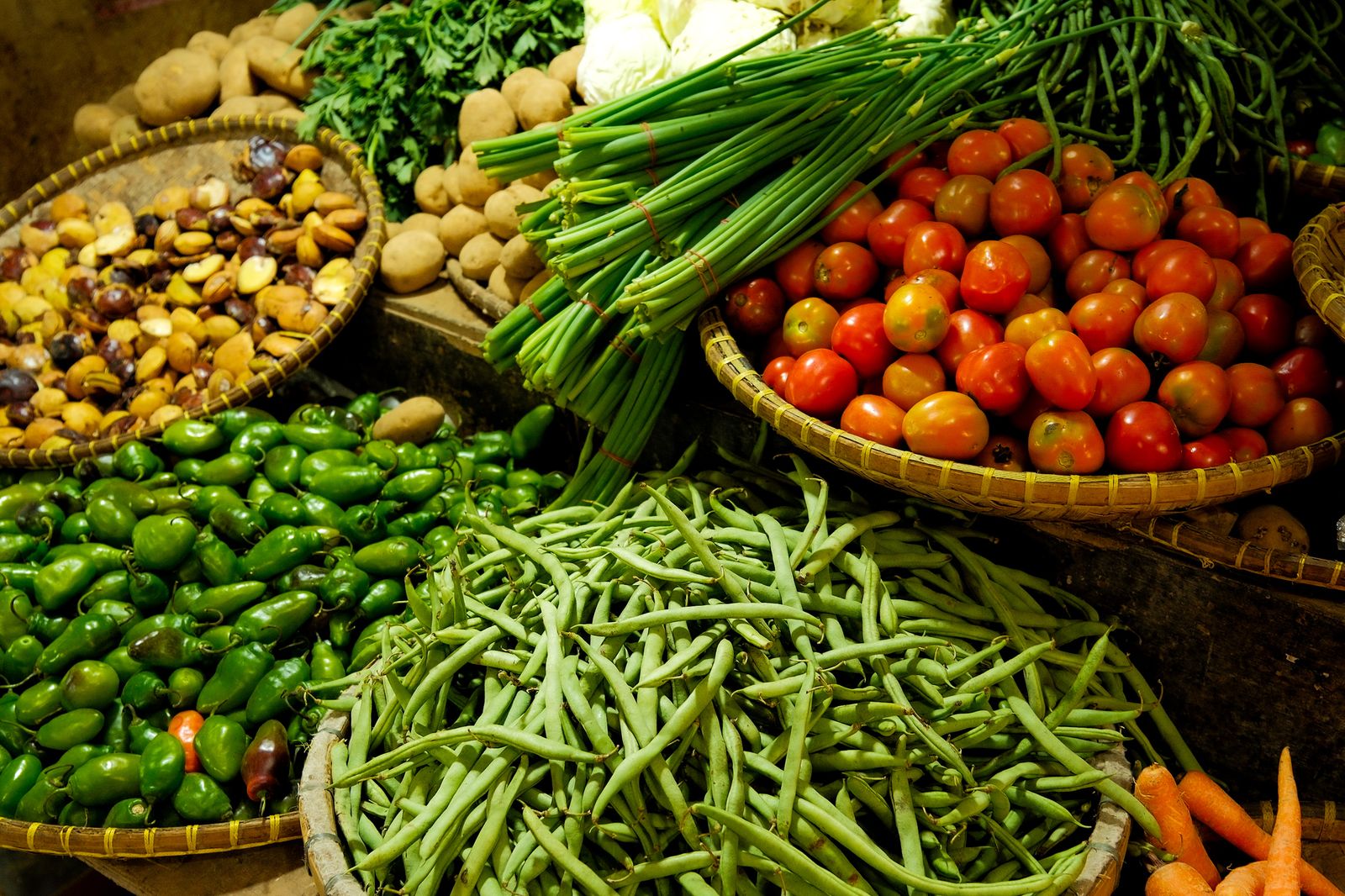
Cook your way through these german food cognates one meal at a time — label your pantry, order with confidence, and let your appetite do the memorizing.