

Few things in language are as satisfying as a word that reads the same forwards and backwards. Type Rentner into a mirror and it stares right back at you, unchanged. German palindromes like this one are everywhere once you start looking — hiding in everyday vocabulary, in names on classroom rosters, and in sentences that take a full breath to say. This guide explains what makes German palindromes tick, why German produces more of them than almost any other European language, and how you can verify, build, and play with them yourself. Every palindrome in this article has been script-verified: stripped of spaces and punctuation, lowercased, and checked to read identically in reverse.
What Are German Palindromes?
A palindrome is any word, phrase, or sentence that reads the same backwards as forwards. The word itself comes from the Greek palin dromein, “to run back again.” In German, the concept works exactly the same way, with one practical rule that every palindrome hunter follows: ignore spaces, punctuation, and capital letters. What matters is the bare sequence of letters.
Take the classic Lagerregal (warehouse shelf). Strip it down and reverse it:
L – A – G – E – R – R – E – G – A – L
Read it backwards and you get the identical sequence. That is the whole test, and it is merciless. A single mismatched letter anywhere in the chain disqualifies the candidate — which is why serious palindrome lists are verified by script rather than by eye. Human eyes are generous; they see symmetry where none exists. A simple program that lowercases the text, removes everything that is not a letter, and compares the string to its reverse does not forgive.
German palindromes come in three sizes. The smallest are interjections and tiny function words: aha, aua (ouch), oho, nun (now), tot (dead). These are fun but almost accidental — with only three letters, symmetry happens by chance fairly often. The middle size is where German shines: ordinary nouns like Rentner (pensioner), Ehe (marriage), Uhu (eagle owl), and Elle (an old unit of measure, the ell). These are real dictionary words that real people use in real sentences, and they happen to be perfectly symmetrical. The largest size is the sentence palindrome, where whole phrases mirror themselves once you remove the spaces: Ein Esel lese nie (a donkey never reads) becomes einesellesenie, which reads identically backwards.
One thing that trips up beginners: the article does not count. When you see die Ehe or der Uhu in a palindrome list, the palindrome is Ehe and Uhu — the die and der are just the grammatical articles telling you the word’s gender. Nobody expects dieehe to read backwards. Lists include the articles because German learners need to know them, not because they are part of the mirror.
Another beginner question is whether umlauts and ß break palindromes. They do not, as long as they mirror correctly. The famous sentence Eine güldne, gute Tugend: Lüge nie (a golden, good virtue: never lie) contains two ü’s, and each one sits exactly where its mirror image demands. The verification is done on the letters as written — no transliterating ü to ue, which would be cheating. German palindromes play by German spelling rules.
The German love affair with palindromes is old. Baroque poets of the 17th century composed mirrored verses as displays of virtuosity, and the great palindrome sentences — Ein Esel lese nie, O Genie, der Herr ehre dein Ego! — circulated in almanacs and puzzle columns for generations before the internet gave them a second life. What changed recently is verification: where earlier collectors trusted their eyes (and occasionally printed a fake), today’s lists are checked by software in milliseconds. That is why this guide insists on script verification. A palindrome canon built on hope is not a canon; it is a rumor. The ones here have survived the mirror test, and you can re-run that test on any candidate you meet in the wild.
Why German Produces Such Great Palindromes
German has a structural superpower for palindrome-making: compounding. Where English needs two or three separate words, German glues them into one. Lager (warehouse, stock) plus Regal (shelf) gives Lagerregal, and because Regal is itself nearly the reverse of Lager, the compound snaps shut into a perfect mirror. English would say “warehouse shelf” — three words, no symmetry, no fun.
This is not a one-off trick. German compounding means the language is constantly manufacturing long words out of shorter parts, and every compound is a fresh roll of the palindrome dice. Reittier (riding animal) works the same way: Reit- mirrored around the double t. Reliefpfeiler (relief pillar) is a genuine architectural term that happens to be a flawless palindrome — try finding an eleven-letter palindrome in a French dictionary.
There is a second reason, subtler but just as important. German syllable structure loves symmetry. The language is full of words built from mirrored pairs: Rent-ner, Ot-to, An-na, Mad-am, Rot-or. Consonant doubling (tt, nn, mm, ll) creates natural pivot points in the middle of a word, and German spelling uses doubling far more aggressively than English. Each doubled consonant is a potential mirror axis.
Compare the hit rate with English. English has its famous palindromes — level, radar, rotor, civic, kayak — and several of these exist in German too (Level, Radar, Rotor, Kajak are all used in German, spelled identically). But German adds a whole layer that English cannot match: the everyday compound nouns. Rentner is not a curiosity invented for a puzzle book; it is the ordinary word for a retired person, used in newspapers every day. When a language’s daily vocabulary contains words like Lagerregal and Rentner, palindrome lovers have an embarrassment of riches.
Names help too. Anna, Otto, Ada, and Hannah are all real German names and all perfect palindromes. A German primary school class has decent odds of containing at least one palindrome-named child, which is more than most languages can say. If you want to see how naturally palindromes sit inside German word life, browse our German palindrome examples — every entry is verified and translated.
Classic German Palindrome Words (All Verified)
Below is a working collection of German palindrome words, each one script-verified letter by letter. Articles (der, die, das) are included so learners get the gender right; remember that the article itself is not part of the mirror.
| Word | Gender | Meaning | Notes |
|---|---|---|---|
| Anna | — | woman’s name | The classic; symmetrical around the double n |
| Otto | — | man’s name | One of the most famous German palindromes |
| Ada | — | woman’s name | Short, elegant, mirrors around d |
| Hannah | — | woman’s name | The double n does the mirroring work |
| die Ehe | feminine | the marriage | A whole abstract noun, perfectly mirrored |
| der Uhu | masculine | the eagle owl | Also the sound the owl makes: uhu |
| der Rentner | masculine | the pensioner | The poster child of German palindromes |
| das Lagerregal | neuter | the warehouse shelf | Lager + Regal — compounding magic |
| das Reittier | neuter | the riding animal | Reit- mirrored around the double t |
| die Madam | feminine | the madam | Borrowed word, kept its symmetry |
| das Radar | neuter | the radar | Same spelling as English |
| das Level | neuter | the level | Same spelling as English |
| der Rotor | masculine | the rotor | Same spelling as English |
| der Pop | masculine | pop music | Short and punchy, like the music |
| der Bob | masculine | the bobsled | Winter sports palindrome |
| das Kajak | neuter | the kayak | Same spelling as English |
| die Ebbe | feminine | the ebb, low tide | Mirrors around the double b |
| die Neffen | masculine plural | the nephews | Plural form; singular Neffe is not one |
| nennen | — | to name, to call | A verb! Palindromic verbs are rare |
| die Tat | feminine | the deed, act | Three letters, zero wasted |
| die Elle | feminine | the ell (old measure) | Mirrors around the double l |
| der Reliefpfeiler | masculine | the relief pillar | Eleven letters of architecture |
| Sagas | — | sagas, legends | Plural of Saga |
| nun | — | now | Tiny but perfect |
| tot | — | dead | Three letters, total symmetry |
| aha | — | aha! | The sound of understanding |
| aua | — | ouch! | The sound of pain |
| oho | — | oho! | The sound of surprise |
A few of these deserve a closer look. Rentner is many learners’ first German palindrome, and it is worth pausing on why it works so beautifully: R-E-N-T-N-E-R. The t sits dead center, with ren on the left mirrored as ner on the right. Lagerregal is the heavyweight champion of everyday German palindromes — ten letters, a real compound noun, and a word you might genuinely need when talking about storage. Reliefpfeiler is the connoisseur’s pick: eleven letters, a technical term, and proof that German compounding can produce palindromes at almost any length.
Notice how many pivot on doubled consonants: Anna, Otto, Ebbe, Elle, Reittier. This is the German spelling system quietly manufacturing symmetry. If you are building vocabulary anyway, these words are mnemonically free — the spelling teaches itself, because each half predicts the other. That self-teaching quality is exactly why teachers love them: a student who has internalized Rentner will never misspell it, because any typo breaks the mirror and looks instantly wrong. Language learners who enjoy word games may also like checking German words with the most vowels for a different kind of spelling pattern.
German Palindrome Sentences Worth Knowing
Word palindromes are satisfying, but sentence palindromes are the art form. Each of the following has been verified by stripping spaces and punctuation and comparing the result to its reverse. Translations are literal so you can see exactly what the German says.
Ein Esel lese nie. — A donkey never reads.
The traditional beginner’s sentence palindrome. Short, clean, and the vocabulary could not be simpler.
Dreh mal am Herd! — Turn the stove knob!
An imperative — you can actually say this in a kitchen. It is one of the few palindromes that is also a useful sentence.
Sei fein, nie fies! — Be nice, never nasty!
Parental advice in perfect mirror form. The ei/ie alternation does a lot of quiet work here.
Trug Tim eine so helle Hose nie mit Gurt? — Did Tim never wear such light trousers with a belt?
The long-form classic. Fourteen words collapsing into one mirrored letter string. Say it slowly and feel the symmetry click into place.
Erika feuert nur untreue Fakire. — Erika only fires disloyal fakirs.
The most theatrical German palindrome. It has a protagonist, a plot, and a profession you rarely meet.
O Genie, der Herr ehre dein Ego! — O genius, may the Lord honor your ego!
Baroque and magnificent — an apostrophe that mirrors itself.
Regal mit Sirup pur ist im Lager. — A shelf with pure syrup is in the warehouse.
A cousin of Lagerregal, expanded into a full sentence about warehouse logistics.
Lag er im Kajak? Mir egal. — Was he in the kayak? I don’t care.
Two sentences mirroring as one unit, with a shrug built in.
Die Liebe ist Sieger, stets rege ist sie bei Leid. — Love is the victor, ever active amid sorrow.
The philosophical heavyweight — nineteen words of mirrored wisdom.
Eine güldne, gute Tugend: Lüge nie. — A golden, good virtue: never lie.
Moral instruction with umlauts in exactly the right places.
Eine Horde bedrohe nie. — Never threaten a horde.
Short, punchy, and good advice in any language.
If you want the full annotated collection with more entries, our list of 30 German palindrome examples has every one of these plus the complete verified word list.
How to Build Your Own German Palindromes
Making your own palindrome is more satisfying than memorizing someone else’s, and German gives you excellent raw materials. Here is a method that actually works, from the center outward.
Step 1: Pick a pivot. Every palindrome has a center — either a single letter (as in Rentner, pivoting on t) or a doubled pair (as in Anna, pivoting on nn). Start there. Single-letter pivots are easier for beginners: choose t, d, n, or l.
Step 2: Mirror outward one pair at a time. Put your pivot down, then add the same letter to both sides: t becomes ata, ete, iti, oto, utu. You now have a three-letter palindrome. Add another pair: n on both sides gives natan, neten, nitin, noton, nutun. None of these are words yet — that is fine. You are building scaffolding.
Step 3: Hunt for real words inside the scaffolding. This is where German compounding pays off. Take noton — not a word. But split your thinking: what German words end in -not or start with not-? What about building from real halves instead, the Lagerregal way? Find a word, reverse it, and see if the reversed form is also a word or word-part: Lager reversed is Regal, and both are real. Glue them together. This reverse-and-glue technique is the single most productive palindrome method in German.
Step 4: Use the compound trick deliberately. List German nouns, reverse each one, and check whether the reversal is also a valid word or stem. Tier reversed is reit- (as in reiten, to ride) — and Reittier is the result. Keep a running list of reversible pairs; every pair is a potential palindrome.
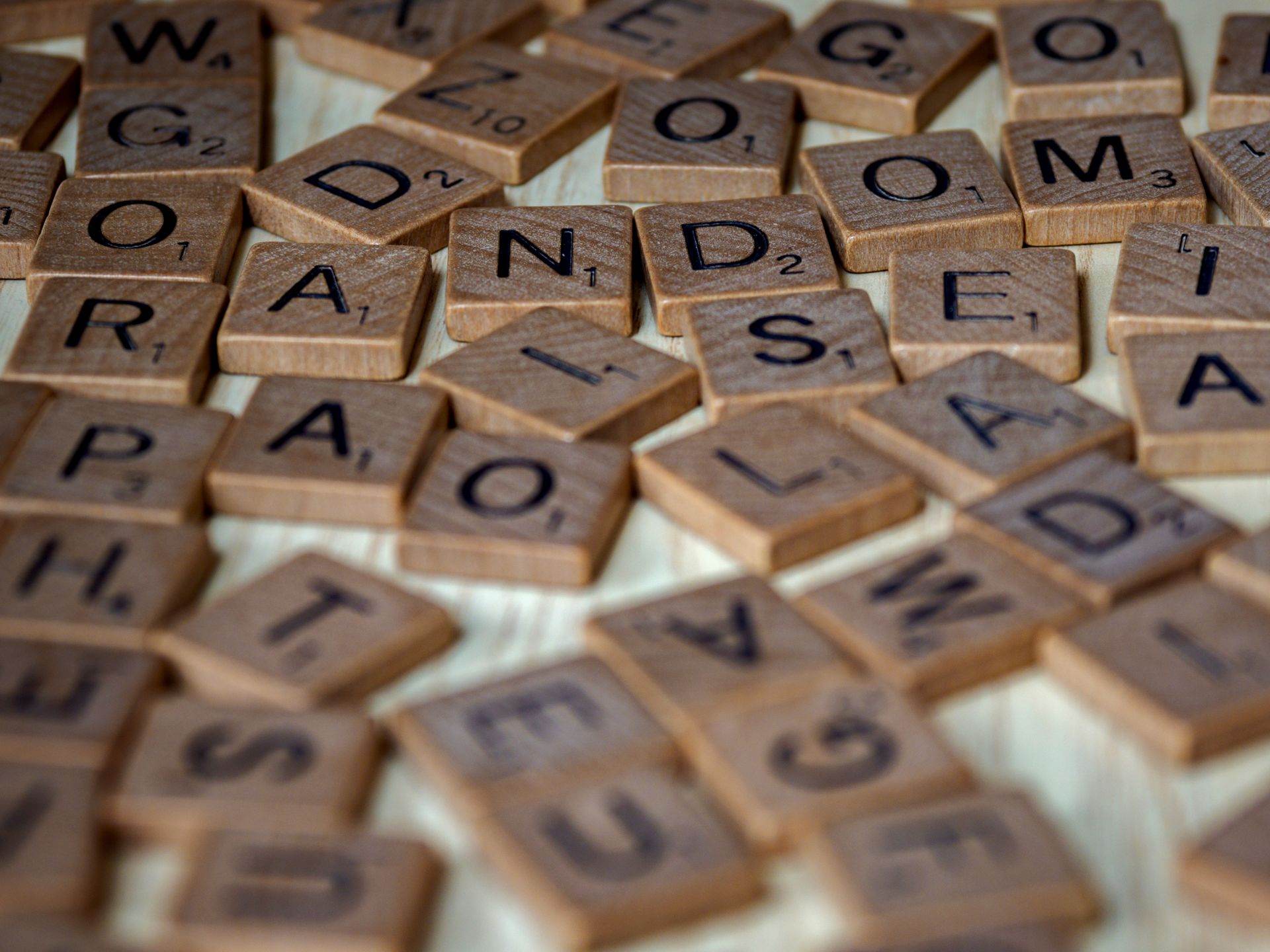
Step 5: Verify ruthlessly. Write your candidate, strip everything but the letters, and check the reverse. Do it with an actual script or a careful manual reversal — never by eye alone. The eye is the enemy of the palindrome hunter; it forgives, and forgiveness is disqualifying.
Step 6: Graduate to sentences. Sentence palindromes are built the same way but with word-level mirroring: the first word mirrors the last, the second mirrors the second-to-last, and so on. Start with three-word sentences and short vocabulary. Dreh mal am Herd is the model: everyday words, genuine meaning, perfect mirror.
A practical tip: Scrabble players develop exactly the reverse-and-glue instinct, because they are constantly anagramming tiles. If you play, our German Scrabble tile values guide doubles as a palindrome-builder’s reference — high-value letters like y and x are palindrome poison, while common vowels are gold.
5 Palindrome Games for German Learners
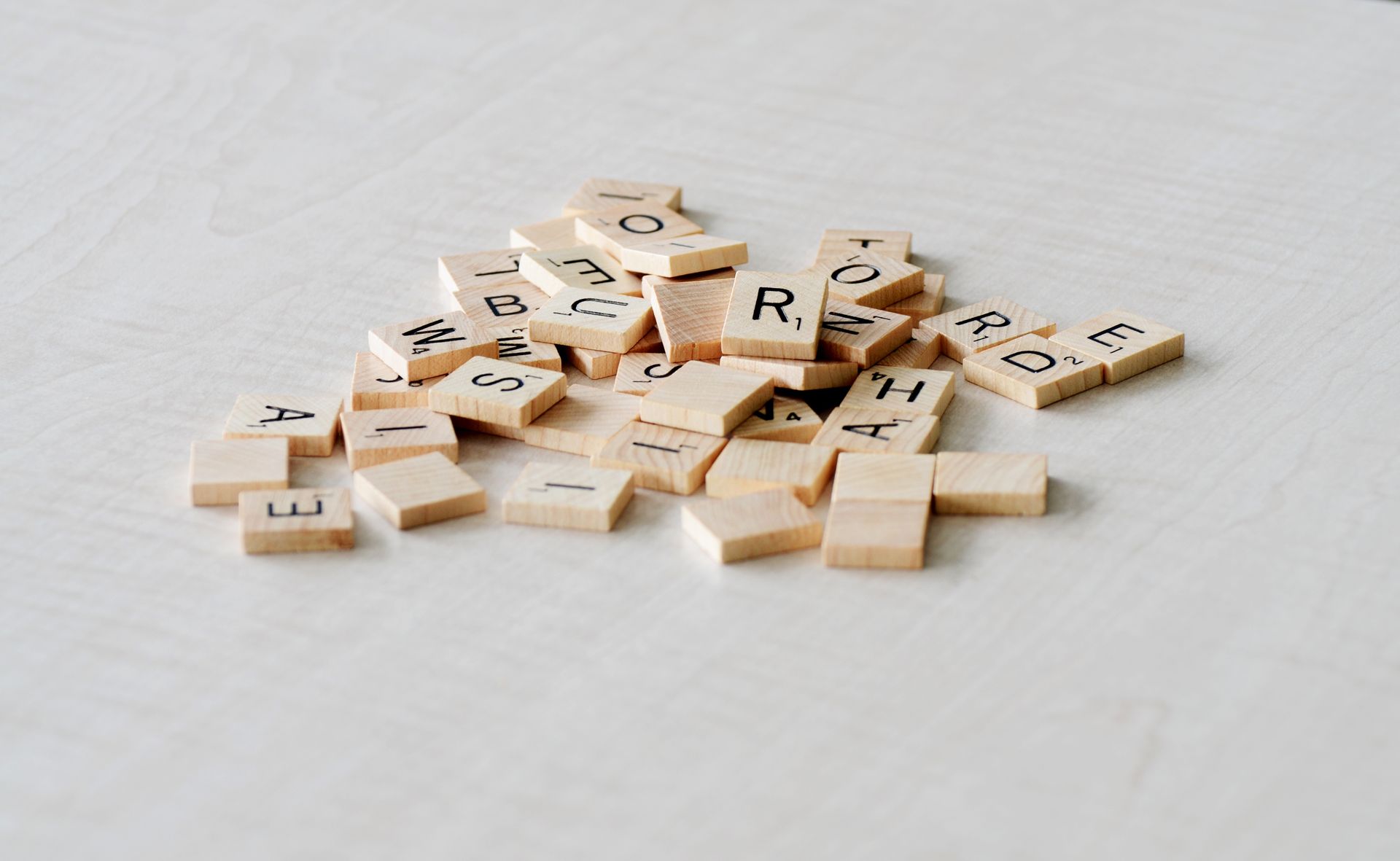
Palindromes are not just curiosities; they are genuinely useful learning tools. Because each half of a palindrome predicts the other half, they train spelling, vocabulary, and pattern recognition at the same time. Here are five games that work for solo learners, classrooms, and families.
1. Palindrome hunt. Give yourself ten minutes with a German dictionary or word list and find as many palindromes as you can. Score one point per word, three points for anything over eight letters. The Lagerregal discovery moment — when you realize a word you already knew was a palindrome all along — is the whole point of the game.
2. Palindrome chains. One player says a palindrome; the next player must say one starting with the last letter of the previous one. Rentner → Radar → Reliefpfeiler → Reittier. It forces you to keep a mental inventory, which is exactly how vocabulary sticks.
3. Timed build. Set a timer for five minutes and build the longest palindrome you can using the center-outward method. Verify at the end; unverified entries score zero. The verification step teaches the discipline that separates real palindromes from wishful thinking.
4. Palindrome dictation. One person reads a sentence palindrome aloud — Trug Tim eine so helle Hose nie mit Gurt? is ideal — and the other writes it down, then checks the mirror. This trains listening, spelling, and the umlaut-free precision that palindromes demand.
5. Mirror writing race. Write a palindrome word normally, then write it backwards from memory, racing a partner. Because the word is symmetrical, the backwards version should match the forwards version exactly. Any mismatch reveals a spelling weakness instantly.
Pair these with pronunciation work for a full workout: our easy German tongue twisters for beginners train the mouth while palindromes train the eye, and together they cover both halves of language learning. Wordle fans can also try applying the mirror instinct to German Wordle tips — symmetrical letter patterns show up in five-letter words more often than you would guess.
Key Takeaways
Here is the short version of everything this guide covered — the points worth remembering the next time a German word looks suspiciously symmetrical.
- German palindromes are words or sentences that read identically backwards once spaces, punctuation, and capitals are removed — Rentner and Lagerregal are the classic examples.
- German’s compounding habit (Lager + Regal) and love of doubled consonants make it a palindrome factory, far richer than English in everyday symmetrical words.
- Articles (der, die, das) are not part of the mirror — the palindrome is the noun itself, as in Ehe or Uhu.
- Every palindrome worth trusting has been verified by script: lowercase, strip non-letters, compare with the reverse. Eyes forgive; scripts do not.
- You can build your own with the center-outward method and the reverse-and-glue compound trick.
- Palindrome games — hunts, chains, timed builds, dictation — turn symmetry into a genuine vocabulary and spelling workout for German learners.