

40 German Shopping Phrases for Markets, Malls and Stores
Shopping in Germany ranges from centuries-old weekly markets to sleek malls — and the language of buying is refreshingly direct. These 40 German shopping phrases cover every retail situation: asking prices, trying on clothes, negotiating at markets, paying, and returning things. Each phrase includes pronunciation and meaning.
Before You Shop: What to Expect
- Opening hours: Most shops close by 20:00 on weekdays, earlier on Saturdays, and stay closed on Sundays (the famous Sonntagsruhe). Plan souvenir shopping accordingly.
- Cash: Small shops, market stalls, and bakeries are often cash-only. Ask Nehmen Sie Kreditkarten? before filling your basket.
- Bags: Plastic bags cost extra or are unavailable — bring a tote or buy one (Eine Tüte, bitte).
- VAT refunds: Non-EU residents can claim back the 19% VAT (Mehrwertsteuer) on larger purchases — ask the shop for a Tax-Free-Formular.
Asking About Prices and Products
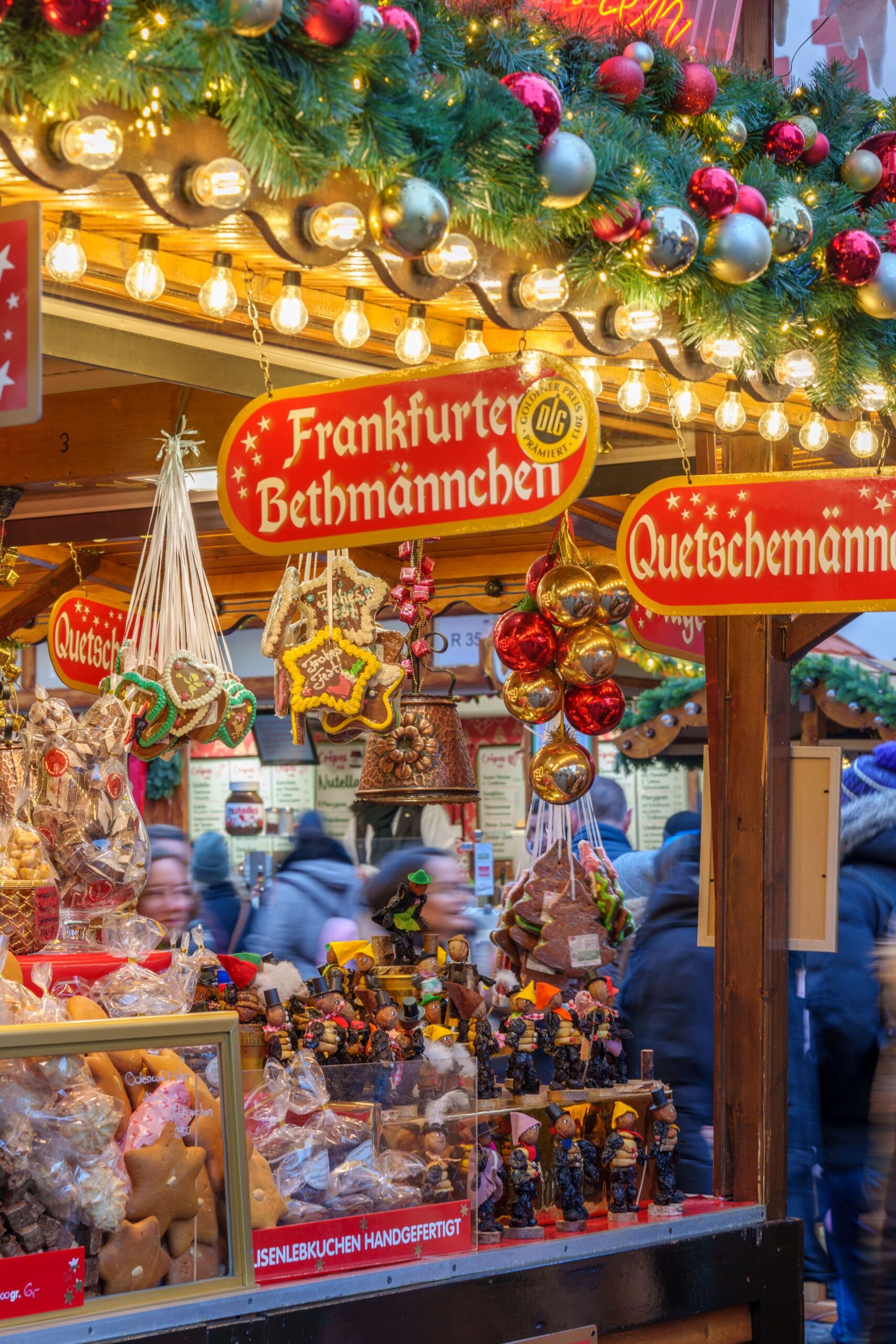
- Wie viel kostet das? (vee feel KOS-tet dahs) — How much is that?
- Was kostet das? (vahs KOS-tet dahs) — What does that cost? (Slightly more casual.)
- Haben Sie das in einer anderen Größe? (HAH-ben zee dahs in INE-er AHN-deh-ren GRUR-seh) — Do you have that in another size?
- Haben Sie das auch in Schwarz? (HAH-ben zee dahs owkh in shvahrts) — Do you have that in black too? (Swap any color: Weiß, Blau, Rot, Grün.)
- Haben Sie das billiger? (HAH-ben zee dahs BIL-i-ger) — Do you have that cheaper? (A gentler haggle than “too expensive.”)
- Das ist zu teuer. (dahs ist tsoo TOY-er) — That’s too expensive.
- Gibt es einen Rabatt? (gipt es INE-en rah-BAHT) — Is there a discount?
- Ist das im Angebot? (ist dahs im ahn-geh-BOHT) — Is that on sale?
- Wo finde ich…? (voh FIN-deh ikh) — Where do I find…? (Wo finde ich die Souvenirs?)
- Haben Sie…? (HAH-ben zee) — Do you have…? (Haben Sie Postkarten? — Do you have postcards?)
Trying Things On
- Kann ich das anprobieren? (kahn ikh dahs AHN-proh-bee-ren) — Can I try that on?
- Wo ist die Umkleidekabine? (voh ist dee OOM-kly-deh-kah-bee-neh) — Where is the fitting room?
- Das passt mir nicht. (dahs pahst meer nikht) — That doesn’t fit me.
- Das ist zu groß / zu klein. (dahs ist tsoo grohs / tsoo kline) — That’s too big / too small.
- Haben Sie eine Nummer größer / kleiner? (HAH-ben zee INE-eh NUM-er GRUR-ser / KLY-ner) — Do you have a size larger / smaller?
- Das steht Ihnen gut. (dahs shtayt EEN-en goot) — That suits you well. (What a friendly salesperson says — take it with a grain of salt.)
- Ich nehme es. (ikh NAY-meh es) — I’ll take it.
- Ich schaue mich nur um. (ikh SHOW-eh mikh noor oom) — I’m just looking. (The magic phrase that gives you space.)
At Markets and Food Shops
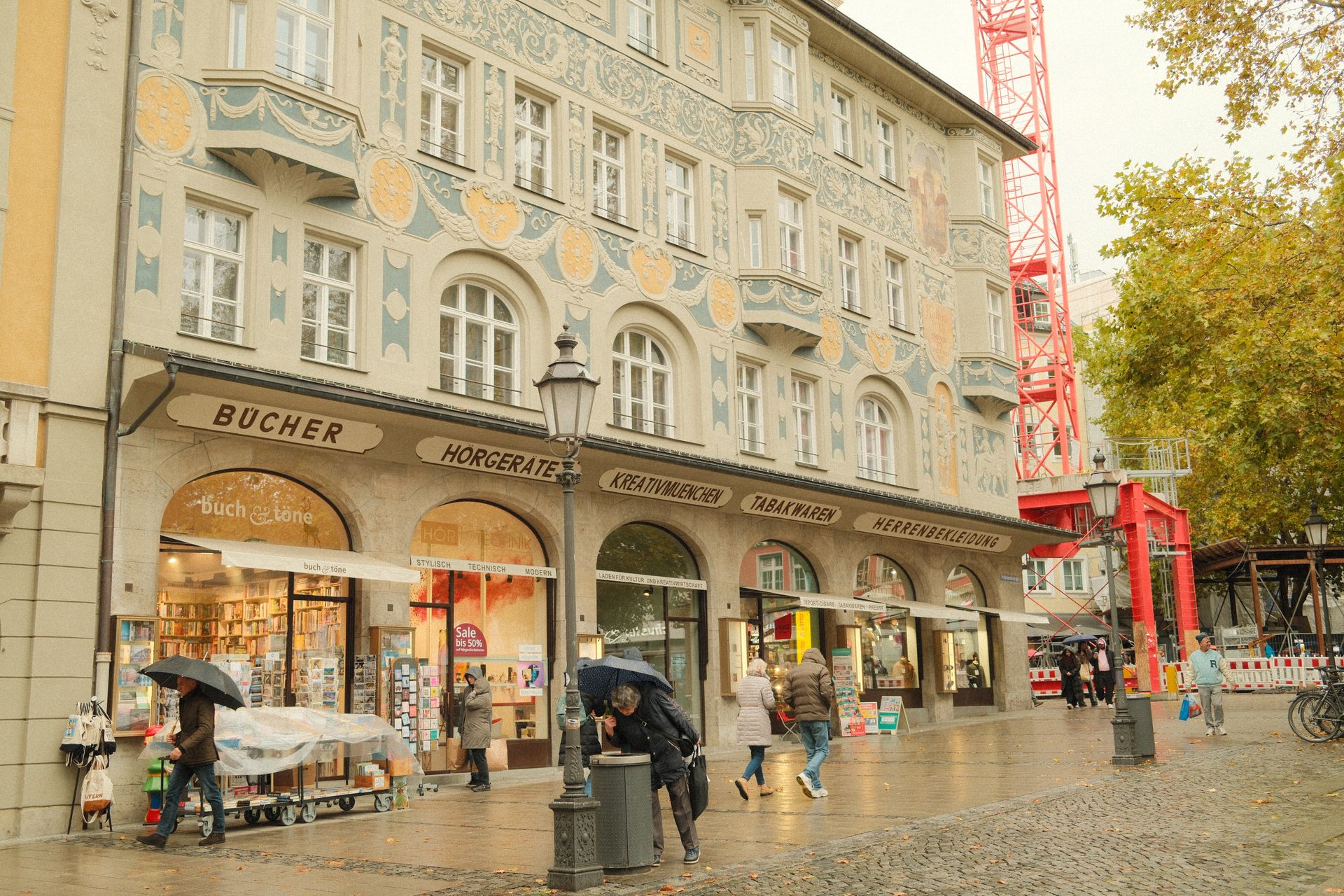
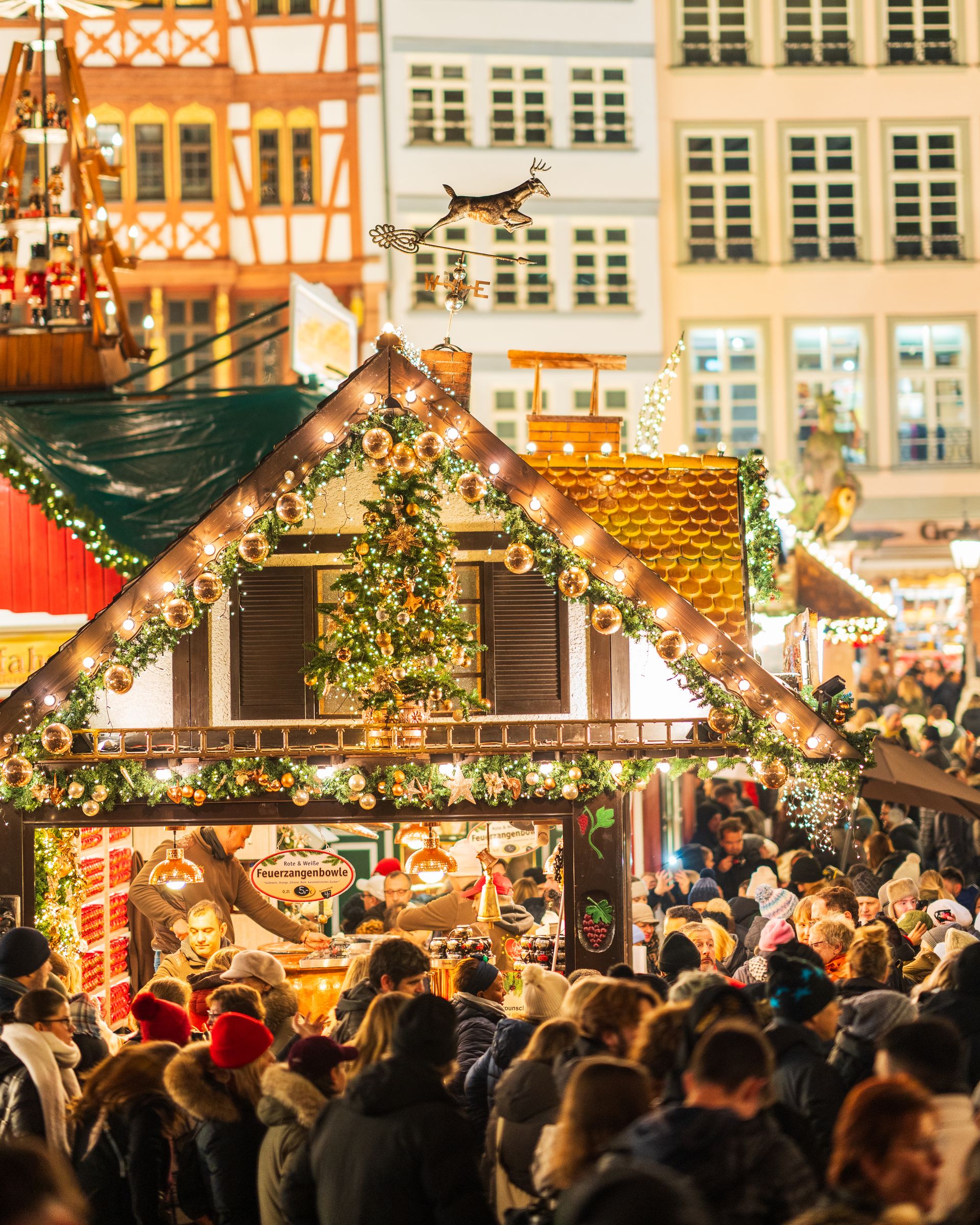
Weekly markets (Wochenmärkte) and Christmas markets (Weihnachtsmärkte) are shopping highlights — and the most fun place to use German. Vendors expect chat.
- Was kostet das Kilo? (vahs KOS-tet dahs KEE-loh) — What does it cost per kilo?
- Ein halbes Kilo, bitte. (ine HAHL-bes KEE-loh BIT-teh) — Half a kilo, please.
- Darf ich mal probieren? (dahrf ikh mahl proh-BEE-ren) — May I try a taste? (At food stalls — usually welcomed.)
- Das ist frisch? (dahs ist frish) — Is that fresh?
- Woher kommt das? (voh-HAIR komt dahs) — Where is that from? (Vendors love telling you about their region.)
- Machen Sie mir einen guten Preis? (MAH-khen zee meer INE-en GOO-ten pryse) — Can you give me a good price? (Friendly haggling at flea markets — Flohmärkte — not in regular stores.)
- Ich nehme alles zusammen für zwanzig Euro? (ikh NAY-meh AH-les tsoo-ZAH-men foor TSVAHN-tsikh OY-roh) — I’ll take everything together for twenty euros? (Bundling is the classic flea-market move.)
Paying
- Nehmen Sie Kreditkarten? (NAY-men zee kreh-DEET-kar-ten) — Do you take credit cards?
- Kann ich mit Karte zahlen? (kahn ikh mit KAR-teh TSAH-len) — Can I pay by card?
- Kann ich mit dem Handy zahlen? (kahn ikh mit daym HEN-dee TSAH-len) — Can I pay with my phone?
- Nur bar? (noor bahr) — Cash only? (Quick check at small stalls.)
- Wo ist die Kasse? (voh ist dee KAH-seh) — Where is the checkout?
- Eine Tüte, bitte. (INE-eh TOO-teh BIT-teh) — A bag, please.
- Das ist alles, danke. (dahs ist AH-les DAHN-keh) — That’s all, thank you.
- Könnte ich die Quittung haben? (KURN-teh ikh dee kvit-TUNG HAH-ben) — Could I have the receipt?
- Stimmt so. (shtimt zoh) — Keep the change. (Works at market stalls too.)
Returns and Problems
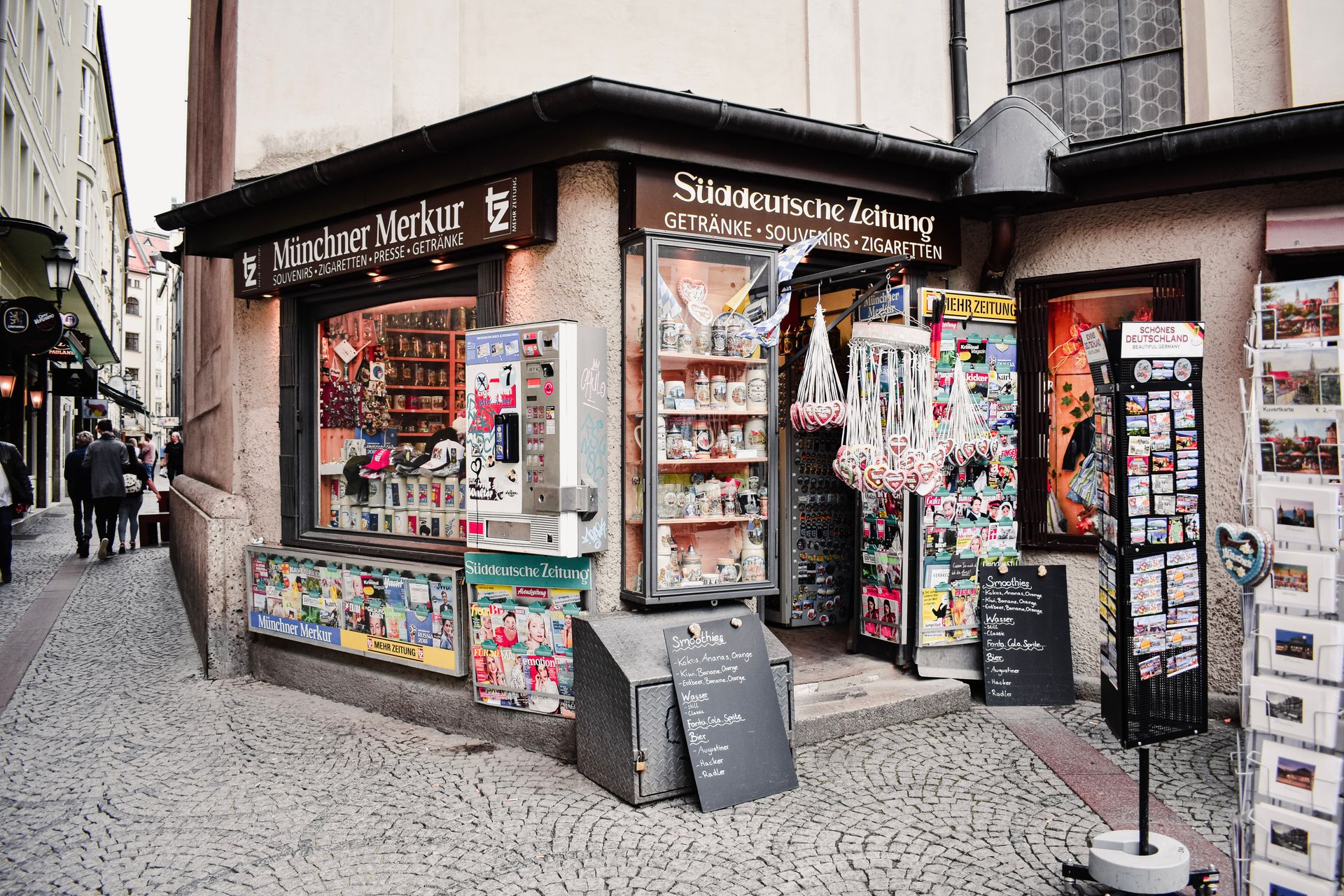
- Kann ich das umtauschen? (kahn ikh dahs OOM-tow-shen) — Can I exchange this?
- Ich möchte das zurückgeben. (ikh MOOKH-teh dahs tsoo-ROOK-gay-ben) — I’d like to return this.
- Das ist kaputt. (dahs ist kah-POOT) — That’s broken.
- Das funktioniert nicht. (dahs funk-tsyoh-NEERT nikht) — That doesn’t work.
- Haben Sie den Kassenbon noch? (HAH-ben zee dayn KAH-sen-bon nokh) — Do you still have the receipt? (What staff ask you: keep your Kassenbon for returns.)
Practical Info
- Wann haben Sie geöffnet? (vahn HAH-ben zee geh-URF-net) — When are you open?
- Wo ist der nächste Supermarkt? (voh ist dair NAYKH-steh ZOO-per-mahrkt) — Where is the nearest supermarket?
- Gibt es hier eine Apotheke? (gipt es heer INE-eh ah-poh-TAY-keh) — Is there a pharmacy here? (Pharmacies handle many things drugstores do elsewhere.)
Bonus vocabulary for labels and signs: der Preis (price), das Angebot (special offer), der Ausverkauf (clearance sale), reduziert (reduced), neu (new), gebraucht (used — for flea markets), der Kassenbon / die Quittung (receipt), die Mehrwertsteuer (VAT), umsonst (free — as in no cost).
German Shopping Phrases for Clothing Sizes
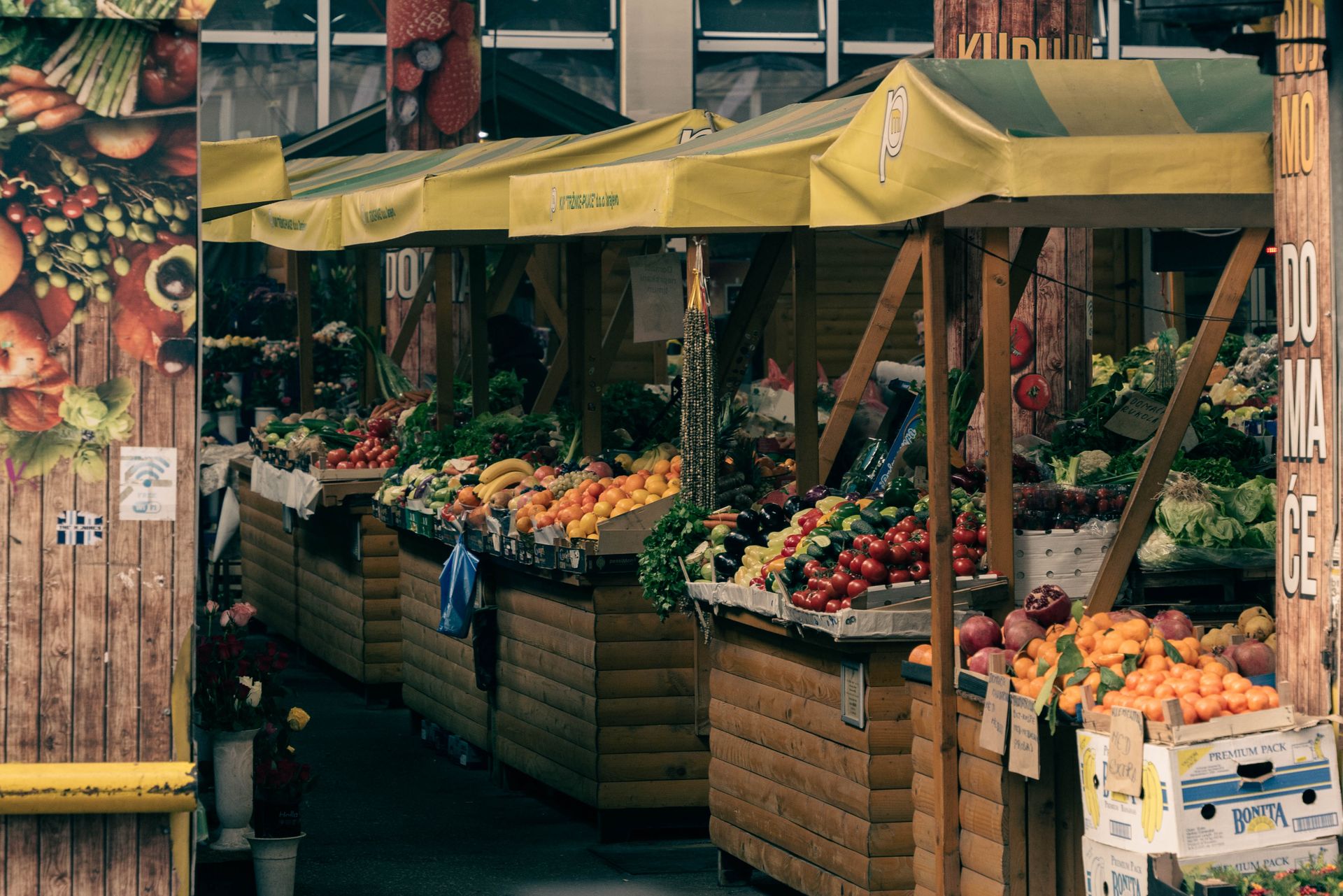
EU sizes confuse everyone at first. The essentials:
- Welche Größe haben Sie? (VELKH-eh GRUR-seh HAH-ben zee) — What size are you? (What staff ask you.)
- Ich habe Größe 42. (ikh HAH-beh GRUR-seh TSWA-unt-feer-tsikh) — I’m a size 42.
- Die Konfektionsgröße (dee kon-fek-TSYOHNS-grur-seh) — the clothing size
- Haben Sie das in Größe M? — Do you have that in size M? (Letter sizes S/M/L/XL are standard too.)
Rough conversions: Men’s: US 32 ≈ EU 42, US 34 ≈ EU 44. Women’s: US 6 ≈ EU 36, US 8 ≈ EU 38. Shoes: US men’s 9 ≈ EU 42, US women’s 8 ≈ EU 38.5. German shops list EU sizes — when in doubt, try on (anprobieren), because cuts vary by brand.
Shoe shopping phrases: Ich suche Schuhe in Größe 43. (I’m looking for shoes in size 43.) — Kann ich die anprobieren? (Can I try these on?) — Die drücken. (They pinch.) — Die sind bequem. (They’re comfortable.)
Souvenir Vocabulary
- das Souvenir (dahs soo-veh-NEER) — the souvenir
- das Mitbringsel (dahs mit-BRING-zel) — a small gift from a trip (the lovely German word for “something you bring along”)
- die Postkarte (dee POST-kar-teh) — the postcard
- der Kühlschrankmagnet (dair KOOL-shrahnk-mahg-nayt) — the fridge magnet
- die Schneekugel (dee SHNAY-koo-gel) — the snow globe
- der Bierkrug (dair BEER-krook) — the beer stein
- die Kuckucksuhr (dee koo-KOOKS-oor) — the cuckoo clock (Black Forest classic)
- das Lebkuchenherz (dahs LAYB-koo-khen-hairts) — the gingerbread heart (Oktoberfest/Christmas market staple)
- Haben Sie etwas Typisches aus dieser Region? (HAH-ben zee ET-vahs TOO-pish-es ows DEE-zer reh-GYOHN) — Do you have something typical from this region? (Gets you past the generic souvenirs to the real local crafts.)
Post office phrases (for mailing postcards — die Post): Ich möchte diese Postkarte nach Amerika schicken. (I’d like to send this postcard to America.) — Was kostet das Porto? (What is the postage?) — Wo ist der nächste Briefkasten? (Where is the nearest mailbox?)
Pharmacy and Drugstore Shopping
Germany splits this world in two — know which door you need:
- die Apotheke (dee ah-poh-TAY-keh) — the pharmacy (medicines, trained pharmacists, the red “A” sign). Ich brauche etwas gegen Kopfschmerzen. (I need something for headaches.) — Haben Sie etwas gegen Erkältung? (Do you have something for a cold?) — Ist das rezeptfrei? (Is that available without prescription?)
- die Drogerie (dee droh-geh-REE) — the drugstore (dm, Rossmann) — toiletries, cosmetics, snacks, household goods. No medicines beyond the mildest.
Useful buys: die Sonnencreme (sunscreen), das Pflaster (band-aid), die Schmerztabletten (painkillers — ask at the Apotheke), das Desinfektionsmittel (hand sanitizer), die Taschentücher (tissues).
Electronics and Practical Buys
- Ich brauche einen Adapter. (ikh BROW-kheh INE-en ah-DAHP-ter) — I need an adapter. (Germany uses Type F plugs, 230V.)
- Haben Sie eine Prepaid-Karte? (HAH-ben zee INE-eh PREE-payd-kar-teh) — Do you have a prepaid SIM card? (Available at supermarkets, drugstores, and phone shops — bring your passport for registration.)
- Wo gibt es Handy-Ladegeräte? (voh gipt es HEN-dee-LAH-deh-geh-ray-teh) — Where are phone chargers?
- Ich suche einen Regenschirm. (ikh ZOO-kheh INE-en RAY-gen-sheerm) — I’m looking for an umbrella. (You will need one. German weather is famously undecided.)
Bargaining at Flea Markets
Fixed prices rule in stores, but Flohmärkte (flea markets) run on friendly haggling:
- Was möchten Sie dafür haben? (vahs MOOKH-ten zee dah-FOOR HAH-ben) — What would you like for that? (The polite opening — better than naming a low price first.)
- Das ist mir zu teuer. (dahs ist meer tsoo TOY-er) — That’s too expensive for me.
- Würden Sie es für zehn Euro geben? (VOOR-den zee es foor tsayn OY-roh GAY-ben) — Would you give it for ten euros?
- Was ist Ihr letzter Preis? (vahs ist eer LETS-ter pryse) — What is your last price?
- Ich nehme beide zusammen für fünfzehn. (ikh NAY-meh BY-deh tsoo-ZAH-men foor FUENF-tsayn) — I’ll take both together for fifteen. (Bundling = leverage.)
- Na gut, abgemacht! (nah goot AHP-geh-mahkht) — All right, deal!
- Schönen Tag noch! (SHUR-nen tahk nokh) — Have a nice day! (Even when you walk away — no hard feelings is the rule.)
Flea market vocabulary: der Trödel (junk/second-hand goods), der Stand (stall), der Händler (dealer), gebraucht (used), antik (antique), ein Schnäppchen (a bargain).
Clothing Vocabulary for Shoppers
- die Jacke (dee YAH-keh) — jacket; der Mantel (dair MAHN-tel) — coat
- die Hose (dee HOH-zeh) — pants/trousers; die Jeans — jeans
- das Hemd (dahs hemt) — shirt (men’s); die Bluse (dee BLOO-zeh) — blouse
- das Kleid (dahs klite) — dress; der Rock (dair rok) — skirt
- der Pullover (dair pul-OH-ver) — sweater; die Strickjacke — cardigan
- die Schuhe (dee SHOO-eh) — shoes; die Stiefel (dee SHTEE-fel) — boots
- die Mütze (dee MOOT-seh) — cap/hat; der Schal (dair shahl) — scarf; die Handschuhe (dee HAHNT-shoo-eh) — gloves
- die Badehose (dee BAH-deh-hoh-zeh) — swim trunks; der Badeanzug — swimsuit
- der Anzug (dair AHN-tsook) — suit
For food-market shopping between stores, see our restaurant phrases — market stalls blur the line between shopping and snacking. And the money phrases pair naturally with our 100 essential travel phrases.
Key Takeaways
These 40 German shopping phrases take you from browsing to receipt: price questions, sizes and fitting rooms, market banter and friendly haggling, card-versus-cash checks, and returns without drama. The cultural keys are simple — shops close Sundays, small vendors love cash, and Ich schaue mich nur um buys you peaceful browsing anywhere. For the money phrases in broader travel use, see our 100 essential German travel phrases, and for market-day sightseeing vocabulary, our sightseeing words list covers Weihnachtsmarkt, Flohmarkt, and more.