

German vs English Scrabble: 7 Key Rule Differences
At first glance, the two games are twins. Same 15×15 board, same premium squares, same seven-tile racks, same satisfying click of wood on wood. But sit down to switch from one to the other and the differences start biting within minutes: a Z that was worth 10 points is suddenly worth 3, a Q you could once play bare now demands its U, and the dictionary you trusted has been replaced by the Duden. Understanding German vs English Scrabble is not just trivia for bilingual players — it is the fastest way to stop making expensive assumptions at the board.
This guide compares the two games across the seven differences that actually change how you play, then draws out the strategic consequences: what transfers, what does not, and how to retool your instincts when you switch languages.
German vs English Scrabble at a Glance
| Feature | German Scrabble | English Scrabble |
|---|---|---|
| Tiles in the bag | 102 (100 letters + 2 blanks) | 100 (98 letters + 2 blanks) |
| Umlaut tiles | Ä, Ö, Ü (one each) | None |
| ß tile | None (ß-words use SS) | N/A |
| Top tile values | Q=10, Y=10, X=8, Ö=8 | Q=10, Z=10, J=8, X=8 |
| Z value | 3 points (common) | 10 points (rare) |
| Q rule | Must be played as QU | QU usual, but Q-only words exist |
| Word authority | Duden | NASPA word list / Collins (varies) |
| Blanks | 2, worth 0, cannot become ß | 2, worth 0 |
With the overview in place, here are the seven differences that matter, in roughly the order they will hit you. Each one is small on its own; together, they add up to a game that rewards different instincts — and punishes the assumption that your English habits will carry over untouched.
Difference 1: German vs English Scrabble Tile Counts — 102 vs 100
The German bag holds 102 tiles; the English bag holds 100. Two tiles might sound like a rounding error, but the composition behind those numbers is what reshapes the game. The German set trades a few English workhorse duplicates for umlaut tiles and a rebalanced value chart — the bag is the same size, but every tile in it plays differently.
The practical consequence is pacing. English Scrabble games often feel like a sprint to the endgame; German games breathe a little more. The seven-tile bingo is just as achievable, but the premium-tile economy is different: with the Z demoted to 3 points and Y promoted to 10, the “power tile” instincts you built in English have to be rebuilt from scratch.
Tile tracking shifts subtly too. In the 100-tile English game, each tile is 1% of the bag; in the 102-tile German game, each is about 0.98% — effectively the same, which means the tracking skills transfer directly. What changes is which tiles matter: the unique power tiles (Q, Y, X, J, V, Ä, Ö, Ü) stand out sharply. Our tile distribution guide breaks down all 102.
Difference 2: The Umlaut Tiles (Ä, Ö, Ü)
English has no umlauts; German Scrabble has three dedicated tiles, one each of Ä (6 points), Ö (8 points), and Ü (6 points). This is the single most characterful difference between the games, and it changes both vocabulary and tactics.
In English, vowel play is about A, E, I, O, U. In German, three more vowel sounds enter the mix, and they unlock the umlaut plurals that define high-level German play: HAUS→HÄUSER, BAUM→BÄUME, BUCH→BÜCHER, STUHL→STÜHLE. An English player sees a rack with an umlaut and thinks “awkward vowel”; a German player sees a hook, a bingo component, and 6–8 points of premium-square ammunition.
The rules around umlauts are strict: Ä, Ö, and Ü cannot be substituted. You cannot play AE for Ä, OE for Ö, or UE for Ü — the tile (or a blank declared as the umlaut) is required. This trips up even experienced German speakers, because everyday German writing often accepts the AE/OE/UE spellings as fallbacks (in crosswords, URLs, and uppercase signage). Scrabble does not. On the board, the umlaut tile is the only currency that counts. English has no equivalent restriction because it has no equivalent tiles. New players from English backgrounds consistently undervalue umlauts for their first dozen games; the correction, once it lands, is worth 50+ points a game. The umlaut words guide is the fastest way to make it land.
Difference 3: Different Letter Values — Especially Z
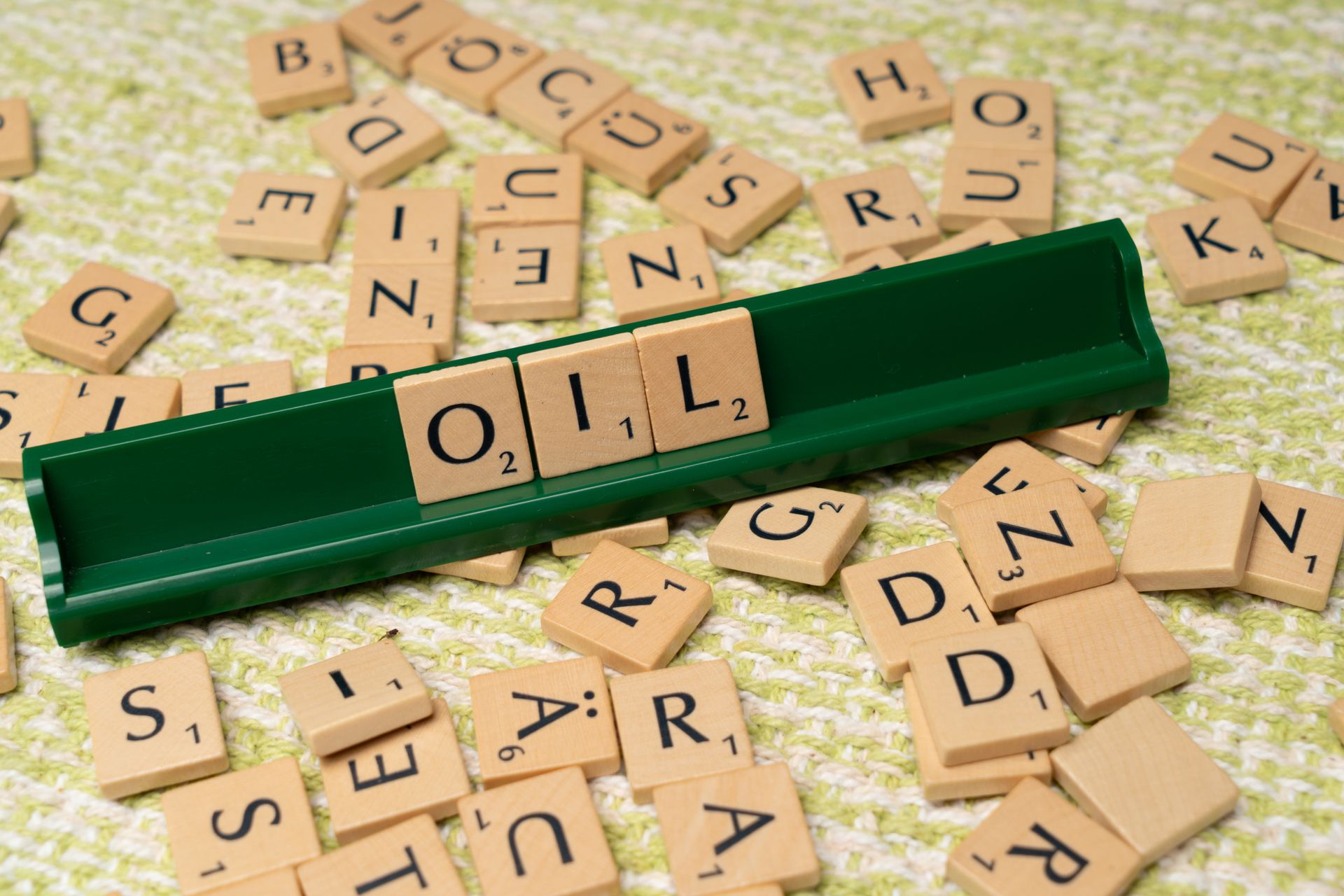
Both games price tiles by frequency, but German letter frequency is a different animal, so the values diverge sharply. The headline differences:
- Z: 10 points in English, 3 in German. This is the big one. English players arrive clutching their Z like a winning lottery ticket and discover it is worth less than a C. In German, Z is a common, useful consonant (ZU, ZEIT, ZUG) — spend it freely.
- Y: 10 points in German (1 copy), versus 4 points in English (2 copies). The Y is genuinely precious in German — rarer and more valuable than in English.
- J: 6 points in German (2 copies) versus 8 in English. Slightly cheaper, slightly more common.
- V: 6 points in German (3 copies) versus 4 in English. The V is a better tile in German than in English — more valuable and easier to place.
- C: 4 points in German (4 copies). More common than in English, thanks to CH.
- Q: 10 in both, but see Difference 5.
The strategic upshot: your English instincts about which tiles to hoard are wrong in German. Hoard the Y, spend the Z, respect the V, and treat J as a mid-tier tile rather than a prize. The complete tile values chart lists every German value for reference.
Difference 4: Word Sources — Duden vs NASPA/Collins
English Scrabble’s word authority depends on where you play: North American tournament play uses the NASPA word list, much of the rest of the world uses Collins Scrabble Words, and casual games use whatever dictionary is handy. German Scrabble has a single, undisputed authority: the Duden.
This simplifies challenges enormously. There is no “which dictionary” argument in German play — if it is in the Duden, it is legal; if not, it is not. But it also means English players must recalibrate their challenge instincts. Words that are legal in English Collins may not exist in German at all, and German’s productive compounding means the Duden contains (or implies, through compounding rules) far more long words than any English list.
One practical note: German’s inflection is fully in play — conjugated verbs, declined adjectives, plurals — and compounds are legal if their parts are. A German player can legally build words of extraordinary length by compounding; an English player used to a fixed word list finds this disorienting at first, then delightful. Our word checker guide explains exactly how legality is determined and challenged.
Difference 5: The Q Rule — QU Is Mandatory in German

In English Scrabble, the Q usually travels with U, but it does not have to: QI, QAT, QOPH, and friends are legal in Collins (and QI in NASPA), giving English players escape hatches for a U-less Q. In German Scrabble, the Q must be played as QU. No exceptions.
This makes the German Q a more demanding tile. You cannot dump it bare; you need a U (six in the bag) or a blank, and you need board space for at least two tiles. The strategic response is urgency: play the Q at the first reasonable opportunity rather than waiting for the perfect one, because every turn it sits on your rack is a turn your rack is effectively six tiles.
English players also tend to overestimate how often the Q question arises: there is exactly one Q in the 102-tile German bag. It comes up once per game, is resolved, and is gone. The QU words worth knowing are few: QUER, QUELLE, BEQUEM, and the interrogatives.
Difference 6: The ß Has No Tile
English has no ß, so English players have no habits to unlearn here — but the rule still surprises everyone the first time. The German tile set contains no ß tile, and words spelled with ß in standard German are played with SS: STRASSE for “Straße,” GROSS for “groß,” FUSS for “Fuß.”
This is official tournament practice, not a house rule. It occasionally creates ambiguity — MASSE on the board could be “Maße” or “Masse” — but since both readings are legal words, play continues unaffected. Blanks cannot become ß either, since there is no ß tile for a blank to represent. The full story, including which common words are affected and why the tile set never gained a ß, is in Is ß Allowed in German Scrabble?.
Difference 7: Strategic Consequences — What Actually Changes at the Board

The six differences above add up to a game that feels different to play well. Here is what transfers from English and what does not:
What transfers directly: the premium-square math, the value of parallel plays, rack management principles, the 50-point bingo bonus, tile-tracking habits, and endgame counting. If you are a strong English player, your fundamentals are intact — you are retooling, not starting over.
What changes:
- Bingo hunting is easier in German. The suffix system (-EN, -ER, -UNG, -HEIT, -KEIT, -ISCH) gives you more seven-tile patterns to spot, and the larger bag gives you more turns to find them. English players who rarely bingo should recalibrate upward; German rewards the hunt.
- Vowel management flips. English punishes consonant-heavy racks; German, with 37 vowel-ish tiles in the bag, punishes vowel floods. If your English instinct is “keep the vowels, dump the consonants,” invert it.
- The power tiles are different. English revolves around Q, Z, J, X. German revolves around Q, Y, X, Ö, J, V, Ä, Ü. Learn the new pantheon or keep misplaying your best tiles.
- Hooks are richer. German morphology (plurals in -E, -EN, -ER, -N, -S plus umlaut plurals) makes the board hook-dense. English players under-hook for their first several German games; learning the plural-hook patterns fixes that fast.
- Challenges are cleaner. One dictionary, no arguments. Enjoy it.
A Tale of Two Endgames
The differences between the games concentrate in the endgame like nowhere else. Consider the same late-game situation in both languages: the bag is empty, you hold three tiles, your opponent holds four, and a triple-word square sits open with a hookable word beside it.
In English, the endgame is often about the remaining power tiles — has the Q been played? Is the Z still out there? With 100 tiles total and a well-memorized distribution, strong English players frequently know exactly what the opponent holds. The endgame becomes a calculation: precise, brutal, and short.
In German, the unique tiles (one Q, one Y, three umlauts, plus single J and V) create sharper individual threats than the English game’s more familiar power-tile economy. The German endgame is less about perfect information and more about threat management: the unplayed Ö is an 8-point premium-square missile, the unplayed Y is 10 points looking for a triple letter, and the SS-spelling of ß-words means your opponent’s options include words you might not have considered (is that MASSE or Maße? — both legal, both possible).
One more endgame difference: going out. In both games, the player who uses their last tile scores the value of the opponent’s remaining tiles. In German, with the Y at 10 and the Q at 10, an opponent caught holding power tiles pays dearly — going out against a Y-holding opponent is a 10-point swing before your own play is even counted. English has the same rule, but the Z at 10 makes it symmetric; in German, the asymmetry (your Y vs their Z at 3) rewards the player who tracked better.
The lesson for switchers: your English endgame discipline (count tiles, close lanes, go out at the right moment) transfers completely. What changes is which tiles you fear. Fear the Y and the Ö in German the way you feared the Z and the Q in English.
The Vocabulary Gap: What Each Game Teaches

Playing both games seriously teaches you something about language itself. English Scrabble rewards a particular kind of vocabulary: short, dense, unusual words — the QI and ZA and XU of tournament play. The English word list is full of two- and three-letter oddities that exist in the game far more than in life. English Scrabble is, at the highest level, a game about an artificial word list as much as about English.
German Scrabble is different. Because German builds words by compounding and inflection, the game’s vocabulary stays closer to the living language. A German bingo is often a perfectly ordinary word — SPIELEN, FREUNDE, WOHNUNG — that happens to use all seven tiles. The skill is not memorizing oddities but seeing morphological structure: recognizing that your rack contains a verb stem plus -EN, or a noun plus -UNG, or a singular begging for its umlaut plural.
This is why many players find German Scrabble more satisfying even when it is less familiar: every bingo feels like a real word, because it is one. And it is why the two games cross-train each other beautifully. English teaches you board tactics and the discipline of the word list; German teaches you to see the machine inside the language — prefixes, suffixes, inflections — and that machine-vision improves your English game too, especially your bingo hunting.
If you only ever play one language, consider learning the other for a month. Not to switch permanently, but because the perspective shift breaks habits you did not know you had. The English player who learns German stops hoarding the Z; the German player who learns English discovers what a 10-point Z feels like and brings new aggression back to the German board.
Tips for Switchers: English to German
If you are an English player learning the German game, do these five things in your first month:
- Memorize the German values for Z, Y, J, V, and C. Tape them to the table if you must. Every Z you hoard is a tempo you waste.
- Learn the two-letter words fresh. Do not assume the English list transfers — it does not. Start with our German two-letter list.
- Play the Q immediately. Your English QI/QAT escape hatches do not exist. QU or bust, and bust is not an option.
- Study three umlaut plurals a day. HÄUSER, BÄUME, BÜCHER, STÜHLE, MÄNNER — within two weeks you will see them everywhere.
- Spell with SS. Every ß-word in your head needs converting before it hits the board. STRASSE, not STRAßE.
And if you are a German player trying English: the mirror advice applies. Your Z is suddenly gold, your Q has escape hatches, the dictionary question gets complicated, and nobody will understand why you keep reaching for an umlaut tile that does not exist. Give yourself a dozen games before judging either version — the instincts transfer slower than the vocabulary.
Key Takeaways: German vs English Scrabble
The German vs English Scrabble comparison comes down to this: same board, same bones, different soul. German brings 102 tiles, three umlaut tiles, no ß, a mandatory QU, the Duden as sole authority, and a value chart that demotes the Z to 3 points while promoting the Y to 10. The strategy layer transfers — premium squares, parallel plays, bingos, endgames — but the tile instincts must be rebuilt from scratch.
Play both and you will become a better player of each: English teaches you tight, tactical board play and ruthless tile efficiency; German teaches you morphological creativity and vowel management. The complete rules guide covers the German game from zero, and the 15 strategies will sharpen whichever language you play.
Frequently Asked Questions
Is German Scrabble harder than English Scrabble?
Neither is harder; they reward different skills. German rewards morphological creativity (compounds, suffix bingos) and vowel management; English rewards tight tactical play and a larger memorized word list. Strong players of one can become strong players of the other within weeks.
How many tiles are in German vs English Scrabble?
German: 102 (100 letters + 2 blanks). English: 100 (98 letters + 2 blanks). The bags are nearly the same size — the strategic differences come from the letter values, the umlaut tiles, and the word sources.
What is the highest-value tile in German Scrabble?
Q and Y, both worth 10 points. (In English it is Q and Z at 10.)
Can you use English Scrabble words in the German game?
Only if they appear in the Duden. English loanwords that German has adopted (COMPUTER, TEAM, CLUB) are generally legal; words with no German standing are not.
Does the Q need a U in German Scrabble?
Yes — the Q must always be played as QU. English allows Q-only words like QI (Collins); German does not.
Which dictionary is official for German Scrabble?
The Duden. Tournament and serious casual play both use it.
Do German and English Scrabble use the same board?
Yes — the 15×15 grid and the premium-square layout are identical. Only the tiles, the values, and the word authority differ.
Can you play umlauts in English Scrabble?
No. English Scrabble has no Ä, Ö, or Ü tiles. If you want umlauts, play the German game.
Why does German Scrabble feel so different with the same bag size?
German’s morphology — its long compound words, inflected forms, and productive suffixes — gets its own tile economy: umlaut tiles, a rebalanced value chart (Z down to 3, Y up to 10, J and V at 6), and the mandatory QU. Same board, rebuilt instincts.