

German 4-letter words are a secret weapon for crossword enthusiasts. Whether you are stuck on a stubborn clue or simply want to expand your vocabulary, short German words offer the perfect blend of simplicity and usefulness. From common everyday terms to classic puzzle favorites, these compact words fit neatly into tight grids.
In this guide, you will discover the most common German 4-letter words for crossword puzzles, complete with meanings and practical examples. By the end, you will have a handy mental list ready to deploy the next time a puzzle throws a German term your way.
Introduction
Crossword puzzles have a way of throwing curveballs at solvers, and few curveballs are as frustrating—or as satisfying to crack—as foreign-language clues. When a puzzle asks for a four-letter German word, you need more than luck. You need a working vocabulary of short, high-frequency German terms that show up again and again in English-language crosswords.
This article explores Common German 4-Letter Words for Crossword Puzzles with clear, practical guidance. Whether you are a casual solver who blanks on anything beyond “ja” or a seasoned grid-filler looking to sharpen your edge, the goal here is the same: give you a reliable, memorable toolkit of German four-letter words and the context to use them correctly.
German appears frequently in crossword puzzles because it is closely related to English, packed with short words, and culturally familiar. Words like zeit, buch, and wein recur across puzzle styles and difficulty levels. The more of these you internalize, the faster you will move through grids and the more confident you will feel when a German clue appears.
Key Concepts
Before diving into word lists, it helps to understand a few fundamentals. Understanding the fundamentals of Common German 4-Letter Words for Crossword Puzzles helps you make informed decisions. Without that foundation, you are memorizing isolated strings of letters instead of building real recall.
Why crossword German differs from textbook German
Crossword German is a peculiar dialect of its own. Puzzle constructors favor words that are:
- Short and vowel-rich: Four-letter words with alternating consonants and vowels fill grids cleanly.
- Culturally recognizable: Terms connected to food, music, geography, and history appear far more often than everyday conversational words.
- Noun-heavy: German capitalizes all nouns, and puzzles lean on nouns like Bier, Brot, and Burg.
- Phonetically guessable: Words that resemble their English cousins—like Haus (house) and Hand (hand)—are fairer clues.
This means you do not need to learn the entire language. You need a targeted set of roughly 50 to 100 words that cover the vast majority of German crossword clues.
Categories of common German four-letter words
Grouping words by theme makes them easier to remember than a flat alphabetical list. The main categories include:
- Numbers: eins (one), zwei (two), vier (four), zehn (ten).
- Nature and geography: Berg (mountain), See (lake), Wald (forest), Wind (wind).
- Food and drink: Bier (beer), Wein (wine), Brot (bread), Ei plus modifiers, Kase/Käse (cheese).
- People and titles: Herr (mister), Frau (woman), Kind (child), Koenig/König (king).
- Colors and adjectives: blau (blue), grau (gray), gut (good), alt (old).
- Abstract nouns: Zeit (time), Wort (word), Buch (book), Lied (song).
Deep Dive
Now let us go deeper. Reliable information and consistent habits lead to better long-term outcomes, so the aim here is not a one-time cram session but a durable mental library.
High-frequency words worth memorizing first
If you only ever learn a dozen German four-letter words, make them these:
- Zeit — time. Appears constantly, sometimes clued as “time, in German.”
- Buch — book. A staple in literature-themed puzzles.
- Haus — house. Cognate-friendly and easy to spot.
- Bier — beer. Evergreen in food and Oktoberfest clues.
- Wein — wine. Pairs naturally with Bier in clue sets.
- Brot — bread. Frequently appears on grid edges.
- Herr — mister or gentleman. Useful for title-based clues.
- Frau — woman, wife, or Mrs. Often clued as “German wife.”
- Kind — child. Recognize it despite the English meaning clash.
- Wind — wind. Identical to English, which makes it a giveaway.
- Berg — mountain. Common in geographic clues.
- Gold — gold. Same spelling, same meaning.
Watch out for these traps
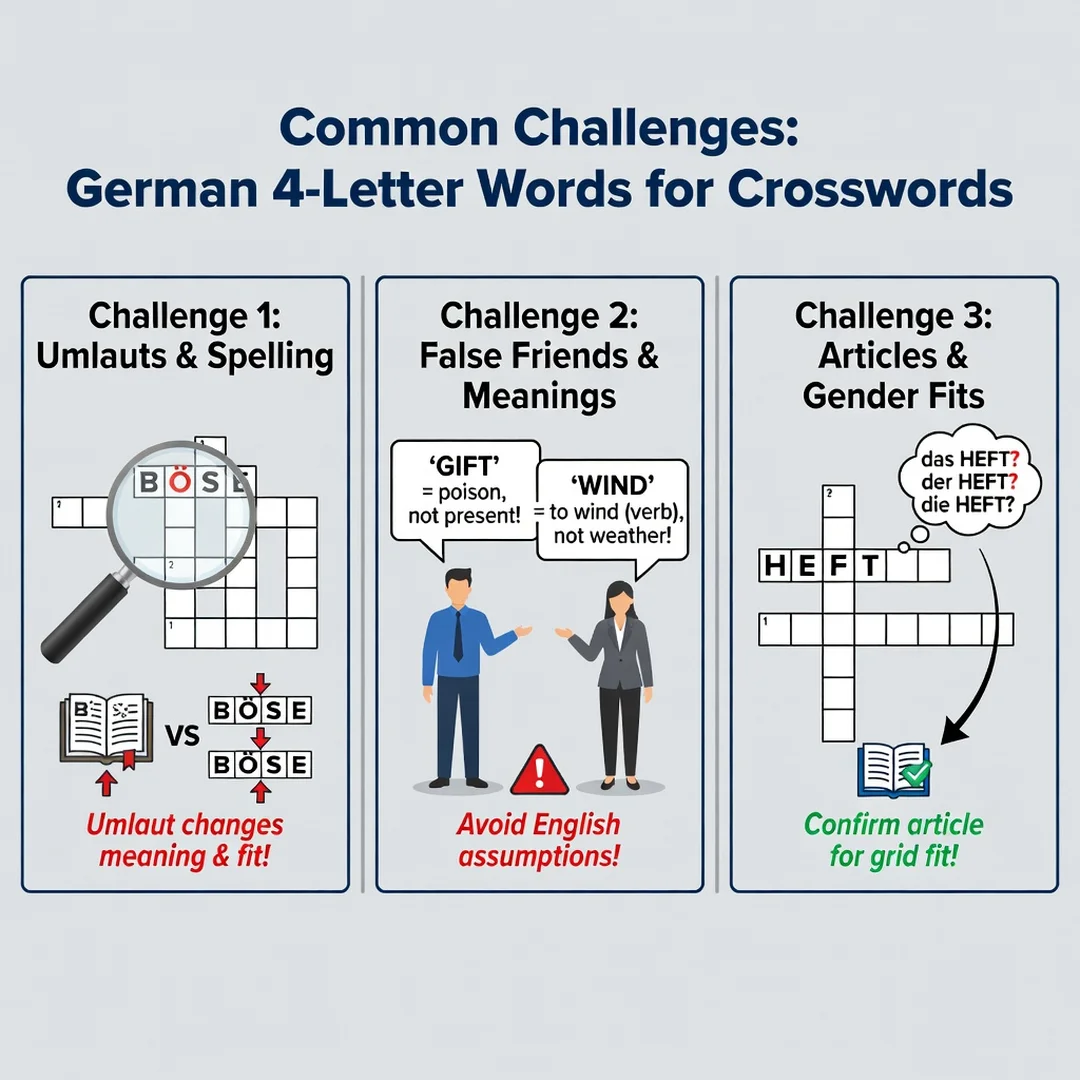
Several German four-letter words look like English words but mean something different. These “false friends” are frequent puzzle bait.
- Gift means poison in German, not a present.
- Bad means bath, not something negative.
- Rat means advice or council, not the rodent.
- Bald means soon, not hairless.
- Also means therefore or so, not “in addition.”
Recognizing these will save you from confidently filling in the wrong answer and then wrecking an entire corner of the grid.
Umlauts, eszett, and how puzzles handle them
German uses three umlauted vowels (ä, ö, ü) and the sharp s (ß). English-language crosswords almost always strip them out:
- Ä becomes A, so Käse appears as Kase.
- Ö becomes O, so König appears as Koenig or Konig.
- Ü becomes U, so Müde appears as Mude.
- ß becomes SS, so Straße is shortened or replaced entirely in four-letter grids.
Since umlauts are rarely usable in a grid, four-letter German answers tend to avoid them altogether. This is one reason words like Zeit, Haus, and Wind are so popular.
Best Practices
Good habits turn knowledge into performance. Applied consistently, the following practices will make German clues far less intimidating.
- Learn in thematic clusters. Memorize numbers together, foods together, and nature words together. Grouped recall is faster under pressure.
- Practice with clue variations. The same word can be clued as “German time,” “Bonn bread,” or “Deutschland drink.” Train yourself to recognize synonyms in clues.
- Cross-check letters. When a German clue intersects other words, confirm with crossing letters before committing. False friends make blind guessing risky.
- Keep a running list. Every time you encounter a German four-letter word you did not know, add it to a notebook or app. Review weekly.
- Combine reading and solving. Short German word lists, children’s books, and even German menus reinforce words in context.
- Watch for capitalization cues. If your puzzle preserves German nouns in caps, the clue will often mention it. If not, use grammar rather than spelling to judge.
- Avoid overfitting to one puzzle style. What fills a New York Times-style grid may not fit a cryptic. Learn the word, not the clue.
These habits are simple but compounding: a few minutes of review each day beats marathon cramming sessions before a big puzzle event.
A Step-by-Step Approach to Mastering German Crossword Words
The following steps give you a structured path from confused beginner to confident solver.
Step 1: Understand the fundamentals
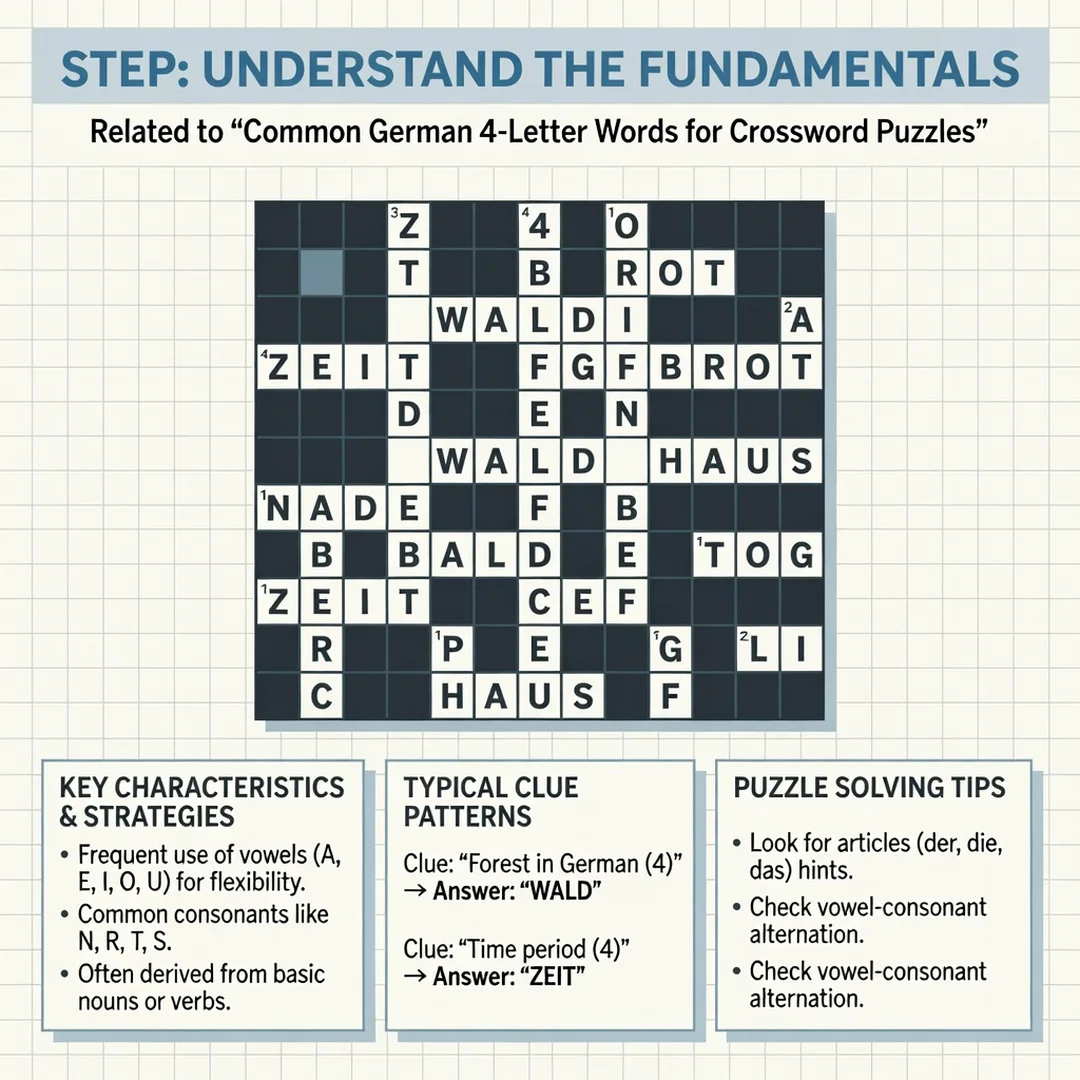
Start by recognizing that German crossword vocabulary is a small, specialized subset of the language. Learn the quirks: nouns are capitalized, umlauts become plain vowels, and false friends abound. Get comfortable with the idea that you are building a curated word bank, not becoming fluent.
Step 2: Assess your starting point
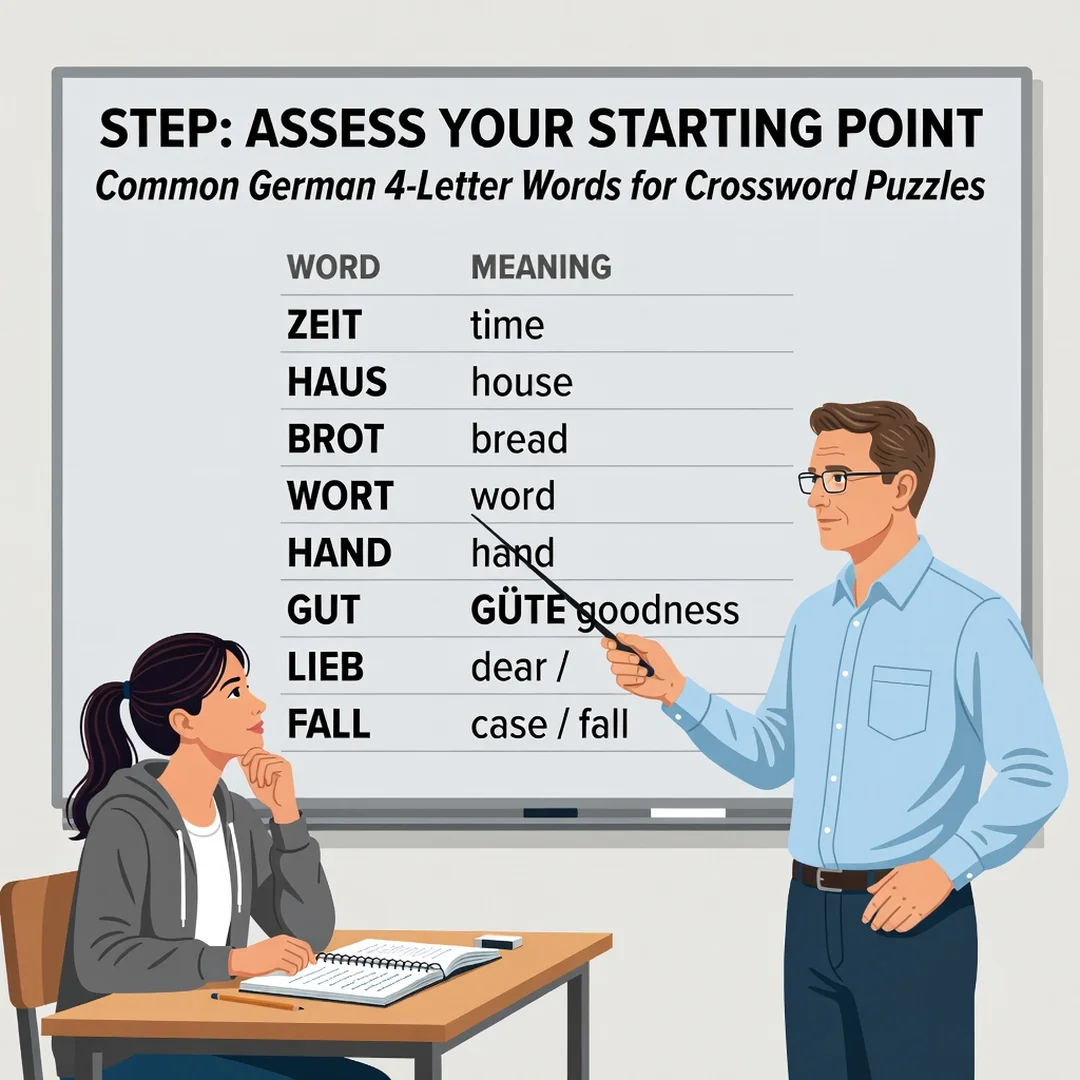
Test yourself honestly. Do you already know ja, nein, and Haus? Take a short quiz of 20 common four-letter German words and note how many you recognize. This tells you whether you should start at the very basics or jump straight into less common vocabulary.
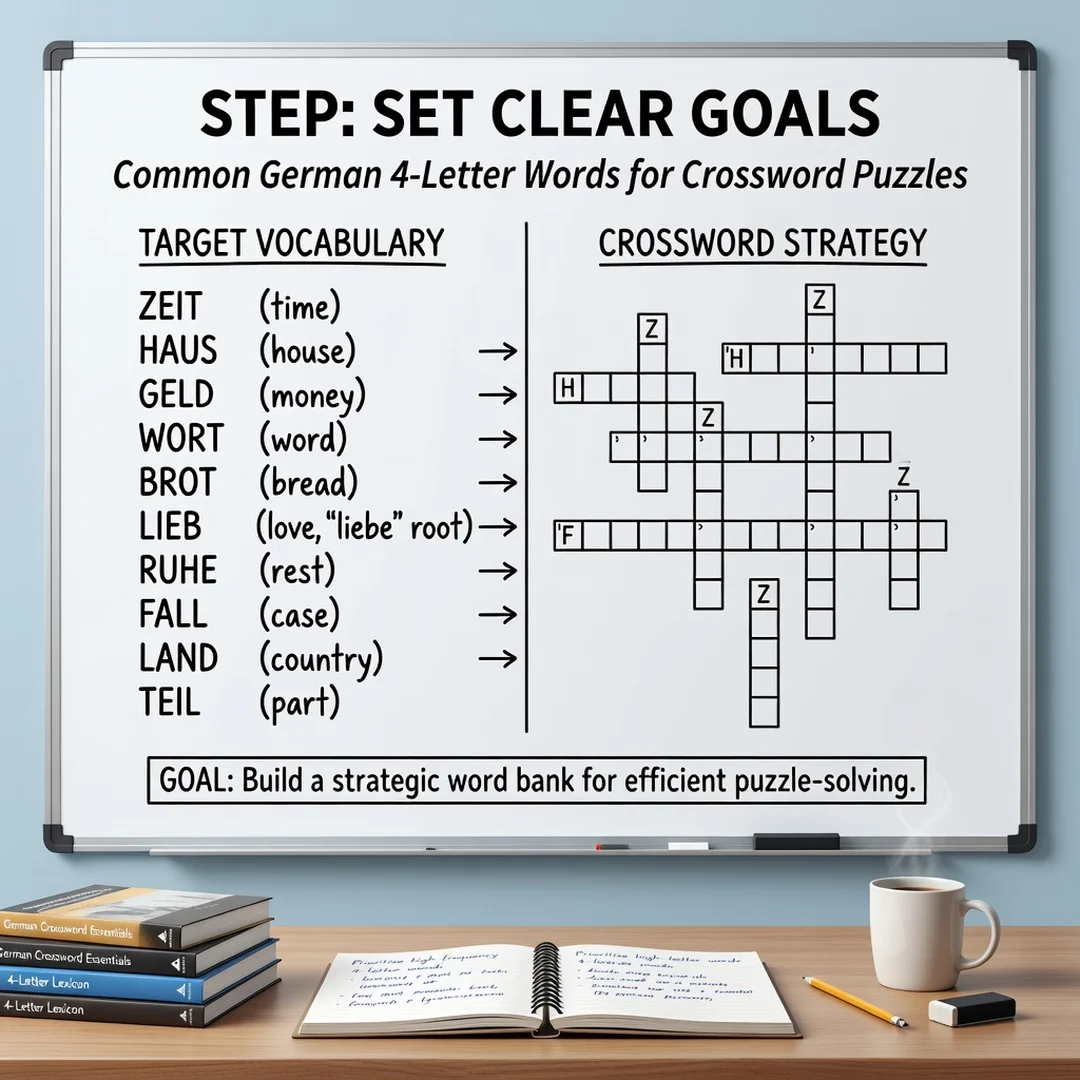
Step 3: Set clear goals
Define what success looks like. A reasonable short-term goal is mastering 25 words within two weeks. A medium-term goal might be 75 words in two months, plus the ability to recognize false friends. Write your targets down so progress is measurable.
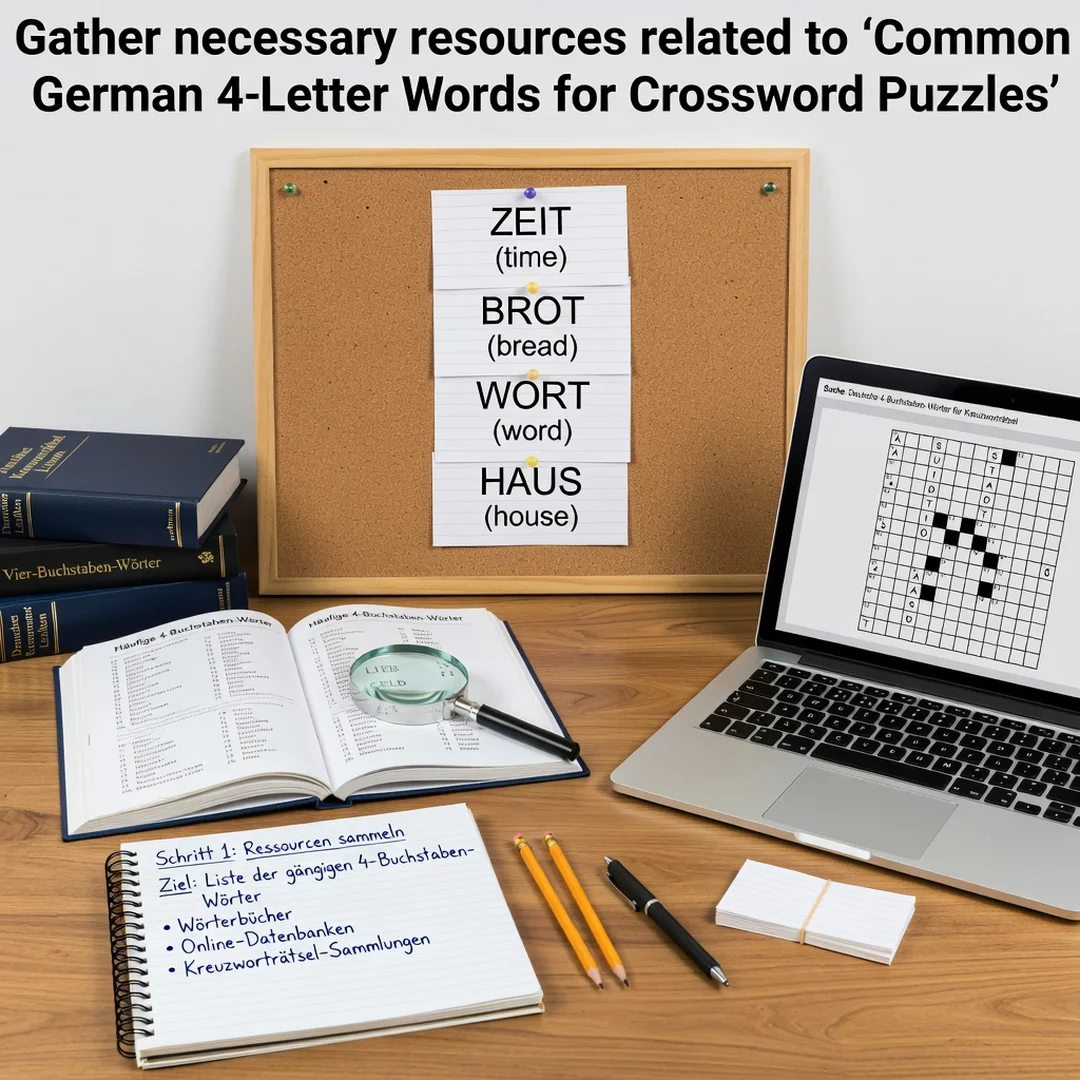
Step 4: Gather necessary resources
Collect the tools you will use:
- A dedicated German four-letter word list (create your own from this article and puzzles you solve).
- A flashcard app with spaced repetition.
- A crossword dictionary that includes foreign terms.
- Access to multiple puzzle sources for context exposure.
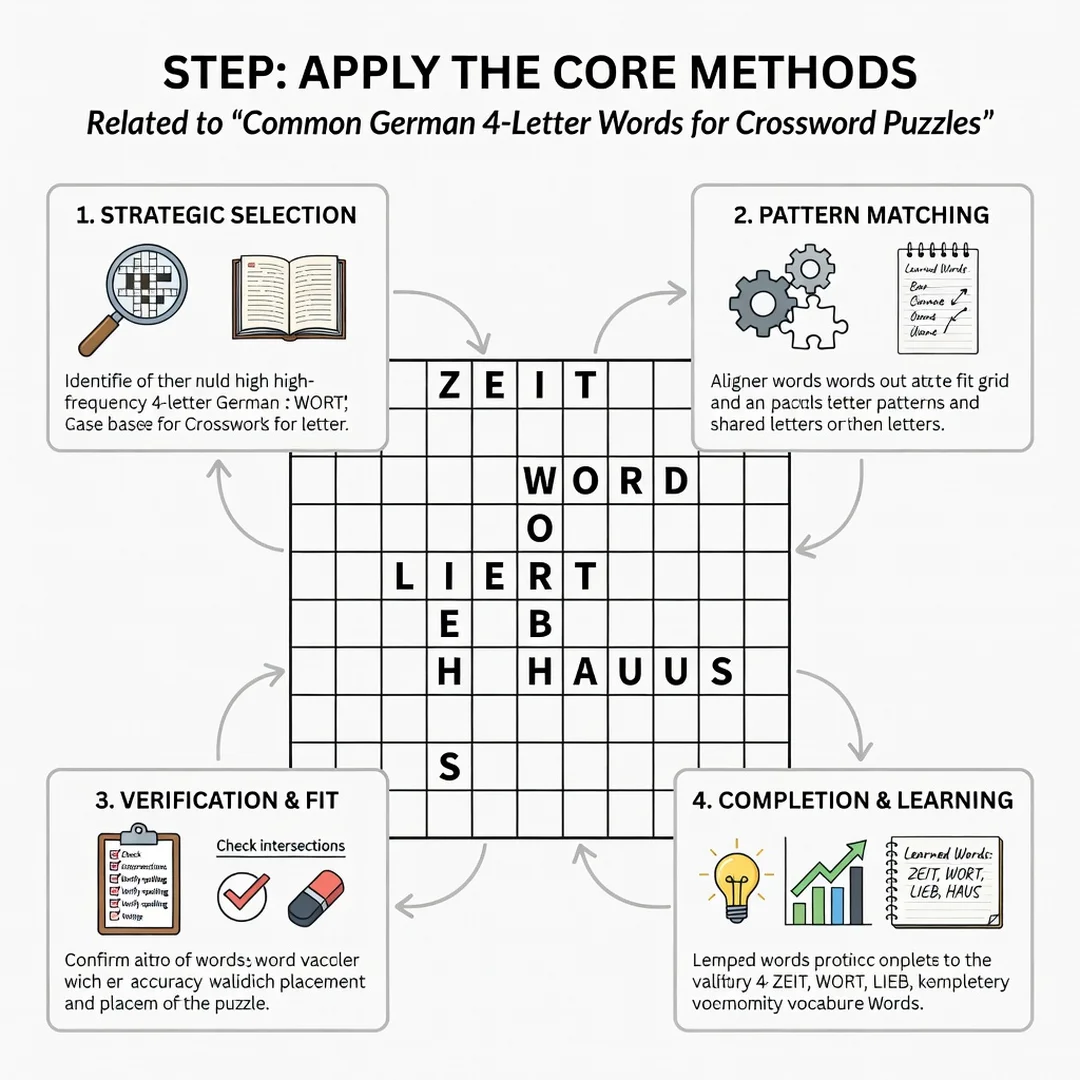
Step 5: Apply the core methods
Put your system into action. Use active recall rather than passive reading. For each word, practice three things:
- Say the word aloud and attach a mental image.
- Link it to an English cognate or contrasting meaning.
- Solve at least one clue using the word each week.
Group words thematically and quiz yourself in random order to build flexible recall.
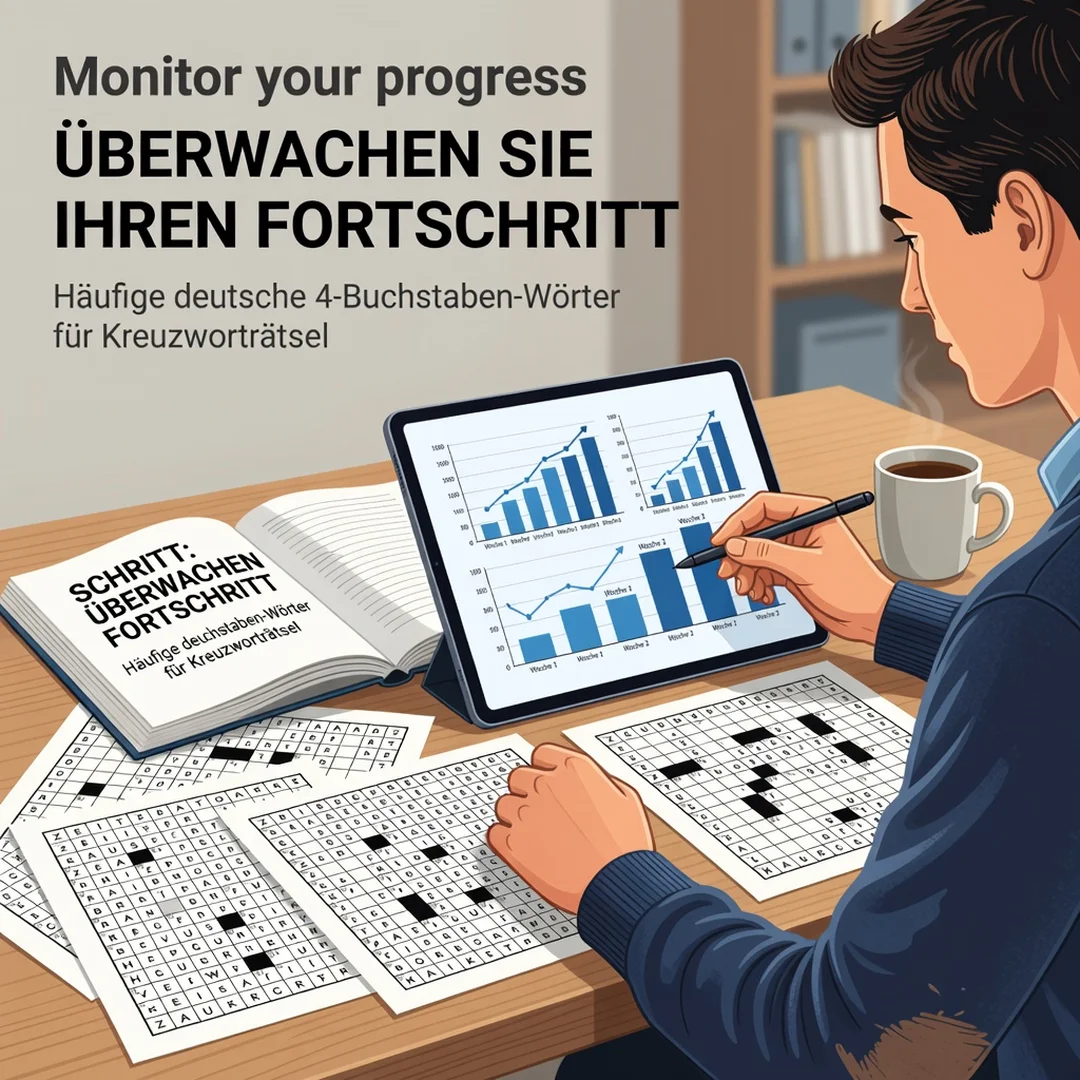
Step 6: Monitor your progress
Track how many words you can recall cold, not just recognize. Revisit your initial quiz every two weeks. Note which words fade and which stick, then adjust reviews toward the stubborn ones. Celebrate small wins—every correctly filled square is progress.
FAQ
What should I know about Common German 4-Letter Words for Crossword Puzzles?
The most important things are straightforward. Four-letter German words are common in English-language crosswords because they fit grids neatly, and the words that appear most often come from a small pool: numbers, foods, nature terms, and a handful of high-frequency nouns. You should also know that umlauts are almost always converted to plain vowels, that nouns are capitalized in German, and that some words like Gift and Bad are false friends that can mislead you. Focus on the top 25 words first; they cover most clues you will encounter.
Who is this guide for?
This guide is for anyone who solves crosswords and wants to feel more confident when German clues appear. That includes beginners who are tired of guessing, intermediate solvers who want to improve their times, and casual puzzlers who are simply tired of getting stuck on words like Zeit or Herr. It also helps trivia buffs and language learners who want a light, practical introduction to German vocabulary. No prior German knowledge is required—just curiosity and a willingness to practice a little each day.
Conclusion
German four-letter words do not have to be a crossword stumbling block. With a targeted vocabulary of roughly 25 to 100 common terms, an awareness of false friends, and a simple habit of reviewing words thematically, you can turn one of the more intimidating clue categories into one of your strengths. Start with the fundamentals, assess where you are, set clear goals, gather your resources, apply consistent methods, and monitor your progress. Reliable information and consistent habits lead to better long-term outcomes—and in crosswords, that means more filled squares and fewer blank stares. Keep a running list, keep solving, and let Zeit, Haus, and Bier become old friends in the grid.
Frequently Asked Questions
What should I know about Common German 4-Letter Words for Crossword Puzzles?
This guide covers the essentials of Common German 4-Letter Words for Crossword Puzzles with practical steps you can apply right away.
Who is this guide for?
Anyone looking for a clear, structured overview without unnecessary complexity.
You now have a solid foundation for Common German 4-Letter Words for Crossword Puzzles. Apply the best practices above and revisit this guide as your needs evolve.