German Airport Train Station Phrases: Navigate Airports & Stations With Ease
Transport hubs are where travelers feel the language barrier most sharply. Announcements echo too fast to catch, departure boards flash unfamiliar abbreviations, and ticket machines offer fourteen options when you wanted one. This guide to German airport train station phrases is built for those exact moments: reading the boards, buying the ticket, finding the platform, and understanding what that announcement just said about your train.
Germany’s transport system is excellent once you can read it. Frankfurt Airport is one of Europe’s biggest hubs, and the Deutsche Bahn rail network connects just about everything else. The vocabulary overlaps heavily between airports and stations — Abflug/Abfahrt (departure), Ankunft (arrival), Verspätung (delay) — so learning one set largely covers both.
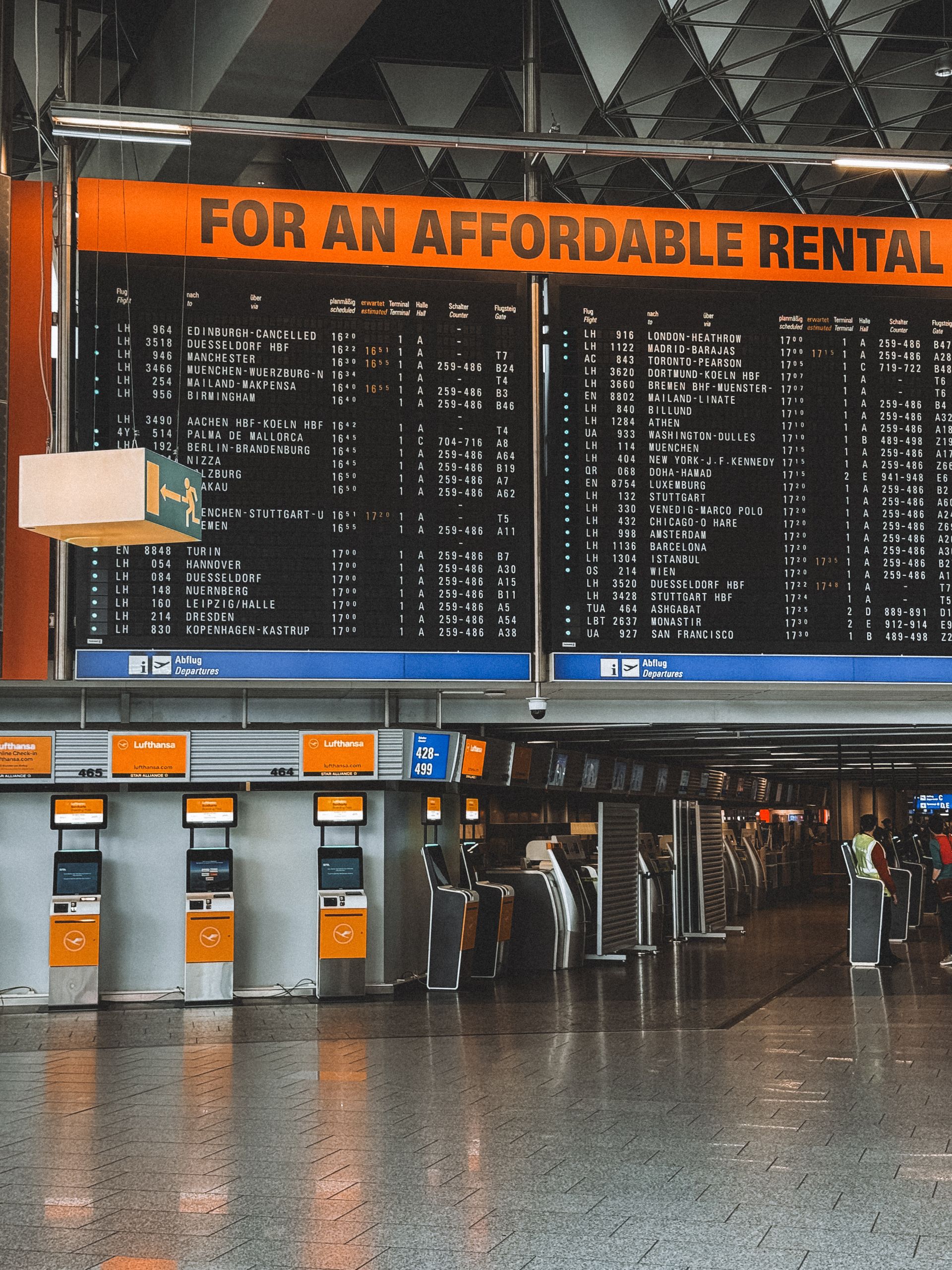
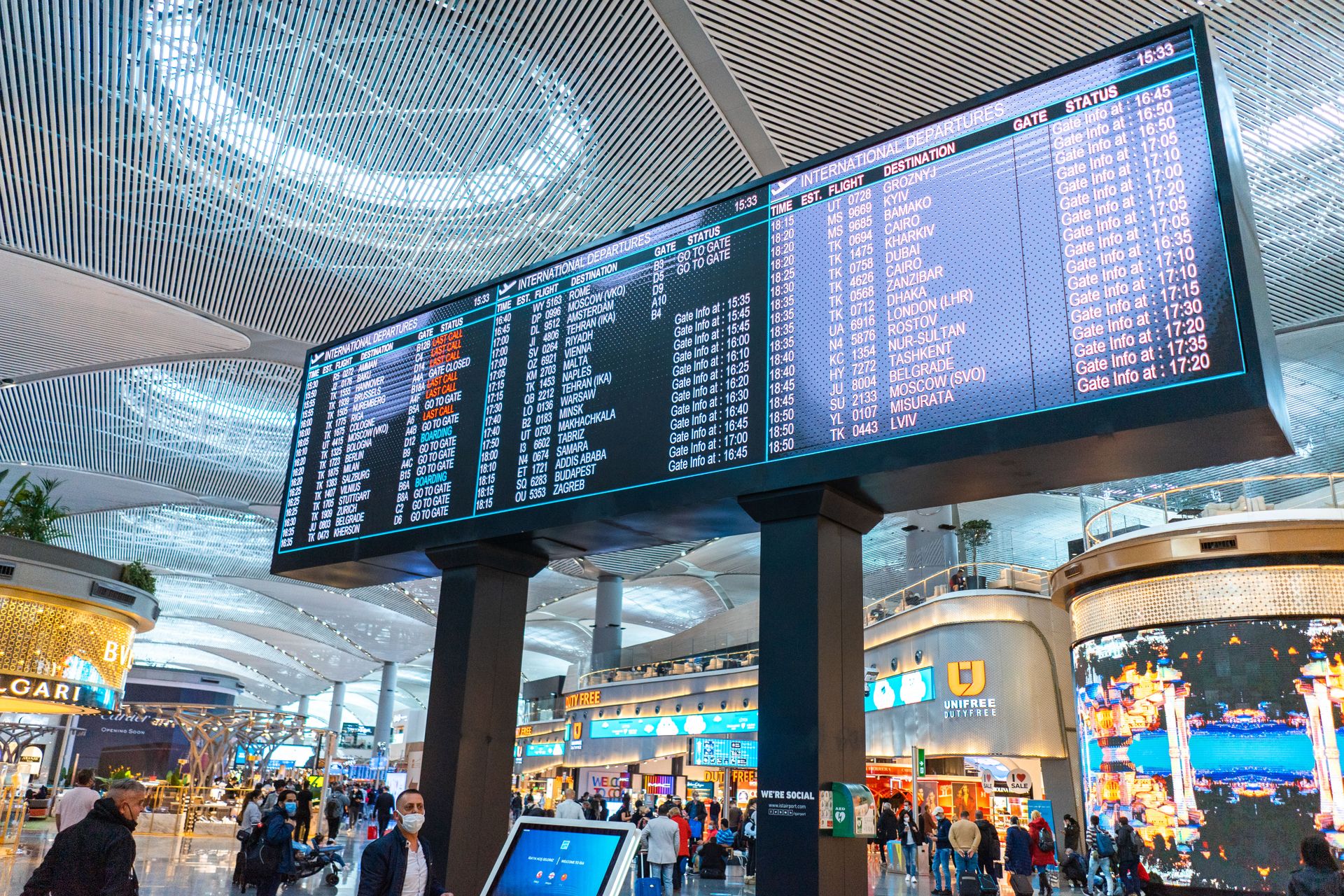
German Airport Train Station Phrases for Reading Departure Boards
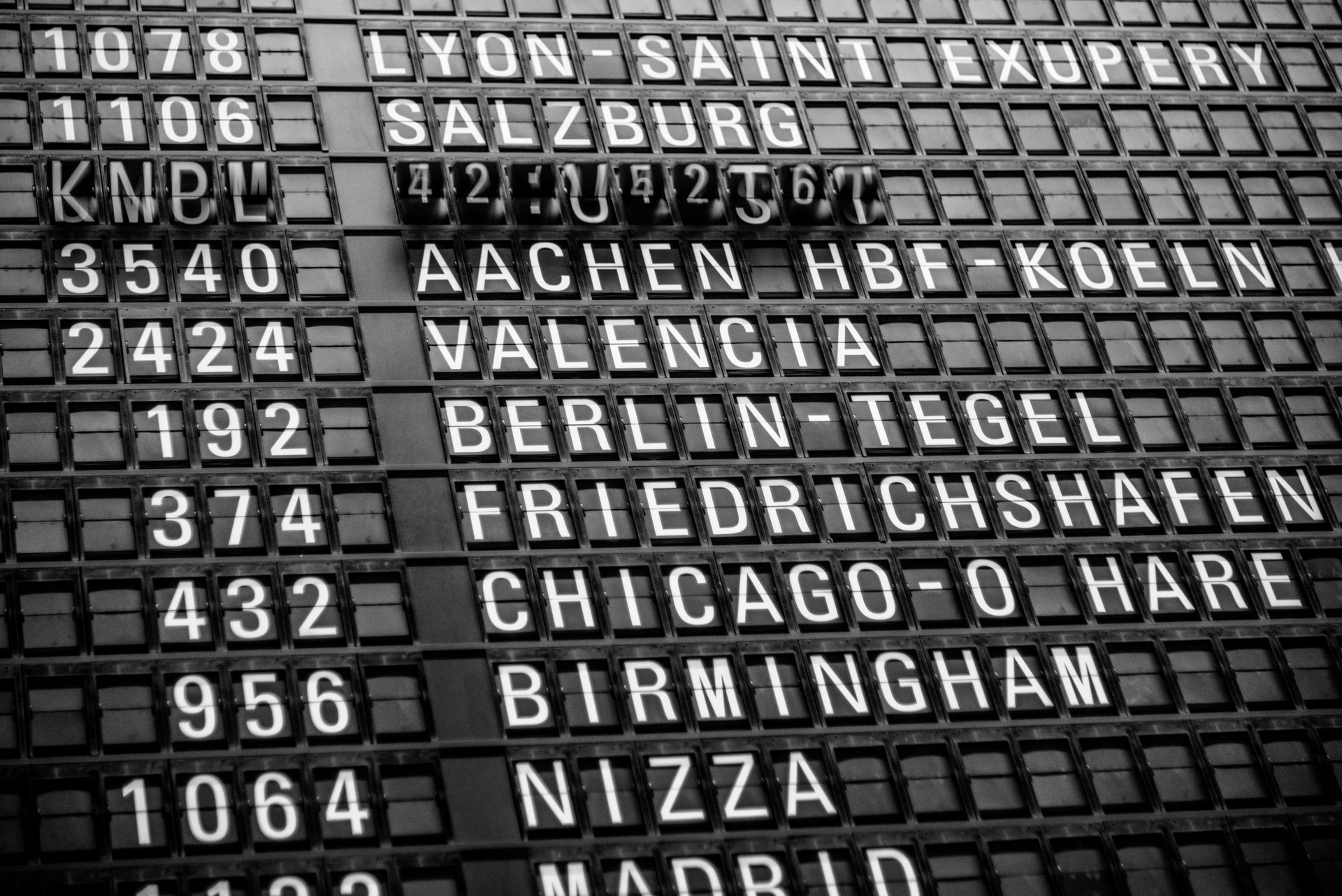
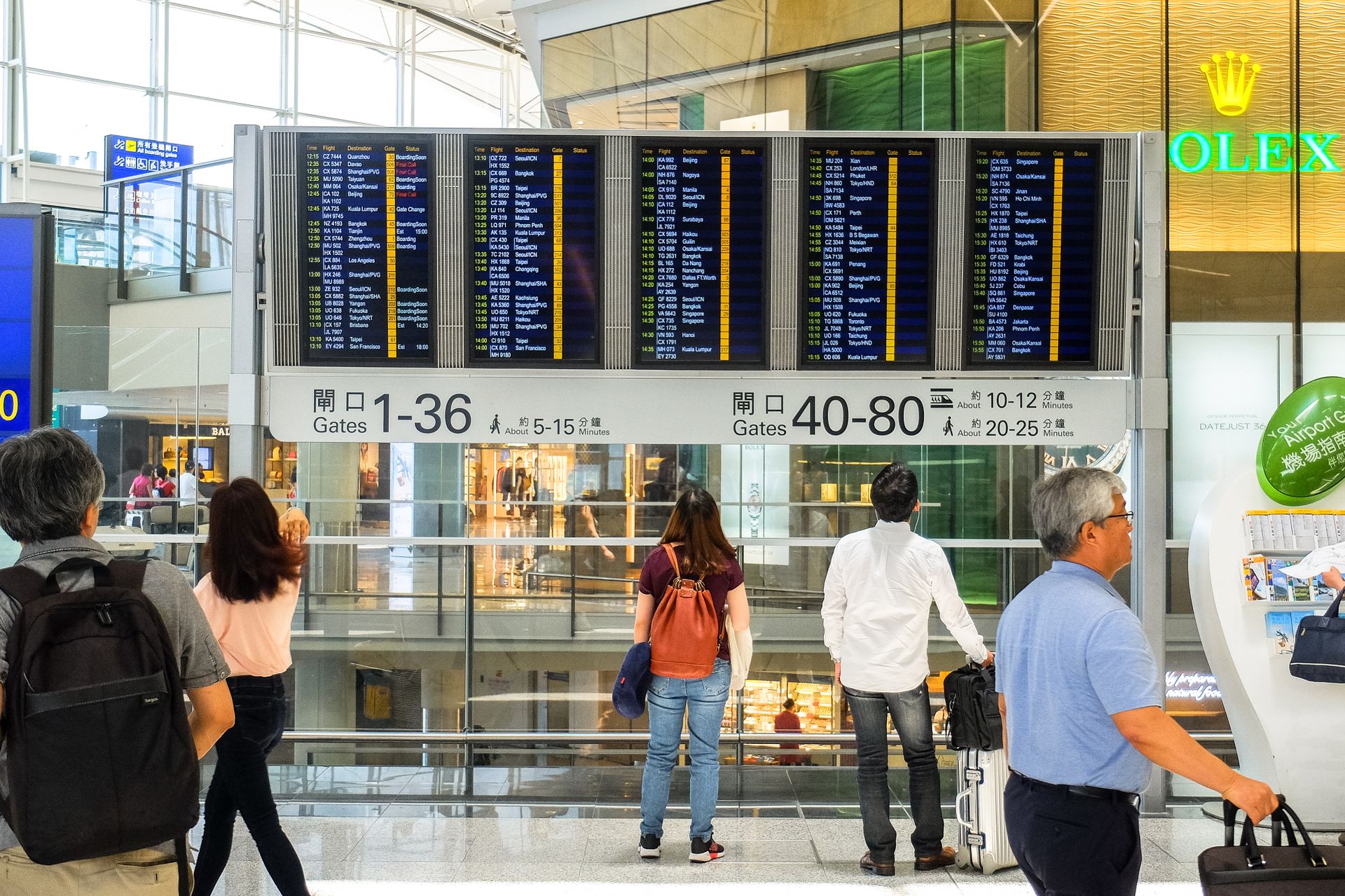
Departure boards (Abfahrtstafeln) look intimidating but use a small, repeating vocabulary. Learn these and the board becomes readable:
At the train station:
Abfahrt (AHP-fahrt) — departure
Ankunft (AHN-kunft) — arrival
Gleis (glyse) — track/platform (trains). Bahnsteig (BAHN-shtike) is the platform itself.
Zugnummer (TSOOK-num-er) — train number
Ziel (tseel) — destination
über (OO-ber) — via. München über Augsburg means the train goes to Munich via Augsburg.
pünktlich (POONKT-likh) — on time
Verspätung (fair-SHPAY-tung) — delay. ca. 15 Min. später means about 15 minutes late.
fällt aus (felt ows) — cancelled. The two most dreaded words on the board.
Ersatzzug (air-ZAHTS-tsook) — replacement train
Umleitung (OOM-ly-tung) — diversion/rerouting
Einsteigen (INE-shty-gen) — boarding
At the airport:
Abflug (AHP-flook) — departure (flights)
Ankunft (AHN-kunft) — arrival
Gate (gayte) — gate (same word, German pronunciation)
Abbreviations you will see:DB (Deutsche Bahn), ICE (InterCity Express — fastest), IC (InterCity), EC (EuroCity), RE (Regional Express), RB (Regionalbahn — slowest, stops everywhere), S (S-Bahn — suburban rail), U (U-Bahn — subway). An ICE costs more but halves travel time; RE/RB tickets are cheaper and often covered by regional day passes.
Buying Tickets: Phrases for Machines and Counters
German ticket machines (Fahrkartenautomaten) have an English language button — usually a small EN or flag icon in the corner. Use it without shame. But counters and human interactions need German.
At the ticket counter:
Eine Fahrkarte nach Berlin, bitte. (INE-eh FAHR-kar-teh nahkh bair-LEEN BIT-teh) — A ticket to Berlin, please.
Einfach oder hin und zurück? (INE-fahkh OH-der hin unt tsoo-ROOK) — One-way or round trip? (What they will ask.)
Hin und zurück, bitte. (hin unt tsoo-ROOK BIT-teh) — Round trip, please.
Erste oder zweite Klasse? (AIR-steh OH-der TSVY-teh KLAH-seh) — First or second class?
Zweite Klasse, bitte. (TSVY-teh KLAH-seh BIT-teh) — Second class, please.
Gibt es eine Ermäßigung? (gipt es INE-eh air-MAY-si-gung) — Is there a discount?
Ich habe eine BahnCard. (ikh HAH-beh INE-eh BAHN-kard) — I have a BahnCard (DB discount card).
Was kostet eine Tageskarte? (vahs KOS-tet INE-eh TAH-ges-kar-teh) — How much is a day pass?
Money-saving tickets worth knowing by name:
Das Deutschlandticket (63 €/month, all regional transport nationwide — the single best deal for slow travelers)
Die Tageskarte — day pass for a city’s transit network
Das Quer-durchs-Land-Ticket — one day of regional trains across all of Germany
Das Bayernticket — Bavaria’s regional day pass (up to 5 people)
Ask for these by name at the counter: “Ein Bayernticket für zwei Personen, bitte.”
Dialogue — buying at the counter:
You: Guten Tag! Eine Fahrkarte nach München, bitte. Hin und zurück. Agent: Zweite Klasse? Und wann möchten Sie fahren? You: Zweite Klasse. Heute um vierzehn Uhr dreißig, bitte. Agent: Das macht achtundfünfzig Euro. Möchten Sie einen Sitzplatz reservieren? You: Ja, gern. Am Fenster, bitte.
Translation: Hello! A ticket to Munich, please. Round trip. / Second class? And when would you like to travel? / Second class. Today at 2:30 p.m., please. / That’s fifty-eight euros. Would you like to reserve a seat? / Yes, gladly. By the window, please.
Important: Long-distance tickets (ICE/IC) do not always include a seat reservation — Sitzplatzreservierung costs a few euros extra and is worth it on busy routes. Regional tickets never have reservations; sit anywhere.
Finding Your Way: Platform and Gate Phrases
Von welchem Gleis fährt der Zug ab? (fon VELKH-em glyse fairt dair tsook ahp) — Which track does the train leave from?
Wo ist Gleis fünf? (voh ist glyse fuenf) — Where is track 5?
Ist das der Zug nach Hamburg? (ist dahs dair tsook nahkh HAHM-boork) — Is this the train to Hamburg?
Hält der Zug in…? (helt dair tsook in) — Does the train stop in…?
Wo muss ich umsteigen? (voh moos ikh OOM-shty-gen) — Where do I have to change trains?
Wie viel Zeit habe ich zum Umsteigen? (vee feel tsite HAH-beh ikh tsoom OOM-shty-gen) — How much time do I have to change trains?
In welche Richtung muss ich? (in VELKH-eh RIKH-tung moos ikh) — Which direction do I need?
Wo ist der Ausgang? (voh ist dair OWS-gahng) — Where is the exit?
Wo ist die Gepäckausgabe? (voh ist dee geh-PEK-ows-gah-beh) — Where is baggage claim?
Wo ist die Sicherheitskontrolle? (voh ist dee ZIKH-er-hites-kon-trol-eh) — Where is security?
At the airport specifically:
Wo ist der Check-in-Schalter für Lufthansa? (voh ist dair check-in SHAHL-ter foor LOOF-tahn-zah) — Where is the Lufthansa check-in counter?
Ist mein Flug pünktlich? (ist mine flook POONKT-likh) — Is my flight on time?
Wo ist Gate B42? (voh ist gate beh-tsvy-unt-feer-tsikh) — Where is gate B42?
Ich habe meinen Anschluss verpasst. (ikh HAH-beh MINE-en AHN-shloos fair-PAHST) — I’ve missed my connection.
Wo ist der Taxistand? (voh ist dair TAHK-si-shtahnt) — Where is the taxi stand?
Fährt ein Bus in die Stadt? (fairt ine boos in dee shtaht) — Is there a bus into the city?
Dialogue — asking for the platform:
You: Entschuldigung! Von welchem Gleis fährt der Zug nach Köln ab? Staff: Gleis sieben. Der Zug hat zehn Minuten Verspätung. You: Danke! Und wo ist Gleis sieben? Staff: Geradeaus und dann die Treppe hoch, links.
Translation: Excuse me! Which track does the train to Cologne leave from? / Track seven. The train is ten minutes late. / Thanks! And where is track seven? / Straight ahead, then up the stairs, on the left.
Decoding Announcements: What They Are Actually Saying
Station announcements follow rigid templates. Once you know the template, you can extract the meaning even at half comprehension.
The delay template:
“Der ICE 614 nach Frankfurt am Main, Abfahrt 14:32, verspätet sich um circa 20 Minuten.”
Pattern: [Train] nach [destination], Abfahrt [time], verspätet sich um circa [X] Minuten. = The [train] to [destination], departing [time], is delayed by about [X] minutes.
The platform change template:
“Der RE 7 nach Hamburg fährt heute von Gleis 9 ab, nicht von Gleis 4.”
Pattern: [Train] nach [destination] fährt heute von Gleis [X] ab, nicht von Gleis [Y]. = runs today from track X, not track Y. Platform changes are common — always double-check the board, not just your ticket.
The cancellation template:
“Der IC 2211 nach Berlin fällt heute aus. Bitte nutzen Sie den nächsten Zug.”
Pattern: [Train] nach [destination] fällt heute aus. = is cancelled today. Bitte nutzen Sie den nächsten Zug = please take the next train. Your ticket is automatically valid on the next available train — you do not need a new one.
Key announcement vocabulary:
verspätet sich um… — is delayed by…
fällt aus — is cancelled
fährt heute von Gleis… ab — departs today from track…
Bitte einsteigen — please board
Zurückbleiben, bitte — stand back, please (doors closing)
Endstation — final stop/terminus
Nächster Halt — next stop
Ausstieg links/rechts — exit on the left/right
Bitte alle aussteigen — please all get off (end of the line or disruption)
Onboard the train: The conductor (Schaffner or Zugbegleiter) checks tickets. Have yours ready — on many regional trains you must stempeln (validate) paper tickets in the little machine before boarding. Unvalidated ticket = fine, even with a valid ticket in hand.
Problems and Disruptions: Phrases That Fix Things
Mein Zug wurde annulliert. Was soll ich tun? (mine tsook VOOR-deh ah-noo-LEERT. vahs zol ikh toon) — My train was cancelled. What should I do?
Gibt es einen Ersatzzug? (gipt es INE-en air-ZAHTS-tsook) — Is there a replacement train?
Kann ich einen späteren Zug nehmen? (kahn ikh INE-en SHPAY-teh-ren tsook NAY-men) — Can I take a later train?
Ist meine Fahrkarte noch gültig? (ist MINE-eh FAHR-kar-teh nokh GOOL-tikh) — Is my ticket still valid?
Ich habe meinen Anschluss verpasst wegen der Verspätung. (ikh HAH-beh MINE-en AHN-shloos fair-PAHST VAY-gen dair fair-SHPAY-tung) — I missed my connection because of the delay.
Wo ist das Fundbüro? (voh ist dahs FOONT-boo-roh) — Where is the lost and found?
Ich habe meine Tasche im Zug vergessen. (ikh HAH-beh MINE-eh TAH-sheh im tsook fair-GES-en) — I left my bag on the train.
Wo gibt es hier WLAN? (voh gipt es heer veh-LAHN) — Where is there Wi-Fi here?
Know your rights: For delays over 60 minutes on Deutsche Bahn, you are entitled to a 25% fare refund; over 120 minutes, 50%. Ask at the Reisezentrum (travel center) or file online — most tourists never claim this.
Getting Into the City
Wie komme ich in die Innenstadt? (vee KOM-eh ikh in dee IN-en-shtaht) — How do I get downtown?
Fährt die S-Bahn ins Zentrum? (fairt dee es-BAHN ins TSEN-trum) — Does the S-Bahn go to the center?
Wo kaufe ich eine Fahrkarte für die U-Bahn? (voh KOW-feh ikh INE-eh FAHR-kar-teh foor dee OO-bahn) — Where do I buy a subway ticket?
Welche Linie muss ich nehmen? (VELKH-eh LEE-nee-eh moos ikh NAY-men) — Which line do I take?
Ist das weit vom Flughafen? (ist dahs vite fom FLOOK-hah-fen) — Is that far from the airport?
City transit tickets must usually be validated (entwerten) before boarding — look for the small stamping machines on platforms. Plainclothes inspectors (Kontrolleure) issue on-the-spot fines around €60 for unstamped tickets. This is the single most common tourist fine in Germany.
Deutsche Bahn Ticket Types, Translated
The ticket machine’s options stop being scary once you know the five that matter:
Der Sparpreis — saver fare. Cheap, train-specific, non-refundable. Book early online.
Der Flexpreis — flexible fare. Expensive, valid on any train that day, refundable. The walk-up default.
Das City-Ticket — included free with Sparpreis/Flexpreis long-distance tickets: covers your S-Bahn/U-Bahn/tram ride to and from the station in 130+ cities. Show the long-distance ticket; no separate purchase needed.
Die BahnCard 25 / 50 — discount cards (25%/50% off for a year). The BahnCard 25 pays for itself in two long trips; there is also a trial Probe BahnCard.
Die Platzreservierung — seat reservation (€5.50 in second class). Not included automatically — and on Friday afternoons, the difference between sitting and standing from Hamburg to Munich.
Validation rules: Long-distance (ICE/IC/EC) tickets are train-bound or day-bound — no stamping needed. Regional paper tickets usually must be entwertet (validated) in the platform machine before boarding. App tickets are always fine as-is.
If you board without a valid ticket: the dreaded erhöhtes Beförderungsentgelt — the increased fare, €60 minimum, collected on the spot by the conductor. Buy before you board, every time.
City Transit: S-Bahn, U-Bahn, Tram, and Bus
Every German city runs its transit on the same logic with local names:
Die S-Bahn — suburban rail (bigger distances, connects to suburbs and airports)
Die U-Bahn — subway/metro
Die Straßenbahn / Tram — tram
Der Bus — bus
Ticket types to know:
Die Einzelfahrkarte / Einzelfahrschein — single ticket (usually valid 2 hours, one direction)
Die Kurzstrecke — short-trip ticket (cheaper, typically up to 3–4 stops — read the local rule)
Die Tageskarte — day pass (almost always the best deal from your third ride on)
Die Gruppenkarte — group day pass (up to 5 people, barely more than a single day pass)
Die Wochenkarte — weekly pass
How to buy: Machines on platforms (U-Bahn/S-Bahn) or inside trams and buses (exact change helps — drivers dislike big bills). Most cities now have apps too. Validate paper tickets in the small box machines before boarding — an unvalidated ticket is legally no ticket at all, and the plainclothes Kontrolleure (inspectors) fine first and listen later.
Asking for help:
Welche Linie fährt zum Hauptbahnhof? (VELKH-eh LEE-nee-eh fairt tsoom HOWPT-bahn-hohf) — Which line goes to the main station?
Muss ich umsteigen? (moos ikh OOM-shty-gen) — Do I have to change?
Ist diese Fahrkarte für die U-Bahn gültig? (ist DEE-zeh FAHR-kar-teh foor dee OO-bahn GOOL-tikh) — Is this ticket valid for the subway?
Wo muss ich die Fahrkarte entwerten? (voh moos ikh dee FAHR-kar-teh ent-VAIR-ten) — Where do I validate the ticket?
Luggage, Lockers, and Left Baggage
Wo gibt es Schließfächer? (voh gipt es SHLEESS-fekh-er) — Where are the lockers? (Most main stations have them — das Schließfach, coins or card payment.)
Kann ich mein Gepäck hier aufbewahren? (kahn ikh mine geh-PEK heer OWF-beh-vah-ren) — Can I store my luggage here?
Was kostet ein großes Schließfach? (vahs KOS-tet ine GROH-ses SHLEESS-fahkh) — What does a large locker cost?
Wo ist die Gepäckaufbewahrung? (voh ist dee geh-PEK-owf-beh-vah-rung) — Where is the left-luggage office?
Ich habe meinen Koffer verloren. (ikh HAH-beh MINE-en KOF-er fair-LOH-ren) — I’ve lost my suitcase.
Station services vocabulary:das Reisezentrum (DB travel center — tickets, advice, refunds), das Fundbüro (lost and found), die Information (info desk), die Bahnhofshalle (station hall), die Toilette (often costs €1 — look for WC signs; the die City-Toilette chain is clean and everywhere), die DB Lounge (first-class/BahnCard comfort waiting area).
Useful Phrases for Delays and Connections
Delays are Deutsche Bahn’s open secret. These phrases turn a ruined connection into a solved problem:
Der Zug hat Verspätung. Schaffe ich meinen Anschluss noch? (dair tsook haht fair-SHPAY-tung. SHAH-feh ikh MINE-en AHN-shloos nokh) — The train is delayed. Will I still make my connection?
Welcher Zug fährt als Nächstes nach…? (VELKH-er tsook fairt ahls NAYKH-stes nahkh) — Which train goes next to…?
Kann ich mit dieser Fahrkarte einen anderen Zug nehmen? (kahn ikh mit DEE-zer FAHR-kar-teh INE-en AHN-deh-ren tsook NAY-men) — Can I take a different train with this ticket? (If your train is cancelled or 20+ minutes late: yes, automatically.)
Wo bekomme ich eine Verspätungsbescheinigung? (voh beh-KOM-eh ikh INE-eh fair-SHPAY-tungs-beh-shy-ni-gung) — Where do I get a delay certificate? (Ask the conductor — you need it for the 25%/50% refund claim.)
Gibt es eine Entschädigung bei Verspätung? (gipt es INE-eh ent-SHAY-di-gung by fair-SHPAY-tung) — Is there compensation for delays? (Yes: 25% back over 60 min, 50% over 120 min — claim at the Reisezentrum or online.)
Wo ist die Sicherheitskontrolle? (voh ist dee ZIKH-er-hites-kon-trol-eh) — Where is security?
Muss ich den Laptop herausnehmen? (moos ikh dayn LAP-top hair-OWS-nay-men) — Do I have to take out the laptop?
Wo ist die Passkontrolle? (voh ist dee PAHS-kon-trol-eh) — Where is passport control?
Ich habe nichts zu verzollen. (ikh HAH-beh nikhts tsoo fair-TSOL-en) — I have nothing to declare.
Ich möchte etwas verzollen. (ikh MOOKH-teh ET-vahs fair-TSOL-en) — I’d like to declare something.
Wo ist der Tax-Free-Schalter? (voh ist dair teks-FREE SHAHL-ter) — Where is the tax refund counter? (For VAT refunds on big purchases — bring the shop’s Tax-Free-Formular and the goods unused.)
Mein Gepäck ist nicht angekommen. (mine geh-PEK ist nikht AHN-geh-kom-en) — My luggage hasn’t arrived.
Wo ist der Schalter für verlorenes Gepäck? (voh ist dair SHAHL-ter foor fair-LOH-reh-nes geh-PEK) — Where is the lost luggage counter?
Meine Tasche sieht so aus… (MINE-eh TAH-sheh zeet zoh ows) — My bag looks like this… (Describe it: schwarz, mittelgroß, mit rotem Band — black, medium-sized, with a red strap.)
Customs vocabulary:der Zoll (customs), die Einfuhr (import), die Freimenge (duty-free allowance), der Reisepass (passport), das Visum (visa).
Conclusion: Read the Board, Ask Early, Travel Calm
German airport train station phrases boil down to a repeatable toolkit: read Abfahrt/Ankunft, find your Gleis or Gate, ask Von welchem Gleis…? when unsure, and decode announcements by their templates. Buy the right ticket (Tageskarte, Bayernticket, or Deutschlandticket), validate before boarding, and claim your refund if Deutsche Bahn runs late.
For the broader travel vocabulary this builds on, see our German for travelers survival guide and the 100 essential travel phrases. And if you want to turn train time into learning time, German word games like Wordle are a genuinely good way to drill vocabulary between stations.