

No language on earth talks about animals the way German does. The pig brings luck, the dog marks the exact location of the problem, the cat hides in sacks, and the louse — yes, the louse — runs across your liver when you’re in a bad mood. Anyone searching for “german animal idioms” has discovered the most entertaining corner of the German language, and this guide goes deep: the essential animal idioms from Schwein to Sau, their origins, what they literally say versus what they mean, and how Germans actually use them today.
German Animal Idioms: Why Germans Talk About Animals So Much
Roughly a third of all common German idioms involve animals — a far higher share than in English. The reason is historical: until a century ago, Germany was an agrarian society where pigs, dogs, horses, and chickens were part of daily life. When your world runs on animals, your metaphors do too. City life replaced the farm, but the phrases stayed — which is why a Berlin startup employee in 2026 still says Schwein gehabt (had pig = got lucky) after a good meeting.
Animal idioms also do something German humor loves: they make abstract feelings concrete and slightly ridiculous. Being lucky is vague; “having pig” is a picture. Being fed up is vague; having “a louse run over your liver” is a whole short film. Learn these idioms and you don’t just learn vocabulary — you learn how Germans turn feelings into images.
A note on the title: Schwein (pig) is the lucky animal; Sau (sow) is its ruder cousin — Sauwetter (sow weather) means miserable weather, and die Sau rauslassen (to let the sow out) means to party hard and let loose. Same animal family, opposite ends of the respectability scale. That range — from lucky charm to rude weather — is exactly what makes German animal idioms so much fun.
For the broader picture of how animal idioms fit among food, body, and weather expressions, see our German idioms by theme overview.
The Pig Family: Schwein, Sau, and Pure Luck
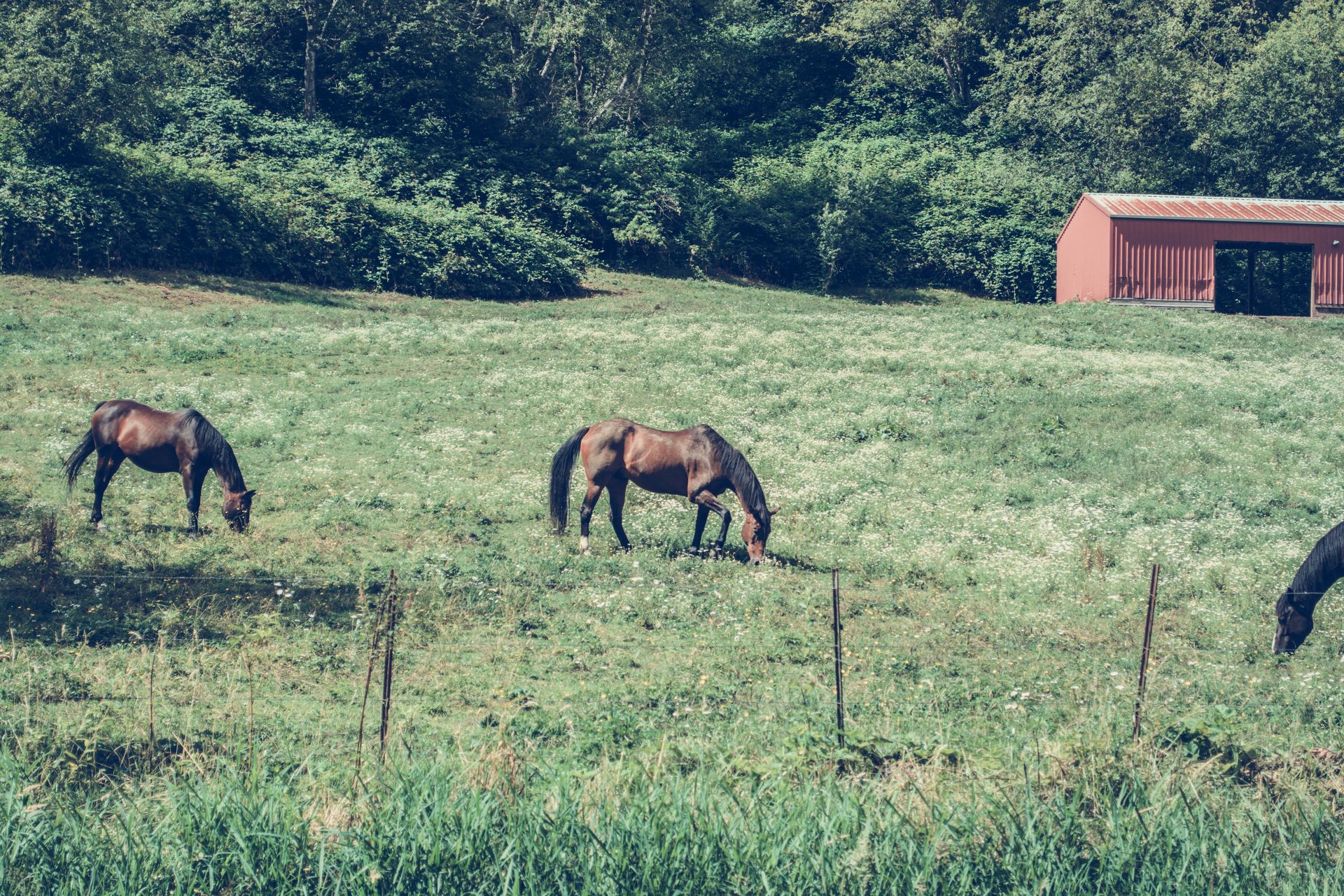
Schwein haben — to “have pig” — is arguably the most-used idiom in the German language. It means to be lucky: Wir haben Schwein gehabt mit dem Wetter (we got lucky with the weather). The pig has symbolized luck and prosperity in German culture for centuries — medieval card games awarded the pig card as a lucky draw, butchers gave away lucky pig charms, and porcelain Glücksschweine (lucky pigs) are still handed out on New Year’s Eve. To have pig is to have fortune itself.
The pig family extends in every direction:
- kein Schwein — “no pig”: nobody. Kein Schwein war da. (Nobody was there.) Blunt, casual, very common.
- den inneren Schweinehund überwinden — to overcome one’s “inner pig-dog”: to conquer your weaker self, your laziness. The innere Schweinehund is the voice that says “skip the gym”; overcoming it is a whole German self-improvement genre.
- ich glaub, mein Schwein pfeift — “I think my pig is whistling”: I must be going crazy, this can’t be true. Said in cheerful disbelief: Du hast den Job? Ich glaub, mein Schwein pfeift!
- Glücksschwein — the lucky pig itself, the charm and the person: Du bist so ein Glücksschwein!
Then there’s the Sau (sow) — the pig’s earthier, ruder sibling. Sauwetter (sow weather) is miserable, driving rain — stronger and funnier than just “bad weather.” Die Sau rauslassen (to let the sow out) means to let loose completely, to party without restraint. Schweinerei (piggery) means a mess or a dirty trick, depending on context. The sow does the emotional heavy lifting that the respectable pig won’t touch.
Learner tip: Schwein haben is neutral enough for almost any setting. The Sau compounds (Sauwetter, die Sau rauslassen) are casual — friends and family, not the boardroom.
Cats, Dogs, and Everyday Mischief
The cat is German idiom’s trickster. Die Katze im Sack kaufen (to buy the cat in the sack = to buy a pig in a poke) warns against buying something sight unseen — the story goes that medieval market traders would substitute a worthless cat for the piglet a buyer thought they were getting, tied up in a sack. Whether or not that’s historically airtight, it’s a great story and every German knows it. Die Katze aus dem Sack lassen (to let the cat out of the sack = to let the cat out of the bag) is the reveal: Jetzt lass doch die Katze aus dem Sack! (Just spit it out!)
More feline entries: für die Katz (for the cat = for nothing) dismisses wasted effort — die ganze Arbeit war für die Katz. Katzenjammer (cat’s wailing) is the miserable morning-after feeling, the hangover’s emotional cousin: Ich hab so einen Katzenjammer. And wie Hund und Katz leben (to live like dog and cat) describes two people who fight constantly.
The dog is the working companion — loyal, but also the measure of hard times. Da liegt der Hund begraben (that’s where the dog is buried = that’s the crux of the matter) is everyday standard, used when the real problem finally surfaces. One charming theory traces it to buried treasure guarded by spectral dogs in folk tales — the dog marks the spot where the valuable (or problematic) thing lies.
- vor die Hunde gehen — to “go before the dogs”: to go to the dogs, to deteriorate. Die Firma geht vor die Hunde. (The company’s going downhill.)
- Hundewetter — dog weather: miserable weather. A step milder than Sauwetter, equally common.
- Hunde, die bellen, beißen nicht — dogs that bark don’t bite: the loudmouth is harmless. Same as English.
- kein Hahn kräht danach — “no rooster crows about it”: nobody cares. Technically a rooster, but it lives in the dog-and-cat neighborhood of indifference idioms.
Dogs also give us one of the strangest and best: da beißt die Maus keinen Faden ab — “the mouse won’t bite a thread off it”: there’s no way around it, it’s unavoidable. The image is oddly specific (a mouse, a thread, biting) and the meaning is pure resignation: Da beißt die Maus keinen Faden ab, wir müssen das machen.
Birds, Fish, and the Wild Ones
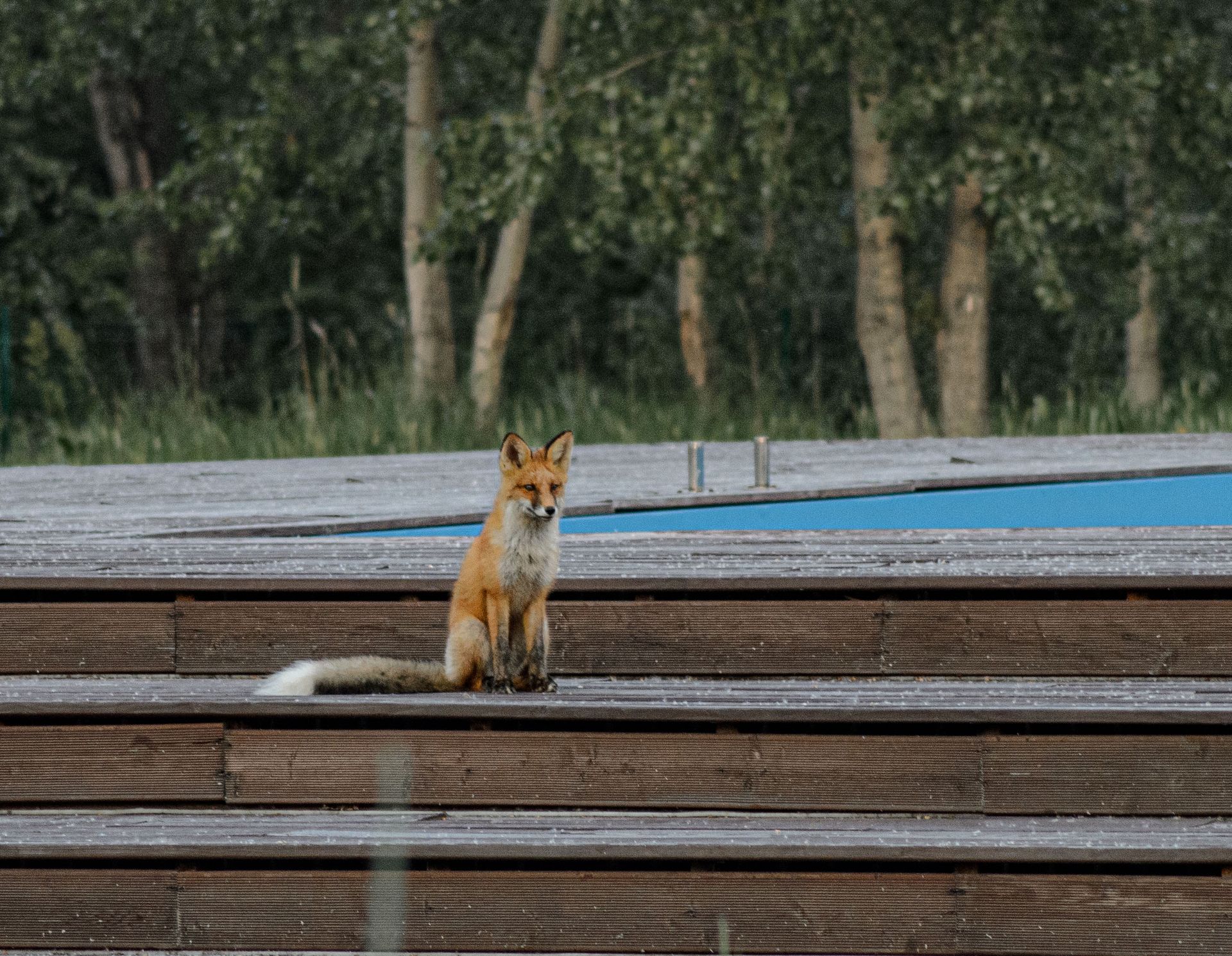
Birds in German idioms signal mild madness and morning virtue in equal measure. Einen Vogel haben (to have a bird = to be nuts) is the standard affectionate insult: Du hast doch einen Vogel! (You’re crazy!) — said with a grin among friends, with an edge among strangers. Den Vogel abschießen (to shoot the bird = to take the cake) means to outdo everyone, for better or worse: at shooting festivals the best marksman literally shot down a wooden bird, and the phrase kept the triumph. Der frühe Vogel fängt den Wurm (the early bird catches the worm) is identical to English — Germany’s morning people quote it proudly.
The owl carries wisdom across cultures, and German has the perfect classical idiom: Eulen nach Athen tragen (to carry owls to Athens = to carry coals to Newcastle) — doing something pointless, since Athens (Athena’s city) already had owls everywhere. Two thousand years old and still understood.
Fish swim through several gems. Wie ein Fisch im Wasser (like a fish in water) means completely in one’s element: Er fühlt sich wie ein Fisch im Wasser. Weder Fisch noch Fleisch (neither fish nor flesh) describes something wishy-washy, neither one thing nor the other — used for people, plans, and political positions. Glatt wie ein Aal (smooth as an eel) is the slippery character you can’t pin down. And ein toller Hecht (a great pike) is old-fashioned praise for an impressive fellow — your grandfather’s compliment, charming when revived.
The wild ones deserve their parade:
- da steppt der Bär — “the bear dances there”: it’s going to be a wild party. From traveling bear shows, now the standard way to promise a great night out.
- jemandem einen Bärendienst erweisen — to do someone a “bear service”: to do them a disservice, to harm while trying to help. From the fable of the bear who killed a fly on his master’s face with a rock.
- Bärenhunger haben — to have a bear’s hunger: to be ravenous.
- wie ein begossener Pudel dastehen — to stand like a drenched poodle: to look sheepish and embarrassed. The poodle’s dignity, destroyed by water.
- sich pudelwohl fühlen — to feel “poodle-well”: to feel fantastic. Same dog, opposite mood.
- des Pudels Kern — “the poodle’s core”: the crux of the matter, from Goethe’s Faust where Mephistopheles first appears as a poodle. Literary, rarely spoken — but every German knows it.
- aus einer Mücke einen Elefanten machen — to make an elephant out of a mosquito: to make a mountain out of a molehill.
- sich wie ein Elefant im Porzellanladen benehmen — to behave like an elephant in a china shop: the bull in the china shop, German edition.
- schlau wie ein Fuchs — sly as a fox: the fox is clever in every culture, Germany included.
- einen Bock schießen — to “shoot a buck” (male goat): to make a blunder. Da hast du einen Bock geschossen. The hunting image stuck; the mistake is all yours.
- stur wie ein Esel — stubborn as a donkey/mule: universal.
- dastehen wie der Ochs vorm Berg — to stand like the ox before the mountain: to be utterly clueless. A wonderfully visual way to say someone doesn’t get it.
- mit jemandem Pferde stehlen können — to “be able to steal horses with someone”: to trust them completely, to be partners in crime (figuratively). One of the warmest compliments in German.
- das Pferd von hinten aufzäumen — to bridle the horse from behind: to put the cart before the horse, to do things backwards.
- die Kuh vom Eis holen — to get the cow off the ice: to resolve a tricky situation. Northern German, practical, bovine.
- ein Wolf im Schafspelz — a wolf in sheep’s clothing: same as English.
- das schwarze Schaf — the black sheep: same as English.
- die Ratten verlassen das sinkende Schiff — the rats leave the sinking ship: same as English.
- arm wie eine Kirchenmaus — poor as a church mouse: same image as English.
- fleißig wie eine Biene — busy as a bee: same as English.
- stolz wie ein Pfau — proud as a peacock: same as English.
- lahme Ente — lame duck: same as English.
- da ist der Wurm drin — “there’s a worm in it”: something’s wrong, something’s off. Irgendwas stimmt nicht, da ist der Wurm drin.
And the two strangest small creatures: jemandem ist eine Laus über die Leber gelaufen — “a louse ran over someone’s liver”: someone is in a bad mood, grumpy for no clear reason. Medieval medicine located emotions in the liver, and the louse is just the final absurd touch. And jemandem einen Floh ins Ohr setzen — to put a flea in someone’s ear: to put an idea in their head (usually a mischievous one). Both are real, both are used, and both sound completely unhinged in literal translation — which is exactly why learners love them.
The Extended Menagerie: 15 More Animal Idioms Worth Knowing
Beyond the greatest hits, German has a whole second shelf of animal idioms — slightly less famous, just as good:
- wie die Made im Speck leben — to live like a maggot in bacon: to live in total luxury. Disgusting image, delightful meaning.
- da lachen ja die Hühner — “even the chickens are laughing”: that’s utterly ridiculous. The chickens are the Greek chorus of German absurdity.
- auch ein blindes Huhn findet mal ein Korn — even a blind hen finds a grain sometimes: everyone gets lucky eventually.
- mit den Hühnern ins Bett gehen — to go to bed with the chickens: to turn in very early.
- Nachtigall, ick hör dir trapsen — “nightingale, I hear you stomping” (Berlin dialect): I see right through you. The nightingale is supposed to be delicate — hearing it stomp means the trick is obvious.
- sich aufplustern wie ein Gockel — to puff oneself up like a rooster: to swagger, to show off.
- dumme Gans — silly goose: the mild, almost affectionate insult.
- Gänsehaut haben — to have goose skin: goosebumps, same as English.
- den Bullen bei den Hörnern packen — to grab the bull by the horns: same as English, same courage required.
- in ein Wespennest stechen — to poke a wasp’s nest: to stir up trouble, same as English.
- jemanden ausnehmen wie eine Weihnachtsgans — to fleece someone like a Christmas goose: to rip them off thoroughly. The goose gets stuffed; so does the victim.
- Rabeneltern — “raven parents”: neglectful parents. Ravens were believed to abandon their young — unfair to ravens, useful to moralists.
- sich in die Höhle des Löwen begeben — to enter the lion’s den: same as English.
- Gift und Galle spucken — to spit poison and bile: to be absolutely furious. The bile connects back to the liver, home of medieval emotions.
- Blut geleckt haben — to have “licked blood”: to have gotten a taste for something and want more — usually a hobby or a thrill. Er hat beim Marathon Blut geleckt.
Notice how many of these double as character judgments: the rooster swaggers, the goose is silly, the raven neglects, the bull must be grabbed. German animal idioms don’t just describe situations — they hand out roles, and everyone knows their part.
Origins: Where German Animal Idioms Come From
German animal idioms are fossils — each one preserves a slice of the world that created it. Four historical layers explain most of them.
The farm (oldest layer). Pig, cow, horse, goat, and chicken idioms come from centuries when nearly every German lived with these animals. Schwein haben reflects the pig’s role as wealth-on-hooves. Die Kuh vom Eis holen comes from the real danger of livestock breaking through ice. Einen Bock schießen preserves hunting culture. Mit jemandem Pferde stehlen können remembers a time when stealing horses together meant absolute mutual trust — you were literally risking the gallows together.
The market and the fair. Die Katze im Sack kaufen belongs to medieval markets and their tricksters. Da steppt der Bär comes from traveling bear shows that drew whole villages. Den Vogel abschießen comes from marksmen’s festivals (Schützenfeste) that still take place across Germany every summer — the wooden bird (Adler) still gets shot down ceremonially.
Literature and fable. Des Pudels Kern is Goethe’s Faust (1808). Jemandem einen Bärendienst erweisen comes via La Fontaine’s fables. Eulen nach Athen tragen is ancient Greek via Latin schoolrooms — German Gymnasium students learned it alongside the classics for centuries. These literary idioms are understood by everyone but used sparingly, usually with a wink.
Folk medicine and superstition. Jemandem ist eine Laus über die Leber gelaufen preserves the medieval belief that emotions lived in the liver — melancholy literally meant “black bile.” Katzenjammer may echo the wailing of cats, mapped onto human misery. Even Schwein haben has a gaming layer: in old card games, the pig (Sau) was a lucky card.
Knowing the origin isn’t required to use an idiom — but it’s the best memory hook there is. The story of the cat in the sack will make you remember die Katze im Sack kaufen forever, and telling that story is itself a great conversation move with German friends.
Using German Animal Idioms in Modern Conversation
Animal idioms aren’t museum pieces — they’re daily currency. Here’s how they actually sound in 2026, by situation:
Celebrating luck: Schwein gehabt! after passing an exam, finding a parking spot, or dodging rain. Short, warm, universal. The full wir haben Schwein gehabt works in any setting; the clipped Schwein gehabt! is pure spoken joy.
Calling out nonsense: Ich glaub, mein Schwein pfeift! when a friend tells you something unbelievable. Da liegt der Hund begraben when the meeting finally names the real problem. Mach aus einer Mücke keinen Elefanten to calm someone down. These are the idioms of honesty — direct, vivid, slightly cheeky.
Describing people (carefully): Einen Vogel haben and nicht alle Tassen im Schrank haben are affectionate among friends, insulting among strangers — know the relationship first. Sich zum Affen machen (to make a fool of oneself) is self-deprecating gold: Da hab ich mich zum Affen gemacht. Germans love self-deprecation, and this idiom delivers it perfectly.
At work (the safe set): Da liegt der Hund begraben, die Katze aus dem Sack lassen (in the sense of “let’s get it on the table”), den Bock schießen (admitting a mistake: da hab ich einen Bock geschossen — disarming and honest), mit jemandem Pferde stehlen können (praising a colleague’s reliability). Avoid the Sau compounds and kein Schwein in formal settings.
What to skip as a learner: Des Pudels Kern (too literary for conversation), die Ratten verlassen das sinkende Schiff (understood, but melodramatic — people just say alle hauen ab), and anything you’re not 100% sure of. A clean, confident Schwein gehabt! beats a hesitant literary quote every time.
For practical guidance on matching every idiom to its situation, see our guide on how to use German idioms naturally — and for the funniest of the bunch, our funny German idioms collection.
Key Takeaways
- German animal idioms run from Schwein (luck, prosperity) to Sau (rude weather, wild parties) — the pig family alone covers half of everyday emotional life.
- Cats trick (die Katze im Sack kaufen), dogs mark problems (da liegt der Hund begraben), birds signal madness (einen Vogel haben), and the louse crosses the liver when you’re grumpy.
- Origins are memory hooks: medieval markets (the cat in the sack), shooting festivals (den Vogel abschießen), Goethe’s Faust (des Pudels Kern), and folk medicine (the louse on the liver).
- In modern use, animal idioms are daily currency — Schwein gehabt!, da liegt der Hund begraben, mach aus einer Mücke keinen Elefanten — but match the register: the Sau compounds stay casual.
- These german animal idioms work because they’re pictures, not abstractions — learn the image, and the meaning sticks. For the full learner’s framework, see German idioms explained; for more everyday phrases with translations, browse common German idioms with translation.