

German Coffee Vocabulary: 40 Words for Café Culture
Germany runs on coffee, so building your German coffee vocabulary is one of the fastest ways to sound natural in everyday German. Germans drink more coffee per person than almost anyone in Europe, and the beloved Kaffeekultur (coffee culture) touches everything from office rituals to Sunday family traditions. This German coffee vocabulary guide gives you 38 real coffee words with their correct der/die/das articles, English meanings, and example sentences — plus two bonus ordering phrases — so you walk into any café ready for anything, from a quick Espresso to a long, lazy Kaffeeklatsch.
Essential German Coffee Vocabulary: The Basics
Start with the core of your German coffee vocabulary: the everyday words you will hear before 9 a.m. in any German household, office, or bakery.
1. der Kaffee (the coffee) — the undisputed king of German mornings. Ich trinke jeden Morgen zwei Tassen Kaffee. (I drink two cups of coffee every morning.)
2. die Kaffeepause (the coffee break) — a sacred mid-morning ritual in German workplaces. Um halb elf machen wir Kaffeepause. (At half past ten we take a coffee break.)
3. der Filterkaffee (the filter coffee) — still the most-brewed style in German homes. Meine Oma macht den besten Filterkaffee. (My grandma makes the best filter coffee.)
4. der Milchkaffee (the coffee with milk) — a large, mellow milk coffee, closer to a French café au lait. Zum Frühstück trinke ich Milchkaffee. (For breakfast I drink coffee with milk.)
5. die Kaffeetasse (the coffee cup) — your essential tableware word. Die Kaffeetasse ist noch heiß. (The coffee cup is still hot.)
6. der Kaffeelöffel (the coffee spoon) — literally “coffee spoon.” Ein Kaffeelöffel Zucker, bitte. (One coffee spoon of sugar, please.)
7. das Kaffeetrinken (the coffee drinking) — the activity itself, a favorite German habit. Das Kaffeetrinken am Morgen ist mein Ritual. (Drinking coffee in the morning is my ritual.)
8. der Kaffeeduft (the coffee aroma) — the smell that sells bakeries. Der Kaffeeduft weckt mich jeden Morgen. (The coffee aroma wakes me up every morning.)
9. die Kaffeekanne (the coffee pot) — what sits on every German breakfast table. Die Kaffeekanne steht auf dem Tisch. (The coffee pot is on the table.)
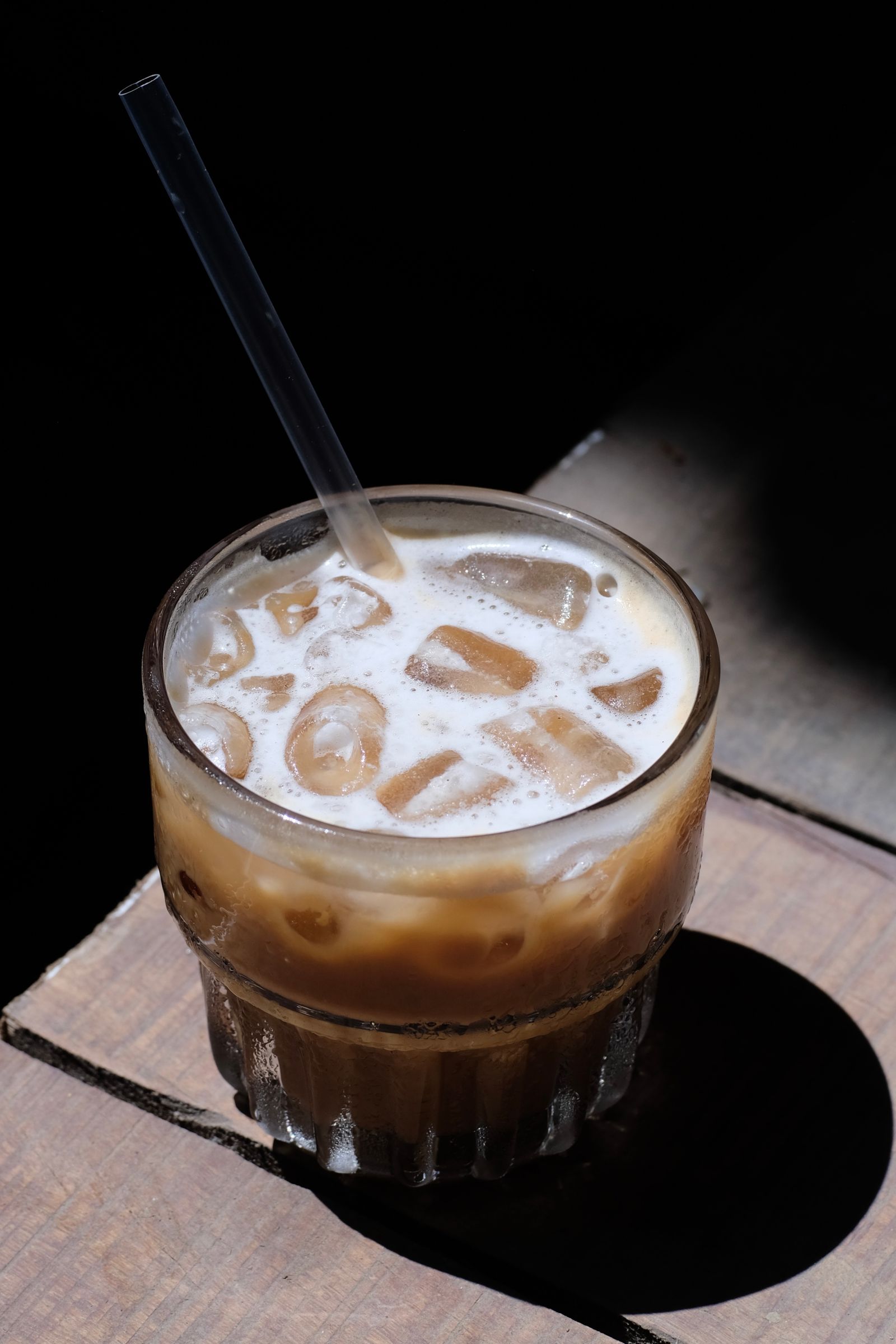
10. der Eiskaffee (the iced coffee) — summer’s answer to the hot cup, often served with vanilla ice cream. Bei dieser Hitze nehme ich einen Eiskaffee. (In this heat I’ll have an iced coffee.)
Coffee Drinks in Germany
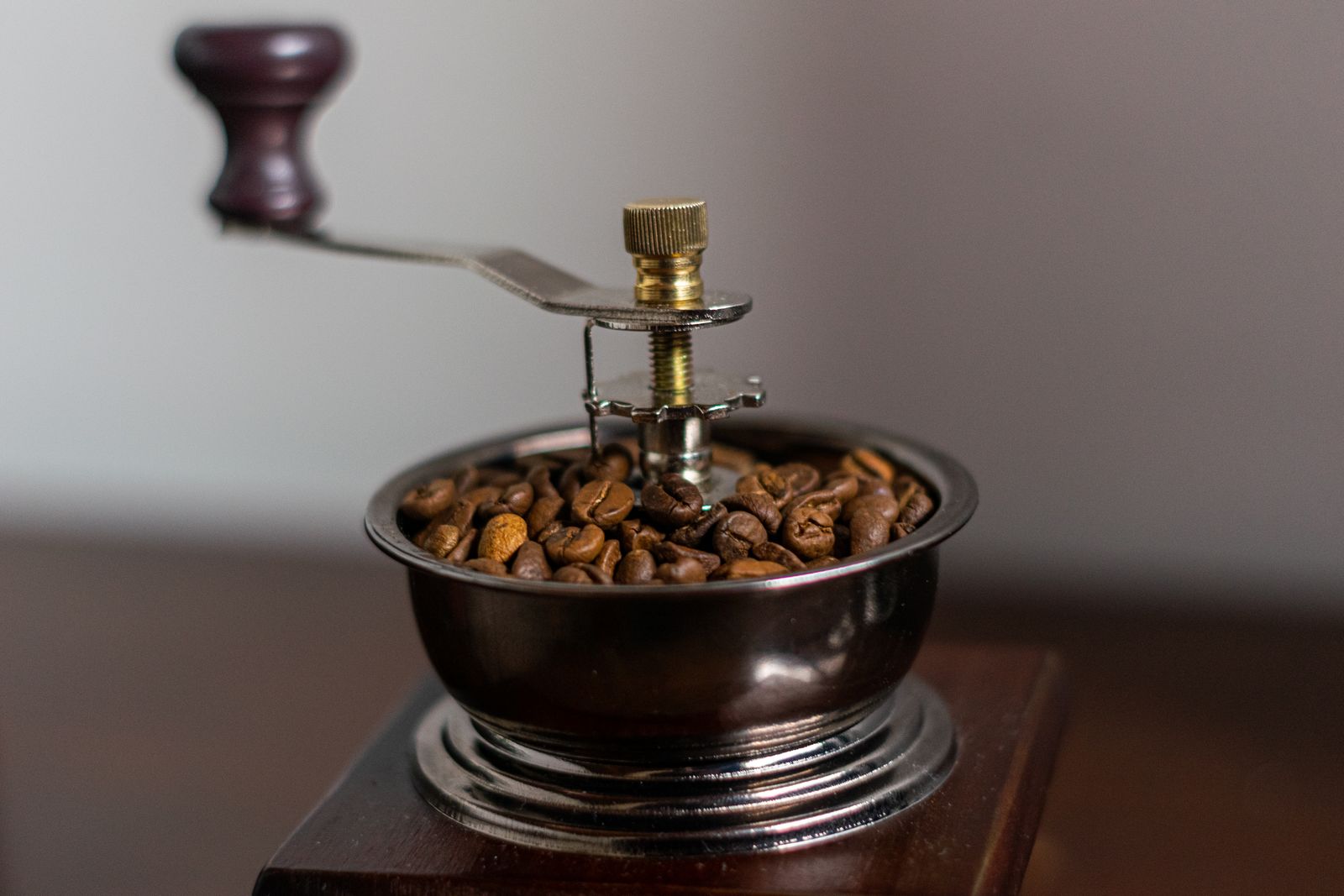
German café menus are full of international classics, and most of them are almost pure German cognates — easy to learn, easy to order.
11. der Espresso (the espresso) — short, strong, and pronounced with a rolled r. Nach dem Essen trinke ich einen Espresso. (After dinner I drink an espresso.)
12. der Cappuccino (the cappuccino) — a third espresso, a third steamed milk, a third foam. Der Cappuccino hat einen schönen Milchschaum. (The cappuccino has lovely milk foam.)
13. der Latte macchiato (the latte macchiato) — the tall, layered glass served everywhere. Sie bestellt einen Latte macchiato mit Hafermilch. (She orders a latte macchiato with oat milk.)
14. der Mokka (the mocha) — a strong, dark brew named after the Yemeni port city. Der Mokka ist kräftiger als der Filterkaffee. (The mocha is stronger than filter coffee.)
15. koffeinfrei (caffeine-free / decaffeinated) — the essential adjective for late-afternoon orders. Ich nehme einen koffeinfreien Kaffee. (I’ll have a decaffeinated coffee.)
German Coffee Vocabulary for Ordering at a Café
Walking into a café is the best real-world test of your German coffee vocabulary. These are the words you need at the counter — and if you want to go beyond coffee, our essential German travel phrases and survival guide for travelers cover the rest of the trip.
16. das Café (the café) — pronounced ka-FEH, not like the English word. Wir treffen uns im Café an der Ecke. (We’re meeting at the café on the corner.)
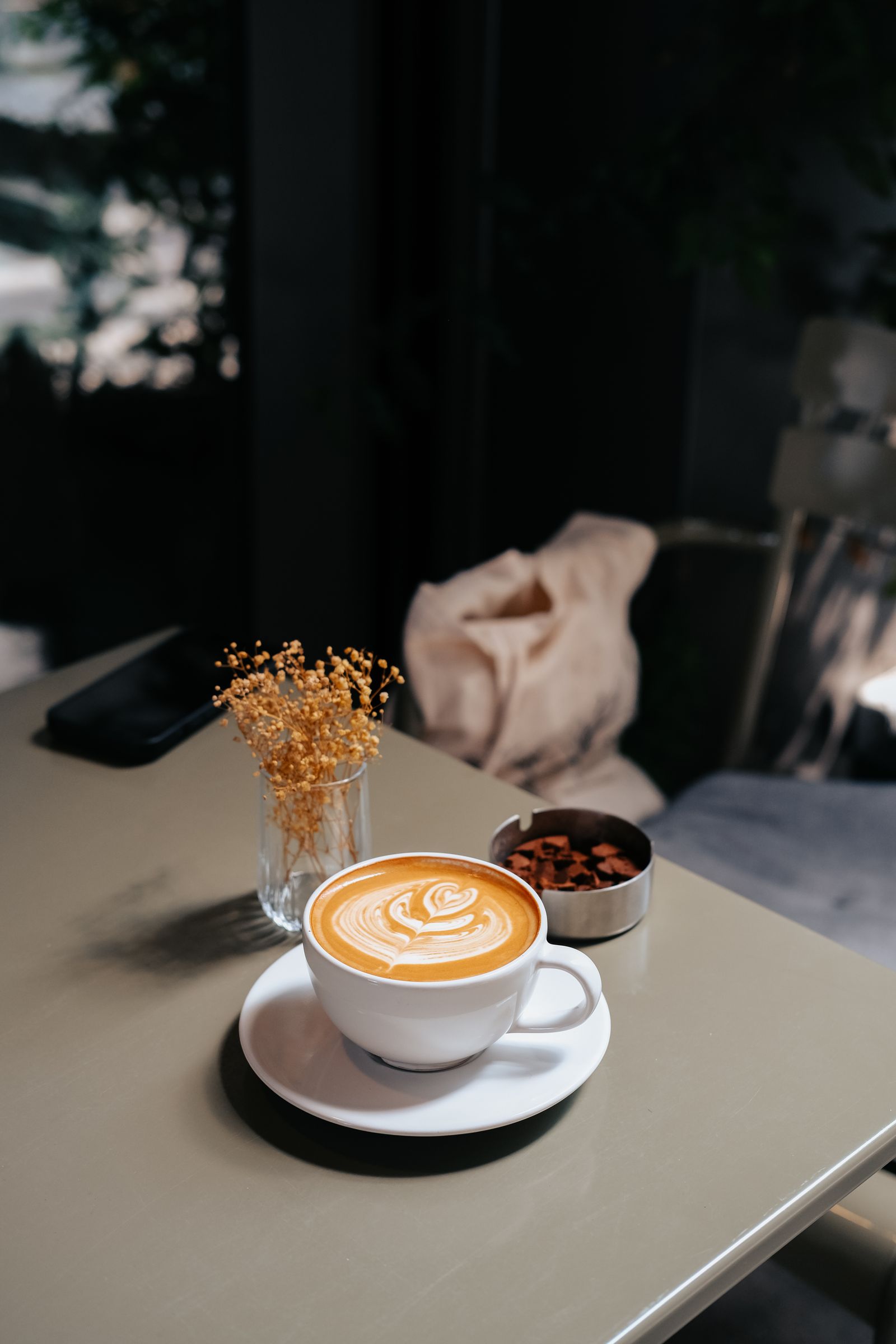
17. das Kaffeehaus (the coffeehouse) — the grand, old-fashioned Viennese-style coffeehouse. Das Kaffeehaus ist über hundert Jahre alt. (The coffeehouse is over a hundred years old.)
18. die Konditorei (the patisserie / cake shop) — where coffee meets Germany’s legendary cakes; if cakes are your thing, you will love our German food cognates next. In der Konditorei gibt es den besten Apfelstrudel. (The patisserie has the best apple strudel.)
19. der Barista (the male barista) — the professional behind the espresso machine. Der Barista macht wunderschöne Latte Art. (The barista makes beautiful latte art.)
20. die Barista (the female barista) — same job, feminine article. Die Barista kennt meinen Namen. (The female barista knows my name.)
21. die Kaffeesahne (the coffee cream) — the classic cream for filter coffee. Möchten Sie Kaffeesahne dazu? (Would you like coffee cream with that?)
22. der Zuckerwürfel (the sugar cube) — old-school, charming, and a Scrabble weapon. Zwei Zuckerwürfel, bitte. (Two sugar cubes, please.)
German Coffee Culture & Traditions
Coffee in Germany is not just a drink — it is a social institution. These words unlock the cultural side of your German coffee vocabulary.
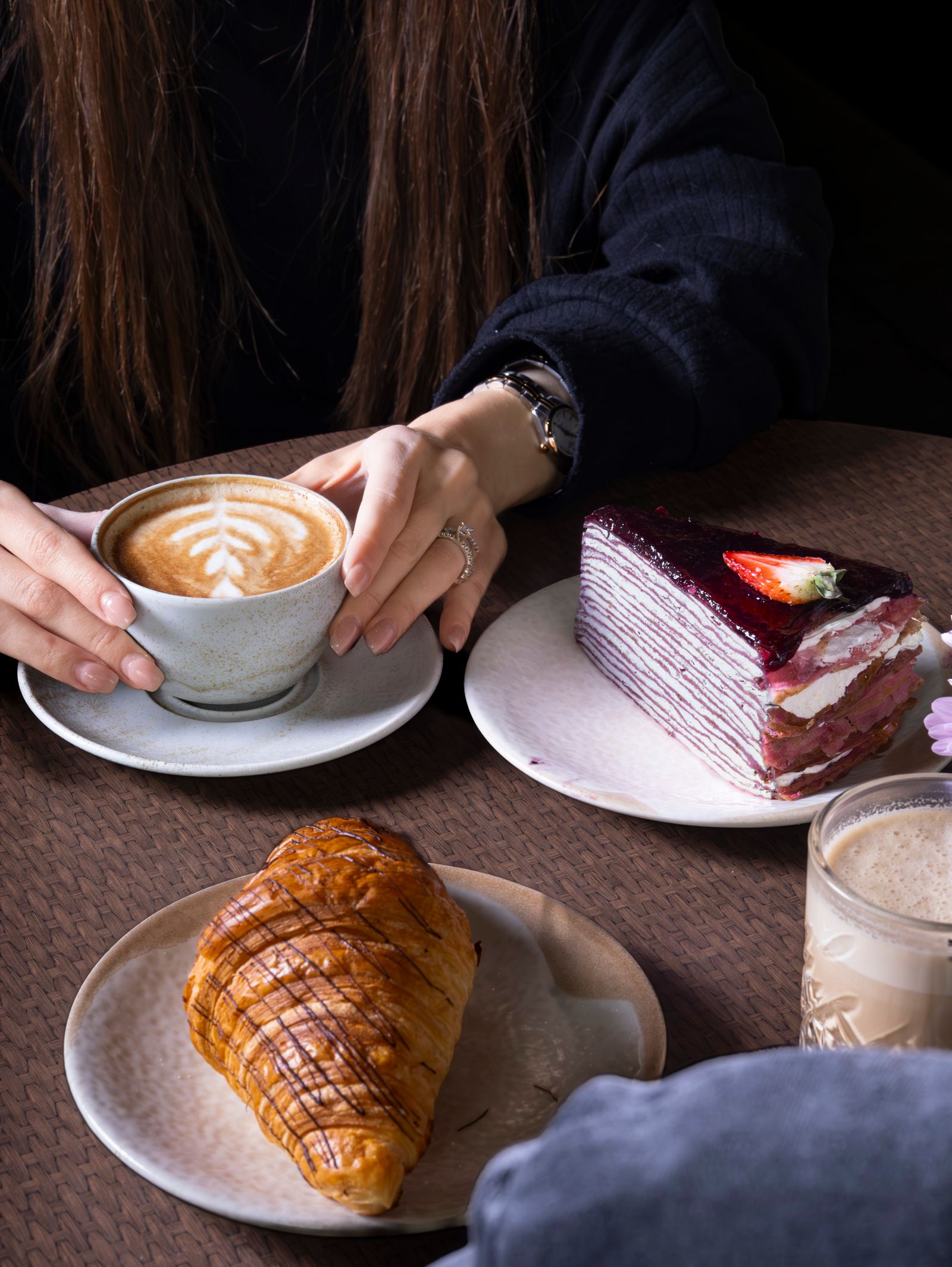
23. das Kaffeekränzchen (the coffee party) — a cozy gathering of friends over coffee and cake. Am Sonntag haben wir ein Kaffeekränzchen. (On Sunday we’re having a coffee get-together.)
24. der Kaffeeklatsch (the coffee gossip) — chatting and gossiping over coffee. Beim Kaffeeklatsch gibt es immer Neuigkeiten. (At coffee gossip sessions there’s always news.)
25. die Kaffeerunde (the coffee round) — a round of coffee for the whole group. Ich gebe eine Kaffeerunde aus. (I’m buying a round of coffee.)
26. der Sonntagskaffee (the Sunday coffee) — the cherished Sunday-afternoon family ritual. Der Sonntagskaffee ist bei uns Tradition. (Sunday coffee is a tradition at our house.)
27. die Kaffeesatzleserei (the coffee-grounds fortune telling) — reading fortunes in leftover coffee grounds. Die Kaffeesatzleserei ist ein alter Brauch. (Reading coffee grounds is an old custom.)
28. fair gehandelt (fair trade) — Germans care deeply about ethical sourcing. Wir kaufen nur fair gehandelten Kaffee. (We only buy fair-trade coffee.)
From Bean to Cup: Roasting & Brewing Words
Germany has a proud specialty-roasting scene, and its words show off how German compound words work: die Kaffeerösterei is simply der Kaffee + die Rösterei (the roasting works).
29. die Kaffeebohne (the coffee bean) — where it all begins. Die Kaffeebohnen kommen aus Kolumbien. (The coffee beans come from Colombia.)
30. gemahlen (ground) — the adjective for ground coffee. Frisch gemahlener Kaffee schmeckt besser. (Freshly ground coffee tastes better.)
31. die Röstung (the roast / roasting) — light, medium, or dark. Diese Röstung ist schön kräftig. (This roast is nicely strong.)
32. die Kaffeerösterei (the coffee roastery) — the workshop where beans are roasted. Die Kaffeerösterei liegt in der Altstadt. (The coffee roastery is in the old town.)
33. die Kaffeekirsche (the coffee cherry) — the fruit the bean grows inside. Die Kaffeekirsche wird rot, wenn sie reif ist. (The coffee cherry turns red when ripe.)
34. der Kaffeeanbau (the coffee cultivation) — growing coffee, done far from Germany’s climate. Der Kaffeeanbau braucht ein tropisches Klima. (Coffee cultivation needs a tropical climate.)
35. der Kaffeefilter (the coffee filter) — paper filter for the classic drip brew. Wir brauchen neue Kaffeefilter. (We need new coffee filters.)
36. der Siebträger (the portafilter) — literally “sieve carrier,” the espresso machine’s handle. Der Barista klopft den Siebträger aus. (The barista knocks out the portafilter.)
37. der Kaffeevollautomat (the fully automatic coffee machine) — the one-button espresso machine in countless German offices and kitchens. Der Kaffeevollautomat mahlt die Bohnen frisch. (The automatic machine grinds the beans fresh.)
38. die Kaffeemaschine (the coffee machine) — the all-purpose word for any coffee maker. Die Kaffeemaschine ist schon an. (The coffee machine is already on.)
Two bonus phrases to reach an even forty: say “einen Kaffee, bitte” (a coffee, please) when ordering, and add “zum Mitnehmen” (to take away) if you want it to go — “Einen Cappuccino zum Mitnehmen, bitte.”
German Coffee Compounds: Decoding Your Own Café Vocabulary
One of the best things about German coffee vocabulary is how it teaches you to decode words you have never seen. German builds long words by gluing shorter ones together, and coffee vocabulary is full of them — the last part of the compound always decides the article and the basic meaning. Here are five from this list broken down:
- die Kaffeemaschine (the coffee machine) = der Kaffee (coffee) + die Maschine (machine)
- der Milchkaffee (the coffee with milk) = die Milch (milk) + der Kaffee (coffee) — note the Kaffee at the end makes it masculine
- die Kaffeerösterei (the coffee roastery) = der Kaffee (coffee) + die Rösterei (roasting works)
- der Zuckerwürfel (the sugar cube) = der Zucker (sugar) + der Würfel (cube)
- das Kaffeekränzchen (the coffee party) = der Kaffee (coffee) + das Kränzchen (little wreath, here: a small circle of friends)
Once you spot the pattern, you can read a café menu with confidence: anything ending in -kaffee is a drink, anything starting with Kaffee- is coffee-related. For more practice with this pattern, see our roundup of German compound words with examples and meanings.
Pronunciation Tips for German Coffee Words
Coffee vocabulary is a fun workout for classic German sounds:
- The ü in der Zuckerwürfel: round your lips for “oo” but say “ee” — TSOO-ker-vuer-fel, not TSOOK-er-woor-fel.
- The ä in das Kaffeekränzchen: like the “e” in “bed” — kaf-fay-KRENTS-chen.
- The z in der Zuckerwürfel: always “ts” in German — TSOO-ker, never “zoo-ker.”
- The ei in die Kaffeemaschine: always sounds like “eye” — ma-SHEE-nuh, with a soft sch.
- The r in der Barista and der Espresso: rolled or tapped, never the flat English r — bah-RIS-ta.
German Coffee Vocabulary in Word Games: Scrabble & Wordle
This German coffee vocabulary doubles as a secret weapon in word games. In German Scrabble, the Z in der Zuckerwürfel is worth 10 points, and high-value umlauts make das Kaffeekränzchen and der Zuckerwürfel genuine score monsters — if you can fit them on the board. Short words like der Mokka, der Espresso, and das Café slot neatly into tight corners.
For German Wordle, this list is a goldmine of five-letter guesses: Bohne and Mokka are exactly five letters, and Kaffee works in six-letter variants. Try solving a puzzle with only words from this list — it forces you to spell the umlauts correctly, which is half the battle.
Key Takeaways
This German coffee vocabulary gives you 38 real coffee words — from der Kaffee and die Kaffeemaschine to das Kaffeekränzchen and der Kaffeevollautomat — each with the correct article, meaning, and example sentence. Learn the article with every word: der, die, or das is part of the word itself. Use the compound-word pattern to decode new words on the fly — once you see that die Kaffeetasse is just Kaffee + Tasse (cup), dozens of café words decode themselves. And practice out loud at the counter: ordering “einen Cappuccino, bitte” with a real rolled r is the moment your German coffee vocabulary stops being a list and starts being a skill.
FAQ
What is the German word for coffee?
Der Kaffee — masculine, so der Kaffee, einen Kaffee, dem Kaffee. It is the base of dozens of compounds in this German coffee vocabulary, from die Kaffeetasse to das Kaffeekränzchen.
How do I order coffee in German?
Say “einen Kaffee, bitte” (a coffee, please) or name your drink: “einen Cappuccino, bitte.” Add “zum Mitnehmen” for takeaway. Staff will appreciate the effort even if your pronunciation wobbles.
What is a Kaffeeklatsch?
A Kaffeeklatsch (masculine: der Kaffeeklatsch) is a cozy social gathering over coffee, usually with cake and plenty of chatting — gossip included, hence the name (klatschen = to gossip). The related Kaffeekränzchen is the classic, slightly more old-fashioned version: think Sunday afternoon with family and a full cake spread.
Do Germans really drink that much coffee?
Yes — Germany is among the world’s top coffee-drinking nations, averaging around 150 liters per person per year. The Kaffeepause at work and the Sonntagskaffee at home are genuine institutions, which is why this German coffee vocabulary is so useful for everyday life.