

Q, X, and Y are the three power tiles of German Scrabble — and the three most misplayed. Together they are worth 28 face-value points, yet most casual players either dump them early for pennies or sit on them until the game ends. The players who win with German Scrabble words Q X Y tiles do neither: they know the exact tile values, the QU rule that governs Q, the short high-value words for each letter, and where on the board these letters earn multiples of their face value.
This guide covers all of it: the real German tile values (not the English ones), Q/X/Y word lists with face values, the QU-play rule, board placement tactics, and the endgame math of holding versus exchanging power tiles.
German Scrabble Words Q X Y: The Real Tile Values
First, burn the English values out of your memory. German Scrabble uses its own tile distribution and point chart, and several letters score very differently than in English Scrabble. The values that matter for this guide:
- Q = 10 points (1 tile in the set; must be played as QU)
- X = 8 points (1 tile in the set)
- Y = 10 points (1 tile in the set)
- J = 6 points, V = 6 points (useful context — mid-value consonants)
- Z = 3 points — this surprises English players, where Z is 10. In German, Z is common (Zeit, zu, das Zimmer) and scores accordingly.
The full 102-tile German set contains exactly one Q, one X, and one Y. There are no blanks that change this math meaningfully for strategy — the point is that each of these tiles is unique, irreplaceable, and worth more than almost anything else on your rack. For the complete chart with every tile count, see our German Scrabble tile values reference.
The QU rule: in German Scrabble, the Q tile may only be played as part of the letter pair QU. You cannot play Q alone, and there is no Q-without-U trick as in English Scrabble (where qi and qat exist). Every German word with Q contains QU — das Quiz, der Quark, quer — so the Q tile always costs you a U from your rack or from the board. Plan accordingly: Q without a U in hand is a tile you cannot play until a U appears.
High-Value Q Words: The 10-Point Tile
Q’s 10 points plus the mandatory U (1 point) mean every Q-play starts at 11 face value before premiums. The best Q-words are short, use common companions, and land on premium squares. Face values below use the German chart (Q=10, U=1, I=1, Z=3 — note: German Z is only 3!):
| Word | Meaning | Face value |
|---|---|---|
| das Quiz | quiz | 15 (10+1+1+3) |
| quer | across/diagonal | 13 (10+1+1+1) |
| quitt | quits/even | 14 (10+1+1+1+1) |
| der Quark | curd cheese | 17 |
| die Qual | torment | 13 |
| die Quote | quota | 14 |
| der Quell | source/spring | 15 |
| quälen | to torment | 14 |
Das Quiz is the classic: 15 points from four tiles, and the Z (3 points in German, not 10) still adds a little. Quer is the workhorse — four letters, fits anywhere, and the E/R are easy hooks. Memorize these eight before you memorize anything longer; short Q-words win more games than long ones because they actually get played.
Longer Q-words for open boards: die Quelle (17), die Qualität (19), der Quatsch (19 — note SCH is 3 tiles), die Quittung (19), das Quadrat (17), die Quantität (21), der Quotient (20), die Quarantäne (21). These are for when the board is open and you can stretch across a triple-word score — Quarantäne across two triple-words is a game-ender.
Strategy notes for Q: never exchange Q early. Beginners dump it for 0 points; instead, hold it and play quer or quitt the moment a U appears anywhere usable. Watch for the U. If your opponent plays a U on a premium square, that is your invitation. Learn the umlaut trick: Ä is 6 points in German Scrabble (see German Scrabble umlaut words), so quälen outscores its plain-vowel cousins — and opponents rarely see it coming.
High-Value X Words: The 8-Point Tile
X at 8 points is the most flexible power tile: unlike Q, it needs no partner letter, and German X-words are short and common. Core list with face values (X=8):
| Word | Meaning | Face value |
|---|---|---|
| der Mix | mix | 13 (8+1+4) |
| die Box | box | 13 |
| der Text | text | 13 |
| mixen | to mix | 14 |
| die Hexe | witch | 15 |
| exakt | exact | 15 |
| das Exil | exile | 13 |
| der Index | index | 14 |
Der Mix, die Box, and der Text are the holy trinity of German X-plays: four letters, 13 points, playable in almost any board state. Die Hexe at 15 is the premium short play — learn it. Longer options: das Experiment (22), die Explosion (20), der Export (15), die Praxis (16), der Kontext (19), der Extrakt (18).
X strategy: X is a parallel-play monster. Because so many X-words are short (Mix, Box, Text), X excels at playing parallel to existing words, forming two-letter hooks (ex-, -xt) that score in two directions at once. Do not waste X on a bare triple-letter square early if a triple-word lane is developing — 8 points tripled to 24 on a letter premium is good, but 13+ points tripled to 40+ on a word premium wins games. The endgame X: with few tiles left, Mix or Box in a tight corner is often the only 10+ point play on the board.
Why X-words are short and hookable is no accident — see why German words with X are rare: nearly all are Greek/Latin loans with compact classical roots.
High-Value Y Words: The 10-Point Tile
Y matches Q at 10 points but is far easier to play — no QU rule, no partner needed. The catch is vocabulary: German Y-words are few, and you must know them. Face values (Y=10):
| Word | Meaning | Face value |
|---|---|---|
| der Typ | guy/type | 14 (10+1+3) |
| das Yoga | yoga | 15 |
| der Yen | yen | 13 |
| der Yak | yak | 15 |
| typisch | typical | 17 |
| die Yacht | yacht | 16 |
| der Yeti | yeti | 13 |
| die Yucca | yucca | 16 |
Der Typ is the single most important Y-word: four letters, 14 points, endlessly hookable (Typen, typs… in Scrabble only dictionary forms count — know your word list’s plurals). Das Yoga and der Yak are the other everyday plays. Longer: das System (15), die Physik (19), die Analyse (14), das Gymnasium (22), der Rhythmus (21), die Symphonie (22).
Y strategy: Y is a bingo enabler. Because Y is rare in German, opponents do not expect Y-words, which makes 7-tile bingos with Y devastating — typisch uses 7 tiles for a 50-point bingo bonus on top of 17 face value. The Y-opening: if you draw Y early, play Typ or Yen quickly rather than holding — unlike Q, Y has no partner constraint, so holding it gains nothing. Defensive Y: late in the game, Yoga or Yacht across a triple-word can close out a lead; keep one in reserve mentally.
For pronunciation that helps you remember these words (saying them correctly fixes them in memory), see our Q, X, Y pronunciation guide and the origin story of German Y-words.
Board Tactics for Q, X, Y
Premium square priority. The three tiles’ values multiply: Q or Y (10) on a triple-letter square = 30 points from one tile. Plan two moves ahead — place a vowel-heavy word that sets up your power tile’s landing square rather than playing the power tile immediately into a bad spot.
The QU setup. Since Q needs U, the advanced play is manufacturing U availability: play words ending in U (…au, …eu are common German diphthongs) near premium squares, then drop your QU-word through them. Watch opponents’ racks — if no U has been played by mid-game, someone is holding your enabler.
Parallel plays. All three letters shine in parallel: quer alongside an existing word, Mix tucked under a long word forming -xi- hooks, Typ stacked to make Ty/yp cross-words. Each cross-word scores fully, so a parallel 4-letter play routinely scores 25–40 points.
Blocking. Power tiles are also defensive weapons. If your opponent is clearly holding Q (no QU-word played by late game, U’s disappearing), close the board’s open lanes with short words. A Q stuck on the rack at game end costs its holder 10 points — sometimes the best Q strategy is making sure it is their Q, not yours.
Tile tracking. With only one of each in the 102-tile set, tracking is trivial and essential: once Q, X, or Y is played, it is gone forever. Count them like cards. If X is unplayed in the endgame, assume your opponent holds it and block the triple-word lanes.
The Exchange Question: Hold or Swap?
Q: almost never exchange. Q’s 10 points and the short-word options (quer, quitt, Quiz) mean it is playable in nearly any board state once a U exists. Exchange only if you hold Q with no U, no vowel, and the bag is still full — and even then, think twice.
X: never exchange. Mix, Box, Text need nothing but themselves. X is playable from any rack, on any board, at any time. Exchanging an 8-point tile that plays itself is giving away points.
Y: exchange only in the opening. If you draw Y with six consonants and no vowel in the first two moves, swapping can be correct — Typ needs vowels. After the opening, hold it; the bingo potential (typisch) and the 10 face points are worth the rack slot.
Endgame rule: in the last 10 tiles, power tiles on the rack are liabilities. Play quitt, Mix, or Typ even for modest scores rather than risk the 8–10 point penalty. The player who empties their rack wins the opponent’s remaining tile points — going out with Q in hand is a 20-point swing.
German Scrabble Words Q X Y: Opening Strategy
The first three moves decide how your power tiles will behave all game. Here’s how to handle each letter in the opening:
You draw Q in the opening. Don’t panic and don’t dump it. The opening board is empty, which is actually good for Q: play a vowel-heavy word like AUE or EIS centrally to create U-adjacent hooks, and hold Q. Your target is the first double-word lane that develops — quer or quitt across it for 26–28 points. If by move 5 no U has appeared anywhere, consider exchanging — but only if the bag is still nearly full, so your odds of a redraw are real.
You draw X in the opening. Play it fast. Mix, Box, or Text on the center star (double word) scores 26 points immediately — one of the strongest possible opening plays. X needs no setup and gains nothing from waiting; every move you hold it is a move your opponent might block the center.
You draw Y in the opening. Typ or Yen on the center star: 28 and 26 points respectively. Like X, Y is self-sufficient — play it, take the points, and move on. The one exception: if your rack is Y + six consonants with no vowel, exchange Y along with the worst consonants. A power tile you can’t spell with is just a 10-point liability.
You draw two power tiles. Q+X, Q+Y, or X+Y in one rack is a crisis and an opportunity. Play the easier one immediately (Mix/Typ), hold the harder one. Never exchange both — the odds of drawing a better rack don’t justify giving up 18–20 face points.
Endgame Scenarios with Power Tiles

Scenario 1: You’re ahead by 30, holding X, six tiles in the bag. Close the game. Play Mix or Box in the tightest available spot — even for 13 points — and start emptying your rack. The lead + going out first (collecting the opponent’s remaining tiles) is worth more than any premium-square heroics.
Scenario 2: You’re behind by 40, holding Q+U, ten tiles in the bag. You need a triple-word lane. Don’t play quer for 13 points now — hold one more turn, play a setup word that opens a lane toward a triple-word square, then strike with your longest QU-word (Quelle, Qualität) across it. Qualität on a triple word with one triple letter: 19 × 3 + 50-point bingo if you use all 7 tiles = over 100 points. That’s your comeback.
Scenario 3: Opponent is holding Q (you can tell — no QU-word all game, U’s vanishing). Block. Play short words that close open lanes, especially near triple-word squares. Every lane you close is 30–60 points denied. If the game ends with Q on their rack, that’s a 10-point penalty plus your gained tile points — a 20+ point swing you manufactured with defense.
Scenario 4: The bag is empty, you hold Y, board is tight. Typ fits in four squares. Scan for any T-Y-P sequence opportunity: existing T or P on the board that you can build through. In tight endgames, the shortest power word wins — don’t hunt for Symphonie when Typ goes out and ends the game.
Memory Drills: The 24 Words That Matter Most
You don’t need 200 Q/X/Y words. You need 24, cold. Drill these until they’re reflex:
Q (8): Quiz, quer, quitt, Quark, Qual, Quote, Quell, Quelle. (All short, all playable, 13–17 points.)
X (8): Mix, Box, Text, mixen, Hexe, exakt, Exil, Index. (The short core plus two 15-pointers.)
Y (8): Typ, Yoga, Yen, Yak, typisch, Yacht, Yeti, System. (From 13-point plays to bingo fuel.)
Write each on a flashcard with its face value. Shuffle. For each card, name a board situation where you’d play it (opening/parallel/premium/endgame). When you can do all 24 in under three minutes, your power-tile game is tournament-ready. Then expand with the full vocabulary in our German words with QU list.
Common Mistakes with Q, X, Y Tiles
Playing Q without a plan for U. The classic beginner error: dropping Quiz for 15 points on move 3 when holding the Q two more turns could have meant Qualität across a triple word for 60+. Patience with Q is a skill.
Using English tile values. In German Scrabble, Z is 3 (not 10), Ä/Ö/Ü are 6 each, and there is no Q-without-U play (qi, qat don’t exist in German). Players coming from English Scrabble routinely misevaluate — memorize the German chart via our tile values guide.
Wasting X on a triple-letter square. 8 × 3 = 24 points feels good, but Mix across a triple-word for 39+ is game-changing. X is short enough to reach word premiums — aim there.
Forgetting Y’s bingo potential. typisch is 7 letters: 17 face value + 50 bingo bonus = 67 points. Players who treat Y as “just 10 points” leave the biggest single-play potential of the three tiles on the table.
Holding power tiles too long. The mirror mistake of playing them too early. If the bag is nearly empty and your power tile has no play, take the modest quitt/Mix/Typ now. A 10-point tile on your rack when the game ends is a 10-point penalty plus the opponent’s gain.
Not tracking the tiles. There is exactly one Q, one X, one Y in 102 tiles. When your opponent plays one, mark it gone. When none have appeared by the endgame, assume the worst and block the triple-word lanes.
Tournament Notes: Rules That Affect Q, X, Y
In official German Scrabble tournaments (Scrabble Deutschland e.V.), a few rules sharpen power-tile play: the word list is fixed (turnierwortliste — know whether your club allows inflected forms, because mixen vs. mixt matters); challenges are free in most German clubs (so opponents will challenge your obscure Quentchen — be sure it’s listed); and the QU rule is absolute — Q must be played as QU, no exceptions, no blanks-as-Q tricks beyond the normal blank rules. Time controls (typically 25 minutes per player) punish power-tile hesitation: decide your Q/X/Y plan on your opponent’s turn, not yours. None of this changes casual play, but if your kitchen-table dominance tempts you toward tournaments, these are the edges that matter.
Quick-Reference Card: Q, X, Y at a Glance
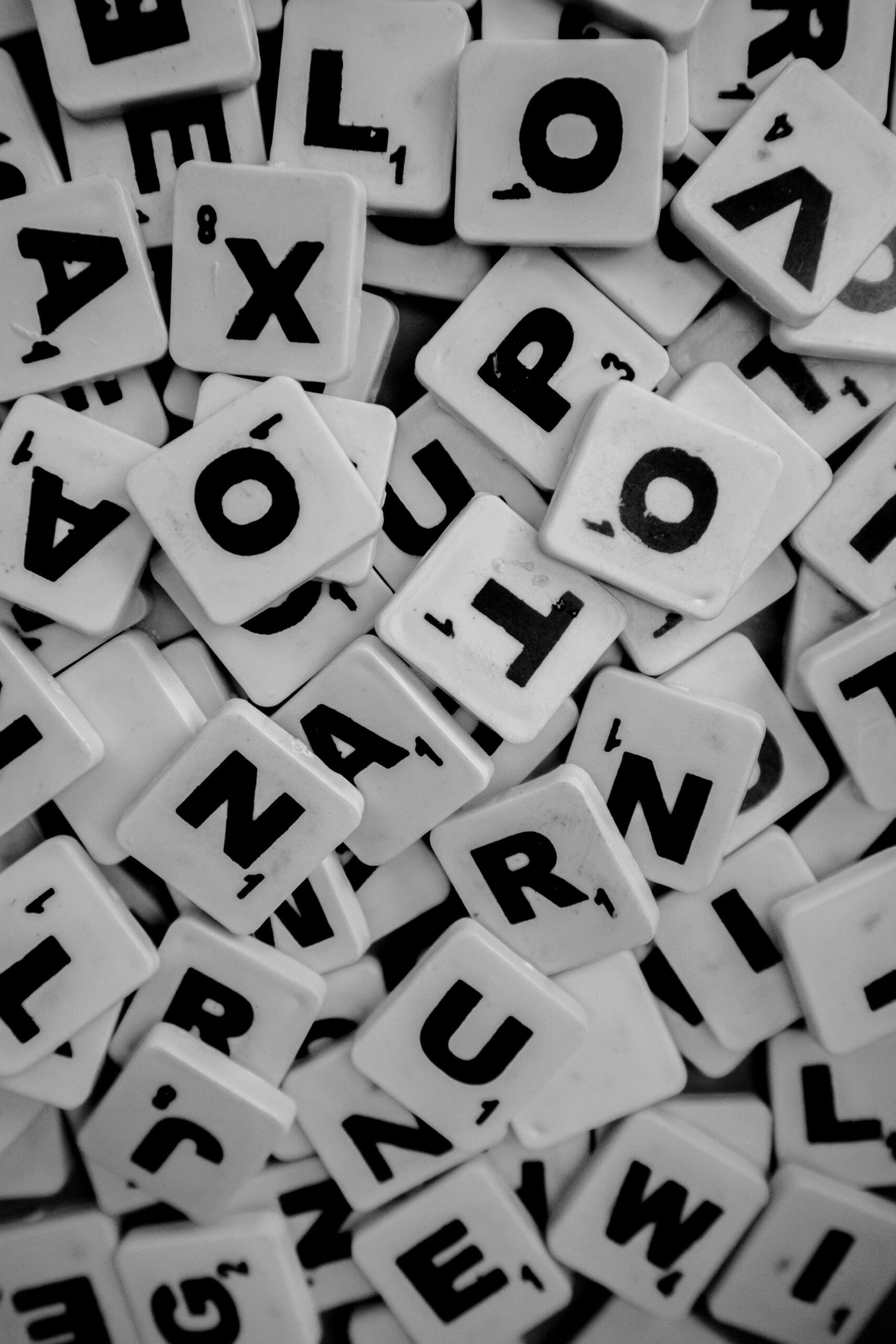
| Q | X | Y | |
|---|---|---|---|
| Points | 10 | 8 | 10 |
| Tiles in set | 1 | 1 | 1 |
| Special rule | Must be played as QU | None — plays alone | None — plays alone |
| Learn first | Quiz, quer, quitt | Mix, Box, Text | Typ, Yoga, Yen |
| Bingo potential | Low (few 7-letter QU words) | Medium (mixen + 2-tile extension) | High (typisch = 7 tiles + 50 bonus) |
| Opening move | Hold for setup | Play immediately | Play immediately |
| Endgame | Play even cheap | Play even cheap | Play even cheap |
Tape this to your tile rack. When in doubt: X and Y play fast, Q plays patient — and Z is only 3 points, so stop treating it like English.
Key Takeaways
Winning with German Scrabble words Q X Y tiles rests on five facts: Q=10, X=8, Y=10 (and Z is only 3 — forget English values); Q must always be played as QU; the short words win (Quiz, quer, Mix, Box, Text, Typ, Yoga); power tiles multiply on premium squares, so set up the landing zone before playing them; and each tile is unique in the 102-tile set, so track them and block your opponent’s. Drill the word lists — our German words with QU article covers the complete QU vocabulary — then study how to play the Q tile and the complete tile values chart to round out your game.