

Open any German dictionary and flip to X. The section is tiny — a handful of pages against dozens for S or M. Learners always notice, and the question of why German words with X are rare has a genuinely interesting answer that runs through two thousand years of language history. The short version: X was never a Germanic letter. It arrived with Latin and Greek scholarship, and native German words simply grew up without it.
This guide traces the full story: what the Germanic sound system did instead of X, where every German X-word actually comes from, the small handful of native exceptions, and what the rarity of X means for learners, Scrabble players, and word-game fans.
Why German Words with X Are Rare: The Germanic Sound System Never Needed It
To understand why German words with X are rare, start with what X actually is: not a single sound but a spelling shortcut for two sounds, [k] + [s]. The letter X is just a convenient way to write “ks.” And here is the key fact: the ancient Germanic languages that became German, English, Dutch, and the Scandinavian languages had no use for that shortcut, because they wrote [k] + [s] out exactly as KS whenever it occurred.
Old High German (roughly 750–1050 AD), the ancestor of modern German, had no letter X in its alphabet at all. When a [ks] sound sequence appeared in a native word, scribes wrote it as hs or chs — which is why modern German still has die Achse (axle), wachsen (to grow), and der Ochse (ox), where the CHS sequence is pronounced [ks]. The spelling chs is the native Germanic way of writing what Latin wrote as X.
So the rarity is not an accident of vocabulary — it is structural. The Germanic sound inventory and spelling tradition developed for a thousand years without X, and by the time X arrived, the language’s core vocabulary was already complete. X never got a foothold in the everyday words for house, hand, water, bread, mother, and father, because those words were coined centuries before X existed in German writing.
Compare English, which kept X slightly more alive (axe, box, fox, six are all native Germanic words with X). German cognates tell the story: English axe is German die Axt — one of the tiny handful of native German words with X. English box is German die Büchse or der Kasten. English fox is German der Fuchs. English six is German sechs. In every case, German uses CHS where English uses X. The two languages inherited the same Germanic roots and spelled the [ks] sound differently.
Where German X-Words Actually Come From

If native vocabulary shuns X, where do the X-words in a modern German dictionary come from? Almost all of them are imports, arriving in three great waves.
Wave 1: Greek through Latin (antiquity to the Middle Ages)
The oldest and largest source. Greek had the letter Chi (Χ, pronounced [ks]), and when Greek scholarship flowed into German through Latin translations, the X came with it. These are the heavyweight X-words of science, medicine, and philosophy: das Examen, das Experiment, die Explosion, der Extrakt, der Index, der Kontext, der Komplex, die Praxis, der Text (from Latin textus), das Lexikon (from Greek lexikon, dictionary). If a German X-word sounds academic, it almost certainly entered through this route. Monks copying Latin manuscripts in medieval monasteries were the delivery drivers — every ex-, extra-, and -x- in learned vocabulary passed through their hands.
Wave 2: Latin and French administrative vocabulary
A second, overlapping wave brought legal, military, and administrative terms: das Exil (exile), der Export, die Expedition, das Exemplar, extra (as in extra zahlen), der Extrakt. Many of these arrived via French during the centuries when French was the language of European diplomacy and courts. They tend to cluster around government, trade, and formal life — exactly the domains where Latin and French dominated.
Wave 3: Modern English and international loans (19th century to today)
The newest X-words are English imports and international technical terms: das Taxi, der Mix, mixen, die Box (in the sports and music senses), der Boxer, das Fax (from facsimile), der Indexfonds, das Recycling… no, that one has no X. But der Boxenstopp (pit stop, from motor racing), das Examen… already counted. Modern examples: das Smartphone… no X either. Genuinely modern X-loans include der Pixel… no. The honest truth is that even the modern wave is thin — das Faxgerät, der Mixer, das Mixgetränk, die Boxhandschuhe, die Textnachricht. Technology mostly gave German words like das Handy and der Computer, X-free. The letter remains rare even in the age of globalization, which tells you how deep the structural resistance goes.
For the complete inventory of where X actually appears in everyday German, see our full vocabulary list of German words with X and the everyday compounds with X.
The Native Exceptions: Axt, Nixe, and Friends
The rule “native German words never have X” has a few famous exceptions, and they are worth knowing because they prove the rule’s shape.
die Axt (axe). The classic native X-word. Old High German had acchus, and the spelling with X developed later — but the word itself is genuinely Germanic, cognate with English axe. It is probably the single most-cited counterexample, and language historians still debate exactly how the X-spelling won out over Axt’s expected Achsts form.
die Nixe (mermaid/water sprite). From Old High German nicchessa, a genuinely Germanic water spirit. The X here also developed from an older consonant cluster. Folklore vocabulary is conservative, and Nixe survived with its X while everyday words normalized to CHS.
der Keks (cookie/biscuit). A fun one: borrowed from English cakes in the 19th century, then respelled. Barely counts as native, but it is fully naturalized — no German speaker thinks of Keks as foreign.
hexen and the Hex- family (die Hexe, der Hexenschuss, die Hexenjagd). Hexe (witch) comes from Old High German hagzissa. The X developed from the old gz cluster. This is a native word wearing an X it grew itself, not one it borrowed.
der Luchs (lynx)? No — that is CHS again, pronounced [ks] but spelled the Germanic way. It belongs in the Fuchs/Achse group, not the X group.
das Wachs (wax)? Same — CHS, not X.
Notice the pattern: even the “native” X-words mostly got their X through sound changes from older clusters (hagzissa → Hexe), not from an original X. The Germanic sound system never started with X anywhere. And Axt stands nearly alone as a true, original X in inherited vocabulary — one word against tens of thousands.
X in German Spelling Reforms and Dictionaries

The rarity of X has occasionally tempted reformers. If X is just “ks,” why not spell Text as Tekst and be done with it? Proposals along these lines have surfaced for over a century, and all of them died the same death: the X-words are precisely the international, learned vocabulary where consistent spelling across languages matters most. A German scientist writes Experiment; an English scientist writes experiment; a French scientist writes expérience. The shared X is a feature, not a bug — it marks the word as part of the international scholarly vocabulary.
Dictionaries reflect this. In the Duden, the X section is dominated by ex- prefixes (exakt, examen, exekutiv, exerzieren, exhumieren, exil, existieren, exklusiv, exmatrikulieren, exotisch…) and Greek compounds. Open a frequency list of the 5,000 most common German words and count the X-words: you will find Text, extra, Taxi, Mix, Box, Praxis, Kontext, Index, Export, Experiment — and not much else. In everyday conversation, a German speaker can go days without saying a single X-word, something impossible with almost any other letter.
What X-Rarity Means for Learners
Pronunciation is trivial. Every German X is [ks], no exceptions — see our pronunciation guide for Q, X, and Y. You will never be surprised by an X-word’s sound.
Spelling is the challenge. Because X-words are loans, their spelling follows the donor language, not German phonetics. das Examen keeps its Latin E, die Yacht… no X. But das Faxgerät, der Boxenstopp, die Hexenjagd — learn each word’s spelling individually, because no German-internal rule predicts it.
Vocabulary building: when you meet a new X-word, assume it is formal, technical, or imported — and you will usually be right. Der Extrakt, die Expedition, das Exemplar, der Experte: these are the words of labs, offices, and universities. The X is a register signal.
Word games: X’s rarity is exactly what makes it valuable. In German Scrabble, X is worth 8 points (only Q and Y score higher at 10), and X-words like Text, Mix, Box, and Hexe are short, hookable, and game-deciding. Our German Scrabble strategy guide for Q, X, and Y shows how to exploit the letter’s scarcity.
The CHS Connection: German’s Native Way of Writing [ks]
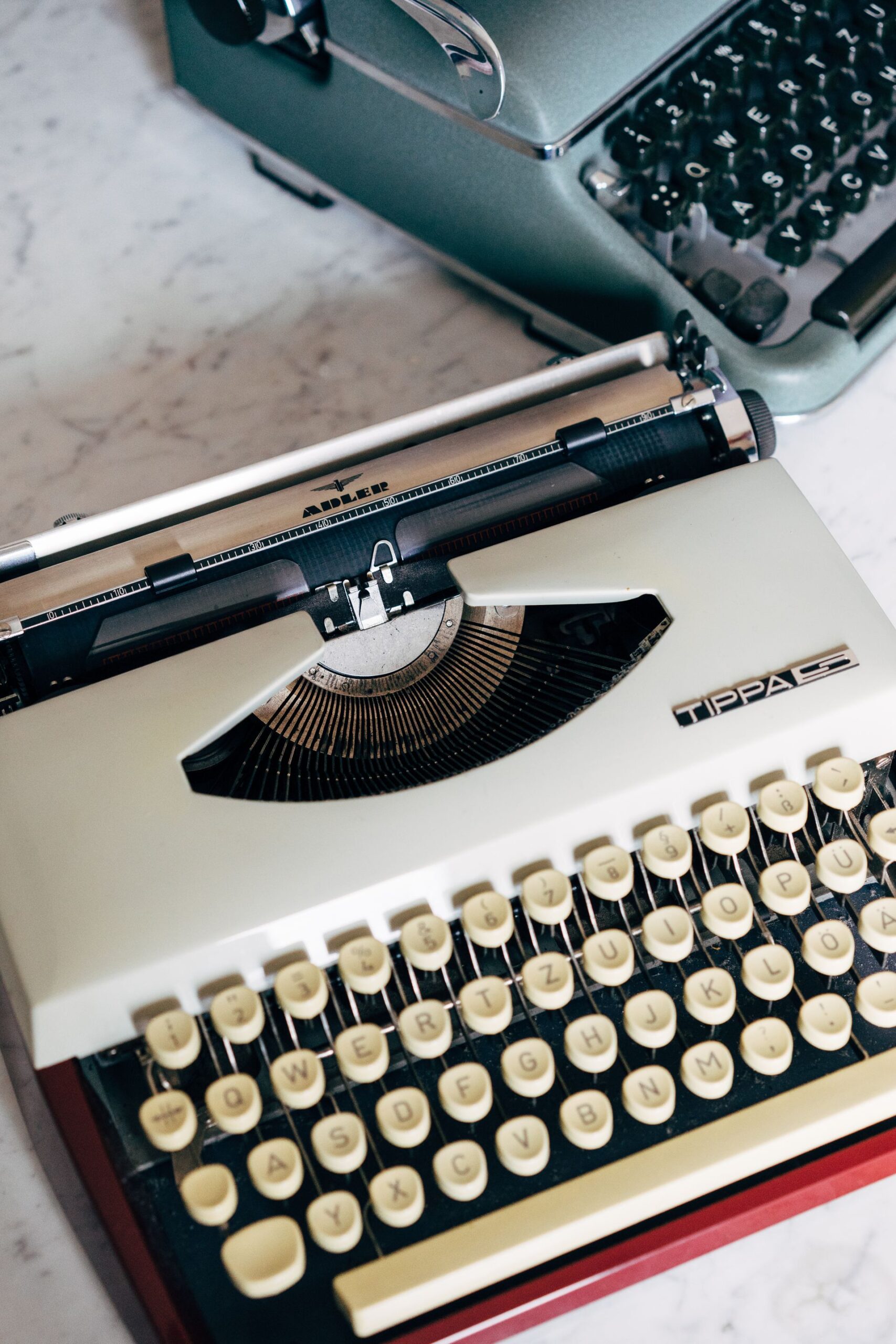
The most elegant proof of why German words with X are rare is the CHS family — native German words where [ks] is spelled CHS, exactly as Old High German scribes wrote it a thousand years ago. These words are X-words in sound but not in spelling, and knowing them explains the whole system:
- die Achse (axle) — [ˈaksə]. English axle kept the X; German kept CHS.
- der Fuchs (fox) — [fʊks]. English fox vs. German Fuchs: the same Germanic root, spelled two ways.
- wachsen (to grow) — [ˈvaksən]. English wax (to grow, as in “waxing moon”) is the cognate.
- der Ochse (ox) — [ˈɔksə]. English ox.
- der Luchs (lynx) — [lʊks].
- das Wachs (wax) — [vaks].
- sechs (six) — [zɛks]. English six.
- die Büchse (box, tin; also rifle) — [ˈbʏksə]. English box.
Say them aloud: every one contains a clear [ks]. A German speaker hears [ks] in Fuchs as naturally as in Text — the spelling difference is pure history. When the Latin letter X arrived with scholarly vocabulary, it took over the new words (Text, Experiment, Index) while the old words kept their ancestral CHS. The two spellings have coexisted peacefully ever since. The rule of thumb for learners: everyday native concepts (animals, numbers, farm life) take CHS — Fuchs, sechs, Ochse; learned, imported, technical concepts take X — exakt, Experiment, Export.
This CHS/X split is also why German children learn X without drama: they already say [ks] in sechs and Fuchs from age three. The sound is native; only the letter is foreign.
X Across the Germanic Family: German vs. English vs. Dutch
Comparing cognates across the Germanic languages makes the X story concrete:
| English | German | Dutch | Note |
|---|---|---|---|
| axe | die Axt | de bijl | German kept X here — the famous exception |
| fox | der Fuchs | de vos | German CHS, Dutch lost the [ks] entirely |
| six | sechs | zes | German CHS, Dutch Z |
| box | die Büchse / der Kasten | de doos | German CHS or replacement |
| text | der Text | de tekst | All three use X/KS — shared Latin loan |
| taxi | das Taxi | de taxi | Shared modern loan, X everywhere |
| wax | das Wachs | de was | German CHS |
The pattern is unmistakable: in inherited vocabulary, each language handled [ks] its own way (German CHS, Dutch often dropping it), while in shared Latin loans (Text, Taxi, Experiment), all three languages use X. Borrowed words travel with their spelling; native words keep their history. This is the mechanism behind X’s rarity in a single table.
X in German Brands, Pop Culture, and Modern Life

Despite its rarity, X has a glamorous modern image in German — precisely because it’s rare, marketers love it. The letter signals international, technical, edgy:
- Xavier Naidoo, the Mannheim soul singer, made X a pop-culture initial in Germany in the 2000s.
- German startups love X-names: XING (the German LinkedIn competitor, pronounced [ksɪŋ]) is the flagship example — a made-up X-word that every German professional knows.
- The TV show X Factor aired in Germany keeping the English X-mystique intact.
- In texting and speech, young Germans use Ex for ex-partner as standard vocabulary (mein Ex), one of the few X-words in youth slang.
- Product and model names across industries use X to mark the premium tier — X marks the spot where German wants to sound global.
For learners, this means X-words cluster in exactly the domains where you’ll sound smartest using them: technology (der Indexfonds, das Faxgerät… okay, fax is retro), business (der Export, die Exportquote), and academia (das Experiment, der Extrakt). The X is doing social work — it tells your listener “this is a precise, modern, international concept.”
Timeline: 2000 Years of X in German
~500 BC – Greek Chi. The Greek letter Χ (Chi), pronounced [ks], is the ultimate ancestor of every German X. Greek scientific vocabulary — the words that would become System, Lexikon, Experiment — carries it.
~100 BC – Latin X. Rome borrows Chi as X for Greek loanwords. Latin textus, examen, extra, exilium enter the language with X intact.
750–1050 – Old High German. Germanic tribes write German without X. The [ks] sound in native words is spelled hs: wahsan (to grow), fuhs (fox), sehs (six). The alphabet has no X.
800–1500 – Monastic transmission. Monks copying Latin manuscripts bring X-words into written German: Text, Examen, Extase… The X lives only in learned, churchly, scholarly vocabulary.
1500s – Printing press. Printed books standardize spelling. Native words settle on CHS (Fuchs, wachsen, Achse); learned words keep X (Text, Index, Experiment). The split becomes permanent.
1700s – French influence. Administrative and military X-words arrive via French: Exil, Export, Expedition, extra.
1800s – Industrial loans. das Taxi… actually early 1900s. 19th century: der Extrakt, die Explosion (industrial age), das Exemplar in publishing.
1900s – English wave. der Mix, mixen, die Box (sport/music), das Fax (1980s), der Boxenstopp (motorsport). Technology and pop culture deliver the newest X-words.
Today. X remains the rarest German letter, worth 8 points in Scrabble, pronounced [ks] without exception. Two thousand years after Chi, the letter is still a guest in German — a distinguished, hardworking guest.
Test Yourself: The X Quiz
- Why do native German words almost never contain X? (Because Old High German had no X; [ks] was written HS/CHS.)
- Name three native Germanic X-words. (die Axt, die Nixe, die Hexe — and der Keks if you count naturalized loans.)
- How is German X always pronounced? ([ks], never [gz] or [z].)
- What does die Achse have to do with X? (It’s the native CHS spelling of [ks] — English “axle” shows the X version.)
- Which is worth more in German Scrabble, X or Z? (X: 8 points. Z is only 3 in German!)
- Where do most German X-words come from? (Greek via Latin, then French administration, then modern English loans.)
Score 5–6: X-expert. 3–4: solid. Below 3: re-read the CHS section above — it’s the key to the whole story. Bonus challenge: explain to a friend why Fuchs and fox are the same word with different spelling histories. If you can teach it, you own it.
Glossary: Key Terms from This Guide
- Germanic — the ancient language family ancestral to German, English, Dutch, and Scandinavian languages. Its sound system never included the letter X.
- Old High German — the earliest recorded form of German (~750–1050 AD), written without the letter X.
- CHS — the native German spelling of the [ks] sound (Fuchs, sechs, Achse), inherited from Old High German hs.
- Loanword — a word borrowed from another language. Nearly every German X-word is a loanword (Greek, Latin, French, English).
- Upsilon — the Greek letter Υ, ancestor of Y, pronounced [y]. Source of the middle-of-word Y in System, Typ, Physik.
- Chi — the Greek letter Χ, pronounced [ks], ancestor of X. Source of German X via Latin.
- Cognate — words in different languages descended from the same ancestor (English fox / German Fuchs).
- Duden — the standard German dictionary and spelling authority.
- Register — the level of formality of a word. X-words skew formal/technical because they’re scholarly loans.
X in the Classroom: Teaching This Story

This guide’s history makes an excellent lesson plan for German teachers. The narrative arc — “your alphabet is missing a letter, and here’s the 2000-year detective story of why” — hooks students far better than a vocabulary list. Key beats for a 45-minute lesson: start with the dictionary (count the X pages vs. S pages), introduce Chi and the monks, reveal the CHS family (Fuchs vs. fox gets audible gasps), and end with the Scrabble values (X=8, Z=3 surprises everyone). Homework: find five X-words in the wild and classify them Greek/Latin/French/English. Students remember the classification game for years — and they never mispronounce X again. The same lesson works beautifully as a self-study project over a weekend.
Key Takeaways
Why German words with X are rare comes down to history, not chance: the Germanic sound system wrote [ks] as CHS for a thousand years before X arrived, so native vocabulary — house, hand, water, bread — grew up X-free. Nearly every German X-word is an import: Greek and Latin scholarship (Text, Experiment, Index, Praxis), French administration (Exil, Export), or modern international loans (Taxi, Mix, Fax). The native exceptions — Axt, Nixe, Hexe — are a tiny handful that mostly grew their X from older consonant clusters. For learners, the payoff is simple: X is always pronounced [ks], X-words are usually formal or technical, and in Scrabble the rare X is worth a full 8 points. Browse the German words with X vocabulary list to meet them all.