

Whether you are stuck on a crossword puzzle, playing a word game, or simply expanding your vocabulary, knowing how to find German words using specific letters can save you time and frustration. German offers a rich set of word combinations, but searching manually through a dictionary is rarely practical when you only have a handful of letters to work with.
This guide shows you practical methods to find German words using specific letters quickly and accurately. You will learn which tools to use, how to handle special characters like ä, ö, ü, and ß, and simple strategies to narrow your results so you get useful matches every time.
Introduction
German is a language known for its long compound nouns, distinctive umlauts, and the notorious ß (Eszett). For language learners, crossword enthusiasts, Scrabble players, and developers building word games, the ability to find German words using specific letters is a genuinely useful skill. Whether you are stuck on a puzzle clue, trying to expand your vocabulary, or writing software that must validate word patterns, knowing how to search by letter combinations saves time and frustration.
This article explores How to Find German Words Using Specific Letters with clear, practical guidance. You will learn the core principles behind letter-based word searches, the tools and techniques that work best, and the habits that make your searches faster and more accurate over time. The focus is on actionable methods you can apply immediately, not abstract theory. By the end, you should be able to take any set of letters—whether they are starting letters, ending letters, or a scattered group of characters—and systematically locate the German words that match.
It is worth noting that German orthography has some unique features. Umlauts (ä, ö, ü) and the Eszett (ß) are treated as distinct letters in some contexts but are often transliterated as ae, oe, ue, and ss in others. How you handle these characters will significantly affect your search results, especially when using online tools or paper dictionaries. Keep this in mind as we move through the concepts and methods below.
Key Concepts
Before diving into specific tools and steps, it helps to understand a few foundational concepts. These ideas form the basis of every letter-based word search, whether you are using a dictionary, a website, or your own memory.
Letter Patterns and Positions
The most basic concept is the letter pattern. A pattern specifies which letters appear and, sometimes, where they appear. For example, the pattern “_ _ _ _” tells you nothing about the letters, while “H _ _ S” tells you the word starts with H and ends with S. German words like “Haus” (house) or “Hals” (neck) fit this pattern. When you search using specific letters, you are essentially defining a pattern and looking for matches.
Wildcards and Unknown Letters
Wildcards are symbols that stand in for unknown letters. In most word-finding tools, the question mark (?) represents exactly one unknown letter, while the asterisk (*) represents zero or more letters. For instance, searching for “H?us” would return “Haus” and “Haus” only, while “H*us” could return “Haus,” “Haus,” and longer words like “Hausbau” (house construction). Understanding how wildcards work is essential for efficient searching.

Umlauts and the Eszett
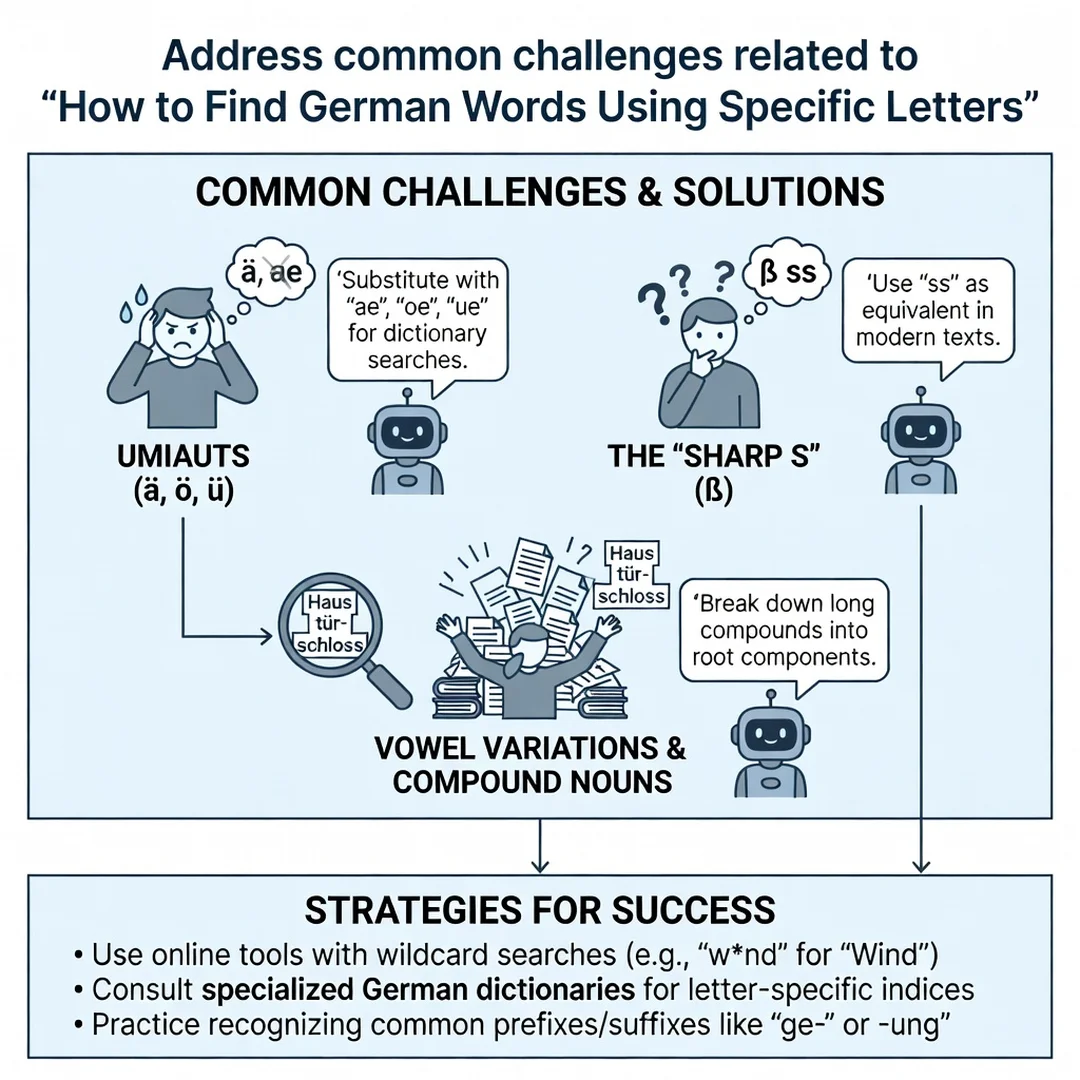
German uses three umlauted vowels—ä, ö, ü—and the ligature ß. Many databases and word lists treat these as separate characters. If you search for “fur” (for), you will not find “für” (for). Conversely, some systems automatically convert umlauts to their two-letter equivalents (ae, oe, ue) and ß to ss. You need to know which convention your chosen tool follows, or you may miss valid words.
Compound Words and Word Formation
German is famous for its compound nouns, which are formed by joining two or more words. This means that a single root word can appear in dozens of longer words. If you find a word using specific letters, it may be part of a larger compound. For example, “Haus” appears in “Hausaufgabe” (homework), “Hausmeister” (caretaker), and many others. Recognizing this can help you generate more matches from a small set of letters.
Deep Dive
Now that you understand the key concepts, let’s explore the methods and tools available for finding German words using specific letters. This section covers the main approaches, from simple manual techniques to advanced digital tools.
Using Online Word Finders and Dictionaries
The fastest way to find German words by letters is to use a dedicated online word finder. These tools let you input your letters, specify positions, and apply wildcards. Popular options include Wort-Finder, Buchstaben.com, and the word search features on dict.cc and Leo.org. Most of these allow you to filter by word length, starting letters, ending letters, and included letters. For example, if you have the letters A, B, E, R, and you want a five-letter word, you might find “Aber” (but) or “Bare” (a type of fish). The best tools also let you exclude letters you know are not present.
When using these tools, be precise about umlauts. Some sites have a checkbox for “treat ä as a” or “treat ß as ss.” If you are unsure, try both settings and compare results. Also, pay attention to whether the tool searches a comprehensive dictionary or a limited word list. A comprehensive dictionary will include obscure and archaic words, which is helpful for crossword puzzles but may overwhelm a language learner.
Manual Search with a Dictionary
If you prefer a physical dictionary or a PDF, you can still search by letters, but it requires more effort. Start by identifying the first letter of the word you need. Then, scan the entries under that letter, looking for words that contain your other letters. This is time-consuming but can be meditative and helps reinforce vocabulary. For patterns with unknown first letters, you may need to check multiple sections. A useful trick is to use the index or a thumb tab to jump to sections quickly.
Leveraging Word Lists and Corpora
For more advanced needs—such as linguistic research or building a word game—you can download a German word list or corpus. The Leipzig Corpora Collection and the DWDS (Digital Dictionary of the German Language) offer extensive datasets. With a corpus, you can use command-line tools like grep or a spreadsheet to filter words by letter patterns. For example, in a text file of German words, you could search for words containing “sch” and ending in “en.” This method gives you full control and is ideal if you need to automate the process.
Mobile Apps and Offline Tools
Several mobile apps are designed for German word searches, including “Wortsuche” and “German Word Finder.” These are convenient when you are away from a computer. They typically include the same features as online tools: wildcards, position constraints, and letter filters. Some even work offline, which is useful if you are traveling in Germany without reliable internet. However, offline apps may have smaller dictionaries, so check reviews before relying on them for obscure words.
Best Practices
To get the most out of your letter-based searches, follow these best practices. They will help you avoid common pitfalls and find accurate results faster.
- Be consistent with umlaut handling. Decide whether you will treat ä/ö/ü as distinct letters or as ae/oe/ue, and apply that rule to every search. Mixing conventions leads to missed words.
- Start broad, then narrow down. Begin with a simple search using only the letters you have, then add constraints like length or position one at a time. This helps you see the full range of possibilities.
- Use wildcards strategically. Do not overuse wildcards, as they can return hundreds of irrelevant results. Use them only when you genuinely do not know a letter or its position.
- Verify results in a reliable dictionary. Word finders sometimes include proper nouns, abbreviations, or very rare words. Cross-check any word you plan to use in a standard dictionary like Duden or Wiktionary.
- Keep a personal list of useful patterns. If you frequently search for words with certain endings (e.g., -ung, -keit, -lich), note them down. Recognizing common suffixes helps you predict word forms.
- Practice regularly. Like any skill, finding German words by letters improves with repetition. Set aside a few minutes each day to solve a puzzle or explore a new letter combination.
Reliable information and consistent habits lead to better long-term outcomes. Whether you are learning German or playing a word game, the more you practice these techniques, the more intuitive they become.
Step-by-Step Guide to Finding German Words by Letters
The following steps provide a structured approach you can use for any letter-based search. They work for puzzles, vocabulary building, and even programming tasks.
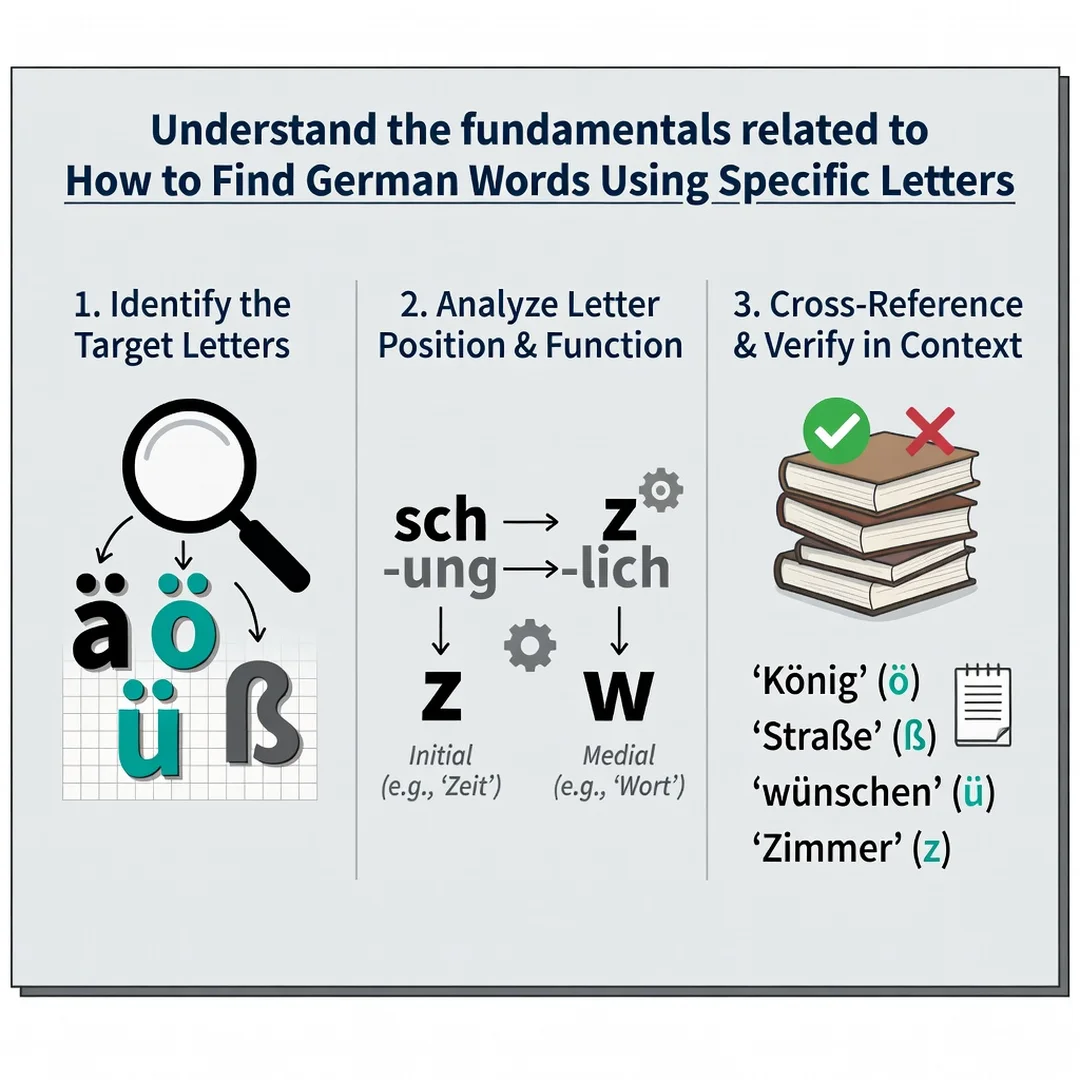
Step 1: Understand the fundamentals
Before you search, clarify what you know and what you need. Identify the specific letters you have, their positions (if known), and any letters you know are not in the word. Understand that German has unique characters (ä, ö, ü, ß) that must be handled correctly. Also, review the basic concepts of wildcards and patterns described earlier. Without this foundation, your searches will be inefficient or inaccurate.
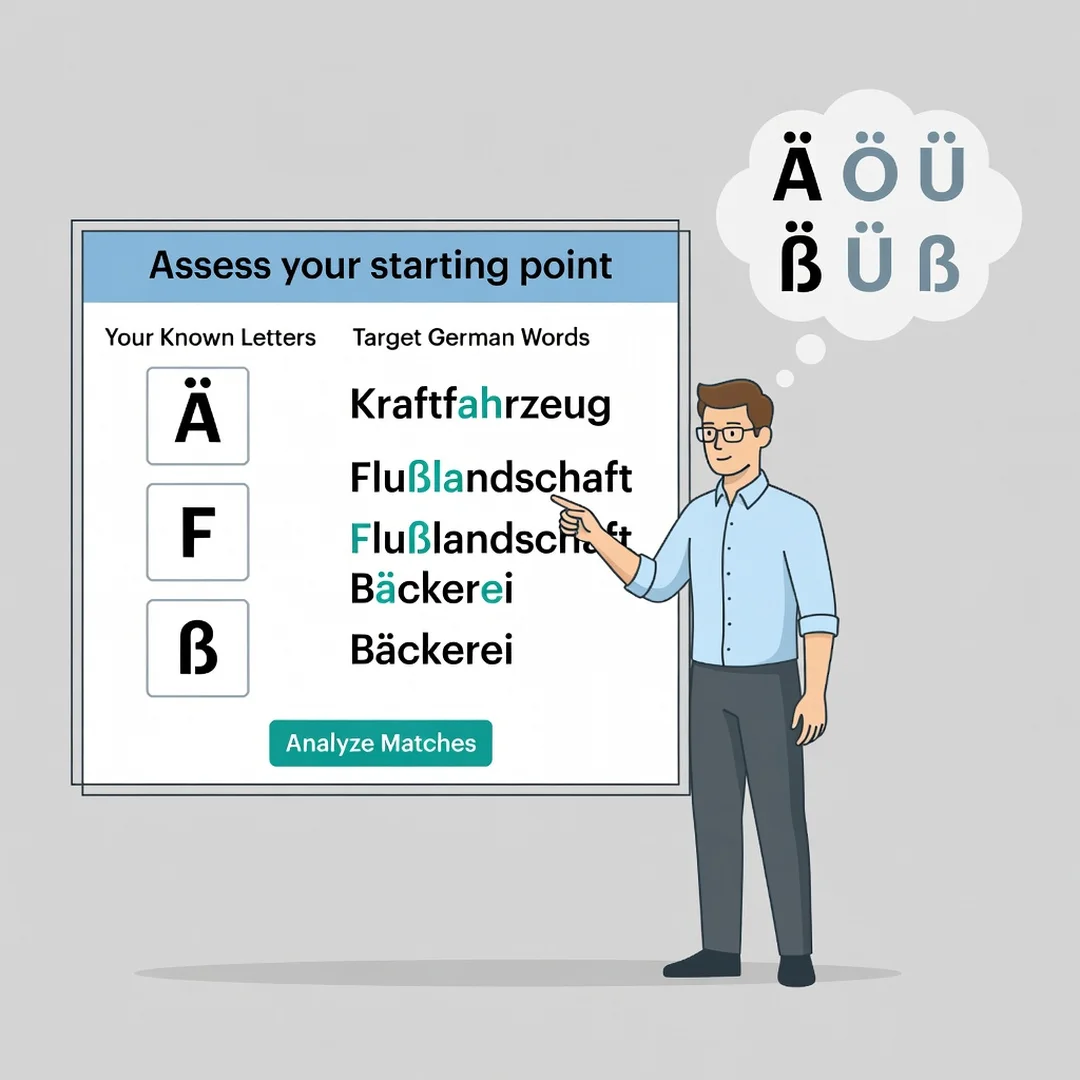
Step 2: Assess your starting point
Take stock of your resources. Do you have a list of letters, a partial word, or just a vague idea? Are you using an online tool, a physical dictionary, or a word list? Determine the constraints you already know—for example, “The word has 6 letters, starts with S, and contains ch.” Write these down. Also, assess your familiarity with German spelling rules, such as when to use ss versus ß. This assessment will guide your choice of method.
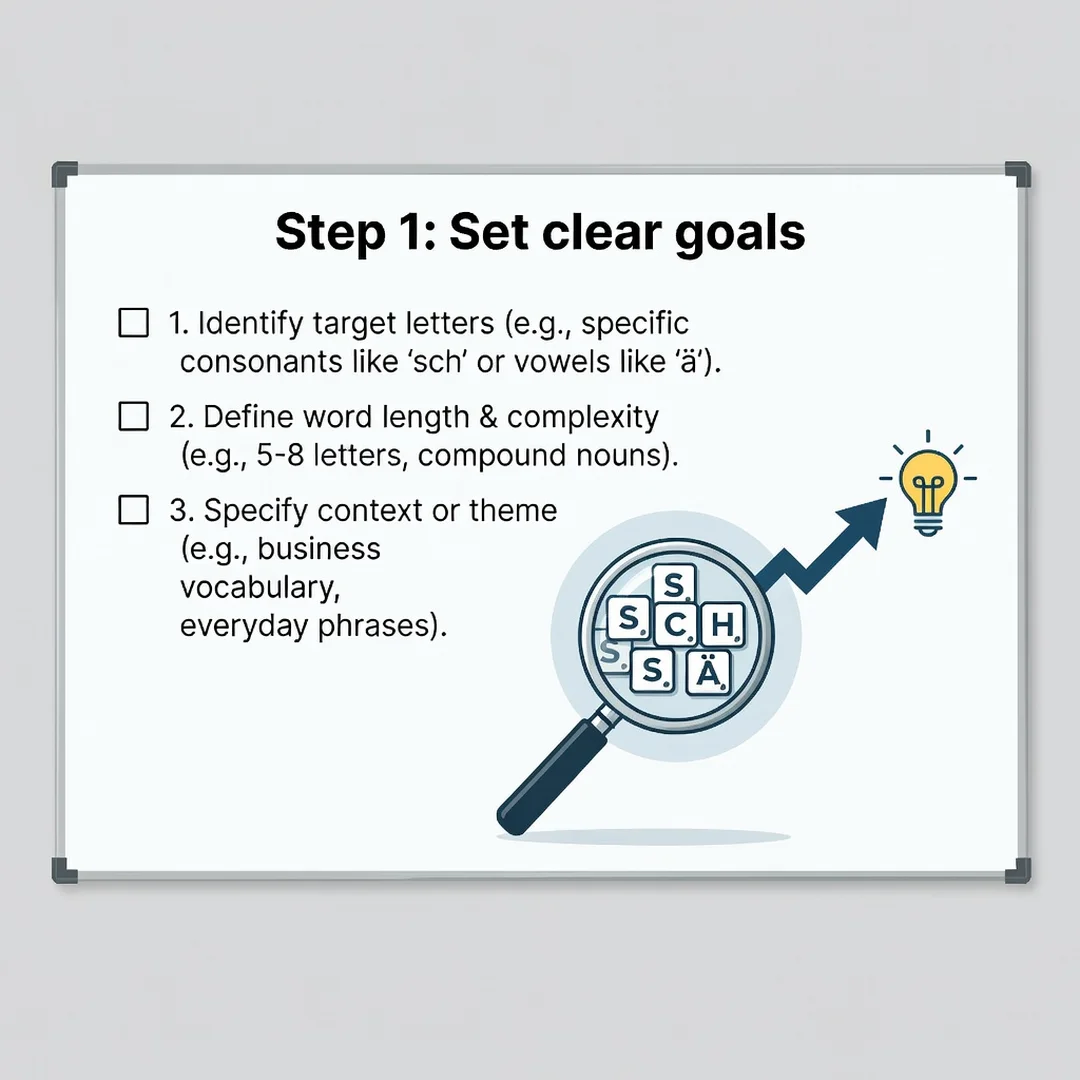
Step 3: Set clear goals
Define what success looks like. Are you trying to find one specific word to solve a crossword? Or are you generating a list of all possible words for a given set of letters? Your goal determines how much time to spend and which tools to use. For a single answer, a quick online search may suffice. For a comprehensive list, you may need a corpus and filtering scripts. Clear goals prevent wasted effort.
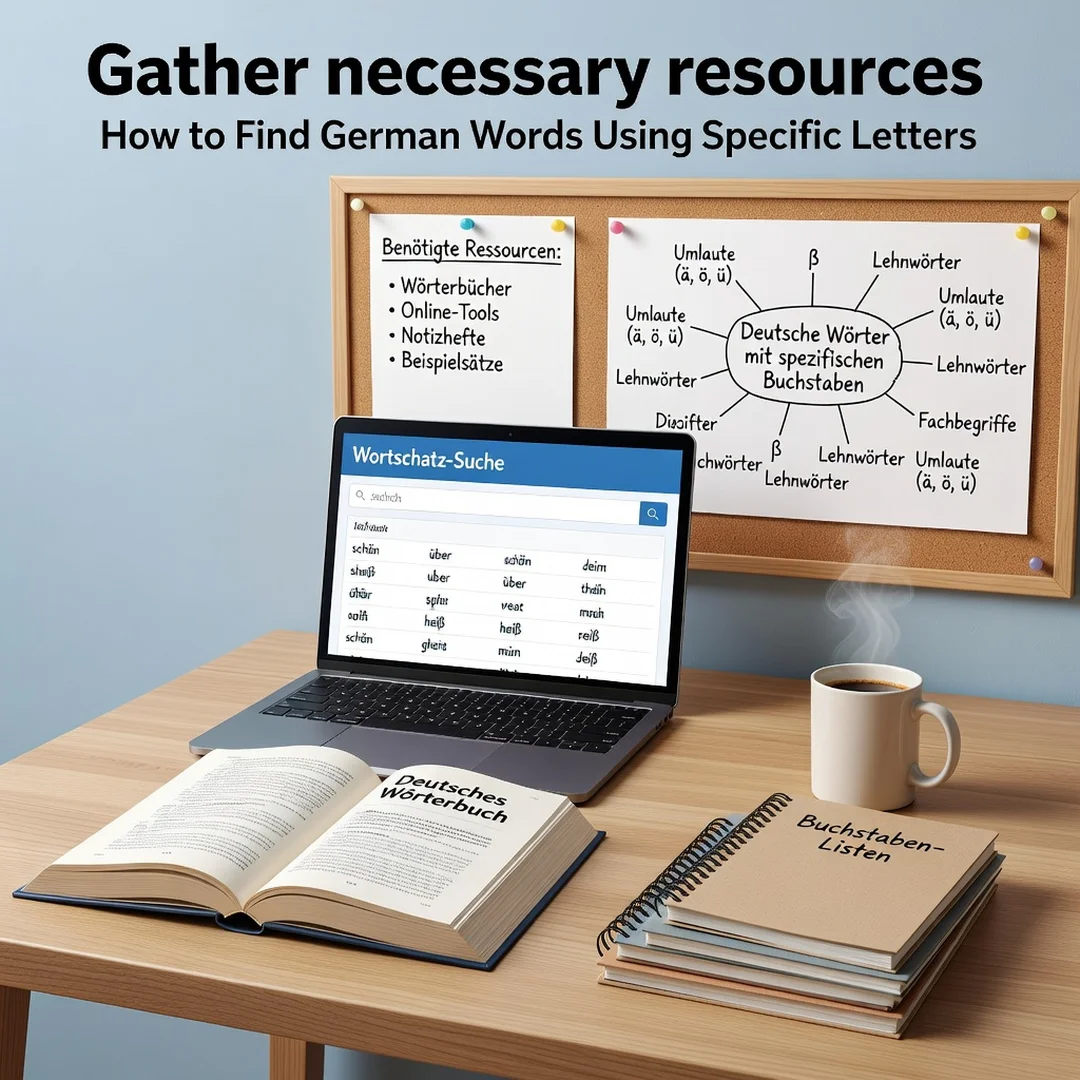
Step 4: Gather necessary resources
Collect the tools and references you will need. This might include a reputable online word finder, a German-English dictionary, a word list file, or a mobile app. If you are working offline, ensure you have a printed dictionary or an offline database. For digital searches, bookmark the sites you plan to use. If you are handling umlauts, decide on your conversion rule and stick to it. Having everything ready before you start saves time later.
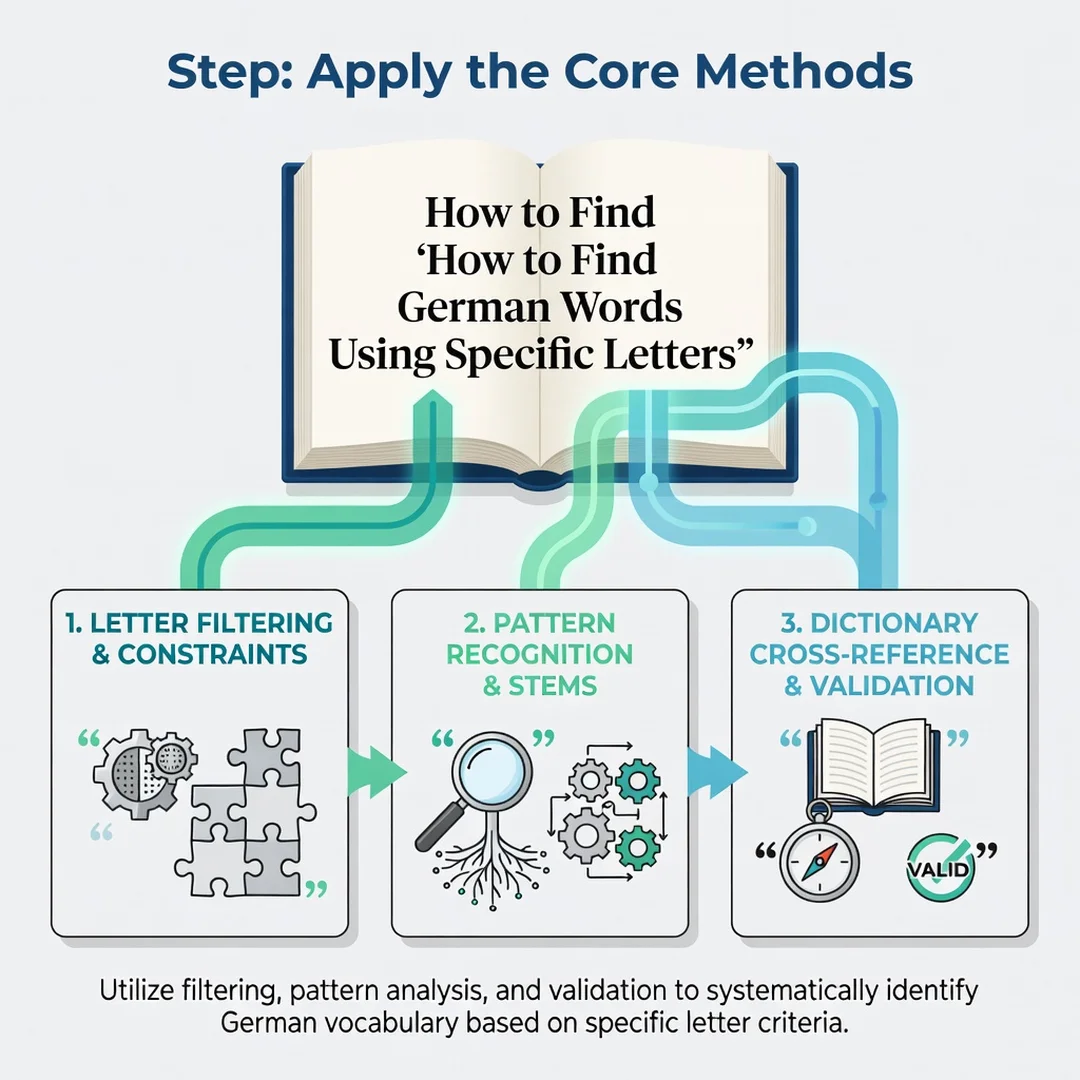
Step 5: Apply the core methods
Now execute your search. If using an online tool, enter your letters, specify known positions, and.
You now have a solid foundation for How to Find German Words Using Specific Letters. Apply the best practices above and revisit this guide as your needs evolve.