

German Birthday Vocabulary: 40 Words & Phrases Guide
Birthdays are the friendliest doorway into a new language — and german birthday vocabulary is some of the most useful German you can learn. Everyone has a birthday, every culture celebrates them, and the words around them (cake, gifts, candles, toasts, congratulations) come up again and again in real conversations. This list gives you 40 real German birthday words and phrases with correct der/die/das articles, English meanings, and short example sentences with translations, organized into five groups: party essentials, gifts and cards, birthday wishes and songs, food and drink, and handy verbs and adjectives. Blow out the candles — los geht’s.
German Birthday Vocabulary for Party Essentials
Every birthday starts with the basics: the party itself, the guests, and the decorations that turn a living room into a celebration. These ten words are the foundation — learn them first and you can already talk your way through most birthday conversations, whether the party is indoors in winter or a garden barbecue in July (our German summer words list covers the outdoor-party vocabulary). The compound words here are a lovely bonus: once you see that die Geburtstagsfeier is simply der Geburtstag + die Feier (celebration), German compounds start decoding themselves. Our guide to how German compound words are built explains the whole system if you want to go deeper.
1. der Geburtstag (the birthday) — the anchor word of this whole list; Geburt (birth) + Tag (day). Wann hast du Geburtstag? (When is your birthday?)
2. die Geburtstagsfeier (the birthday party) — the formal word for the celebration itself. Die Geburtstagsfeier beginnt um 18 Uhr. (The birthday party starts at 6 p.m.)
3. die Einladung (the invitation) — every party starts with one of these. Hast du die Einladung schon geschickt? (Have you sent the invitation yet?)
4. der Gast (the guest) — note the plural die Gäste with the umlaut shift. Jeder Gast bringt ein Geschenk mit. (Every guest brings a gift along.)
5. die Party (the party) — a friendly English loanword Germans use constantly. Die Party dauert bis Mitternacht. (The party lasts until midnight.)
6. die Dekoration (the decoration) — the balloons, garlands, and banners together. Die Dekoration sieht wunderschön aus. (The decoration looks beautiful.)
7. der Luftballon (the balloon) — literally “air balloon,” and yes, the same word means hot-air balloon. Der Luftballon schwebt an der Decke. (The balloon floats on the ceiling.)
8. die Lichterkette (the string of fairy lights) — those twinkling light chains that make every party cozy. Die Lichterkette hängt über dem Tisch. (The string of lights hangs above the table.)
9. das Konfetti (the confetti) — grammatically neuter and always singular in German. Das Konfetti liegt überall auf dem Boden. (The confetti is lying all over the floor.)
10. die Überraschungsparty (the surprise party) — überraschen (to surprise) turned into a party noun. Die Überraschungsparty war ein voller Erfolg. (The surprise party was a complete success.)
Gifts and Cards: Birthday Presents in German
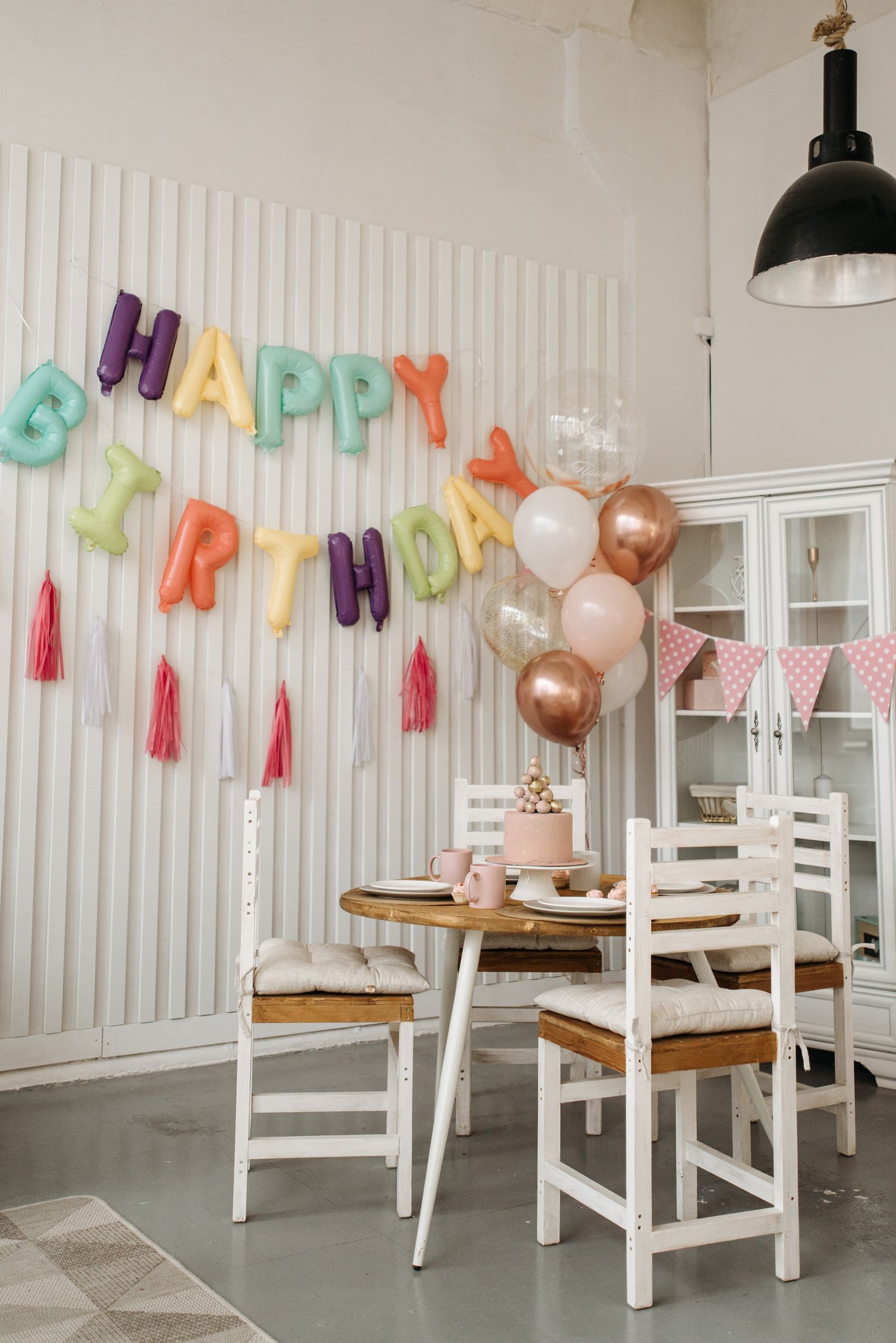
Giving and receiving presents is half the fun of a birthday, and the German words around gifts are wonderfully logical. Das Geschenk comes from the verb schenken (to give as a gift), and die Geburtstagskarte is exactly what it looks like once you split the compound. Pay attention to the articles as you read — learning das with Geschenk now saves you an embarrassing guess later. For more celebration words, our German Christmas words list covers the gift vocabulary of December too.
11. das Geschenk (the gift) — the single most important noun in this section. Das Geschenk ist schön verpackt. (The gift is nicely wrapped.)

12. die Geburtstagskarte (the birthday card) — with a handwritten message inside, of course. Ich schreibe eine liebe Geburtstagskarte. (I am writing a lovely birthday card.)
13. der Glückwunsch (the congratulation) — usually heard in the plural die Glückwünsche. Vielen Dank für deinen Glückwunsch! (Thank you so much for your congratulations!)
14. die Schleife (the ribbon / bow) — the bow on top of the present. Die Schleife ist aus rotem Band. (The bow is made of red ribbon.)
15. das Geschenkpapier (the wrapping paper) — Geschenk + Papier, a textbook compound. Das Geschenkpapier hat bunte Muster. (The wrapping paper has colorful patterns.)
16. die Geschenktüte (the gift bag) — the modern shortcut for wrapping. Die Geschenktüte ist leider zu klein. (The gift bag is unfortunately too small.)
17. der Wunschzettel (the wish list) — what kids write before their birthdays (and Christmas). Auf dem Wunschzettel stehen drei Dinge. (There are three things on the wish list.)
18. die Kerze (the candle) — one for each year, plus one for luck. Die Kerze brennt auf dem Tisch. (The candle is burning on the table.)
Birthday Wishes and Songs in German
This is the section you will actually use at a real German birthday: the greetings, the toasts, and the songs. Alles Gute zum Geburtstag! is the warm, everyday wish you will hear most often, while Herzlichen Glückwunsch zum Geburtstag! is the slightly more formal classic. And yes — Germans really do sing Hoch soll er leben! around the cake, the German cousin of “For he’s a jolly good fellow.” For more things Germans actually say, see our collection of everyday German expressions natives use.
19. Herzlichen Glückwunsch zum Geburtstag! (Hearty congratulations on your birthday!) — the classic formal birthday wish. Herzlichen Glückwunsch zum Geburtstag, lieber Onkel! (Hearty congratulations on your birthday, dear uncle!)
20. Alles Gute zum Geburtstag! (Happy birthday! / All the best for your birthday!) — the most common everyday greeting. Alles Gute zum Geburtstag, meine Liebe! (Happy birthday, my dear!)
21. Hoch soll er leben! (Long may he live!) — sung to the birthday person, raising glasses high. Alle singen: Hoch soll er leben! (Everyone sings: Long may he live!)
22. Viel Glück und viel Segen (Much luck and many blessings) — the traditional German birthday song, sung to the “Happy Birthday” melody. Wir singen „Viel Glück und viel Segen“. (We are singing “Much luck and many blessings”.)
23. das Ständchen (the serenade) — a little musical performance for the birthday person. Die Freunde bringen ein Ständchen. (The friends perform a serenade.)
24. der Wunsch (the wish) — the silent wish you make before blowing out the candles. Ich habe einen geheimen Wunsch. (I have a secret wish.)
25. gratulieren (to congratulate) — takes the dative: jemandem gratulieren. Ich gratuliere dir herzlich! (I congratulate you warmly!)
26. feiern (to celebrate) — the verb behind every Feier. Wir feiern deinen Geburtstag! (We are celebrating your birthday!)
Birthday Food and Drink Words in German
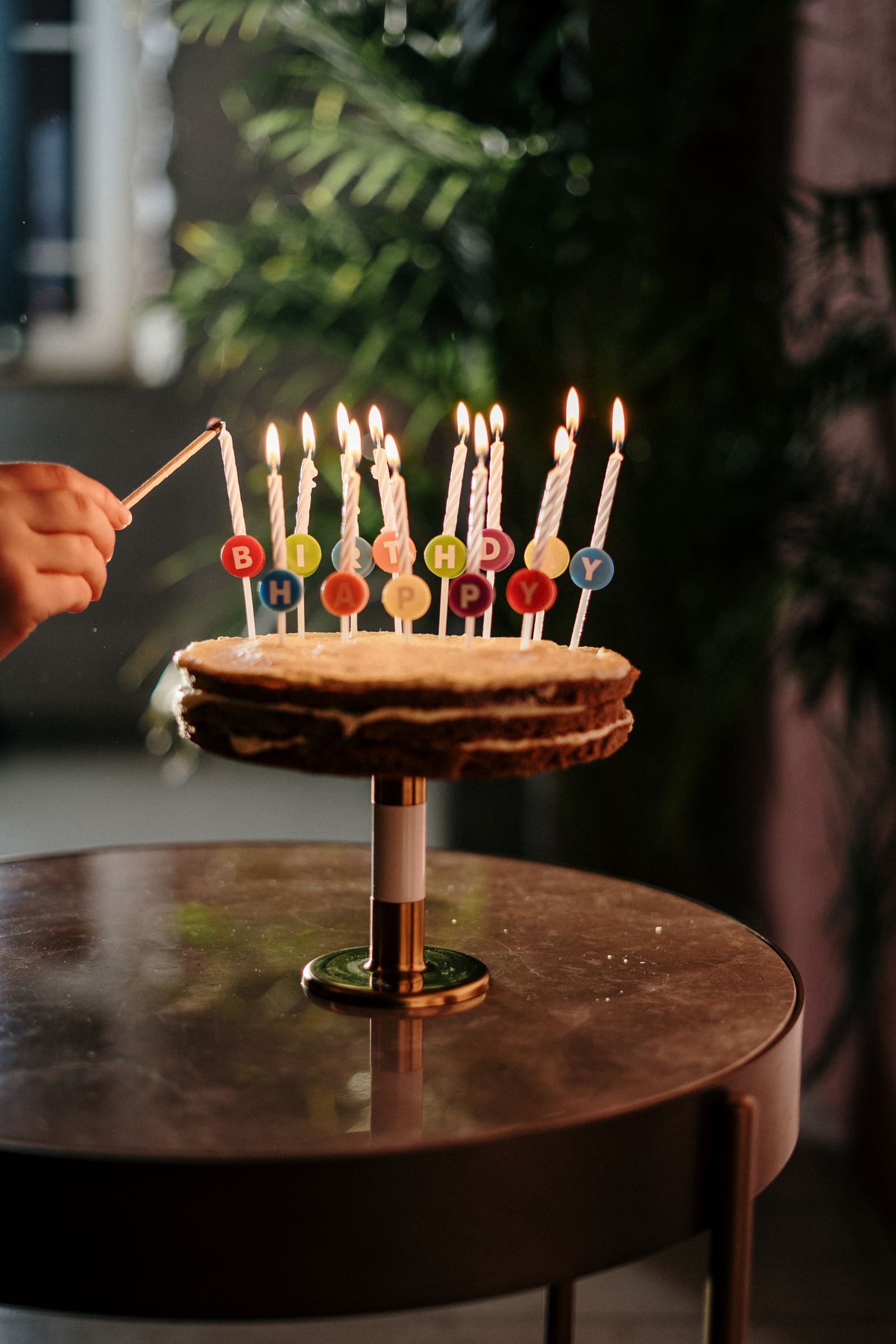
No birthday is complete without cake — and German cake vocabulary is a world of its own, from the towering Geburtstagstorte to the everyday Kuchen. Notice how die Torte (a layered cream cake) differs from der Kuchen (the general word for cake); mixing them up is a classic learner moment. And no German celebration is truly official until someone says anstoßen and the glasses clink. For more delicious compounds, our German coffee vocabulary pairs perfectly with the cake section of any party.
27. die Geburtstagstorte (the birthday cake) — the showpiece with candles on top. Die Geburtstagstorte schmeckt köstlich. (The birthday cake tastes delicious.)
28. die Torte (the layer cake / torte) — a fancier, layered cake with cream. Die Torte hat drei Schichten. (The torte has three layers.)
29. der Kuchen (the cake) — the everyday word for cake in general. Der Kuchen ist frisch aus dem Ofen. (The cake is fresh out of the oven.)
30. die Sahnetorte (the cream cake) — Sahne (cream) + Torte, a strawberry-topped favorite. Die Sahnetorte ist mit Erdbeeren verziert. (The cream cake is decorated with strawberries.)
31. die Schokoladentorte (the chocolate cake) — the crowd-pleaser at every children’s party. Die Schokoladentorte ist sein Favorit. (The chocolate cake is his favorite.)
32. der Sekt (the sparkling wine) — Germany’s answer to champagne, served at every toast. Der Sekt wird kalt serviert. (The sparkling wine is served chilled.)
33. anstoßen (to toast / to clink glasses) — separable verb: wir stoßen an. Wir stoßen auf das Geburtstagskind an! (We are toasting the birthday child!)
34. das Geburtstagsmenü (the birthday menu) — for the fancy sit-down celebration. Das Geburtstagsmenü hat vier Gänge. (The birthday menu has four courses.)
35. die Partyhäppchen (the party snacks) — plural-only little finger foods. Die Partyhäppchen sind schnell weg. (The party snacks are gone quickly.)
Useful German Birthday Verbs and Adjectives
Round out your german birthday vocabulary with the action words: giving, unwrapping, blowing out candles, and surprising someone. These verbs are the engine of birthday sentences — with schenken, auspacken, and auspusten you can narrate the whole gift-and-cake ceremony. Note that schenken takes the dative for the recipient (Ich schenke dir…), a pattern worth memorizing early.
36. schenken (to give as a gift) — with dative for the person receiving. Ich schenke dir ein Buch. (I am giving you a book as a gift.)
37. auspacken (to unwrap) — separable: packt … aus. Die Kinder packen die Geschenke aus. (The children are unwrapping the presents.)
38. auspusten (to blow out) — separable: pustet … aus; for the birthday candles. Sie pustet die Kerzen aus. (She is blowing out the candles.)
39. überraschen (to surprise) — the verb behind the Überraschungsparty. Wir überraschen Oma mit einer Party. (We are surprising grandma with a party.)
40. jährlich (yearly, annual) — birthdays come but once a year, after all. Der Geburtstag kommt jährlich wieder. (The birthday comes around every year.)
Pronunciation Tips for Birthday Words
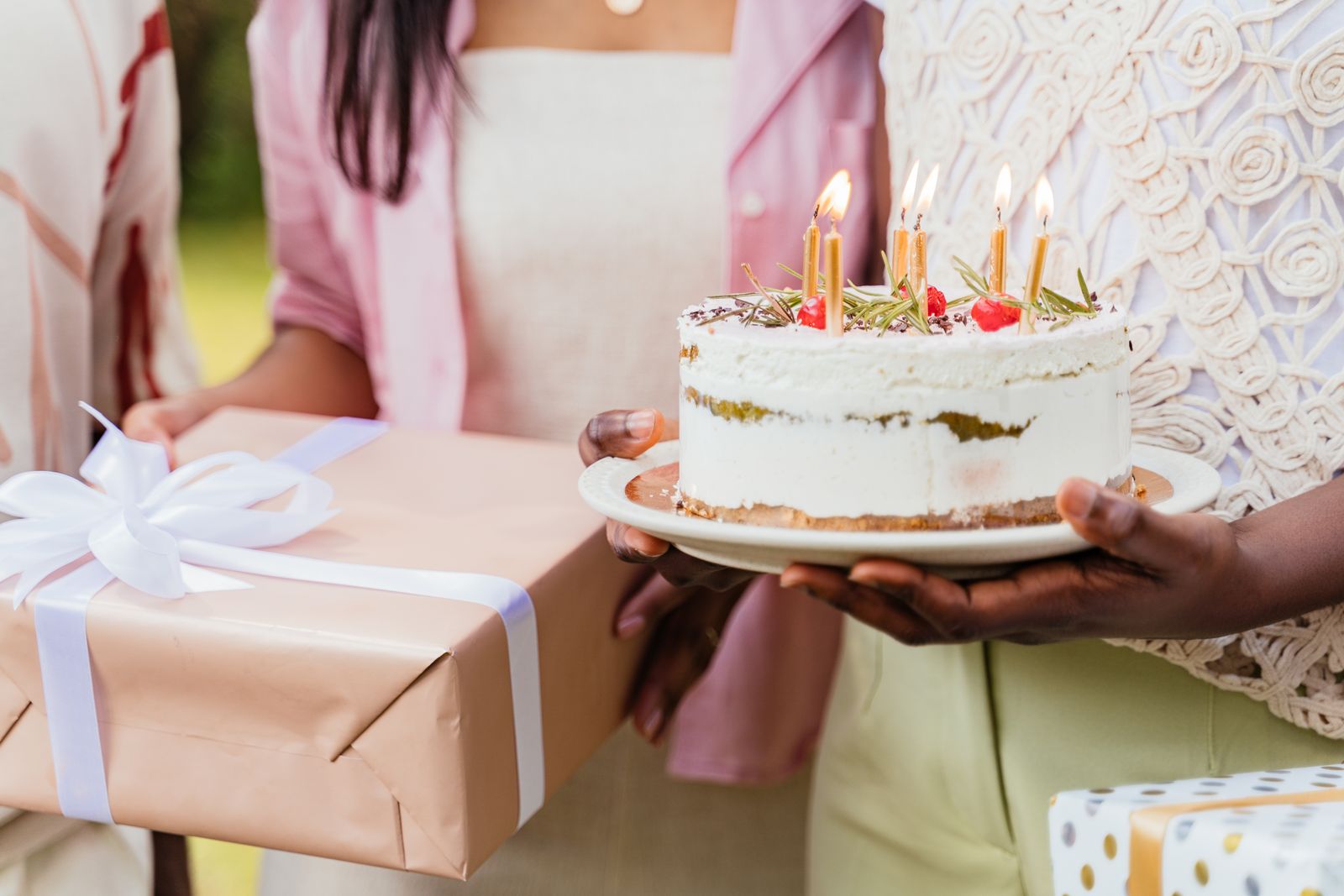
Birthday words are a great workout for the German sounds English speakers find trickiest — and getting them right makes your Glückwünsche sound so much warmer. Say each word out loud as you review the list:
- The ch in Hoch: after o it is the throaty “ach” sound, like clearing your throat softly — HOHKH soll er LAY-ben.
- The ü in Glückwunsch and Wunsch: round your lips as for “oo” but say “ee” — GLUEK-voonsh, VOONSH.
- The z in die Kerze: always pronounced “ts” in German — KAIR-tseh.
- The w in der Wunsch: pronounced like an English “v” — VOONSH, never “wunsh”.
- The ä in die Gäste: say it like the “e” in “bed” — GES-teh; the plural umlaut shift is common in party vocabulary.
- The ß in anstoßen: pronounced like a sharp “s” — AHN-shtoh-sen; and remember to raise your glass when you say it.
Once you can toast confidently, our German Oktoberfest vocabulary list gives you even more celebration and toasting words to practice with.
German Birthday Traditions Worth Knowing
A few German birthday customs are so distinctive that knowing the vocabulary behind them earns you instant cultural credit. In Germany, the birthday person hosts — the Geburtstagskind traditionally brings Kuchen to the office or organizes the evening’s Geburtstagsfeier themselves, a reversal of the English-speaking “treat the birthday person” norm. Never wish someone a happy birthday early: vorher gratulieren is considered bad luck, and Germans take this surprisingly seriously. The classic song Hoch soll er leben! (literally “long shall he live!”) usually comes with three shouted Hoch! calls while the birthday person is lifted — sometimes literally — on a chair. And in many regions, unmarried men turning thirty must sweep the town hall steps (das Treppenfegen) until a Jungfrau kisses them free, while unmarried women at thirty polish doorknobs instead. These traditions are not just curiosities — they are the cultural scaffolding that makes the vocabulary memorable, because every custom is attached to a handful of vivid words you will never forget.
Key Takeaways
These 40 words and phrases give you a complete german birthday vocabulary toolkit — from der Geburtstag and die Geburtstagsfeier through gifts like das Geschenk, wishes like Alles Gute zum Geburtstag!, songs like Hoch soll er leben!, and party-table words like die Geburtstagstorte and der Sekt. Three habits will make this vocabulary stick. First, always learn the article with the noun — der, die, or das is part of the word, and birthday nouns like das Konfetti or der Glückwunsch will trip you up if you guess. Second, split the compounds: Geburtstagstorte, Geschenkpapier, and Überraschungsparty all decode into pieces you already know. Third, use the phrases out loud at the next birthday you attend — say Ich gratuliere dir herzlich!, sing Viel Glück und viel Segen, and raise your glass with Wir stoßen an!. Nothing fixes vocabulary in memory like a real celebration. Alles Gute beim Lernen!