

German Idioms About Time: 28 Sayings Explained with Examples
German idioms about time reveal how much Germans respect the clock — and how poetically they complain about it. From the blunt pragmatism of Zeit ist Geld (time is money) to the drama of es ist fünf vor zwölf (it’s five to twelve), German gives time a personality: it races, presses, heals, and occasionally stands perfectly still. Learners love these expressions because time is an everyday topic — you will use them in offices, cafés, and classrooms within your first weeks in Germany. This guide to german idioms about time collects 28 authentic, widely used expressions, each with its literal translation, true meaning, and an example sentence so you can start using them right away.
Why Time Idioms Are Perfect for German Learners
Ask any German about punctuality and you will get a sermon: being on time is close to a moral duty in German-speaking culture, and the language is packed with sayings that celebrate speed, punish lateness, and counsel patience. Time idioms are ideal study material because the vocabulary is simple — Zeit, Uhr, Minute, spät — while the imagery is vivid enough to stick in your memory after a single reading. You will also recognize many concepts from English, which makes them easy to learn: die Zeit rennt is just “time races.” Notice how Germans often personify time as something that runs, presses, or flies — once you see the pattern, dozens of expressions decode themselves. If you are just starting with figurative German, our German idioms explained guide covers the basics first.
28 German Idioms About Time with Meanings

Here are 28 genuine german idioms about time, grouped by theme — time flying, lateness and urgency, patience, using time wisely, and the rhythms of life. Each entry gives you the literal translation first (often funny on its own), then the real meaning, then a short example sentence in German with its English translation so you can see the idiom working in a natural sentence.
When Time Flies: Sayings About Racing Clocks
1. Die Zeit rennt
Literal translation: “Time is racing.”
Meaning: Time passes very quickly, especially when you are busy or having fun.
Example: “Die Woche ist schon wieder vorbei — die Zeit rennt!” (“The week is over already — time flies!”)
2. Die Zeit vergeht wie im Flug
Literal translation: “Time passes as if in flight.”
Meaning: Time goes by extremely fast, almost unnoticed.
Example: “Der Urlaub verging wie im Flug.” (“The holiday flew by.”)
3. Die Zeit steht still
Literal translation: “Time stands still.”
Meaning: A moment feels frozen — during shock, awe, or perfect happiness.
Example: “Als sie Ja sagte, stand die Zeit für einen Moment still.” (“When she said yes, time stood still for a moment.”)
4. Die Zeit drängt
Literal translation: “Time is pressing.”
Meaning: There is little time left and a decision or action is urgent.
Example: “Wir müssen uns beeilen — die Zeit drängt.” (“We have to hurry — time is pressing.”)
5. Die Uhr tickt
Literal translation: “The clock is ticking.”
Meaning: The deadline is approaching; time is running out.
Example: “Die Bewerbungsfrist endet morgen — die Uhr tickt.” (“The application deadline ends tomorrow — the clock is ticking.”)
Late, Last Minute, and Urgent: Sayings Under Pressure

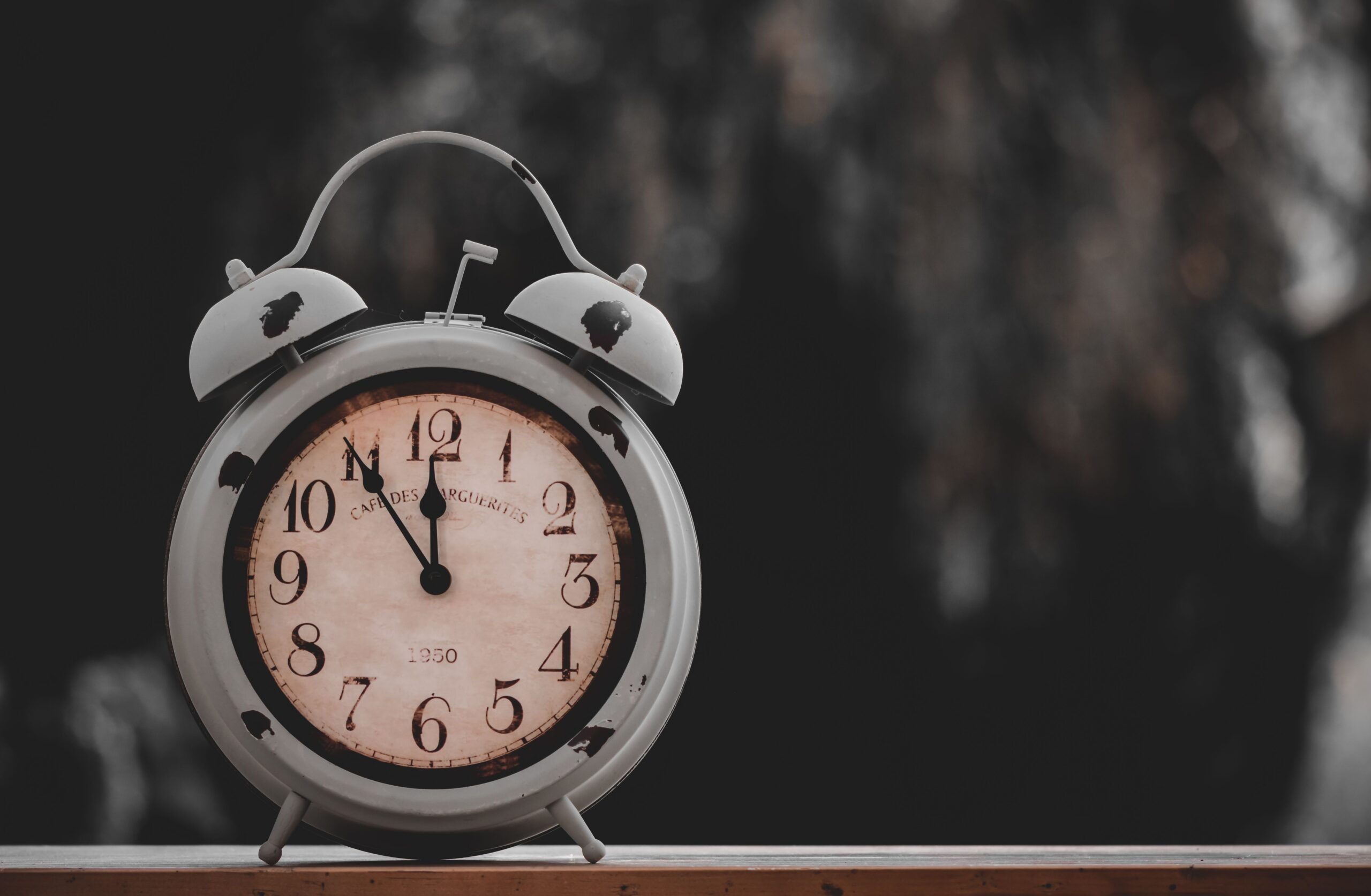
6. Es ist fünf vor zwölf
Literal translation: “It’s five to twelve.”
Meaning: It is high time — the very last moment before something is too late. A reference to the final minutes before midnight.
Example: “Es ist fünf vor zwölf — wir müssen endlich handeln.” (“It’s high time — we finally have to act.”)
7. In letzter Minute
Literal translation: “In the last minute.”
Meaning: At the very last possible moment, just in time.
Example: “Er hat die Prüfung in letzter Minute bestanden.” (“He passed the exam at the last minute.”)
8. Es wird höchste Zeit
Literal translation: “It is becoming highest time.”
Meaning: It is high time — something should have happened already and is now overdue.
Example: “Es wird höchste Zeit, dass du dich entschuldigst.” (“It’s high time you apologized.”)
9. Besser spät als nie
Literal translation: “Better late than never.”
Meaning: Exactly as in English — arriving late is still better than not showing up at all.
Example: “Er kam erst zum Nachtisch, aber besser spät als nie.” (“He only made it for dessert, but better late than never.”) Like many time sayings, this one also appears in our funny German idioms discussions — because Germans rarely forgive lateness with a smile.
10. Keine Zeit verlieren
Literal translation: “To lose no time.”
Meaning: To act immediately, without delay.
Example: “Verliere keine Zeit und ruf den Arzt an!” (“Lose no time and call the doctor!”)
Patience Pays: Sayings About Waiting Well
11. Sich Zeit lassen
Literal translation: “To let oneself time.”
Meaning: To take one’s time, to do something calmly without rushing.
Example: “Lass dir Zeit mit der Entscheidung.” (“Take your time with the decision.”)
12. Kommt Zeit, kommt Rat
Literal translation: “Comes time, comes counsel.”
Meaning: With time comes advice — be patient, and a solution will appear.
Example: “Mach dir keine Sorgen — kommt Zeit, kommt Rat.” (“Don’t worry — time will bring a solution.”)
13. Alles zu seiner Zeit
Literal translation: “Everything in its time.”
Meaning: Everything happens when it is supposed to; don’t rush things.
Example: “Die Kinder lernen das schon noch — alles zu seiner Zeit.” (“The kids will learn that eventually — everything in its time.”)
14. Die Zeit heilt alle Wunden
Literal translation: “Time heals all wounds.”
Meaning: Emotional pain fades with time; grief and heartbreak become easier to bear.
Example: “Nach der Trennung war er am Boden zerstört, aber die Zeit heilt alle Wunden.” (“After the breakup he was devastated, but time heals all wounds.”)
15. Rom wurde nicht an einem Tag erbaut
Literal translation: “Rome was not built in a day.”
Meaning: Great achievements take time — be patient with big projects.
Example: “Dein Deutsch wird schon besser — Rom wurde nicht an einem Tag erbaut.” (“Your German is improving — Rome wasn’t built in a day.”)

Spend It or Waste It: Sayings About Time as Currency

16. Zeit ist Geld
Literal translation: “Time is money.”
Meaning: Time is valuable and should not be wasted — efficiency matters.
Example: “Komm zum Punkt — Zeit ist Geld.” (“Get to the point — time is money.”)
17. Zeit totschlagen
Literal translation: “To beat time to death.”
Meaning: To kill time — to do something unproductive while waiting.
Example: “Bis der Zug kommt, schlagen wir die Zeit im Café tot.” (“Until the train comes, we’ll kill time in the café.”)
18. Sich die Zeit vertreiben
Literal translation: “To drive the time away.”
Meaning: To pass the time pleasantly, often while waiting.
Example: “Sie vertrieb sich die Zeit mit einem Buch.” (“She passed the time with a book.”)
19. Jemanden die Zeit stehlen
Literal translation: “To steal someone’s time.”
Meaning: To waste someone’s valuable time with pointless talk or delays.
Example: “Ich will dir nicht die Zeit stehlen, nur eine kurze Frage.” (“I don’t want to steal your time — just one quick question.”)
20. Sich Zeit nehmen
Literal translation: “To take time for oneself.”
Meaning: To deliberately make time for something or someone important.
Example: “Nimm dir Zeit für deine Familie.” (“Make time for your family.”)
Early Birds and Eras: Sayings About Life’s Rhythm
21. Der frühe Vogel fängt den Wurm
Literal translation: “The early bird catches the worm.”
Meaning: Those who act early get the best results — a classic proverb about punctuality.
Example: “Steh früh auf — der frühe Vogel fängt den Wurm.” (“Get up early — the early bird catches the worm.”)
22. Morgenstund hat Gold im Mund
Literal translation: “The morning hour has gold in its mouth.”
Meaning: The early morning is the most productive and precious part of the day.
Example: “Morgenstund hat Gold im Mund — ich lerne am besten vor acht.” (“The morning hour has gold in its mouth — I study best before eight.”)
23. Wer zuerst kommt, mahlt zuerst
Literal translation: “Whoever comes first, grinds first.”
Meaning: First come, first served — early arrivals get priority. From the old mill queue.
Example: “Beeil dich mit der Anmeldung — wer zuerst kommt, mahlt zuerst.” (“Hurry with the registration — first come, first served.”)
24. Jetzt oder nie
Literal translation: “Now or never.”
Meaning: A once-in-a-lifetime chance — act immediately or lose the opportunity forever.
Example: “Die Stelle ist frei — jetzt oder nie!” (“The position is open — now or never!”)
25. Andere Zeiten, andere Sitten
Literal translation: “Other times, other customs.”
Meaning: Times change and customs change with them — things were done differently before.
Example: “Früher schrieb man Briefe — andere Zeiten, andere Sitten.” (“People used to write letters — times change.”)
26. Im Laufe der Zeit
Literal translation: “In the course of time.”
Meaning: Gradually, over time — something developed slowly across a longer period.
Example: “Im Laufe der Zeit wurde aus der Idee ein erfolgreiches Unternehmen.” (“Over time, the idea became a successful company.”)
27. Vor meiner Zeit
Literal translation: “Before my time.”
Meaning: Something happened before I was born or before I was involved.
Example: “Das war vor meiner Zeit — ich kenne die Geschichte nur vom Hörensagen.” (“That was before my time — I only know the story by hearsay.”)
28. Mit der Zeit gehen
Literal translation: “To go with the time.”
Meaning: To keep up with the times — to adapt to modern developments instead of clinging to the past.
Example: “Die Firma muss mit der Zeit gehen, sonst verliert sie Kunden.” (“The company has to keep up with the times or it will lose customers.”) Weather sayings work the same way — timeless images for modern situations, as our German weather idioms collection shows.
Practical Tips for Using German Time Idioms Naturally

Learning german idioms about time is easiest when you sort them by situation. Use the urgency group — es ist fünf vor zwölf, die Zeit drängt, keine Zeit verlieren — at work and in emails, where Germans expect directness about deadlines. Save the patience group — sich Zeit lassen, kommt Zeit, kommt Rat, Rom wurde nicht an einem Tag erbaut — for comforting friends or calming yourself before an exam. A third trick is to pair opposites: learn die Zeit rennt together with die Zeit steht still, so the contrast locks both meanings in. Watch out for register: Zeit totschlagen is casual and perfect with friends, while jemandem die Zeit stehlen is a polite, almost formal apology. Learn each idiom as a fixed chunk rather than assembling it from single words; that is how native speakers store them, and it is the fastest route to sounding natural. Our how to use German idioms naturally guide walks through this chunking method step by step. Finally, listen for these expressions in German podcasts and series — die Uhr tickt in a crime drama or Morgenstund hat Gold im Mund from a colleague will anchor them in your memory far better than any flashcard, and you will start noticing them in headlines and advertisements too.
Key Takeaways
German idioms about time turn the clock into a character: time races, presses, heals, kills, and occasionally stands still. The 28 expressions in this list — from Zeit ist Geld to es ist fünf vor zwölf — are all genuinely used by native speakers, so you can adopt them with confidence in offices, classrooms, and everyday conversation. Start with the urgency idioms for work, add the patience sayings for daily life, and practice one new expression each day; within a month your German will sound noticeably more fluent and natural. And when you are ready to explore how Germans talk about feelings with the same vivid imagery, continue with our German idioms about love and German idioms about food collections next.