

40 German Words Starting with H: Meanings, Articles & Examples
The letter H opens the door to some of the warmest, most human vocabulary in German — from das Haus (the house) to die Heimat (home/homeland), from haben (to have) to herzlich (heartfelt). This list of 40 German words starting with H gives you nouns with correct der/die/das articles, everyday verbs, and expressive adjectives, each with an English meaning and a short German example sentence with translation. Learning one letter at a time is a brilliant study strategy: pronunciation patterns start repeating, articles get easier to memorize, and your word-game skills improve too. If you have already worked through our German words starting with G and German words starting with F lists, this H collection is the perfect next chapter — los geht’s!
German Words Starting with H for Home and Family: das Haus, die Heimat & More
Home is where the letter H feels most at home. These nine nouns cover the house itself, the people in it, and the parts of the body you talk about every day. Notice the articles carefully — das Haus but die Heimat — because gender never follows a shortcut in German.
1. das Haus (the house) — one of the first nouns every German learner meets. Das Haus ist groß und gemütlich. (The house is big and cozy.)
2. die Heimat (home / homeland) — deeper than a building: the place your heart belongs. Die Heimat fehlt mir sehr. (I miss home very much.)
3. die Hand (the hand) — handshakes, handwriting, helping hands. Sie reicht mir die Hand. (She extends her hand to me.)
4. das Herz (the heart) — the organ and the seat of feeling in one word. Das Herz schlägt schnell. (The heart beats fast.)
5. die Haut (the skin) — watch the diphthong au, pronounced like “ow.” Die Haut braucht Sonnencreme. (The skin needs sunscreen.)
6. der Hund (the dog) — Germany is a nation of dog lovers, so this word comes up constantly. Der Hund bellt laut. (The dog barks loudly.)
7. das Hemd (the shirt) — the classic button-up; neuter despite the masculine look. Das Hemd ist blau gestreift. (The shirt is blue-striped.)
8. die Hose (the trousers) — always plural in English translation, singular in German. Die Hose passt perfekt. (The trousers fit perfectly.)
9. der Hut (the hat) — Hut ab! (“hats off!”) is a real expression of respect. Der Hut schützt vor der Sonne. (The hat protects from the sun.)
Everyday H Nouns: Seasons, Food, Travel & the City
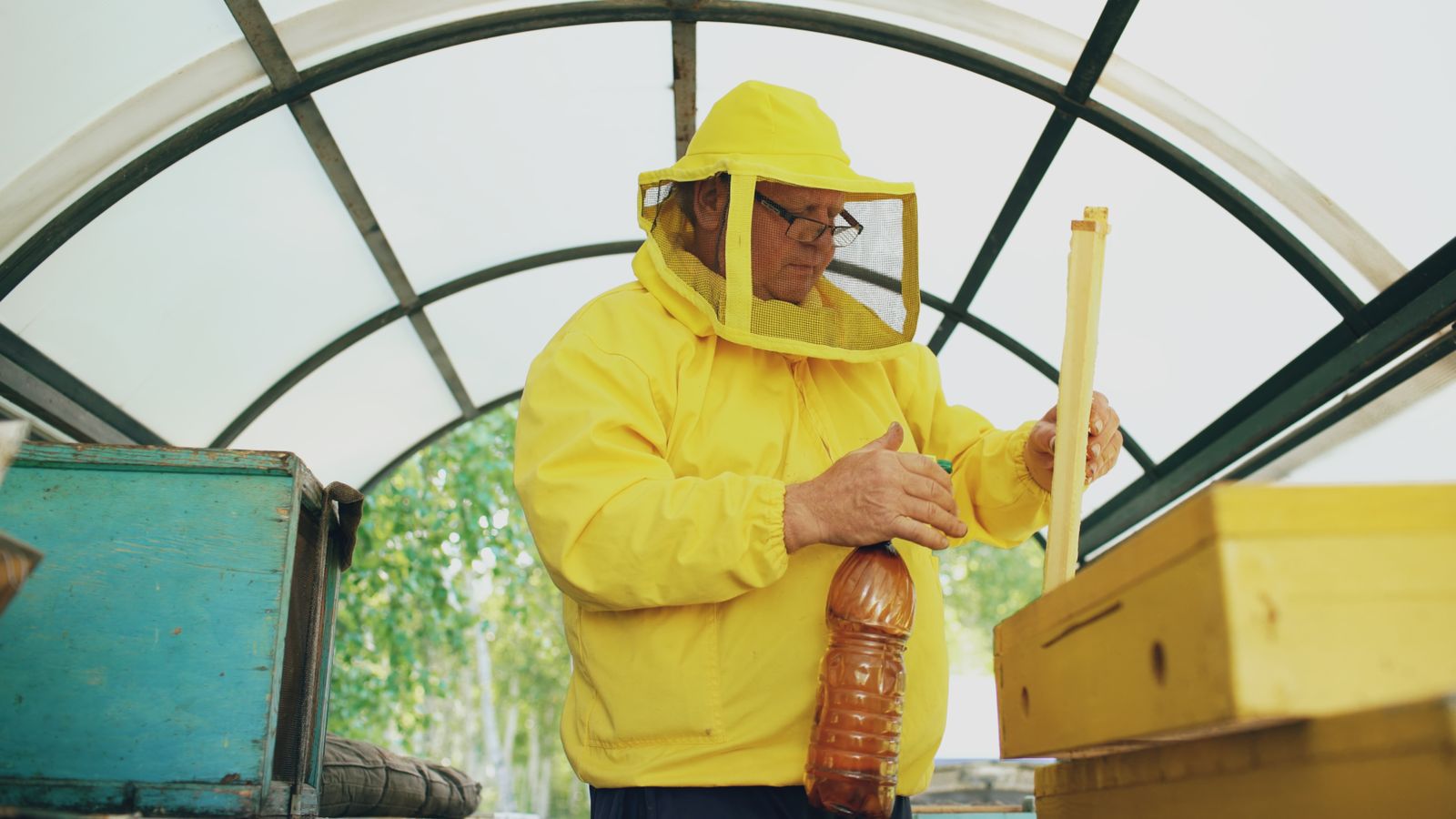
From der Herbst (autumn) to der Hafen (harbor), these eleven H words turn up in weather small talk, on menus, and on city signs. The feminine die Hochzeit and die Hoffnung are good abstract-noun practice, and die Haltestelle is pure travel survival vocabulary. Pair this section with our German autumn words for the full seasonal set.
10. der Herbst (the autumn) — Herbst gives German its most poetic season word. Der Herbst bringt bunte Blätter. (Autumn brings colorful leaves.)
11. der Himmel (the sky / heaven) — one word for the blue above and the beyond. Der Himmel ist heute blau. (The sky is blue today.)
12. die Hitze (the heat) — the summer counterpart to winter’s Kälte. Die Hitze macht müde. (The heat makes you tired.)

13. der Honig (the honey) — a sweet staple of the German breakfast table. Der Honig schmeckt wunderbar süß. (The honey tastes wonderfully sweet.)
14. der Hafen (the harbor) — Hamburg’s famous harbor makes this word a travel must. Der Hafen ist voller Schiffe. (The harbor is full of ships.)
15. die Hochzeit (the wedding) — literally “high time” — a lovely compound to unpack. Die Hochzeit findet im Juni statt. (The wedding takes place in June.)
16. der Hahn (the rooster) — also the word for a water tap; context decides. Der Hahn kräht am Morgen. (The rooster crows in the morning.)
17. der Hof (the courtyard / farm) — the farmyard, the schoolyard, or a royal court. Der Hof ist groß und grün. (The courtyard is big and green.)
18. der Hunger (the hunger) — the feeling behind ich habe Hunger (I am hungry). Der Hunger kommt beim Essen. (Appetite comes while eating.)
19. die Hoffnung (the hope) — hoffen (to hope) is the matching verb below. Die Hoffnung stirbt zuletzt. (Hope dies last.)
20. die Haltestelle (the bus/tram stop) — the word you read on every German street corner. Die Haltestelle ist um die Ecke. (The stop is around the corner.)
H Verbs: Have, Help, Hear, Hope
The H verbs include some of the most-used verbs in the entire language — haben and heißen appear in nearly every beginner conversation. Learn them with the example sentences and you will start speaking in complete German sentences immediately. Our German words starting with Z list continues the alphabet from the other end.
21. haben (to have) — the possession verb; irregular, so learn ich habe, du hast. Ich habe einen Hund. (I have a dog.)
22. helfen (to help) — takes the dative: jemandem helfen. Sie hilft ihrer Mutter. (She helps her mother.)
23. hören (to hear / to listen) — hearing sounds and listening to music in one verb. Wir hören gern Musik. (We like listening to music.)
24. halten (to hold / to stop) — holding objects and stopping vehicles share this verb. Der Bus hält hier. (The bus stops here.)

25. heißen (to be called) — the introduction verb: ich heiße…. Ich heiße Anna. (My name is Anna.)
26. hoffen (to hope) — pairs with die Hoffnung from our noun list. Wir hoffen auf gutes Wetter. (We hope for good weather.)
27. heiraten (to marry) — also used for “to get married.” Sie heiraten im Sommer. (They are getting married in summer.)
28. heilen (to heal) — wounds, hearts, and rifts all heilen. Die Wunde heilt langsam. (The wound is healing slowly.)
29. hängen (to hang) — irregular like haben: hängen, hing, gehangen. Das Bild hängt an der Wand. (The picture hangs on the wall.)
30. husten (to cough) — practical vocabulary for the pharmacy or the doctor. Er hustet seit gestern. (He has been coughing since yesterday.)
H Adjectives: From heiß to herzlich

Ten adjectives that turn plain sentences into vivid ones — and herzlich delivers one of the warmest words in the German language. Notice how -lich endings like herzlich, heimlich, and höflich follow the same pattern, so learning one teaches you dozens. For more alphabet lists, explore our German words starting with B next.
31. heiß (hot) — temperature and passion; the ß is a sharp “ss” sound. Der Tee ist noch heiß. (The tea is still hot.)
32. hell (bright / light) — bright rooms, light colors, clear sounds. Das Zimmer ist hell und freundlich. (The room is bright and friendly.)
33. hoch (high) — mountains, prices, and hopes can all be hoch. Der Berg ist sehr hoch. (The mountain is very high.)
34. hübsch (pretty) — the everyday compliment adjective; round your lips for the ü. Das Kleid ist wirklich hübsch. (The dress is really pretty.)
35. hungrig (hungry) — pairs with der Hunger from our noun list. Die Kinder sind hungrig. (The children are hungry.)
36. höflich (polite) — Höflichkeit (politeness) is a national virtue. Der Kellner ist sehr höflich. (The waiter is very polite.)

37. herzlich (heartfelt / warm) — from das Herz: herzlich willkommen means “a warm welcome.” Ein herzlicher Empfang wartet auf uns. (A warm welcome awaits us.)
38. heimlich (secret) — the adjective of das Geheimnis; also “secretly.” Es war ein heimliches Treffen. (It was a secret meeting.)
39. hart (hard) — hard surfaces and tough times alike. Der Boden ist kalt und hart. (The floor is cold and hard.)
40. hilfsbereit (helpful) — Hilfe + bereit (ready): literally “ready to help.” Die Nachbarn sind sehr hilfsbereit. (The neighbors are very helpful.)
German Words Starting with H for Scrabble and Wordle
These 40 German words starting with H are a secret weapon at the board. In German Scrabble (current 102-tile set), the letter H is worth 4 points and appears twice in the bag, making H tiles solid mid-range earners that slot neatly into compounds. Long words like die Hochzeit, die Haltestelle, and hilfsbereit can stretch across the whole board for a bingo bonus, while short words like der Hut, der Hof, die Hand, and heiß fit into tight corners. Words with Ü — hübsch — are especially valuable, since Ü tiles are scarce and score 6 points. Learn the full tile values and rules in our German Scrabble rules guide.
For German Wordle players, this list hides some excellent five-letter guesses: Honig and Handy are exactly five letters, and six-letter words like Himmel and Herbst are perfect for testing vowel positions mid-game. Try building anagrams from der Hafen or die Hochzeit — anagram practice is one of the fastest ways to sharpen your German spelling instincts.
How to Pronounce German H-Words

The H sound is refreshingly simple for English speakers — but it has a few German-only tricks. Say these aloud as you review the list:
- H at the start is always pronounced: das Haus, der Hund, heißen all begin with a clear breathy “h” — German H is never silent at the start of a word.
- H after a vowel goes quiet and stretches it: in der Hahn, the h is silent and the a is long — HAHN. This is called the lengthening h (Dehnungs-h).
- hei- says “hy”: heiß, heißen, die Heimat, and heimlich all start with the long “i” sound — HYSS, HY-men.
- hö- and hü- need rounded lips: höflich, hören, and hübsch use the ö and ü sounds — shape your mouth for “oo” while saying “eh” or “ee.”
- The ch in hoch is the throaty one: after o it is the ach-sound, like clearing your throat gently — HOHkh, not “hock.”
Practice tip: read the ten verbs in a row — haben, helfen, hören, halten, heißen — and notice how the H stays crisp and identical every single time.
Key Takeaways
These 40 German words starting with H give you a complete letter workout — warm everyday nouns like das Haus and das Herz, essential verbs like haben and heißen, and expressive adjectives like herzlich and höflich. Three habits will make this H vocabulary stick. First, always learn the article with the noun: der, die, or das is part of the word, and this list was built to drill exactly that. Second, use the word-family pairs — der Hunger with hungrig, die Hoffnung with hoffen, die Hilfe idea with hilfsbereit — to multiply every word you memorize. Third, bring the words into your word games: H tiles earn a solid 4 points in German Scrabble, and five-letter words like Honig and Handy are perfect Wordle practice. Keep adding one letter at a time and your German vocabulary will grow faster than you expect — viel Erfolg!
FAQ

What are some common German words starting with H?
The most common include das Haus (house), die Hand (hand), der Hund (dog), haben (to have), heißen (to be called), and heiß (hot) — all high-frequency everyday vocabulary.
Is the German H always pronounced?
At the start of a word, yes — German H is never silent there, unlike in some French loanwords. After a vowel, though, it goes quiet and lengthens the vowel, as in der Hahn.
How many points is H worth in German Scrabble?
In German Scrabble (current 102-tile set), the letter H is worth 4 points, and there are two H tiles in the bag.
What is a good German H word for Wordle?
Five-letter options from this list include Honig (honey) and Handy (mobile phone) — great opening or mid-game guesses.