

German Oktoberfest Vocabulary: 35 Words & Phrases Explained
If you are planning a trip to Munich in late September — or you simply want to sound like an insider when the festival comes up in conversation — this German Oktoberfest vocabulary guide has you covered. The Oktoberfest is the world’s largest folk festival, drawing more than six million visitors to Munich’s Theresienwiese each year, and its vocabulary is a delicious mix of Bavarian dialect, traditional festival culture, and some of the most fun compound words in the German language.
Below you will find 35 Oktoberfest words with their correct der/die/das articles, English meanings, and a short example sentence for each, complete with translations. The list covers beer and tent words, Wiesn food, traditional clothing (Tracht), rides and music, and the essential phrases you will hear shouted across every beer tent. Along the way, watch how German builds monster compound words like das Bierzelt and der Trachtenumzug — learning these patterns will unlock hundreds of German words far beyond the festival grounds. Prost!
35 German Oktoberfest Words with Meanings
Here is the full list: thirty-five German Oktoberfest words and phrases with meanings, grouped by theme so you can learn them in context. Each entry gives you the article, the English translation, and a short example sentence with its translation. Pay attention to the articles as you read — knowing whether a word takes der, die, or das is what separates a confident speaker from a guesser, and festival vocabulary is a brilliant way to practice.
Beer & Tent Words
The beer tent is the beating heart of the Oktoberfest, so this Wiesn vocabulary starts where the action is.
1. das Oktoberfest (the Oktoberfest) — the world’s biggest folk festival, held in Munich since 1810. Das Oktoberfest beginnt im September. (The Oktoberfest begins in September.)
2. die Wiesn (the festival grounds / nickname for the Oktoberfest) — locals call the festival die Wiesn, after the Theresienwiese. Auf der Wiesn ist immer was los. (There is always something happening at the Wiesn.)
3. das Bierzelt (the beer tent) — the giant tents run by Munich’s traditional breweries. Das Bierzelt fasst zehntausend Gäste. (The beer tent holds ten thousand guests.)
4. die Maß (the liter of beer / the liter mug) — the one-liter Maßkrug is the only serving size in the tents. Eine Maß bitte! (One liter, please!) — the most important sentence of the festival.
5. der Bierkrug (the beer mug) — the heavy glass mug every toast is made with. Der Bierkrug ist fast einen Kilo schwer. (The beer mug weighs almost a kilogram.)
6. das Festzelt (the festival tent) — the general word for the huge festival tents; Bierzelt is the beer-specific one. Das Festzelt ist abends immer voll. (The festival tent is always full in the evening.)
7. der Bierausschank (the beer bar / beer dispensing stand) — where the beer is poured and served. Am Bierausschank bildet sich eine lange Schlange. (A long line forms at the beer bar.)
8. die Bierbank (the beer bench) — the long wooden bench where tent-goers sit (and sometimes stand). Wir haben einen Platz auf der Bierbank gefunden. (We found a spot on the beer bench.)
9. der Biergarten (the beer garden) — Munich’s beloved outdoor drinking tradition, at its liveliest during the festival weeks. Im Biergarten sitzt man unter Kastanienbäumen. (In the beer garden you sit under chestnut trees.)
10. das Festbier (the festival beer) — the special stronger lager brewed for the Oktoberfest. Das Festbier ist etwas kräftiger als normales Bier. (The festival beer is a bit stronger than normal beer.)
Food Words
No one survives the Wiesn on beer alone. These festival food words will get you through every menu.
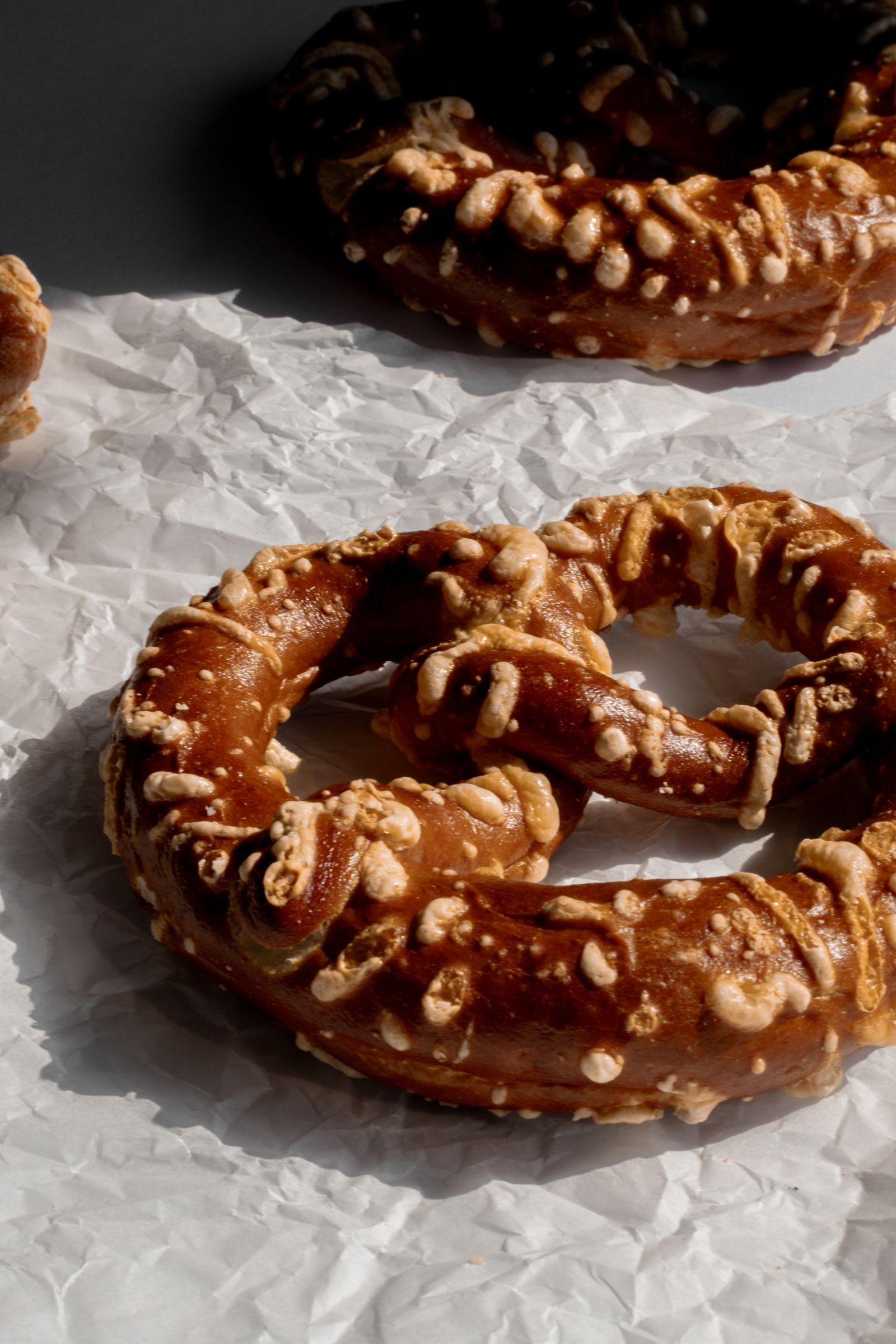
11. die Brezel (the pretzel) — the twisted, salted icon of Bavarian baking. Zur Maß gehört eine Brezel dazu. (A pretzel goes with a liter of beer.)
12. das Hendl (the roast chicken) — the Bavarian word for das Hähnchen; half a roast chicken is a tent classic. Ich esse ein halbes Hendl. (I am eating half a roast chicken.)
13. der Schweinsbraten (the roast pork) — slow-roasted pork with crispy skin, a Bavarian staple. Der Schweinsbraten kommt mit Knödeln. (The roast pork comes with dumplings.)
14. die Weißwurst (the white sausage) — Munich’s famous veal sausage, traditionally eaten before noon. Die Weißwurst isst man mit süßem Senf. (The white sausage is eaten with sweet mustard.) If you like food words, our German food cognates list shows how much kitchen vocabulary you already know.
15. der Senf (the mustard) — the essential companion to every sausage. Gib mir bitte mehr Senf! (Please give me more mustard!)
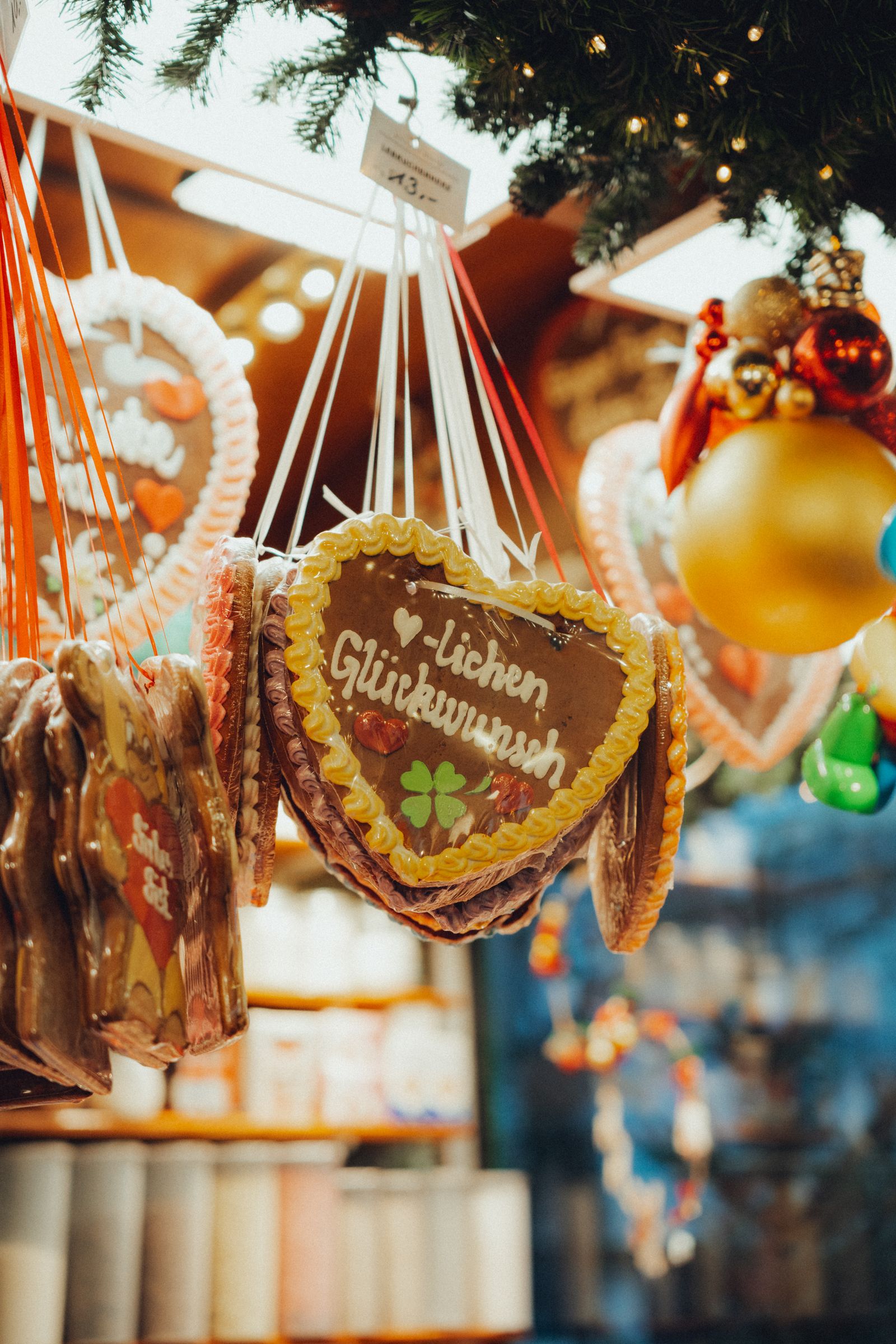
16. das Lebkuchenherz (the gingerbread heart) — the decorated heart-shaped cookie worn as a necklace. Sie trägt ein Lebkuchenherz mit der Aufschrift “Spatzl”. (She is wearing a gingerbread heart that says “sweetheart”.)
Traditional Clothing (Tracht)
About seventy percent of visitors wear Tracht — traditional dress. Here is the vocabulary to match.
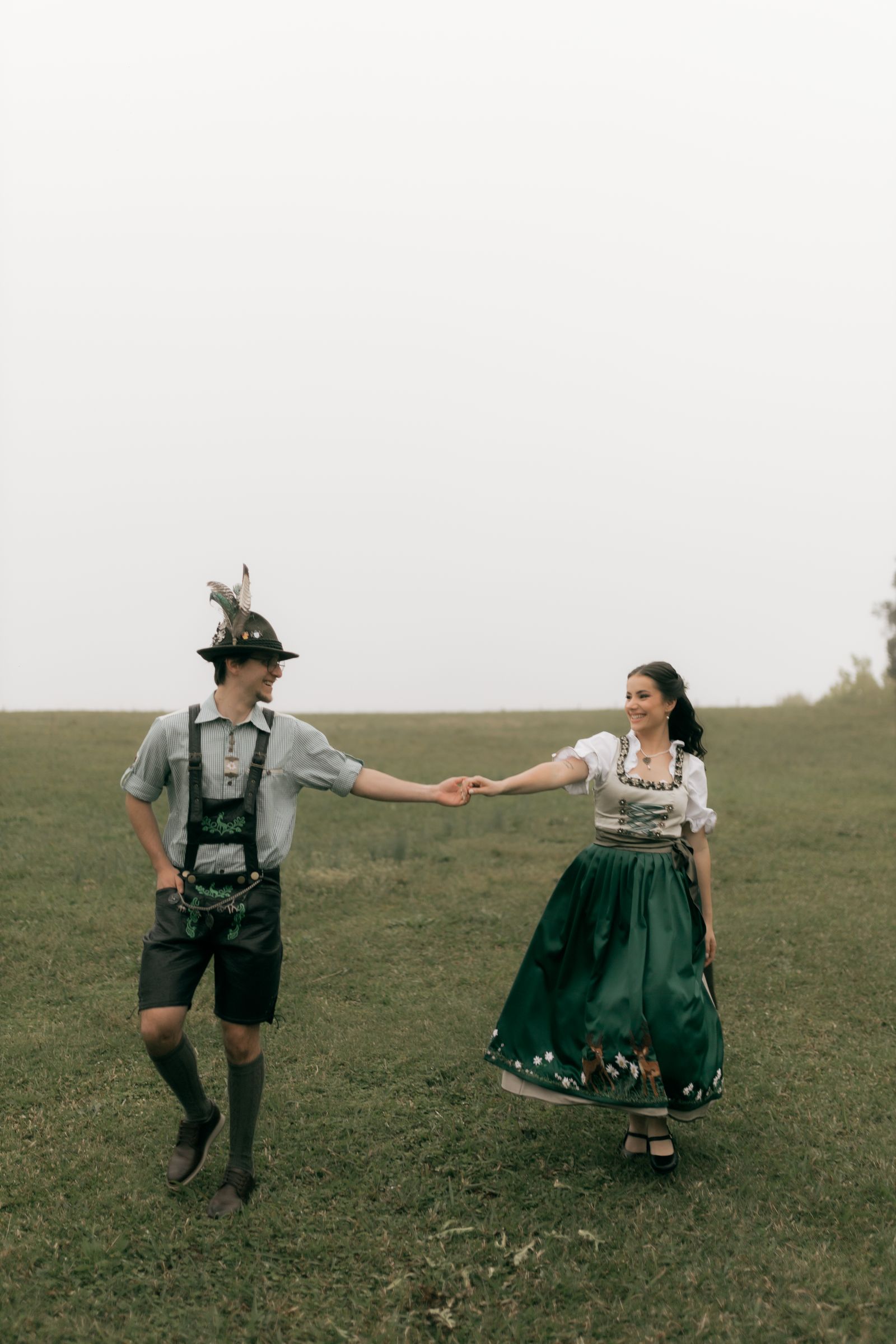
17. die Lederhose (the leather trousers) — the iconic lederhosen; the plural die Lederhosen is more common. Er trägt eine neue Lederhose zur Wiesn. (He is wearing new lederhosen to the Wiesn.)
18. das Dirndl (the dirndl) — the traditional dress worn by women, with apron and bodice. Das Dirndl ist in vielen Farben erhältlich. (The dirndl comes in many colors.)
19. der Trachtenhut (the traditional hat) — the felt hat with a feather or brush, worn with Tracht. Der Trachtenhut rundet das Outfit ab. (The traditional hat completes the outfit.)
20. der Trachtenumzug (the traditional costume parade) — the grand Sunday parade with thousands in Tracht. Der Trachtenumzug zieht durch die Innenstadt. (The costume parade marches through the city center.)
21. der Trachtenverein (the traditional costume club) — the local clubs that keep Bavarian customs alive. Der Trachtenverein übt jeden Donnerstag. (The costume club rehearses every Thursday.)
Rides, Music & Festival Life
Beyond the tents lies a full fairground of rides, parades, and oompah bands.
22. das Fahrgeschäft (the amusement ride) — the general word for fairground rides. Das neue Fahrgeschäft ist sehr beliebt. (The new amusement ride is very popular.)
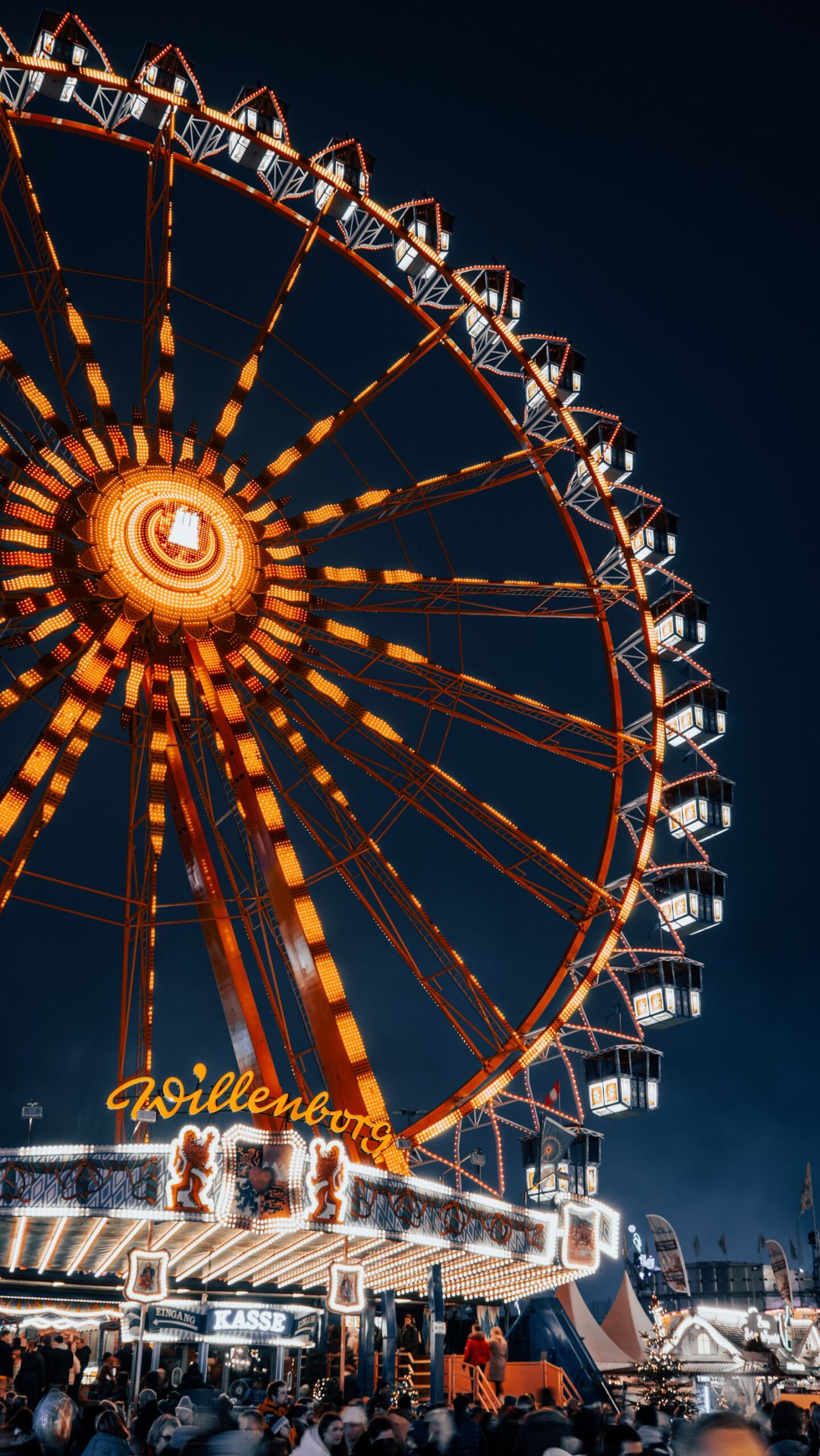
23. das Riesenrad (the Ferris wheel) — the giant wheel with its famous view over the Wiesn. Vom Riesenrad sieht man die ganze Festwiese. (From the Ferris wheel you can see the whole festival grounds.)
24. die Achterbahn (the roller coaster) — literally “figure-eight track,” a gorgeous German compound. Die Achterbahn ist nichts für schwache Nerven. (The roller coaster is not for the faint-hearted.) Like many words here, it is built from parts — our guide to building German compound words shows how Acht plus Bahn becomes a brand-new word.
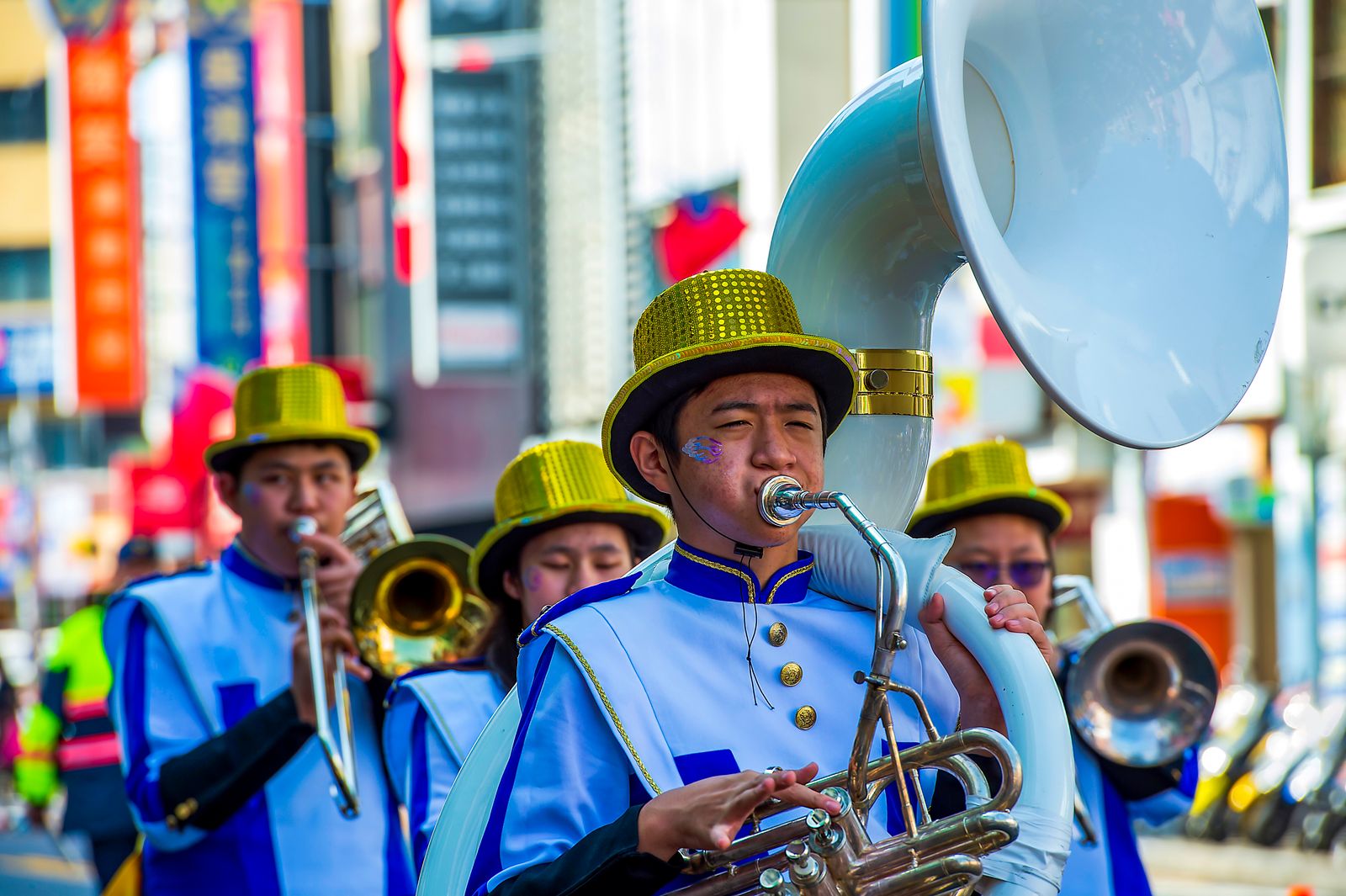
25. die Blaskapelle (the brass band) — the oompah band playing on every tent balcony. Die Blaskapelle spielt “Ein Prosit”. (The brass band plays “Ein Prosit”.)
26. der Festzug (the parade) — the opening parade with brewery wagons and horse-drawn carts. Der Festzug startet am ersten Samstag. (The parade starts on the first Saturday.)
27. der Schausteller (the showman / fairground operator) — the families who run the rides and stalls, often for generations. Der Schausteller verkauft gebrannte Mandeln. (The showman sells roasted almonds.)
28. die Festwiese (the festival grounds) — the fairground itself; the Theresienwiese is the most famous one. Die Festwiese ist riesig. (The festival grounds are huge.)
Wiesn Life & Useful Phrases
These words and phrases capture the spirit — and the morning after — of the festival.
29. die Bedienung (the waitress / service) — the famously strong servers who carry up to ten Maßkrüge at once. Die Bedienung bringt uns zwei Maß. (The waitress brings us two liters of beer.)
30. das Trinkgeld (the tip) — the gratuity for your server, always appreciated in the tents. Vergiss das Trinkgeld nicht! (Don’t forget the tip!)
31. die Gemütlichkeit (the coziness / conviviality) — the warm, sociable atmosphere every tent aims for. In den Zelten herrscht echte Gemütlichkeit. (Real Gemütlichkeit reigns in the tents.) If you are traveling in Germany, our essential German travel phrases will help you navigate beyond the festival too.
32. der Rausch (the intoxication) — the buzz; in Bavarian wisdom, one should enjoy der Rausch responsibly. Nach drei Maß spürt man den Rausch. (After three liters you feel the buzz.)
33. der Kater (the hangover) — literally “the tomcat,” Germany’s beloved word for a hangover. Am nächsten Tag hatte er einen schlimmen Kater. (The next day he had a terrible hangover.)
34. “O’zapft is!” (It’s tapped!) — the Munich mayor’s traditional cry when the first keg is tapped, opening the festival. „O’zapft is!” — damit beginnt das Oktoberfest. (“It’s tapped!” — that is how the Oktoberfest begins.)
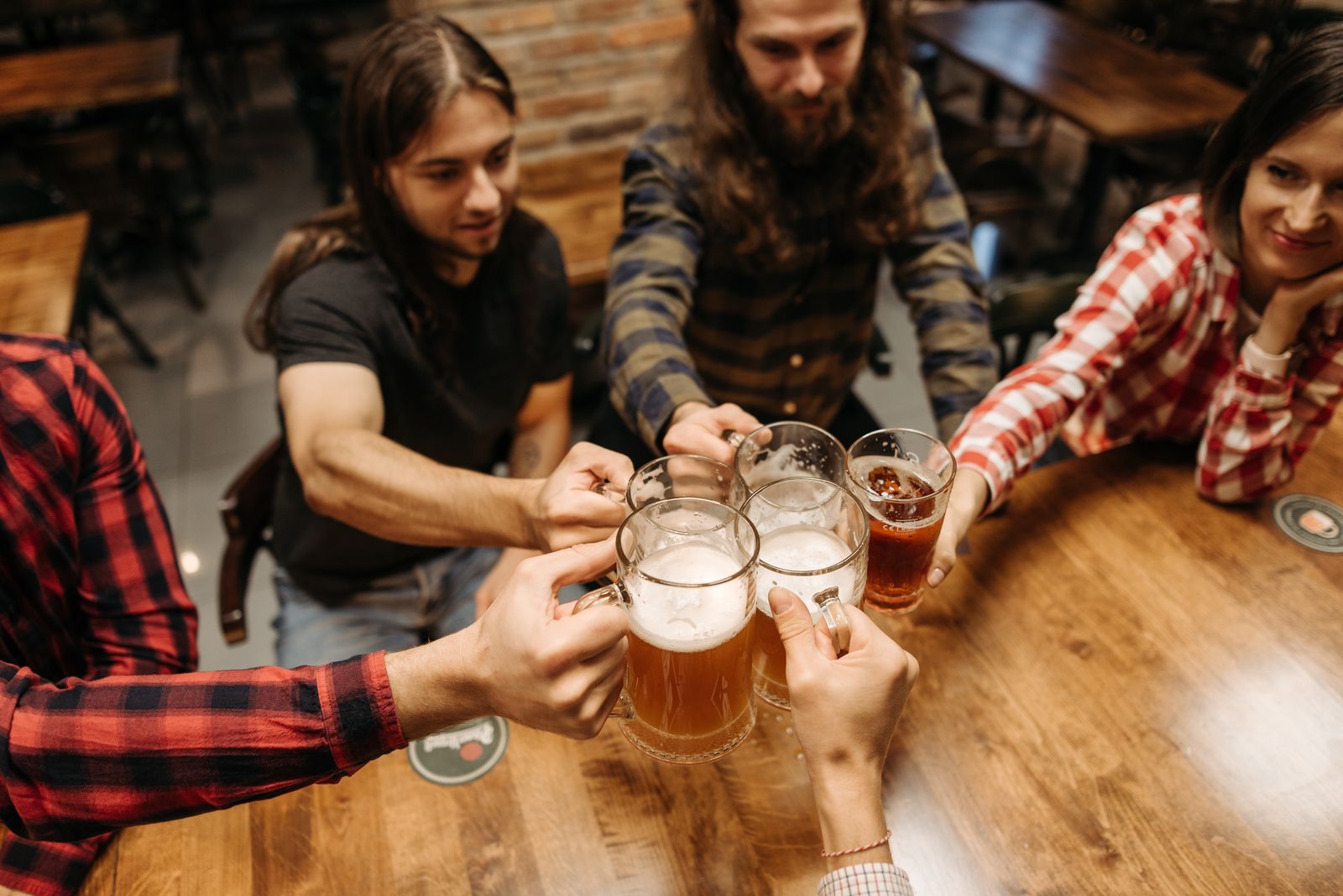
35. “Prost!” (Cheers!) — the toast you will hear a thousand times a day in every tent. Wir stoßen an: Prost! (We clink glasses: Cheers!)
Pronunciation Tips for Wiesn Words
Oktoberfest vocabulary is a great workout for German sounds that trip up English speakers:
- The ü in die Gemütlichkeit: round your lips as if to say “oo” but try to say “ee” instead — ge-MUET-lish-kite.
- The z in der Festzug: always pronounced “ts” in German — FEST-tsook.
- The ß in die Maß: a sharp “s” sound — mahss. One syllable, short and crisp.
- The ch in das Riesenrad: after i and e it is soft, like a cat hissing — REE-zen-raht.
- The ä in das Hendl: the umlaut here is part of Bavarian dialect; in standard German Hähnchen, the ä sounds like the “e” in “bed.”
For more pronunciation fun beyond the tents, our German Christmas anagrams article turns festive words into letter games — the same trick works beautifully with Wiesn vocabulary.
German Oktoberfest Vocabulary for Word Games: Scrabble & Wordle Scores
Festival words are a secret weapon in German word games. In German Scrabble, the high-value letters Z (10 points), V (6 points), and Ü (6 points) turn words like der Festzug, die Gemütlichkeit, and die Weißwurst into score monsters. Short words from this list — der Senf, der Kater, der Rausch, die Maß, das Dirndl — are perfect for tight board corners, while long compounds like der Trachtenumzug and das Lebkuchenherz can stretch across the board for a bingo bonus.
For German Wordle players, this list is a goldmine of five-letter guesses: Hendl, Kater, and Rausch are all exactly five letters, and Maß, Senf, and Prost shine in shorter variants. Word games also sharpen your eye for tricky lookalikes — our German food false friends article warns you which food words do not mean what they seem to.
Key Takeaways
These 35 words give you a complete German Oktoberfest vocabulary starter kit — from die Maß and das Bierzelt to die Gemütlichkeit and the legendary “O’zapft is!” Three habits will make this Wiesn vocabulary stick. First, always learn the article with the word: der, die, or das is part of the word itself, and pairs like die Maß versus das Festzelt reward the extra second of attention. Second, use the compound-word pattern to your advantage — once you see that die Bierbank is just Bier + Bank and der Festzug is Fest + Zug, dozens of festival words decode themselves; our overview of German compound word examples and their meanings goes deeper. Third, say the toasts out loud — shouting “Prost!” with the right pronunciation is half the fun of learning these words. Bookmark this list before your trip, or share it with a friend who is headed to Munich. And for a lighter take on German idioms, don’t miss our collection of funny German idioms — several of them come up in festival conversation too.
Frequently Asked Questions
What do locals call the Oktoberfest?
Locals call it die Wiesn, short for the Theresienwiese, the Munich fairground where it takes place. Using Wiesn instead of Oktoberfest is the fastest way to sound like a regular.
How much beer is in a Maß?
A Maß (die Maß) is exactly one liter of beer, served in the famous heavy glass Maßkrug. The tents do not serve smaller sizes — when you order, you order a Maß.
What should I wear to the Oktoberfest?
Traditional Tracht — die Lederhose for men and das Dirndl for women — is worn by the majority of visitors. It is not required, but dressing the part is half the experience.
Is Oktoberfest vocabulary Bavarian dialect or standard German?
A mix of both. Words like die Wiesn and das Hendl are Bavarian, while das Bierzelt and die Gemütlichkeit are standard German. Everyone in Munich understands all of them during the festival.