

40 German Words Starting with K: Meanings, Articles & Examples
The letter K brings a warm, friendly sound to German — from der Kaffee (coffee) to das Kind (child), from die Küche (kitchen) to der König (king). This list of 40 german words starting with k gives you everyday nouns with the correct der/die/das articles, essential verbs like kaufen (to buy) and kommen (to come), and expressive adjectives like klein (small) and klug (clever), each with an English meaning and a short German example sentence with translation. Studying one letter at a time is a powerful method: K follows the simplest pronunciation rules in the German alphabet, and your word-game scores climb fast — the K tile is worth a solid 4 points in German Scrabble. If you have already worked through our German words starting with G and German words starting with H lists, these german words starting with k complete your tour of the alphabet’s middle — los geht’s!
German Words Starting with K for People and Family: das Kind, der König & More
People vocabulary is the perfect place to start, because K gives you both the warmest word in the nursery — das Kind — and the grandest word in the storybook — der König. These ten K words for people cover family, work, and everyday roles.
1. das Kind (the child) — one of the most-used nouns in German, and a famous neuter noun: das Kind, not der Kind. Das Kind spielt im Garten. (The child is playing in the garden.)
2. der König (the king) — the star of every German fairy tale (Märchen). Der König regiert das Land. (The king rules the land.)
3. der Künstler (the artist) — from die Kunst (art). Der Künstler malt ein Porträt. (The artist is painting a portrait.)
4. der Kollege (the colleague) — the person you see more often than your friends. Mein Kollege hilft mir gern. (My colleague gladly helps me.)
5. der Kunde (the customer) — the word behind every checkout conversation in Germany. Der Kunde wartet an der Kasse. (The customer is waiting at the checkout.)
6. der Koch (the cook / chef) — kitchens are K territory, so cooks live here too. Der Koch bereitet das Essen zu. (The cook is preparing the food.)
7. die Köchin (the female cook) — the feminine partner to der Koch; the umlaut plus -in pattern works for hundreds of professions.
8. der Kellner (the waiter) — your go-to word in every German restaurant. Der Kellner bringt die Speisekarte. (The waiter is bringing the menu.)
9. der Käufer (the buyer) — from the verb kaufen; shopping vocabulary pairs neatly with this one. Der Käufer zahlt sofort. (The buyer pays immediately.)
10. der Kapitän (the captain) — ships, planes, and football teams all have one. Der Kapitän steuert das Schiff. (The captain steers the ship.)
K Nouns for Home, Kitchen & Daily Life: der Kaffee, die Küche & More

If German had a flavor, K would taste like coffee and cake: der Kaffee and der Kuchen are two of the most beloved words in the language. Coffee lovers should pair this section with our German coffee vocabulary for the full Kaffeeklatsch experience.
11. der Kaffee (the coffee) — Germany runs on coffee, and this masculine noun is essential vocabulary. Der Kaffee ist heiß und stark. (The coffee is hot and strong.)
12. der Kuchen (the cake) — Kaffee und Kuchen is a sacred German afternoon ritual. Der Kuchen schmeckt lecker. (The cake tastes delicious.)
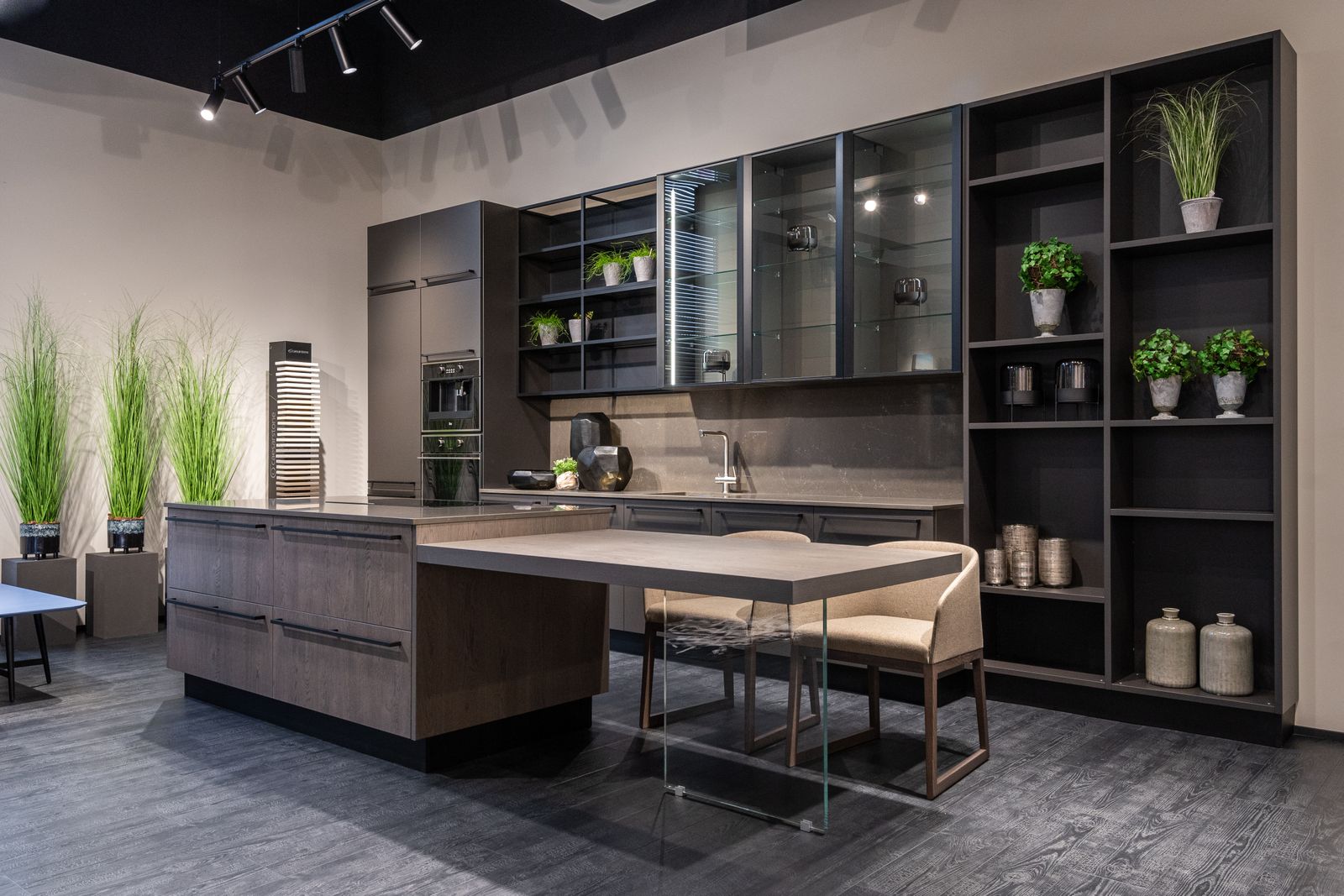
13. die Küche (the kitchen) — the heart of the home, and the same word for “cuisine.” Die Küche ist klein, aber modern. (The kitchen is small but modern.)
14. der Kühlschrank (the fridge) — a classic compound: kühl (cool) + Schrank (cupboard). Die Milch steht im Kühlschrank. (The milk is in the fridge.)
15. der Keller (the basement) — where wine, bikes, and old boxes sleep. Der Wein liegt im Keller. (The wine is stored in the cellar.)
16. der Korb (the basket) — picnics, shopping, and laundry all need one. Der Korb ist voller Äpfel. (The basket is full of apples.)
17. die Karte (the card / map / ticket) — one word for a birthday card, a city map, and a train ticket. Die Karte zeigt den Weg. (The map shows the way.)
18. die Kerze (the candle) — from Advent wreaths to birthday cakes. Die Kerze brennt auf dem Tisch. (The candle is burning on the table.)
K Verbs: kaufen, kommen, können & More
These eight K verbs include some of the most useful verbs you will ever learn — können (can) is a modal verb that unlocks thousands of sentences, and kommen pairs with the famous kommen Sie rein (“come in”). For more alphabet lists, continue with our German words starting with B next.
19. kaufen (to buy) — the shopping verb; pairs with der Käufer from our people list. Wir kaufen morgen ein Auto. (We are buying a car tomorrow.)
20. kommen (to come) — irregular (kommen, kam, gekommen) but worth every minute of drilling. Kommst du zur Party? (Are you coming to the party?)
21. können (can / to be able to) — a modal verb: it changes the meaning of whatever verb follows it. Ich kann gut kochen. (I can cook well.)
22. kennen (to know, to be acquainted with) — for people and places; facts use wissen instead. Ich kenne deinen Bruder. (I know your brother.)
23. küssen (to kiss) — mind the double-s: küssen (to kiss) is very different from kissen (cushion) with one s.
24. kochen (to cook) — matches der Koch and die Köchin from our noun lists. Meine Mutter kocht sehr gut. (My mother cooks very well.)

25. klopfen (to knock) — doors, hearts, and opportunities all klopfen. Jemand klopft an die Tür. (Someone is knocking on the door.)
26. klingen (to ring / to sound) — bells ring and melodies sound beautiful with this irregular verb (klingen, klang, geklungen). Die Melodie klingt schön. (The melody sounds beautiful.)
K Adjectives: klein, klug, komisch & More
Six adjectives that instantly upgrade your descriptions — and each one comes with a built-in antonym, so learning one pair doubles your vocabulary for free.
27. klein (small; antonym: groß) — small things, and also “little” in the affectionate sense. Das Zimmer ist klein, aber gemütlich. (The room is small but cozy.)
28. kurz (short; antonym: lang) — short stories, short trips, short hair. Die Geschichte ist kurz. (The story is short.)
29. klug (clever / smart; antonym: dumm) — intelligence with a practical edge. Die kluge Frau löst das Problem. (The clever woman solves the problem.)
30. krank (sick; antonym: gesund) — the word behind Krankenhaus (hospital) and Krankenschwester (nurse). Das Kind ist krank und bleibt zu Hause. (The child is sick and is staying home.)
31. kalt (cold; antonym: warm) — German winters make this one unavoidable. Im Winter wird es kalt. (In winter it gets cold.)
32. komisch (funny / strange) — funny-ha or funny-peculiar — komisch covers both. Der Film war wirklich komisch. (The film was really funny.)
German Words Starting with K for Travel, Nature & Culture
K takes you out of the house and into the wider world: concert halls, art galleries, classrooms, and the occasional cat napping in the sun. The seasonal vocabulary pairs well with our German autumn words for the full cultural calendar.
33. das Konzert (the concert) — Germany’s concert halls are world-famous, and this neuter noun gets you through the door. Das Konzert beginnt um acht Uhr. (The concert starts at eight o’clock.)
34. die Kunst (the art) — also the parent of der Künstler from our people section. Die Kunst fasziniert mich. (Art fascinates me.)
35. die Kultur (the culture) — Kultur is a word Germans use with pride. Die Kultur des Landes ist spannend. (The culture of the country is fascinating.)

36. die Klasse (the class / grade) — the school class, and also a level of quality — erste Klasse means first class. Die Klasse lernt Deutsch. (The class is learning German.)
37. das Klima (the climate) — small talk that never gets old. Das Klima hier ist mild. (The climate here is mild.)
38. der Kampf (the fight / struggle) — from boxing rings to hard-fought negotiations. Der Kampf war hart. (The fight was hard.)
39. das Kino (the cinema) — the Friday-night word; ins Kino gehen means “to go to the movies.” Wir gehen heute ins Kino. (We are going to the cinema today.)
40. die Katze (the cat) — Germany adores its cats, and this feminine noun ends the list on a soft paw. Die Katze schläft auf dem Sofa. (The cat is sleeping on the sofa.)
Scrabble & Wordle Corner: K Is a 4-Point Power Tile

These 40 german words starting with k are a secret weapon at the board. In German Scrabble (current 102-tile set), the letter K is worth 4 points and there are two K tiles in the bag — solid mid-range earners that plug into compounds like der Kühlschrank or der Kampf. Short words like der Korb, die Katze, and klein fit into tight corners, while die Küche earns extra respect thanks to the scarce Ü. Learn the full tile values and rules in our German Scrabble rules guide.
For German Wordle players, this list hides excellent five-letter guesses: klein and Küche are exactly five letters each, and six-letter Klasse is perfect for testing consonant positions mid-game. Try building anagrams from der Kampf or die Kunst — anagram practice is one of the fastest ways to sharpen your German spelling instincts.
How to Pronounce German K-Words
The K sound is refreshingly simple for English speakers — but it has one big advantage over English. Say these aloud as you review the list:
- K is always pronounced: unlike English, German never silences the K. English “knight,” “knee,” and “know” all pronounce the K in German: das Knie (knee) starts with a crisp K.
- Say it crisply: German K is a sharp, unaspirated k — say der Kaffee and das Kind with a firm stop, not the breathy puff English adds.
- Kü- needs rounded lips: die Küche and küssen use the ü sound — shape your mouth for “oo” while saying “ee.”
- The sch in komisch is soft: the sch in komisch is the same gentle “sh” as in English — ko-MISH.
Practice tip: read the eight verbs in a row — kaufen, kommen, können, kennen — and notice how the K stays crisp and identical every single time.
Key Takeaways
These 40 German words starting with K give you a complete letter workout — warm everyday nouns like der Kaffee and das Kind, powerhouse verbs like kaufen, kommen, and können, and sharp adjectives like klein, klug, and komisch. A few habits will make this K vocabulary stick:
- Always learn the article with the noun: der, die, or das is part of the word — this list was built to drill exactly that, from der König to die Küche to das Konzert.
- Use the word-family pairs: der Koch with kochen, die Kunst with der Künstler, der Kauf idea with der Käufer and kaufen — every word multiplies the ones around it.
- Learn adjectives in antonym pairs: klein/groß, kurz/lang, krank/gesund, kalt/warm — twice the vocabulary for one effort.
- Play with the words: K tiles earn 4 points in German Scrabble, and five-letter words like klein and Küche are perfect Wordle practice.
Keep adding one letter at a time and your German vocabulary will grow faster than you expect — viel Erfolg!
FAQ
What are some common German words starting with K?
The most common include der Kaffee (coffee), das Kind (child), der König (king), kaufen (to buy), kommen (to come), können (can), and klein (small) — all high-frequency everyday vocabulary.
How do you pronounce the German K?
German K is always pronounced with a crisp, unaspirated “k” sound — never silent like in English “knight” or “knee.” Even das Knie (knee) pronounces the K.
How many points is K worth in German Scrabble?
In German Scrabble (current 102-tile set), the letter K is worth 4 points, and there are two K tiles in the bag.
What is a good German K word for Wordle?
Five-letter options from this list include klein (small) and Küche (kitchen) — great opening or mid-game guesses.