

German Words Starting with D: 40 Words with Meanings & Examples
The letter D is one of the busiest in the German alphabet, and german words starting with d open the door to everyday conversation — from der Dank (thanks) to denken (to think) to dunkel (dark). This list gives you 40 real German words starting with D, each with the correct der/die/das article, an English meaning, and a short example sentence with translation. We have organized them into three practical groups — nouns, verbs, and adjectives — plus a word-game corner for Scrabble and Wordle players. Learn the article together with every noun, say each sentence out loud, and the whole D-family will stick. Viel Erfolg! Whether you are preparing for an A1 exam, filling a vocabulary notebook, or simply love the sound of German, this list is built to be read, said out loud, and remembered.
German Words Starting with D: 16 Essential Nouns
Nouns are the backbone of this list, and in German every noun comes with its article — der, die, or das is part of the word itself. Notice how many of these German words starting with D describe people, time, and everyday objects you can point at. If you have already worked through our German words starting with B list, this D round will feel familiar — same article-first learning method, brand-new vocabulary. Say each article aloud three times as you read; your mouth will start choosing the right gender before your brain catches up.
1. die Dame (the lady) — a polite word for a woman, like English “dame” or “lady.” Die Dame trägt einen eleganten Hut. (The lady wears an elegant hat.)
2. der Doktor (the doctor) — the academic or medical title; the everyday word for a physician is der Arzt, but Doktor is everywhere. Der Doktor untersucht den Patienten. (The doctor examines the patient.)
3. das Dach (the roof) — also used in idioms like eins aufs Dach kriegen (to get a scolding). Das Dach ist rot. (The roof is red.)
4. der Dank (the thanks/gratitude) — the noun behind the verb danken; vielen Dank means “many thanks.” Der Dank gilt meinen Eltern. (My thanks go to my parents.)
5. der Durst (the thirst) — remember the common phrase Ich habe Durst (literally “I have thirst”). Der Durst ist groß nach dem Sport. (Thirst is great after sports.)
6. das Dorf (the village) — the heart of rural Germany, home to das Dorffest (village festival). Das Dorf liegt im Tal. (The village lies in the valley.)
7. die Dunkelheit (the darkness) — built from dunkel (dark) plus the noun ending -heit. Die Dunkelheit bricht herein. (Darkness is falling.)
8. die Drohung (the threat) — a serious word, also common in news headlines. Die Drohung war ernst gemeint. (The threat was meant seriously.)
9. der Drache (the dragon) — fire-breathing and fairy-tale famous; do not confuse it with der Drachen (the kite). Der Drache spuckt Feuer. (The dragon breathes fire.)
10. der Duft (the scent) — a pleasant smell; der Geruch can be good or bad. Der Duft von Kaffee liegt in der Luft. (The scent of coffee is in the air.)
11. das Datum (the date) — neuter, like most Latin-origin nouns ending in -um. Das Datum steht auf dem Brief. (The date is on the letter.)
12. der Dienstag (the Tuesday) — all German weekdays are masculine. Am Dienstag beginnt der Kurs. (The course begins on Tuesday.)
13. der Dezember (December) — all months are masculine too; December brings der Schnee and our German winter words collection. Der Dezember bringt Schnee. (December brings snow.)
14. das Denkmal (the monument) — literally “a thinking-mark”: denken (to think) + Mal (mark). Das Denkmal steht im Park. (The monument stands in the park.)
15. die Decke (the ceiling / the blanket) — one word, two meanings; context decides. Die Decke ist warm und weich. (The blanket is warm and soft.)
16. der Diamant (the diamond) — a near-cognate of the English word, masculine in German. Der Diamant glänzt im Licht. (The diamond sparkles in the light.)
Many of these nouns hide smaller words inside them — das Denkmal, die Dunkelheit, der Dienstag — and spotting those pieces is the fastest way to grow your vocabulary. Our guide to building German compound words shows the whole system in action.
German Verbs Starting with D: 12 Action Words

German D-verbs cover thinking, thanking, and everything you are allowed — or not allowed — to do. Pay special attention to dürfen (to be allowed to), one of the most useful modal verbs in the language, and to duzen, a verb with no direct English equivalent that describes a very German social custom. Conjugate each verb out loud as you read: ich denke, du denkst, er denkt. German verbs also carry their grammar with them — danken demands the dative (ich danke dir), duschen is reflexive (ich dusche mich), and dürfen always teams up with a second verb — so watch the example sentences closely.
17. denken (to think) — one of the most common German verbs, irregular in the past (dachte, gedacht). Ich denke oft an meine Familie. (I often think of my family.)
18. danken (to thank) — takes the dative: ich danke dir, never dich. Ich danke dir für deine Hilfe. (I thank you for your help.)
19. dürfen (to be allowed to) — a modal verb: it changes the meaning of the main verb. Du darfst hier parken. (You may park here.)

20. duschen (to shower) — a reflexive verb: ich dusche mich (I shower myself). Er duscht jeden Morgen. (He showers every morning.)
21. dienen (to serve) — from duty to dog commands (Sitz! Diene! is not a thing, but dienen covers service in every sense). Sie dient dem Land seit Jahren. (She has served the country for years.)
22. drängen (to push / to urge) — both physical pushing and the pressure of time. Die Zeit drängt uns. (Time is pressing us.)
23. drehen (to turn / to rotate) — keys, wheels, and also film scenes (einen Film drehen = to shoot a film). Drehe den Schlüssel nach rechts. (Turn the key to the right.)
24. drucken (to print) — the verb behind der Drucker (the printer). Ich drucke den Vertrag aus. (I print out the contract.)
25. dulden (to tolerate) — a strong, slightly formal word for putting up with something. Das dulde ich nicht länger. (I will not tolerate that any longer.)
26. duzen (to address with “du”) — using the informal du instead of Sie; a small word for a big social step. Kollegen duzen sich oft. (Colleagues often use “du” with each other.)

27. dämmern (to dawn) — usually appears as es dämmert, describing twilight at either end of the day. Es dämmert schon früh im Winter. (It gets dark early in winter.)
28. debattieren (to debate) — a Latin-root verb common in politics and classrooms. Sie debattieren über Politik. (They debate about politics.)
German Adjectives Starting with D: 12 Describing Words
Adjectives beginning with D give you opposites (dick vs. dünn), feelings (dankbar, durstig), and handy everyday descriptors. Notice how dankbar (grateful) and der Dank (thanks) share a root — German word families like this make memorizing twice as efficient. Ready for the next letter? Our German words starting with Z list continues the alphabet tour. Note that adjectives change their endings depending on the noun they describe, but here we show the dictionary base form — learn the meaning first, the endings later.
29. dunkel (dark) — for rooms, nights, and colors; the opposite is hell (bright). Es ist dunkel im Wald. (It is dark in the forest.)
30. dick (thick) — for books, walls, and unfortunately also waistlines. Das Buch ist sehr dick. (The book is very thick.)
31. dünn (thin) — the direct opposite of dick; also means “skinny.” Die Suppe ist zu dünn. (The soup is too thin.)
32. dankbar (grateful) — pairs naturally with danken (to thank) and der Dank. Ich bin dir sehr dankbar. (I am very grateful to you.)

33. dumm (stupid / silly) — softer than it sounds; often used playfully among friends. Das war eine dumme Idee. (That was a silly idea.)
34. dreckig (dirty) — everyday word for muddy shoes and messy hands. Deine Schuhe sind dreckig. (Your shoes are dirty.)
35. durstig (thirsty) — the adjective twin of der Durst (the thirst). Nach dem Lauf war ich durstig. (After the run I was thirsty.)
36. direkt (direct) — a cognate that works in German exactly like in English. Sag es mir direkt. (Tell me directly.)
37. deutlich (clear / distinct) — for voices, writing, and explanations. Seine Stimme war deutlich zu hören. (His voice was clearly audible.)
38. dauerhaft (lasting / permanent) — from die Dauer (duration); think long-term. Das ist keine dauerhafte Lösung. (That is not a lasting solution.)
39. dynamisch (dynamic) — a modern cognate, great for describing people and cities. Die Stadt ist sehr dynamisch. (The city is very dynamic.)
40. doppelt (double) — useful at the dinner table — and if double portions make you hungry for more vocabulary, try our German idioms about food. Ich nehme die doppelte Portion. (I’ll take the double portion.)
German Words Starting with D for Scrabble and Wordle
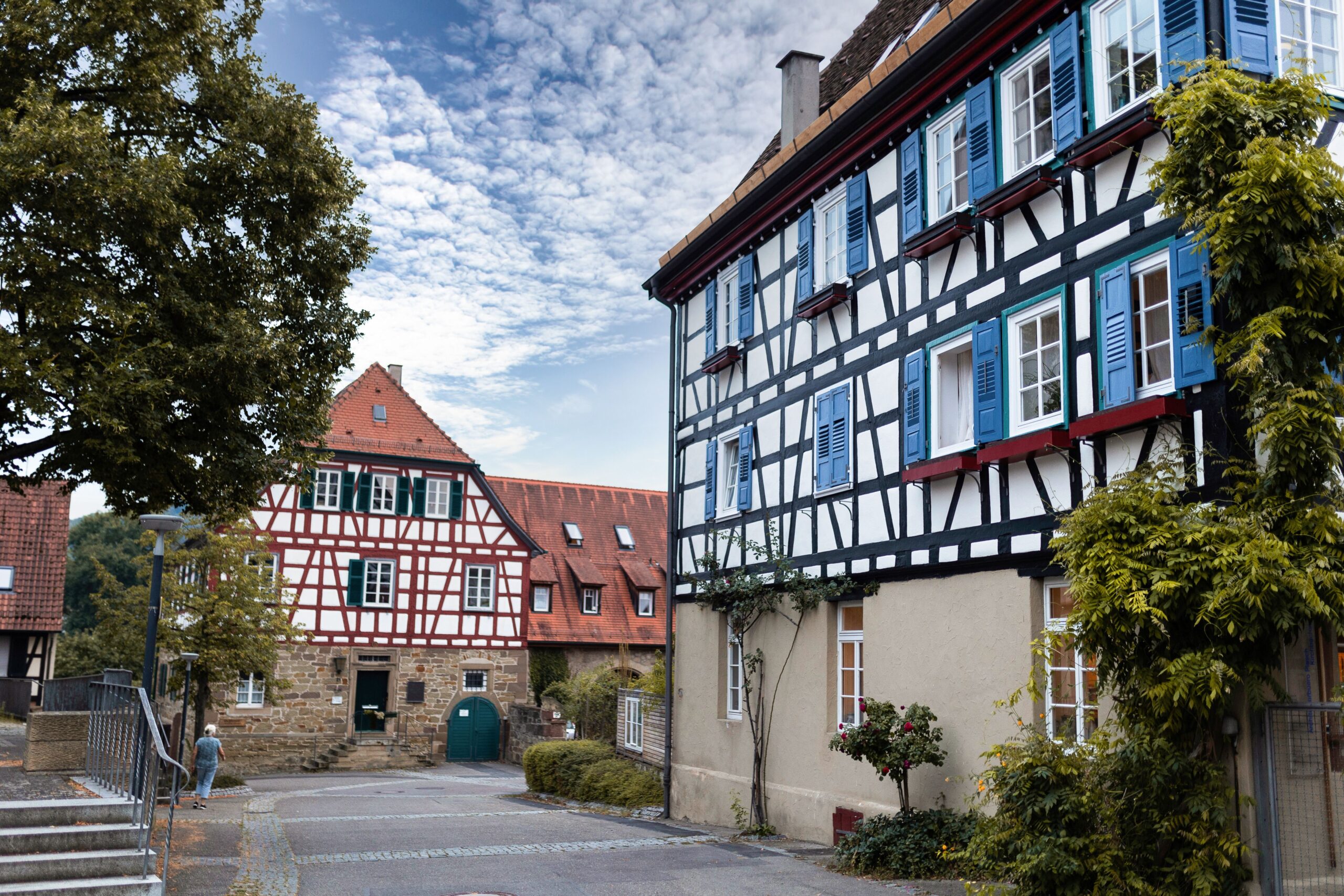
The letter D is a workhorse in German word games — common enough to play often, tricky enough to score well. In German Scrabble, D is worth just 1 point, but the words on this list pair it with high-value letters: der Diamant brings two A’s and an M, der Drache delivers the 4-point C and H combo, and die Drohung packs a Ü-adjacent punch with its G and H. Short plays like dick, dünn, dumm, and direkt slot neatly into tight board corners, while long words like die Dunkelheit or das Erntedankfest… well, that one starts with E — try die Diskussion or der Dezember for your seven-letter bingos instead.
For German Wordle players, this list is full of five-letter gold: Dame, Durst, Duft, dünn, and direkt are all exactly five letters, and denken, Drache, and Datum make excellent opening guesses because they test the ultra-common D, E, and N. A smart opening strategy is to rotate D-words through your first two guesses — DAME followed by DURST, for example, tests A, E, U, D, M, R, S, and T in just ten letters. For more opening ideas, see our best German Wordle starting words and the 2-letter German Scrabble words cheat sheet for endgame squeezes. Five-letter D-words like Durst and Drache are especially valuable as second guesses, when you already know a letter or two and need to test fresh consonants fast.
Key Takeaways: Your German Words Starting with D Cheat Sheet
These 40 German words starting with D give you a complete starter kit for the letter — 16 nouns with their correct der/die/das articles, 12 verbs, and 12 adjectives, each with a real example sentence. Three habits will lock them in. First, never learn a noun without its article: die Dame, der Doktor, das Dach — the gender is part of the word, and guessing it later is the classic beginner trap. Second, learn words in families: der Dank, danken, dankbar and der Durst, durstig are each one root wearing different hats, so one memorization effort buys you three words. Third, use them immediately — say Ich habe Durst the next time you want water, vielen Dank at every checkout, and Es ist dunkel when evening falls. Add five words a day to a phone list, review them with their example sentences, and within a week the whole D-section of your German vocabulary will feel like old friends. Viel Spaß beim Lernen!