

German Winter Words: 40 Terms with Meanings & Examples
Few seasons fill the German language with such poetry as winter — and German winter words are some of the most satisfying vocabulary you can learn, from the first Schneeflocke (snowflake) to the glow of a Weihnachtsmarkt (Christmas market). These 40 German winter words cover weather and nature, warm clothing, cozy food and drink, winter sports, the Christmas season, and the famous Winter- compound words. Each entry gives you the correct der/die/das article, the English meaning, and a short example sentence with a translation. Bundle up, pour yourself a Glühwein, and let’s learn winter auf Deutsch.
German Winter Words for Weather and Nature: From der Schnee to der Schneesturm
Winter weather is the beating heart of German winter words. These nature words describe everything from gentle frost on the window to a full-blown blizzard, and several are gorgeous compound words that decode themselves once you know the parts. Our German weather compound words collection goes even deeper.
1. der Winter (the winter) — the season itself, your anchor word for this whole list. Der Winter beginnt im Dezember. (Winter begins in December.)
2. der Schnee (the snow) — the single most important winter word. Der Schnee fällt leise auf die Dächer. (The snow falls quietly onto the rooftops.)
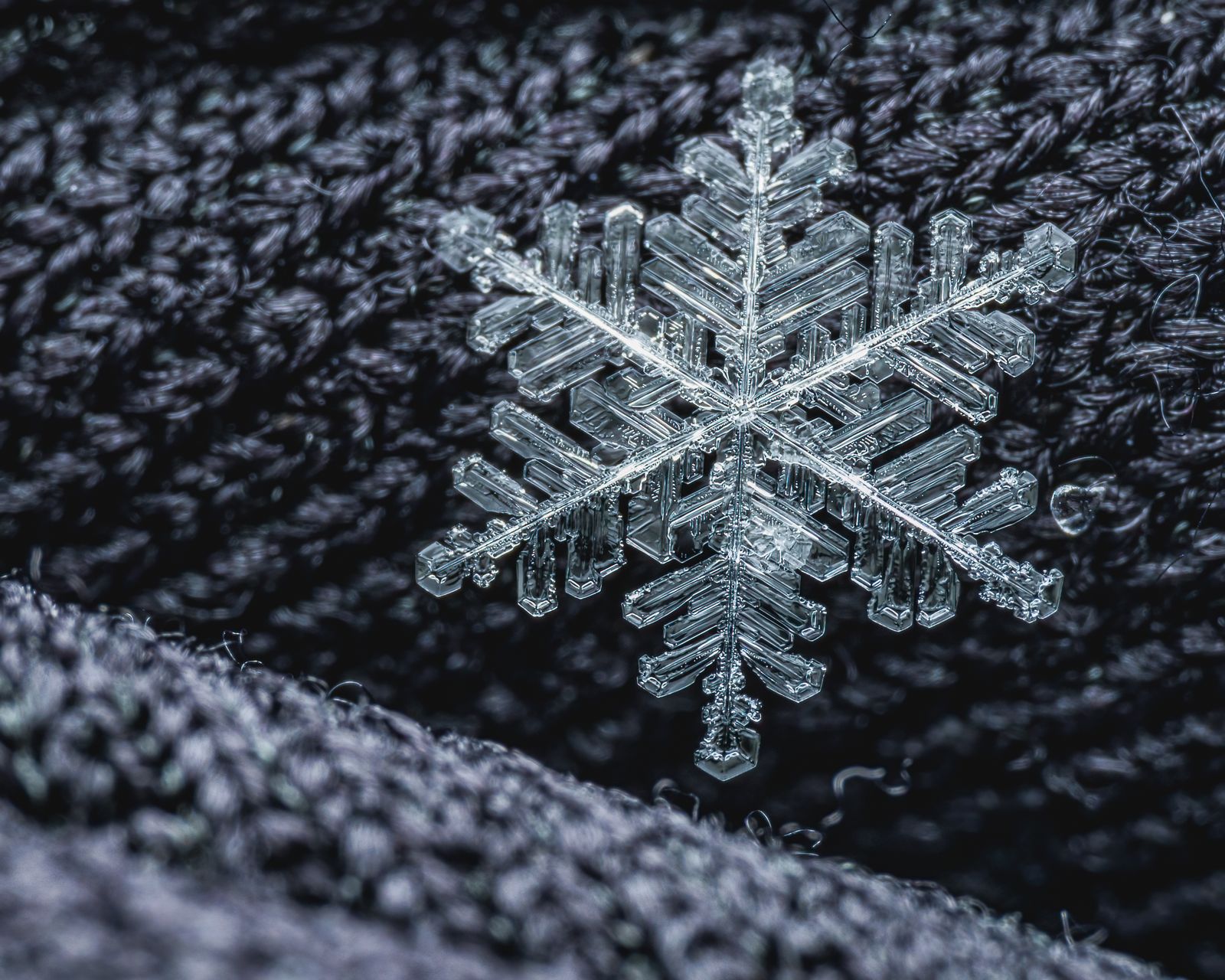
3. die Schneeflocke (the snowflake) — Schnee + Flocke (flake), nature’s tiniest masterpiece. Jede Schneeflocke ist einzigartig. (Every snowflake is unique.)
4. der Schneesturm (the snowstorm) — Schnee + Sturm (storm), a textbook compound. Der Schneesturm blockiert die Straßen. (The snowstorm blocks the roads.)
5. der Schneefall (the snowfall) — the act of snow falling, softer than a storm. Der Schneefall dauert die ganze Nacht. (The snowfall lasts all night.)
6. der Frost (the frost) — the bitter cold that bites exposed skin. Der Frost bedeckt die Felder. (The frost covers the fields.)
7. der Rauhreif (the hoarfrost) — the crystalline frost that turns trees silver-white. Der Rauhreif glitzert auf den Zweigen. (The hoarfrost glitters on the branches.)
8. das Eis (the ice) — frozen water, and the German word that also means ice cream in summer. Das Eis auf dem See ist dick. (The ice on the lake is thick.)
9. der Eiszapfen (the icicle) — Eis + Zapfen (cone/tap), hanging from every roof edge. Die Eiszapfen hängen vom Dach. (The icicles hang from the roof — note the plural here.)
10. die Kälte (the cold) — the abstract noun for the chill in the air. Die Kälte dringt durch die Jacke. (The cold penetrates through the jacket.)
German Winter Clothing Words: Staying Warm auf Deutsch

German winter words for clothing are wonderfully practical — the compounds practically explain themselves. Learn these before a trip to Germany in January, alongside our essential German travel phrases.
11. die Winterjacke (the winter jacket) — Winter + Jacke (jacket), your first line of defense. Die Winterjacke ist warm und wasserdicht. (The winter jacket is warm and waterproof.)
12. der Wintermantel (the winter coat) — the long, elegant version for cold city streets. Der Wintermantel reicht bis zu den Knien. (The winter coat reaches to the knees.)
13. der Schal (the scarf) — short, common, and endlessly useful. Der Schal schützt den Hals vor der Kälte. (The scarf protects the neck from the cold.)
14. die Mütze (the hat/cap) — the winter hat, not the dressy kind. Die Mütze sitzt tief auf den Ohren. (The hat sits low on the ears.)
15. die Handschuhe (the gloves) — plural; from Hand (hand) + Schuh (shoe) — literally “hand shoes.” Die Handschuhe wärmen die Finger. (The gloves warm the fingers.)
16. die Winterstiefel (the winter boots) — Winter + Stiefel (boot), built for snow and slush. Die Winterstiefel haben ein gutes Profil. (The winter boots have good tread.)
German Winter Food and Drink Words: Cozy Flavors of the Season
German winter words for food and drink taste like cinnamon, cloves, and melted chocolate. Christmas markets run on these flavors, and every one of them is a delight to order auf Deutsch. For more tasty vocabulary, our German Christmas anagrams word game is the perfect sweet companion.
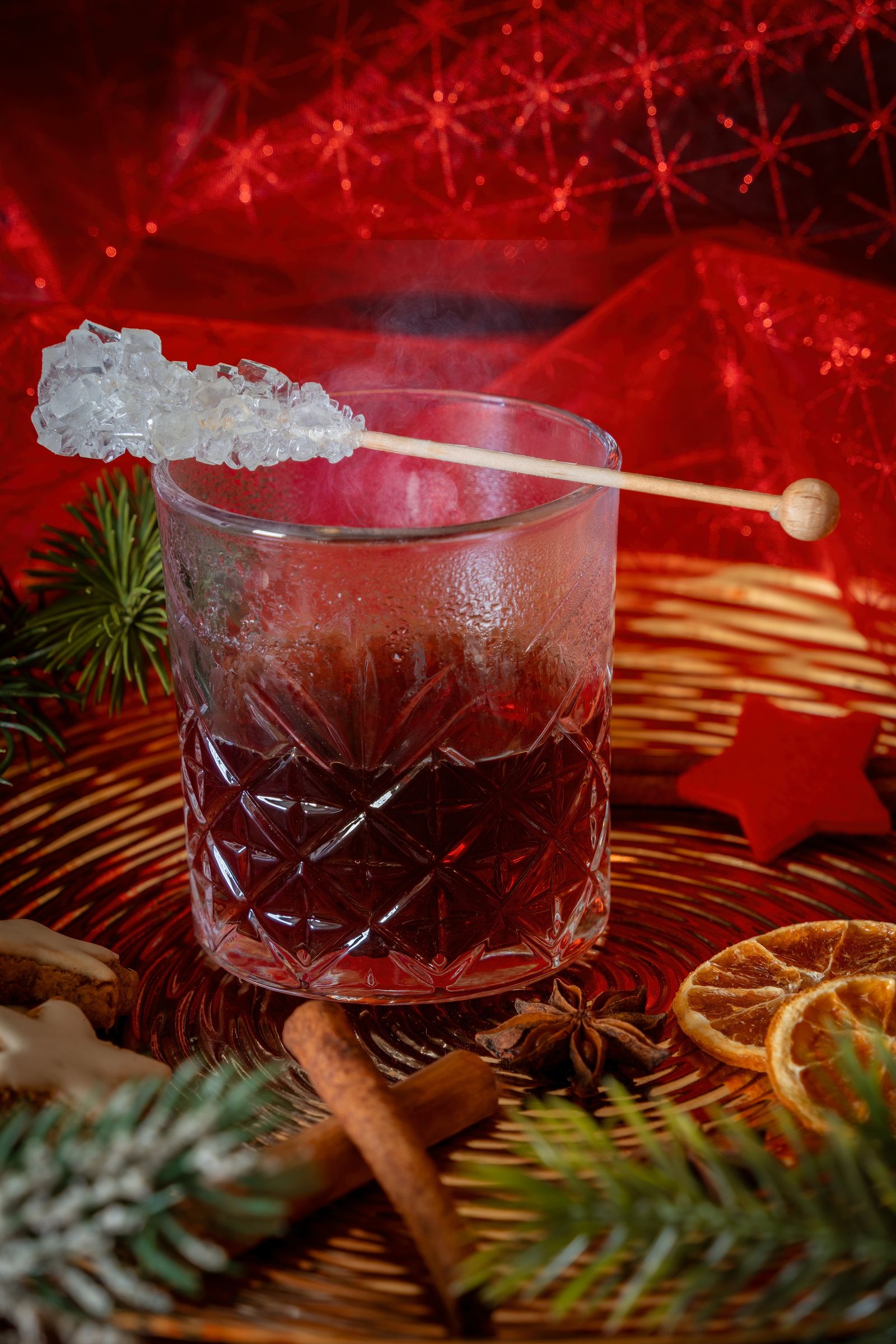
17. der Glühwein (the mulled wine) — glühen (to glow) + Wein (wine), the soul of every Christmas market. Der Glühwein wärmt von innen. (The mulled wine warms from the inside.)
18. der Punsch (the punch) — the non-alcoholic sibling of Glühwein, popular with kids and drivers. Der Punsch duftet nach Orange und Nelken. (The punch smells of orange and cloves.)
19. die heiße Schokolade (the hot chocolate) — the coziest drink of the season. Die heiße Schokolade schmeckt mit Sahne am besten. (The hot chocolate tastes best with cream.)
20. der Lebkuchen (the gingerbread) — the spiced honey cake of Christmas markets everywhere. Der Lebkuchen kommt aus Nürnberg. (The gingerbread comes from Nuremberg.)
21. die Weihnachtsplätzchen (the Christmas cookies) — plural; baked in every German household in December. Die Weihnachtsplätzchen backen wir am Sonntag. (We bake the Christmas cookies on Sunday.)
22. die gebrannten Mandeln (the roasted almonds) — plural; the sweet, crackling snack of the Christmas market. Die gebrannten Mandeln duften süß. (The roasted almonds smell sweet.)
23. der Stollen (the stollen/Christmas bread) — the rich fruit bread dusted with powdered sugar. Der Stollen liegt auf dem Teller. (The stollen lies on the plate.)
German Winter Activity Words: Sports, Play, and Snow Days
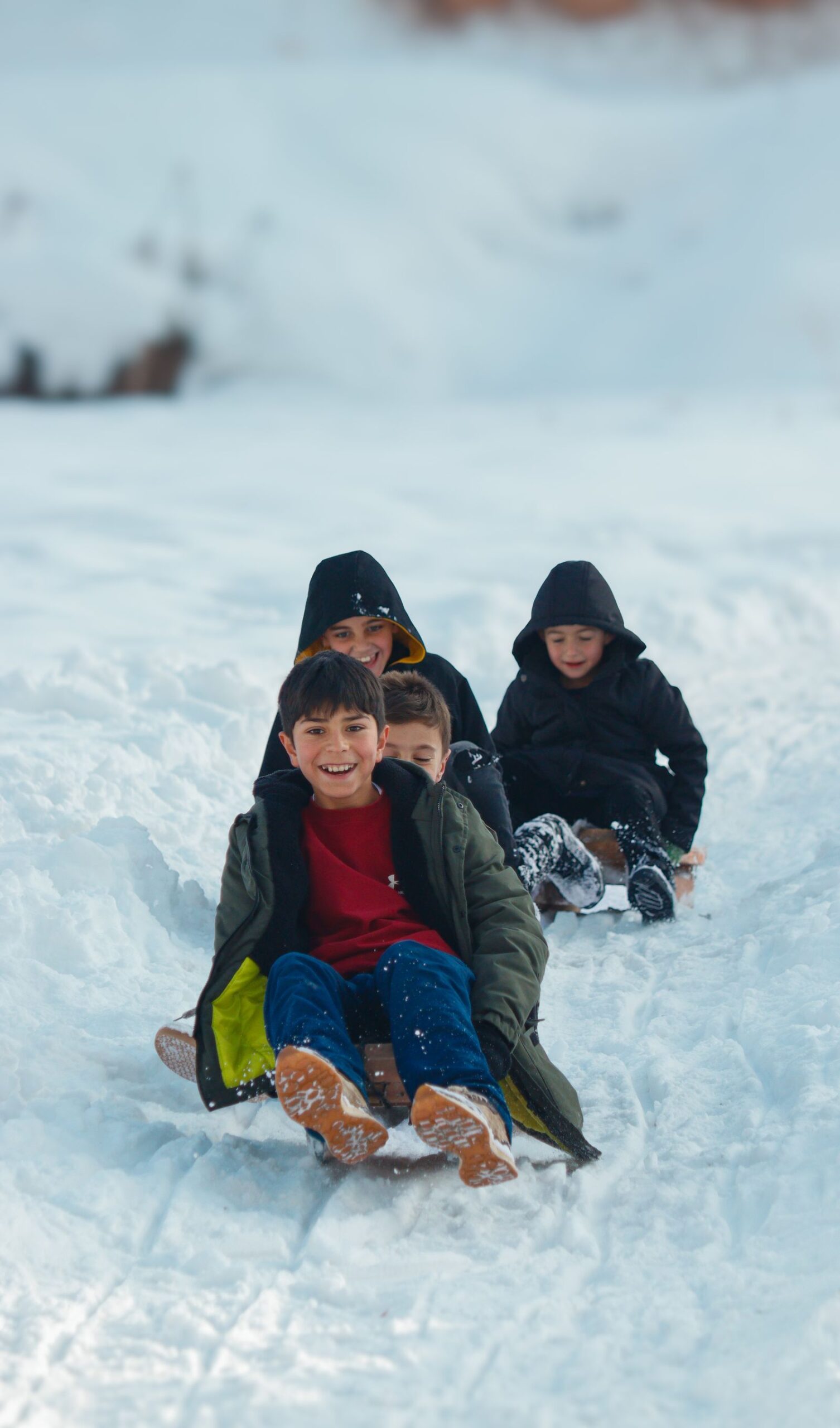
These German winter words cover everything from Olympic sports to the simple joy of a snowball fight — and many of these nouns turn into verbs, like Schlittschuh laufen (to ice-skate) or rodeln (to sled). For wordplay with the season next door, see our German autumn words list.
24. das Schlittschuhlaufen (the ice skating) — Schlittschuh (ice skate) + Laufen (running/walking). Das Schlittschuhlaufen macht viel Spaß. (Ice skating is a lot of fun.)
25. das Skifahren (the skiing) — Ski + Fahren (driving/riding). Das Skifahren lernt man in den Alpen. (You learn skiing in the Alps.)
26. das Rodeln (the sledding) — the noun form of rodeln, gliding downhill on a sled. Das Rodeln ist am Hang am schönsten. (Sledding is loveliest on the slope.)
27. die Schneeballschlacht (the snowball fight) — Schnee + Ball + Schlacht (battle), childhood in one word. Die Schneeballschlacht beginnt nach der Schule. (The snowball fight starts after school.)
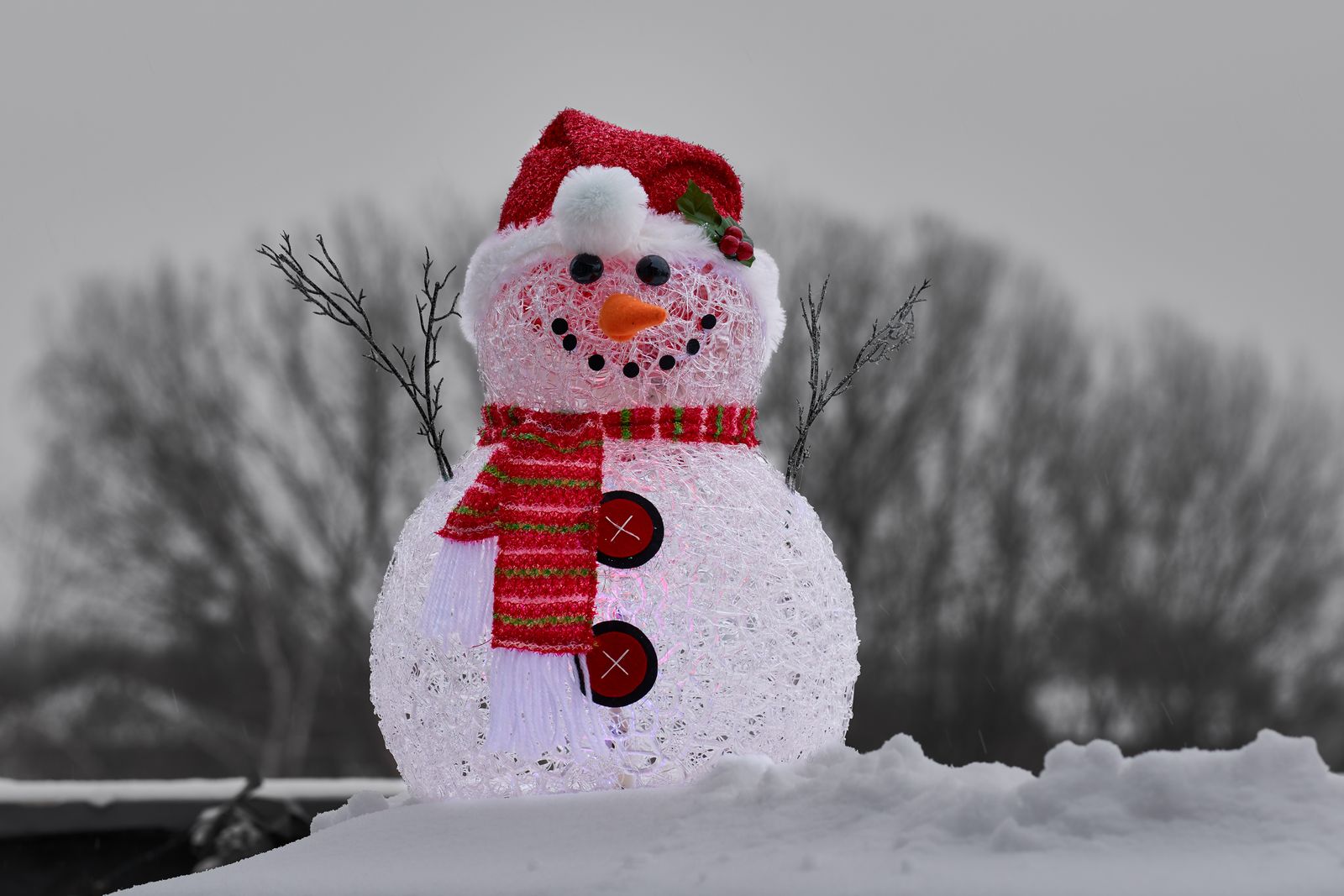
28. der Schneemann (the snowman) — Schnee + Mann (man), every child’s winter project. Der Schneemann trägt eine Karottennase. (The snowman wears a carrot nose.)
29. die Winterwanderung (the winter hike) — Winter + Wanderung (hike), a beloved German pastime. Die Winterwanderung führt durch den verschneiten Wald. (The winter hike leads through the snow-covered forest.)
German Christmas Season Words: die Weihnachtszeit Vocabulary
No list of German winter words is complete without the Christmas season — Germany practically invented the modern Christmas market tradition. These festive words connect winter vocabulary with culture, from Advent calendars to St. Nicholas Day. For spooky seasonal vocabulary from the months just before, try our German Halloween words.
30. die Weihnachtszeit (the Christmas season) — the magical weeks around Christmas. Die Weihnachtszeit ist voller Lichter. (The Christmas season is full of lights.)
31. die Adventszeit (the Advent season) — the four weeks before Christmas, deeply traditional in Germany. Die Adventszeit beginnt am ersten Advent. (The Advent season begins on the first Sunday of Advent.)
32. der Adventskalender (the Advent calendar) — Advent + Kalender, opening one door a day until Christmas Eve. Der Adventskalender hat vierundzwanzig Türchen. (The Advent calendar has twenty-four little doors.)
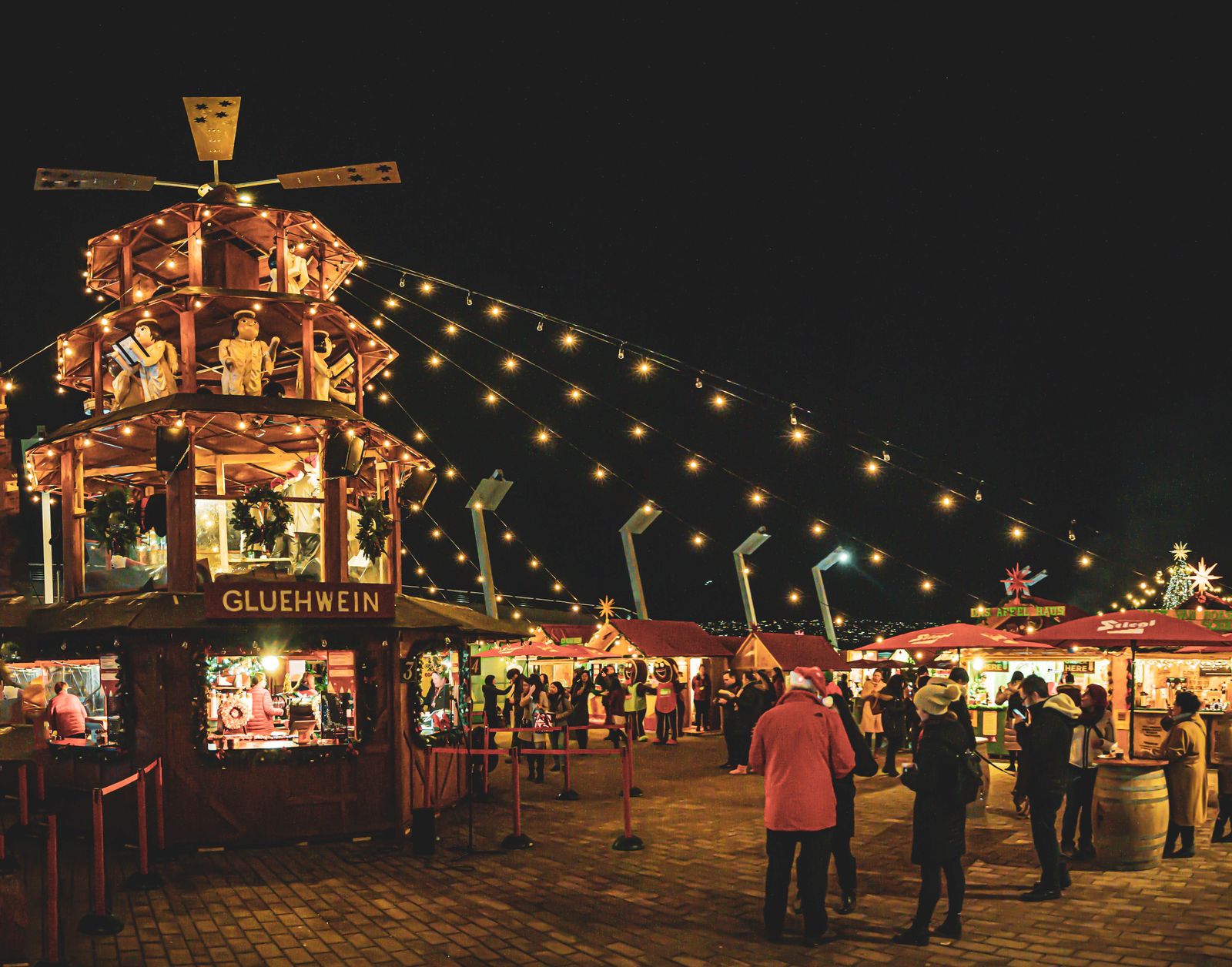
33. der Weihnachtsmarkt (the Christmas market) — the crown jewel of the German winter. Der Weihnachtsmarkt duftet nach Zimt. (The Christmas market smells of cinnamon.)
34. der Tannenbaum (the Christmas tree) — literally “fir tree,” what Germans call their decorated tree. Der Tannenbaum steht im Wohnzimmer. (The Christmas tree stands in the living room.)
35. der Nikolaustag (St. Nicholas Day) — December 6th, when children find treats in their polished boots. Der Nikolaustag bringt Süßigkeiten. (St. Nicholas Day brings sweets.)
Winter- Compound Words: German Winter Words That Build Themselves

Here is where German winter words show off the language’s superpower: compounds. The prefix Winter- attaches to almost anything to make a winter-specific word, and the gender always comes from the LAST part of the compound — die Winterjacke is feminine because die Jacke is. Master this pattern and hundreds of new words unlock themselves. Our guide to German weather idioms is another great way to see German weather vocabulary in action.
36. der Winterschlaf (the hibernation) — Winter + Schlaf (sleep), what bears and hedgehogs do. Der Winterschlaf dauert mehrere Monate. (The hibernation lasts several months.)
37. die Wintersportart (the winter sport) — Winter + Sportart (type of sport). Die Wintersportart Skispringen ist spektakulär. (Ski jumping is a spectacular winter sport.)
38. der Winterurlaub (the winter holiday) — Winter + Urlaub (vacation), usually in the mountains. Der Winterurlaub führt uns in die Alpen. (The winter holiday takes us to the Alps.)
39. die Winterreifen (the winter tires) — plural; mandatory in Germany when roads are wintry. Die Winterreifen sind ab Oktober Pflicht. (Winter tires are mandatory from October — when conditions are wintry.)
40. die Winterlandschaft (the winter landscape) — Winter + Landschaft (landscape), the view from every mountain window. Die Winterlandschaft sieht aus wie ein Märchen. (The winter landscape looks like a fairy tale.)
Pronunciation Tips for German Winter Words
German winter words are a fantastic workout for the sounds English speakers find trickiest. Say each word out loud as you review the list:
- The ch in die Schneeflocke and das Schlittschuhlaufen: after e and i it is a soft hissing sound, like a cat — SHNAY-flok-eh, SHLIT-shoo-lau-fen.
- The ü in die Handschuhe and der Glühwein: round your lips as for “oo” but say “ee” — HAND-shoo-eh, GLUE-vine.
- The w in der Winter, die Winterwanderung, and der Weihnachtsmarkt: always pronounced like an English “v” — VIN-ter, VIN-ter-VAN-de-roong, VY-nakhts-markt.
- The z in der Eiszapfen: pronounced “ts” — ICE-tsap-fen; same for every German z.
- The sch in der Schal, der Schnee, and der Schneemann: pronounced “sh,” one sound — shahl, shnay, SHNAY-mahn.
- The ei in die Weihnachtsplätzchen: pronounced like the “i” in “like” — VY-nakhts-plats-shen.
German Winter Words for Word Games: Scrabble and Wordle Scores
These 40 German winter words are a secret weapon in German word games. In German Scrabble, the high-value letters are Z (10 points), Ä, Ö, Ü (6 points each), V and J (6 points each) — and this list is generous with them. Der Glühwein packs a Ü, der Eiszapfen offers a Z worth ten points, and die Weihnachtsplätzchen is a board-spanning monster with Ä and Z for a possible bingo. Short words like der Schnee, das Eis, der Schal, and der Frost fit neatly into tight board corners, while long compounds like das Schlittschuhlaufen or die Schneeballschlacht can stretch across the whole board.
For German Wordle players, this list is full of five-letter gold: Schnee is exactly five letters, Frost makes a sharp opening guess, and Winter works as a mid-game anchor. Try building anagrams from der Schneesturm or der Weihnachtsmarkt — anagram practice sharpens your spelling instincts and makes the compound-word pattern second nature.
Key Takeaways
These 40 German winter words give you everything you need to talk about the season auf Deutsch — from der Schnee and die Kälte to cozy words like der Glühwein and der Weihnachtsmarkt. Three things will make this German winter vocabulary stick. First, always learn the article with the word: der, die, or das is part of the word itself, and guessing wrong is the most common beginner mistake. Second, use the compound-word pattern — once you see that der Schneesturm is just Schnee + Sturm, dozens of new winter words decode themselves, and the gender always follows the last part of the compound. Third, connect words to real moments: say die Schneeflocke when the first snow falls, der Punsch at the Christmas market, and das Rodeln on the sledding hill. Add one new German winter word to a notebook or phone list each day — by spring, you will own the whole winter set. Viel Spaß beim Lernen!
FAQ: German Winter Words
What is the German word for winter?
The German word for winter is der Winter (masculine). Germans pair it into countless compounds like die Winterjacke (winter jacket) and der Winterurlaub (winter holiday).
What is Glühwein?
Der Glühwein is Germany’s beloved hot mulled wine, served at every Christmas market — red wine heated with cinnamon, cloves, and citrus.
What are good German winter words for beginners?
Start with short, common words like der Winter, der Schnee, das Eis, der Schal, and der Frost — all everyday words, easy to pronounce, and useful all season long.
When do Germans put on winter tires?
Die Winterreifen (winter tires) are required in Germany whenever roads are wintry — as a rule of thumb, from October to Easter (O bis O).